
Every Concept Motorbike (1927-2025)

From experimental engines and unconventional steering systems to electric drivetrains and self-balancing technology, motorcycle manufacturers have spent nearly a century challenging the limits of two-wheeled engineering. This collection explores 384 concept motorcycles and prototypes introduced between 1927 and 2025, examining their technical specifications, innovative designs, development histories, and the ideas that eventually reached production.
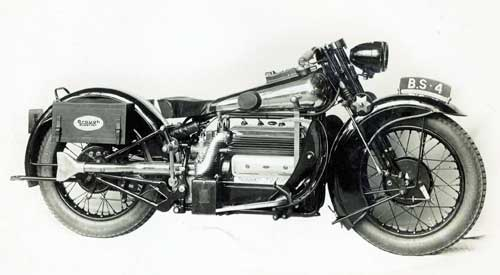
1927 Brough Superior V-Four Prototype
George Brough developed a luxury four-cylinder motorcycle around a 994cc air-cooled, 60-degree side-valve V4 rather than his established V-twins. The experimental engine and four-speed gearbox formed an integrated package with a clutch and conventional chain final drive. Displayed at Olympia, its unusual layout proved too complicated to develop into a practical, manufacturable series motorcycle. Only one prototype was built before Brough abandoned the V4 and commissioned a MAG-powered inline-four experiment for 1928.

1928 Brough Superior MAG Four Prototype
Brough Superior tried a Swiss Motosacoche straight-four after abandoning its earlier V4 experiment, but mechanical reliability became a serious problem. The approximately 900cc side-valve engine used a three-speed gearbox, bevel-gear intermediate drive, chain final drive and 5:1 compression. A connecting-rod failure damaged the crankshaft, prompting the exhibition machine to receive a wooden substitute crankcase before Olympia. The MAG Four remained an experimental machine, and Brough did not develop it into a regular production range.
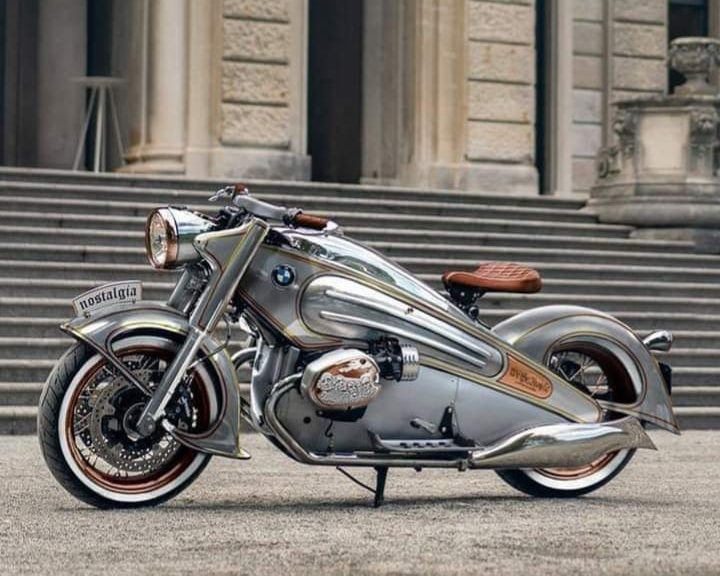
1934 BMW R7 Prototype
Alfred Böning designed the R7 with sweeping Art Deco panels, an integrated headlamp, concealed controls and streamlined mechanical packaging. Its purpose-built 793cc air-cooled boxer twin was paired with a four-speed transmission and enclosed shaft final drive. A pressed-steel chassis and telescopic front fork differed significantly from the exposed tubular-frame motorcycles common in the 1930s. BMW constructed only one R7 and never sold the design; the surviving motorcycle was later recovered and restored.
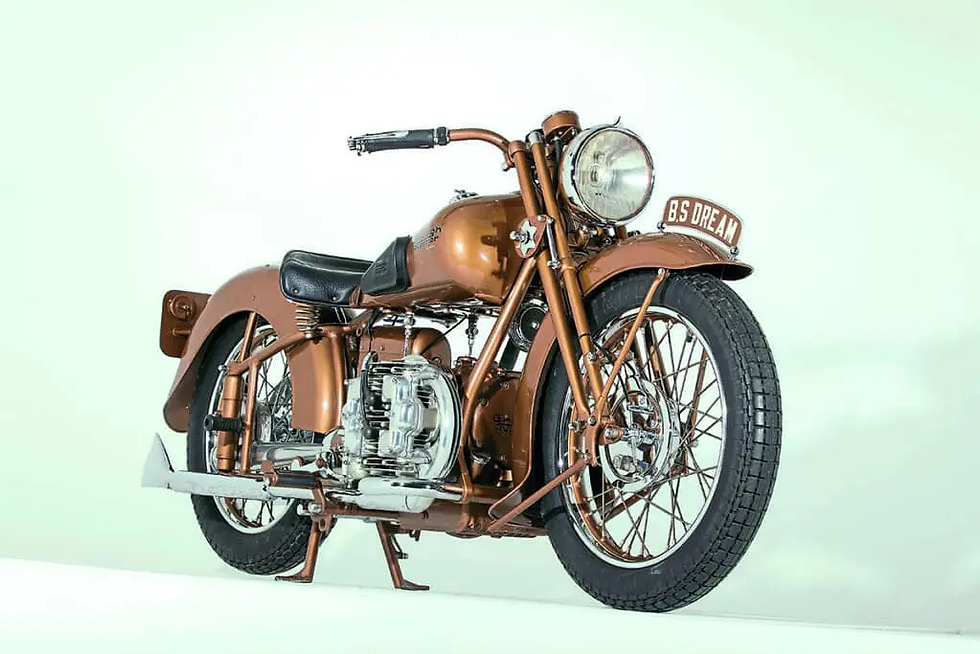
1938 Brough Superior Golden Dream Prototype
H J Hatch designed the Golden Dream around an approximately 1,000cc pushrod-operated H-four formed from two vertically stacked flat twins. Two geared, counter-rotating crankshafts synchronized the cylinder banks, while an integrated foot-shift gearbox transmitted power through shaft drive. The unconventional H layout was intended to deliver smooth four-cylinder performance without the architecture of an ordinary flat-four. Brough displayed the prototype at Earls Court in 1938, but the Second World War ended its development before production.
1963 Ducati Berliner 1260 Apollo Prototype
The Apollo was developed for U.S. importer Berliner Motor Corporation. It used a 1,257cc air-cooled 90-degree V4, overhead-valve pushrod engine, designed for American police/touring requirements. A chain-driven rear wheel and heavy touring chassis carried the substantial powerplant. The program did not enter series production; it provided Ducati with important V-engine experience.
1972 Honda M1 Gold Wing Prototype
Developed by Honda under the project that produced the Gold Wing, the M1 tested whether a smooth, low-centered six-cylinder could underpin an ultra-high-speed grand tourer. It used a approximately 1,470cc liquid-cooled, horizontally opposed six-cylinder engine; shaft final drive and a long-distance chassis with the engine mounted low. Honda chose a more compact flat-four for the first GL1000; the production Gold Wing later returned to the six-cylinder layout in 1988. The M1 was an engineering prototype, distinct from the production GL1000 of 1974.
1972 Yamaha RZ201 Rotary Prototype
Yamaha packaged the two rotors within a conventional motorcycle silhouette, investigating the vibration characteristics and compactness of rotary combustion. It used a liquid-cooled twin-rotor Wankel, approximately 660cc nominal displacement; rotary engine layout rather than reciprocating cylinders. Apex sealing, combustion temperature, fuel economy and exhaust emissions were major engineering hurdles, distinct from the problems of piston engines. The exhibited configuration remained experimental, with no mechanically identical production motorcycle commercially released.
1979 Honda NR500 (NR1) Oval-Piston Racing Prototype
Honda developed the NR500 to exploit four-cylinder Grand Prix regulations with oval pistons accommodating eight valves and two spark plugs each. Its 499.6cc liquid-cooled 100-degree V4 used two connecting rods per piston, a six-speed gearbox and chain final drive. The original NR1 also featured an aluminum semi-monocoque chassis, unconventional front suspension and a high-revving 32-valve racing engine. Early racing exposed major piston and ring durability problems, but the oval-piston research later contributed to Honda’s NR750.
1980 BMW Futuro Concept
BMW combined a turbocharged boxer engine with a tightly enclosed aerodynamic shell that integrated the rider and bodywork. The proposed powertrain retained an air-cooled horizontally opposed twin, longitudinal crankshaft and enclosed shaft-drive architecture. Turbocharger heat and airflow demands created technical difficulties within the narrow, streamlined fairing surrounding the exposed-cylinder engine layout. The Futuro remained an experimental aerodynamic and forced-induction study, not a production BMW motorcycle.
1981 Harley-Davidson Project Nova V4 Prototype
The Nova program was intended to move Harley-Davidson beyond traditional air-cooled pushrod V-twins. The development configuration used liquid-cooled, approximately 800cc, 60-degree V4 with dual overhead camshafts and electronic fuel injection; concept versions also investigated modular V-twin and V6 layouts. Porsche assisted in powertrain development, while different design layouts investigated radiator placement, under-seat fuel storage and integrated engine/transmission packaging. Working development prototypes existed, but financial priorities and the Evolution V-twin program prevented series production; the year identifies early V4 prototype development, not a production launch.
1983 Bimota Tesi VF400 Prototype
Student Pierluigi Marconi and the Bimota team explored independently controlled steering and suspension, keeping brake forces from compressing telescopic fork legs. It used Honda VF400-derived 399cc-class liquid-cooled V4 in an early experimental chassis. In principle this decoupled some braking-related changes in steering geometry from suspension movement; in practice it introduced demanding linkages, bearings and steering feel. A road-going Tesi 1D arrived in 1990 with Ducati 851-derived power; it was not mechanically identical to the original Honda VF400 test machine.
1985 Harley-Davidson Cafe Racer Concept
The 1985 Cologne show exhibit adopted angular, Katana-like aerodynamic bodywork, a sport-focused cockpit and an appearance far removed from the traditional Sportster. Its defining technology was not a new engine: it was the unconventional integration of an American pushrod twin into a fully faired, European- and Japanese-influenced sporting silhouette. The donor engine's precise displacement and independently measured output were not established by the concept documentation. Harley-Davidson did not produce the Cafe Racer in the form shown at Cologne.
1985 Suzuki FalcoRustyco Concept
Suzuki replaced the conventional drivetrain with a hydrostatic system that transmitted engine power through a hydraulic pump and rear-wheel motor. Its liquid-cooled square-four used two geared crankshafts, 16 valves, three camshafts and fuel injection; reported displacement varies between 400cc and 500cc. Hub-center steering and handlebar-mounted controls eliminated ordinary front forks and foot levers, while the hydraulic motor assisted braking. The running 1985 demonstrator never entered production, and contemporary accounts disagree over whether drive reached one wheel or both.
1986 Suzuki Nuda Concept
Suzuki constructed the Nuda with a carbon-fiber monocoque, single-sided wheel supports and mechanically linked hub-center steering with hydraulic assistance. A fuel-injected 749cc-class oil-cooled GSX-R750 inline-four drove both wheels using shafts, a transfer case and a viscous front coupling. The prototype also tested rim-mounted brakes, composite wheels and a laterally movable seat to influence cornering behavior. Suzuki demonstrated the machine at Ryuyo and exhibited it in 1986, but never brought its complex all-wheel-drive system into production.
1988 Honda CO-29 Concept
The white, fully sculpted concept emphasized covered mechanical components and an aerodynamic, integrated body shape. Reliable public specifications for engine displacement, transmission ratios and output have not been found; assigning a donor engine from its appearance would be speculative. Contemporary images appeared by the end of 1989 and period compilations date the CO-29 to 1988. No series-production Honda CO-29 or independently verified factory performance sheet is known.
1989 Honda C021 Concept
The C021 was one of three successive Tokyo Motor Show design studies from the Honda Advanced Design Team, followed by the Mantis in 1991 and ES21 in 1993. It used Honda did not publish verified engine architecture, cylinder capacity, transmission ratios or performance for this Advanced Design Team study; displacement and output estimates are therefore excluded. The project investigated new motorcycle forms rather than presenting a certified or market-ready drivetrain; period reporting places it within the development lineage that ultimately informed Honda’s Zodia. It was shown at Tokyo in 1989; remained a design concept, and must not be confused with Honda’s subsequent production models.
1989 Yamaha MORPHO Concept
Seat, handlebars and footpegs could change position to suit different rider physiques and riding scenes. It used Yamaha sportbike-derived internal-combustion drivetrain; primary innovation was rider-controlled ergonomic geometry, not a novel engine. Its FZR-derived four-cylinder powertrain was familiar; the radically adjustable riding position and hub-steered suspension were not. The exhibited configuration remained experimental, with no mechanically identical production motorcycle commercially released.
1991 Honda CUV-Canopy Electric Scooter Prototype
The experimental CUV-Canopy combined a weather-protection roof, windshield and wiper with two-wheeled electric scooter packaging. It used a battery-electric step-through scooter using nickel-zinc rechargeable battery chemistry and a brushless DC motor; contemporary reporting did not publish a production-standard battery capacity, range or rated output for the show prototype. Its key development question was whether electrically powered urban commuters could improve rider exposure to rain without the mass and road footprint of a passenger car. It was shown at the 1991 Tokyo Motor Show; the canopy-equipped electric prototype did not reach series production in that specific form.
1991 Honda CUV-ES Electric Scooter Prototype
A former Honda motorcycle press representative documented public display of the CUV-ES prototype at the June 1–2, 1991 Low-Emission Vehicle Fair in Yoyogi Park, Tokyo. It used early battery-electric step-through scooter with an electric motor and rechargeable traction battery; the original 1991 prototype’s exact performance sheet is not established. The separate 1994 production CUV ES used a 0.58kW-rated brushless DC motor, 86.4V/20Ah Ni-Cd pack and V-belt continuously variable drive. It was first publicly displayed in 1991; Honda introduced the related CUV ES in limited government and local-authority sales/leases beginning in 1994.
1991 Honda Mantis Prototype
Both 21-inch wheels received drive. It used experimental hydraulic two-wheel-drive system; Honda did not identify the prime mover or provide displacement and output figures. The front and rear wheels were carried by unusual single-sided suspension structures, with electronically regulated damping instead of entirely passive shock-absorber settings. It was shown at the 1991 Tokyo Motor Show; did not enter series production.
1991 Suzuki XF-4 Lander Concept
The XF-4 used an Earles-type front suspension rather than ordinary telescopic forks and a twin-shock rear swingarm. It used a approximately 125cc two-stroke single-cylinder engine, automatic transmission and mechanically driven front and rear wheels. It was displayed at the 1991 Tokyo Motor Show with the separate XF-425 and XF-5 research machines. This was a physical off-road study; it was not released as a production Suzuki.
1991 Suzuki XF-425 Ugly Duck Concept
The distinctive scooter-like open footboards, long two-person seat and exaggerated bodywork were paired with balloon off-road tires. Contemporary technical accounts describe a nominal front/rear torque split around 40/60 and a front-wheel system using shafts and chains; published descriptions differ over the engine cooling method. It used a 125cc-class two-stroke single with automatic transmission and permanent mechanically coupled two-wheel drive. A 1991 Tokyo factory research concept, built to explore approachable all-wheel-drive leisure riding.
1991 Suzuki XF-5 Concept
Compared with the other 1991 Suzuki 2WD exhibits, the XF-5 used conventional-looking enduro proportions: telescopic front fork, rear swingarm, 110/100-18 front and 120/90-18 rear tires and front/rear disc brakes. It used nominal 200cc liquid-cooled reed-valve two-stroke single-cylinder engine, six-speed gearbox and dual-wheel drive. Contemporary specifications quote approximately 129kg dry weight and identify about 7.8kg additional mass associated with the front-drive transmission. It was shown in running-prototype form at Tokyo 1991 and reportedly tested extensively; front-drive weight, cost and complexity ultimately prevented a production version.
1991 Yamaha FROG Electric Scooter Prototype
Yamaha created the FROG as a functional urban-electric reference vehicle. It used rechargeable battery-electric scooter drivetrain, driving a DC traction motor with an electronic controller. Electronic control regulated drive power, with the design program aimed at acceleration and usable top speed approaching those of contemporary 50cc two-stroke scooters. It was displayed at the 1991 Tokyo Motor Show as an electric scooter engineering prototype, not a commercially delivered Yamaha FROG.
1991 Yamaha MORPHO II Concept
The MORPHO II allowed the rider to reposition handlebars, seat and footpegs; it added electrically adjustable wind and knee protection, LCD instrumentation and enhanced visibility lighting. Yamaha’s 1991 manufacturer account specifies two-wheel steering (2WS), computerized electronic suspension (CES) and ABS. It used a approximately 400cc four-stroke inline-four with catalytic exhaust treatment, plus Yamaha’s electronically regulated chassis systems. Remain a concept; Yamaha subsequently used alternative front suspension on the production GTS1000, but the MORPHO II was not itself built for customers.
1993 Honda City Cub Concept
Honda reinterpreted the Super Cub’s underbone chassis with single-sided front and rear suspension arms for cleaner styling and wheel access. The 35th-anniversary commuter proposal combined a small Cub-derived four-stroke architecture with an experimental automatic gearbox and belt final drive. Enclosed control cables, smooth body panels and a digital-style display gave the familiar step-through motorcycle a more futuristic cockpit. Honda exhibited the City Cub in Tokyo in 1993 without confirming exact output or displacement, and it never reached production.
1993 Honda CS-301 Concept
The CS-301 explored a scooter with a built-in overhead rain canopy and more substantial rider weather protection, foreshadowing Honda’s later Cabina scooter. It used automatic gasoline-powered urban-scooter concept; contemporary 1993 Tokyo exhibition lists identify the model but do not preserve an exact independently verified CS-301 show-specific engine output or displacement. The challenge was incorporating screen, roof, frame and steering in a package that remained narrower and more maneuverable than an enclosed microcar. Do not backdate later production Cabina engine specifications to the CS-301 prototype without original show data.
1993 Honda ES21 Future Sports Concept
The future-sport body used a double-arm alternative front steering/suspension system, a single front shock and a large integrated rear-wheel rim-drive layout. This was an advanced-design proposal, NOT an independently demonstrated operating hydrogen-fuel-cell/superconducting motorcycle; Honda did not verify real motor output, fuel storage or range. It used a theoretical hydrogen-powered electrical source feeding a proposed superconducting electric motor, with rim-drive propulsion at the rear wheel. Honda referred to ES21 internally as a Sport Zodia and its styling helped inform the 1995 Zodia show machine, but the speculative hydrogen/superconducting drivetrain never became a production model.
1993 Honda Rescue Fusion Concept
The Rescue Fusion adapted the long, low two-wheel Fusion architecture to rapid initial medical response. It used Honda Fusion maxi-scooter-based urban emergency-response concept with automatic scooter drivetrain; contemporary accounts do not establish a separate certified engine specification for the uniquely equipped show vehicle. It was presented at the 1993 Tokyo Motor Show as a designated emergency-activity scooter concept. It was not launched as a standalone mass-production Honda Rescue Fusion model.
1994 Honda EXP-2 Activated Radical Combustion Prototype
The machine used electronic control of combustion conditions in an attempt to reduce the unburned hydrocarbon loss associated with ordinary crankcase-scavenged two-strokes. 402cc liquid-cooled, single-cylinder two-stroke experimental engine using Honda's Activated Radical (AR) combustion process. Honda showed the EXP-2 in the 1994 Cologne show period, then entered a running prototype in the 1995 Granada-Dakar Rally. The technology was a serious low-emission two-stroke research program, not a production Honda motorcycle.
1995 Honda CL644 Prototype
The CL644 used the same basic large-single architecture as the Super Mono but adopted a classic scrambler layout. It used a 644cc air-cooled four-stroke OHC RFVC single; more traditional chassis with telescopic front fork, twin rear shocks, wire wheels and high-mounted twin exhausts. The official show specification recorded dimensions of 2,240 x 850 x 1,250mm, a longer, taller motorcycle than the streamlined Super Mono. The exhibited configuration remained experimental, with no mechanically identical production motorcycle commercially released.
1995 Honda Super Mono 644 Prototype
Honda integrated the oil cooler into the short half-fairing and fitted high-running dual exhaust pipes. It used a 644cc air-cooled Honda RFVC four-stroke OHC single; steel-truss frame, elliptical-tube aluminum rear swingarm and low-mounted rear monoshock. The engine’s simplicity made weight and throttle response central to the design, while the chassis used sophisticated suspension hardware and bodywork more typical of a dedicated sport machine. It was shown at the 1995 Tokyo Motor Show; never manufactured in this form.
1995 Honda X-4 Prototype
The show machine was designed as a muscular drag-bike-inspired roadster, with a massive rear tire, elongated chassis, short megaphone exhaust and rear suspension visually laid low beneath the seat. It used large liquid-cooled DOHC inline-four, displayed as over 1,000cc; the production X4 subsequently used a 1,284cc four-cylinder and five-speed gearbox. Unlike the other Honda experiments, this concept directly signaled a sellable new motorcycle segment. Evolved into the production Honda X4 launched in Japan in 1997; concept specifications should not be replaced with showroom figures.
1995 Honda Zodia Concept
The cruiser used trailing-link front suspension, a single-sided rear swingarm and unusual rim-mounted disc brakes. It used a approximately 1,500cc air/oil-cooled V-twin with Honda's experimental hydro-mechanical continuously variable automatic transmission (HFT/PGM-HMT). Its hydro-mechanical automatic drive and unusual front suspension sought cruiser comfort without conceding all mechanical sophistication to traditional American styling. No direct production Zodia followed; its visual and suspension ideas reappeared in the later Valkyrie Rune program.
1997 Honda Cabina Convertible Prototype
Honda investigated whether a powered two-wheeler could retain the compactness of a scooter while providing more flexible rain and wind protection. It featured roof-equipped lightweight scooter with an adaptable convertible weather-protection system; based on Honda's Cabina enclosed-scooter concept. This differs from mounting an ordinary removable windshield on a standard scooter. The exhibited configuration remained experimental, with no mechanically identical production motorcycle commercially released.
1997 Honda CL400RS Prototype
The machine explored simple, upright ergonomics and mechanically exposed construction instead of high-end electronics. It used a air-cooled 400cc-class single-cylinder roadster architecture in a retro road-and-scrambler chassis. Honda's 1997 booth records it specifically as a prototype; its final production relation to later CL/CB motorcycles is not a substitute for a separate test specification. The exhibited configuration remained experimental, with no mechanically identical production motorcycle commercially released.
1997 Honda Dream Kids Dokitto Prototype
Honda designed interchangeable modules allowing the motorized unit to be configured into small motorcycle-like and other riding forms. It used a compact brushed DC electric motor in a modular children's vehicle architecture; later 1999 show documents list approximately 950 x 450 x 580mm. The project emphasized hardware modularity, user assembly and controlled low-speed operation rather than conventional combustion power. It was displayed in 1997 and again in 1999; one model, not two different concepts.
1997 Honda Dream Kids Wakuccho Prototype
The Wakuccho shared the experimental build-block philosophy of the Dokitto but had its own configuration and dimensions. It used brushed DC electric motor in a configurable children's mobility module; 1999 show dimensions approximately 1,240 x 780 x 545mm. Honda investigated how swapping physical vehicle modules might change children's use of an electric platform. It was a 1997 debut with a 1999 repeat exhibit, not a production minibike.
1997 Honda FB-B Prototype
The FB-B formed part of Honda's practical-mobility experiments aimed at rethinking storage, riding posture and the gap between scooters and conventional motorcycles. Published archival lists confirm the FB-B model designation but do not provide a verified detailed engine schedule. It featured compact automatic scooter-oriented research vehicle shown alongside the boxer-twin FB-S. A distinct official 1997 show prototype, not a trim level of the FB-S.
1997 Honda FB-S Prototype
Honda intended the flat-twin power unit to offer low-mounted mass and sportbike-class responses in a long-distance scooter package. It used a 399cc liquid-cooled four-stroke boxer twin with automatic transmission; overall dimensions 2,296 x 805 x 1,311mm. The large luggage area, wind protection and road-oriented wheel dimensions challenged the established boundary between motorcycles and maxi-scooters. The exhibited configuration remained experimental, with no mechanically identical production motorcycle commercially released.
1997 Honda FN-1 Prototype
Honda’s FN-1 placed an unusual longitudinal V4 at the center of a compact, naked performance-cruiser design. The proposed engine was a 1,500cc liquid-cooled 52-degree SOHC V4 serving as a stressed chassis component. Its visible powertrain and compact bodywork distinguished it from Honda’s usual transverse inline-four roadsters, although certified output remained undisclosed. Honda displayed the FN-1 at the 1997 Tokyo Motor Show as a prototype rather than a production-ready model.
1997 Honda Hybrid Motorcycle Prototype
The machine was part of Honda's Move Eco research on cleaner urban motorcycles. It featured experimental combination of internal-combustion power and an electrical drive/assist system; exact engine and battery ratings are not established by the accessible official exhibit list. Its significant engineering question was how a motorcycle could package two energy sources without a car-sized volume allowance. It was an official 1997 prototype; not a named production-ready hybrid motorcycle; the Honda Hybrid Motorcycle Prototype remained an exhibit or development study; a separate showroom equivalent with identical show specifications is not documented.
1997 Honda Looper Prototype
Its archival importance is its presence among Honda's small urban machines while the company was simultaneously developing boxer-powered maxi-scooter prototypes. It featured compact personal-mobility prototype from Honda's 1997 Move Eco exhibit, with unconventional packaging instead of a conventional large motorcycle chassis. Detailed powertrain output was not published in the available summary. An officially listed Tokyo show prototype; no production Looper followed.
1997 Honda Renoa Prototype
Honda used this project to test an unconventional form of accessible transportation rather than a high-performance road motorcycle. It featured small personal-mobility experimental vehicle shown in Honda's Move Eco area; details of power output and transmission were not included in the publicly accessible exhibit register. The model is retained only with the facts supported by Honda's original records. A separate 1997 prototype; not an alias for the Looper.
1997 Honda XL250T Prototype
The name was explicitly listed as a prototype in Honda's Japanese show catalogue. It featured 250cc-class lightweight trail-bike research machine, shown separately from the production XL and XR range in Honda's Tokyo exhibition. Publicly accessible primary materials do not provide sufficient suspension travel, engine tuning or wheel-size figures to attribute them reliably to the exhibit. Included for archival completeness; performance figures were not publicly confirmed.
1998 Ducati MH900e Concept
Pierre Terblanche designed the MH900e as a modern tribute to Mike Hailwood’s Ducati racing legacy, incorporating a half fairing, stripped-down racing seat, exposed tubular chassis and sculptural twin-cylinder engine. It used classic Ducati air-cooled 904cc-class 90-degree two-valve desmodromic L-twin engine with conventional manual transmission and chain final drive; design study later engineered for road use in limited series. The project’s 1998 concept presentation preceded its unusually early internet-only ordering process; the road-legal MH900e production motorcycle should be differentiated from the original styling model. The 1998 concept led to 2,000 limited-edition motorcycles assembled in Bologna during 2001–2002 and sold through an innovative online pre-order program.
1998 Honda Valkyrie T1 Concept
The first Honda Research America T-series custom emphasized a minimal hot-rod silhouette. It used Gold Wing/Valkyrie-derived 1,520cc horizontally opposed six-cylinder architecture; steel twin-spar frame and custom cast-aluminum swingarm. Its exposed engine, abbreviated fenders, integrated LED rear lamp and visible rear shock demonstrated how the Gold Wing flat-six could be repackaged into a custom cruiser. It was first publicly shown around 1998-99; Honda later developed T2 into the Rune.
1999 Honda boss cub Prototype
The large-capacity step-through reinterpreted the basic Super Cub format as an adult leisure motorcycle. It used a 248cc liquid-cooled four-stroke OHC single with automatic transmission; dimensions 1,820 x 770 x 1,040mm. Honda's automatic driveline was central to the idea: cruiser-like ease of use with the compact appearance of a Cub. Honda styled the official model name in lowercase; it remained a prototype.
1999 Honda Bosscat Prototype
Honda paired a low, narrow riding form with conventional two-cylinder engine power. It used a 398cc liquid-cooled four-stroke DOHC parallel twin; dimensions 2,210 x 830 x 1,055mm. Its minimal bodywork and street-focused geometry were meant to make a compact motorcycle feel different from both sportbikes and scooters. It was an official 1999 Honda concept; no production Bosscat followed; the Honda Bosscat Prototype remained an exhibit or development study; a separate showroom equivalent with identical show specifications is not documented.
1999 Honda CB Four Prototype
Honda revisited the original CB750 Four’s heritage with a naked motorcycle centered around an exposed, air-cooled DOHC inline-four. The engine’s exact displacement and certified horsepower were not published, so contemporary CB400 and CB750 specifications cannot be substituted. The prototype measured approximately 2,124mm long, 870mm wide and 1,140mm high, with an upright roadster riding layout. Presented during the CB750 Four’s 30th-anniversary period, the CB Four remained a factory show prototype rather than a new retail model.
1999 Honda Dirt CUBRA Prototype
This was a factory prototype in the 1999 Create section, not a fully independent new engine family. It featured dirt-inspired customization of the Cub-family small motorcycle, with taller utility styling and changes to bodywork and off-road-oriented fittings. The source differentiates it from the Americubra, which Honda categorized as a planned-production exhibit. The exhibited configuration remained experimental, with no mechanically identical production motorcycle commercially released.
1999 Honda X-WING Prototype
Honda combined adjustable aerodynamic fairing elements with Combined Braking System/ABS, electronic traction control, integrated navigation and an internet-capable display. It used a 1,500cc liquid-cooled four-stroke DOHC 150-degree V6; dimensions 2,325 x 810 x 1,355mm. That matters because cylinder-bank geometry changes crankshaft packaging, weight distribution and engine height. It was an official 1999 Tokyo Motor Show engineering prototype; never produced as X-WING.
1999 Yamaha MT-01 Concept
Yamaha concentrated on the large V-twin's low-rpm pulse and mechanical sound. It used a approximately 1,600cc air-cooled pushrod 48-degree V-twin derived from the XV1600 Road Star; chassis configured as a muscular roadster rather than cruiser. The minimal tank and under-seat exhaust treatment paired cruiser torque characteristics with sporting wheels, brakes and a more forward riding position. The production MT-01 arrived in 2005, using a larger 1,670cc variant; do not conflate concept and production engine figures.
2000 Honda Valkyrie T2 Concept
T2 introduced the deep, flowing fenders, radiator covers, leading-link-style front suspension and large exposed rear wheel that became central to the Valkyrie Rune. It used Valkyrie/Gold Wing-derived horizontally opposed six with custom aluminum twin-spar chassis and single-sided Pro-Arm rear suspension. A short integrated exhaust and distinct headlamp treatment were part of the concept's construction. Honda evaluated all four T-series designs and used T2 as the main design basis of the production 2004 Valkyrie Rune.
2000 Honda Valkyrie T3 Concept
The T3 was the T-series drag-bike interpretation, with tubular-steel frame, raked fork, hand-shaped aluminum bodywork and brake discs attached to the front wheel spokes. It used Honda flat-six cruiser architecture, reworked with chain final drive, a 230/60-16 rear tire, and six individual exhaust outlets. Its chain conversion and shortened body were deliberate changes from standard shaft-drive Valkyrie packaging. It was shown with T1/T2 at the December 2000 Long Beach exhibition; never produced.
2000 Honda Valkyrie T4 Prototype
Honda commissioned specialist fabricator Mike McCluskey to demonstrate advanced metalworking and construction quality. It featured custom flat-six rolling engineering/materials study, fabricated as a one-off rather than developed as a complete production motorcycle. Unlike the first three T-series machines, the T4 emphasized fabrication techniques and the craftsmanship of complex surfaces. Internal material study subsequently displayed publicly; not a production preview.
2000 Sachs Beast 1000 Concept
The Sachs Beast used an unusual sculptural aluminum structure, with its V-twin employed as a major stressed component and an aggressively minimal, exposed motorcycle layout. The proposed engine was approximately 998cc liquid-cooled Folan V-twin; production-rated horsepower, mass and top speed were never established in a certified production specification. Its Folan engine should not be confused with a complete tested showroom drivetrain. Built and displayed as a concept, the Beast did not proceed to series production.
2001 Aprilia 1000 Blue Marlin Concept
Aprilia and Boxer Design created the Blue Marlin with a chrome-moly tubular frame containing engine oil and a tubular aluminum swingarm. Its fuel-injected 998cc, 60-degree RSV Mille V-twin used a six-speed gearbox and chain drive, with approximately 130hp claimed. Suspension and brakes included a 43mm inverted Öhlins fork, twin 320mm front Brembo discs and a 220mm rear disc. Displayed in Milan in 2001, the low-slung café racer remained a concept; Aprilia developed the separate Tuono roadster instead.
2001 Ducati Multistrada 1000 Concept
Pierre Terblanche developed the Multistrada as an upright sport-touring crossover with long-travel suspension, powerful brakes and a steel-trellis chassis. It proposed an approximately 1,000cc fuel-injected, air-cooled, two-valve desmodromic L-twin with a conventional manual gearbox. The headlamp and windscreen turned with the handlebars while the main fairing remained fixed, and the fuel tank extended under the seat. Ducati debuted the concept in Milan in 2001 and developed the Multistrada 1000 DS for production with finalized specifications in 2003.
2001 Honda CAIXA Prototype
The handlebars and footrests folded flush, while both wheels, seat and rear fender retracted into a narrow box-shaped module. It used electric wheel-in motor. Honda designed the machine to be carried inside the UNIBOX concept car; storage thickness was the principal engineering target. The exhibited configuration remained experimental, with no mechanically identical production motorcycle commercially released.
2001 Honda e-DAX Prototype
The frame telescoped and the handlebars slid inward to collapse the compact motorcycle. It used electric wheel-in motor; reported mass 25kg. It measured 1,125 x 560 x 890mm. The exhibited configuration remained experimental, with no mechanically identical production motorcycle commercially released.
2001 Honda e-NSR Prototype
Honda proposed quiet recreational racing, with the rear wheel, swingarm and seat cowl foldable for storage. It used electric wheel-in motor, compact sport/recreation chassis; overall dimensions 1,450 x 450 x 750mm. It was not an electric conversion of an existing NSR race engine: the project used a purpose-built compact electric drivetrain. The exhibited configuration remained experimental, with no mechanically identical production motorcycle commercially released.
2001 Honda ELYSIUM Prototype
Honda’s ELYSIUM combined luxury scooter weather protection with a retractable roof, projector headlights, LED indicators, navigation and a rear camera. Its newly developed 750cc liquid-cooled flat-four drove through a hydraulically controlled continuously variable transmission and shaft final drive. The engine was separated from the swingarm to reduce unsprung weight, and the vehicle measured 2,445 × 750 × 1,755mm. Displayed in 2001, it was a distinct flat-four automatic project rather than a version of Honda’s earlier V6 X-WING.
2001 Honda FUSION50 Prototype
Honda tested whether the relaxed seating position and full-length bodywork of a large automatic scooter could be translated into a compact, lighter commuter. It used a 50cc-class scooter unit in an unusually long, low body inspired by Honda's larger Fusion maxi-scooter. A production-ready performance specification was not published with the official prototype listing. Show prototype in 2001, not a retail production Fusion model.
2001 Honda NAS 1000 (New American Sports) Concept
Developed by Honda Research America, the NAS featured an exposed perimeter front brake rotor, compact nose fairing, under-engine exhaust and sculptural tank/seat construction. It used a approximately 996cc 90-degree liquid-cooled V-twin based on the VTR1000F FireStorm/Super Hawk platform; sport-oriented chassis and chain drive. It explored a performance streetbike identity without the visual cues of a full race replica. It was shown publicly in 2001; never became a production Honda NAS.
2001 Honda NC-I Prototype
Honda combined a pedal-equipped moped layout with a front basket large enough to take a helmet. It used a 49cc air-cooled four-stroke single, with bicycle pedals; dimensions 1,536 x 570 x 984mm. The lightweight exposed geometry was intended to capture bicycle accessibility while retaining independent combustion propulsion. The exhibited configuration remained experimental, with no mechanically identical production motorcycle commercially released.
2001 Honda NC-II Prototype
Unlike the pedal-equipped NC-I, the NC-II had scooter-style storage with a front utility box. It used a 49cc air-cooled four-stroke single, with a dry mass of approximately 40kg; dimensions 1,536 x 570 x 984mm. The two were separate exhibits despite the same nominal dimensions and engine family. The exhibited configuration remained experimental, with no mechanically identical production motorcycle commercially released.
2001 Honda XAXIS Prototype
Developed by Honda Research of America, XAXIS used four projector headlights, a tail-section radiator, an exhaust integrating the under-cowl and perimeter-mounted front disc with two calipers. It used a 995cc liquid-cooled four-stroke DOHC V-twin; twin-tube chassis and pivotless single-sided swingarm. Overall dimensions were 2,030 x 730 x 1,020mm. The exhibited configuration remained experimental, with no mechanically identical production motorcycle commercially released.
2001 Suzuki B-King Concept
The enormous, engine-dominated roadster used a broad tank, integrated intake treatment and massive under-seat exhaust outlets. It used supercharged 1,299cc Hayabusa-derived liquid-cooled inline-four, with manual gearbox and chain final drive. The 2001 show bike’s supercharger is an essential historical distinction: Suzuki eventually put the B-King into production, but the 2007 road bike used a naturally aspirated Hayabusa-derived four-cylinder. The exhibited configuration remained experimental, with no mechanically identical production motorcycle commercially released.
2001 Yamaha Passol Electric Prototype
Yamaha transferred high-precision motor control techniques from its PAS electric-assist bicycle research to a motor-driven scooter. It used lithium-ion battery-electric propulsion with motorcycle-style twist-and-go speed control; lightweight aluminum urban-commuter structure. The exposed-frame design prioritized low mass, easy access and a simple rider interface; manufacturer-published 2001 show material did not establish a retail homologation range. The experimental Passol preceded Yamaha’s limited-market 2002 and wider-market 2003 production electric scooter.
2001 Yamaha Tricker Prototype
The first Tricker show machine used a short wheelbase comparable to Yamaha’s YZ85 motocrosser and an abbreviated low seat. It used a 223cc air-cooled, four-stroke SOHC single-cylinder engine, coupled to a lightweight aluminum off-road-inspired frame and compact motorcycle driveline. Its premise was BMX/X-Games-style maneuverability, with easy changes in rider position rather than traditional racing aerodynamics. First displayed at the 2001 Tokyo Motor Show; developed into the Tricker platform shown in more production-oriented form in 2003.
2002 BMW Boxer Roadster Concept
BMW combined the R1150R drivetrain with fork sliding tubes, 5.5-inch rear wheel, instruments and other components from the R1100S. It used BMW R1150R-derived 1,130cc oil-cooled opposed twin and shaft drive. Asymmetric headlights came from the R1150GS, and redesigned front trim gave the machine a sport-oriented naked-bike identity. Officially revealed at INTERMOT in September 2002 as a design concept only.
2003 Ducati GT 1000 SportClassic Prototype
Ducati’s GT1000 offered the relaxed, passenger-friendly roadster interpretation of its three SportClassic prototypes, avoiding racing-style clip-on handlebars. It shared a 992cc air-cooled two-valve desmodromic V-twin and steel-trellis chassis architecture with its sportier concept siblings. Upright controls and classic touring proportions distinguished the GT from the Paul Smart and Sport1000 racing-inspired studies. First presented in 2003, the proposal later evolved into the limited-era production Ducati SportClassic GT1000.
2003 Ducati PaulSmart 1000 SportClassic Prototype
Pierre Terblanche's half-faired tribute to Paul Smart's 1972 Imola win combined contemporary tubular-trellis chassis technology, inverted forks and clip-ons with a rounded racing fairing and classic tank proportions. It used Ducati 992cc air-cooled 90-degree two-valve desmodromic V-twin and six-speed chain-drive transmission. Its later limited-production version, the Paul Smart 1000 LE, demonstrates how a carefully targeted heritage concept could find customers without a new engine platform. Led to the limited-edition Paul Smart 1000 LE, released as part of the production SportClassic family.
2003 Ducati Sport 1000 SportClassic Prototype
Sport1000 reduced the bodywork to a narrow tank, round headlamp and low clip-ons. It used a 992cc air-cooled two-valve desmodromic L-twin, six-speed gearbox and chain final drive. Ducati retained modern disc brakes, wheels and chassis engineering while using a 992cc twin and low handlebars to create the café-racer position. Production Sport1000 launched later, with differences from its show specification.
2003 Honda GRIFFON Concept
The rear body integrated extensive storage and enclosed mechanical architecture while the front adopted performance-roadster proportions. It used a 750cc liquid-cooled horizontally opposed four-cylinder engine with electronically controlled automatic continuously variable transmission; large motorcycle/scooter hybrid chassis with a substantial integrated rear body. Contemporary 2003 reporting identifies the flat-four/CVT arrangement, so confusing it with the 2001 750cc ELYSIUM would conceal that Honda was running several distinct automatic flat-four research programs. Tokyo debut 2003; Honda did not market a production GRIFFON.
2003 Honda PS250 Prototype
Created by Honda's N Project engineers, the PS250 featured an unusually open industrial frame, minimal body panels and a folding passenger backrest/seat arrangement that extended cargo usability. It used a 249cc-class liquid-cooled single with automatic scooter transmission; exposed tubular-steel utility frame. The layout was markedly different from a normal plastic-clad maxi-scooter. Evolved into a production PS250 in 2004 (Big Ruckus in some markets).
2003 Kawasaki ZZR-X Concept
A distinctive front swingarm and hub-centered steering pivot replaced telescopic forks. It featured long-distance performance sport-touring design with hub-center steering, perimeter front brake rotor and variable rider/aerodynamic packaging. The front end put steering near the wheel hub and routed suspension loads through a swingarm, allowing designers to manage fork dive differently. First displayed as a show study in the 2003-04 period.
2003 KTM 990 RC8 Concept
The RC8 combined angular fairing shapes, compact packaging and an aggressive front-end design to turn KTM's large V-twin engine family into a full-fairing superbike. It used a approximately 990cc liquid-cooled LC8 75-degree V-twin; lightweight sport chassis and chain final drive. Later production RC8 versions used the larger 1,148cc engine; their specifications must not be transferred backward to the original concept. It was introduced in 2003; series-production KTM RC8 launched later; the KTM 990 RC8 Concept remained an exhibit or development study; a separate showroom equivalent with identical show specifications is not documented.
2003 Suzuki G-Strider Concept
With approximately 1,800mm wheelbase and around 615mm seat height in period descriptions, the G-Strider prioritized an extreme reclined riding position. It used a 916cc liquid-cooled parallel twin with electronically controlled continuously variable automatic transmission; low-slung long-wheelbase touring chassis. Suzuki’s long-wheelbase layout was an unusually deliberate attempt to replace the conventional separate motorcycle and maxi-scooter categories. It was displayed at the 2003 Tokyo Motor Show, never mass produced.
2003 Yamaha Chivicker Prototype
The Chivicker compressed the BMX-inspired Tricker theme into a 50cc format and used an aluminum in-frame fuel tank. It used a 49cc air-cooled, SOHC two-valve four-stroke single. Short compact proportions emphasized controlled low-speed tricks and maneuverability, rather than the larger bike’s 250cc road use. An independent 2003 Yamaha special exhibition, not a nickname for the Tricker Pro.
2003 Yamaha DIVIDE Concept
Rather than using a traditional engine frame and tank, DIVIDE attempted to make a small EV into a single sculptural mechanical object that could be kept indoors. It used electric propulsion in an aluminum monocoque-type structural body, with extremely compact external packaging. The aluminum monocoque was the central technical element; it was not an ordinary production scooter with replacement body panels. The exhibited configuration remained experimental, with no mechanically identical production motorcycle commercially released.
2003 Yamaha Dolsa Wind Concept
Developed with design input from Yamaha Corporation, the Dolsa Wind linked riding with music. It used electric two-wheeler design study; exact battery capacity and motor rating not published in Yamaha's design archive. Its relaxed rider posture and immersive sound environment explored the sensory experience of quiet electric transport rather than top speed. The exhibited configuration remained experimental, with no mechanically identical production motorcycle commercially released.
2003 Yamaha FC06 Fuel-Cell Prototype
The fuel-cell stack used a diluted methanol/water mixture instead of high-pressure hydrogen. It used direct-methanol fuel-cell (DMFC) generating up to 500W; permanent-magnet synchronous traction motor rated 0.58kW. The commuter also incorporated GPS navigation, a rear-facing camera display and a 300W external AC outlet for temporary equipment power. Preceded the 2005 FC-me; it was a distinct 2003 experimental fuel-cell motorcycle.
2003 Yamaha MABRICE Hybrid Concept
Built around the Majesty maxi-scooter’s underlying architecture, the MABRICE explored what a hybrid motorcycle could do beyond simply improving fuel economy. Yamaha used a 250cc gasoline engine driving the rear wheel and an electric hub motor at the front wheel. The electrically driven front wheel made the hybrid a two-wheel-drive experiment when the combustion engine and hub motor were both working. It was one of Yamaha’s named special exhibits at the 2003 Tokyo Motor Show; the specific two-wheel-drive hybrid system did not become a production MABRICE.
2003 Yamaha MT-03 Concept
It was shown at Milan 2003, the MT-03 presented Yamaha’s “Roadster Motard” principle with the mass concentrated tightly around the big single. It used a 660cc-class liquid-cooled four-stroke four-valve SOHC single from Yamaha’s XT660 family; low-maintenance BELT final drive on the original 2003 concept, not the chain configuration later used on production motorcycles. A horizontally oriented rear shock lay beside the engine, allowing the exhaust to route cleanly beneath the seat. A 660cc production MT-03 followed for European markets in 2005–2006 with a changed drive system.
2003 Yamaha Passol L Prototype
A 100V household charging connection, different lamps and a polished aluminum frame differentiated the show model. It used permanent-magnet synchronous electric motor rated 0.58kW, integrated charger and larger fixed battery than the earlier removable-battery Passol. Yamaha emphasized greater distance per charge and improved everyday practicality over the initial battery-electric Passol. It was displayed as a separate 2003 special exhibition prototype; further developed toward the production Passol L.
2003 Yamaha Pocke Electric Prototype
Yamaha built the frame around pentagonal aluminum sections, foldaway handlebars and space to store a charger or spare battery. It used permanent-magnet synchronous electric motor, 0.58kW rated output; length/width/height 1,350 x 550 x 915mm; 960mm wheelbase, 10-inch wheels. A configurable synthesized operating-sound feature gave the bike a distinctive rider interface. Tokyo Motor Show 2003 special exhibition vehicle; not a production Yamaha Pocke.
2003 Yamaha Tricker Pro Prototype
Yamaha lightened the Tricker Pro with an aluminum tank and swingarm, carbon-fiber body panels and a centrally positioned muffler. Its 249cc air-cooled SOHC single used an inverted fork with titanium-coated tubes in an action-oriented lightweight chassis. The prototype weighed 94kg dry, versus 107kg for the standard-oriented Tricker, and measured 1,950 × 850 × 1,200mm. Shown in Tokyo in 2003, the Pro remained a specialized experimental version rather than the production Tricker specification.
2004 Honda Moped-EV Prototype
Instead of a conventional twist-grip accelerator, the Moped-EV used a two-step thumb-operated lever below the right handlebar. It used a battery-electric, with a 360Wh nickel-metal-hydride traction pack housed in an aluminum frame; electric motor and electronic drive controller integrated into the rear swingarm. Honda disclosed a 1,290mm overall length, 44kg vehicle weight and ability to ascend a 12-degree incline. This particular prototype did not enter ordinary series production; it is distinct from Honda’s earlier CUV-ES electric scooter.
2004 TVS Chicane Concept
TVS displayed the low-slung Chicane at the 2004 Auto Expo to explore sharper aerodynamics and sportier styling than its commuter motorcycles. The bodywork emphasized an aggressive road-going silhouette, but the manufacturer did not establish a validated running-engine specification for the exhibit. Displacement, horsepower, transmission layout and independent performance data remain undocumented, so assigning a specific production powertrain would be speculative. The Chicane remained a factory design study and never entered production, making its main contribution an alternative visual direction for TVS.
2004 Yamaha Air Tricker Concept
The Air Tricker was developed as a European interpretation of Yamaha's Tricker exhibition ideas. It featured light experimental trials/urban crossover; carbon-fiber-oriented frame construction and 360-degree-turnable handlebar arrangement. Its rotating bars emphasized maneuverability and stunt-bike influence, while its minimal frame and accessible seat aimed to lower perceived motorcycle complexity. The exhibited configuration remained experimental, with no mechanically identical production motorcycle commercially released.
2005 Ducati Hypermotard 1100 Concept
Pierre Terblanche designed the Hypermotard around supermoto ergonomics, long suspension travel, a trellis frame and 17-inch sport tires. It used an approximately 1,078cc air-cooled desmodromic two-valve 90-degree V-twin with six-speed transmission and chain final drive. A single-sided swingarm and high-mounted twin exhausts gave the large roadster the stance of a competition-inspired motard. The 2005 concept developed into Ducati’s production Hypermotard 1100, launched in 2007 with finalized road-going specifications.
2005 Honda DN-01 Concept
Rather than putting a scooter CVT into a motorcycle, Honda used a hydraulic-mechanical system intended to deliver smooth, predictable cornering without conventional shift interruptions. Honda’s 2005 concept used a 680cc liquid-cooled four-stroke OHC V-twin and a hydraulic-mechanical continuously variable Human-Friendly Transmission (HFT). The chassis and low, stretched body created a cruiser seating position while the automatic gearbox removed the clutch and foot-operated shifts. It did reach production in 2008; unlike many show bikes, the distinctive long-and-low styling survived largely intact.
2005 Honda E4-01 Prototype
The E4-01 tried to make a genuinely sporting motorcycle as easy to use as a luxury scooter. It used inverted front forks, 17-inch wheels, and a rear unit-Pro-Link suspension combined with Honda’s single-sided Pro-Arm. The combination of a claimed sub-200kg machine, two-helmet storage and 903cc four-cylinder power was remarkably ambitious. It never reached production, and its unpublished rated horsepower should not be fabricated from the 903cc displacement.
2005 Honda NP6-D Prototype
Honda’s NP6-D reworked a small automatic scooter around greater utility, adding a side-swinging seat that improved access to storage. Its 124cc air-cooled OHC single belonged to Honda’s N Project scooter platform rather than an entirely new engine family. The compact vehicle measured 2,135 × 738 × 1,064mm and shared its research background with the separately named NP6-S. Honda displayed the NP6-D in Tokyo in 2005, but the cargo-focused prototype never entered series production.
2005 Honda NP6-S Prototype
Honda’s in-house N Project developed a low-and-long variant designed around stretched, feet-forward ergonomics and a sharply simplified body. It used a 124cc air-cooled four-stroke OHC single in a 125cc-class automatic scooter platform. It shared a core platform with the separately displayed NP6-D but used a different seat and overall configuration. The exhibited configuration remained experimental, with no mechanically identical production motorcycle commercially released.
2005 Suzuki Stratosphere Concept
To make six cylinders practical in a normal motorcycle frame, Suzuki engineered a narrow crankcase and cylinder block. It used a 1,100cc liquid-cooled DOHC 24-valve transverse inline-six, fuel injection and an electronically controlled automated transmission with manual-shift capability; Suzuki quoted about 180PS as a design goal. The adjustable windscreen, multi-function instrumentation and retro-futurist slab-sided fairing contrasted with the unusual compact six-cylinder power unit. The exhibited configuration remained experimental, with no mechanically identical production motorcycle commercially released.
2005 Yamaha DEINONYCHUS Prototype
Its “Stretch & Shrink” mechanism could alter both horizontal and vertical body geometry for commuting, cruiser-like or BMX-influenced riding postures. It used twin brushless DC in-wheel motors providing front- and rear-wheel drive; adjustable-length aluminum frame. The electric hub motors eliminated a conventional engine, transmission and final-drive chain, granting Yamaha considerable freedom to change geometry. Two-wheel-drive 2005 technology demonstrator; no production model followed; the Yamaha DEINONYCHUS Prototype remained an exhibit or development study; a separate showroom equivalent with identical show specifications is not documented.
2005 Yamaha FC-me Prototype
The direct-methanol approach avoided a heavy high-pressure hydrogen tank and separate fuel reformer. It used direct-methanol fuel-cell electrical system using an onboard methanol-water solution and an electric traction motor, rather than a hydrogen-gas storage vessel. Yamaha targeted approximately 1kW-class electrical output for a compact urban vehicle and researched efficiency improvements in the fuel-cell stack and fuel-supply controls. The exhibited configuration remained experimental, with no mechanically identical production motorcycle commercially released.
2005 Yamaha Gen-Ryu Prototype
Yamaha combined a long-wheelbase cast-aluminum structure and scooter-style luggage accommodation with hybrid performance-motorcycle technology. It paired a 599cc liquid-cooled DOHC YZF-R6-derived inline-four with a high-output electric motor; dimensions were 2,610 × 1,090 × 1,050mm. Proposed equipment included cornering lights, distance warnings, active noise cancellation, passenger intercom, voice navigation and a rearview camera. The Gen-Ryu debuted at the 2005 Tokyo Motor Show as a factory research prototype and never entered production.
2005 Yamaha HV-01 Prototype
Unlike a series-hybrid generator vehicle, the combustion and electric sources were intended to contribute to propulsion. It used gasoline engine and electric motor arranged as a parallel hybrid automatic scooter, with an electrical-energy storage system; Yamaha did not provide a homologated range or power figure. A motor-only quiet mode was proposed for low-noise running, while an ultra-low-power “push” mode could assist the owner when moving the scooter beside it. The exhibited configuration remained experimental, with no mechanically identical production motorcycle commercially released.
2005 Yamaha MAXAM3000 Prototype
The extraordinary stretched silhouette included a pick-up-like open cargo area. It used large automatic-scooter platform, with low-slung cruiser-style packaging; factory documentation emphasizes its styling rather than independently certified engine performance. Its proportions explored whether a maxi-scooter could become a utility/recreation vehicle with transporting space usually associated with small cars. The “3000” name should not be misread as a verified 3,000cc engine displacement.
2005 Yamaha VMAX Design Prototype
The radically restyled muscle bike wore enormous aluminum air scoops, muscular radiator treatment and stubby exhausts. It used newly proposed liquid-cooled V4 engine with an envisaged V-Boost-type intake arrangement; Yamaha did not publish prototype displacement or certified horsepower at its 2005 reveal. It combined an aluminum frame with a conventional fork and dual rear shock-absorbers; contemporary accounts describe a partially finished design model rather than a homologated production bike. Tokyo 2005 prototype helped preview the redesigned 2009 VMAX; the latter’s 1,679cc production figure must not be backdated to this unmeasured exhibit.
2005 Yamaha VOX Prototype
The unusually boxy rear body allowed a long, generally flat underseat load area, opening toward the side rather than treating storage as merely a small underseat helmet compartment. It used a 50cc-class four-stroke urban scooter unit with automatic continuously variable drive; manufacturer 2005 materials framed it as a production-minded urban utility scooter. Yamaha used exposed surfaces and a rugged-looking configuration to emphasize utility. Prototype at the 2005 Tokyo show; later released commercially in Japan.
2005 Yamaha XT250X Prototype
Yamaha fitted 17-inch supermoto wheels, sport-pattern tires and a sharpened roadster body. It used a 249cc air-cooled four-stroke SOHC single-cylinder engine, five-speed manual gearbox and chain drive. Lighting details borrowed from the YZF-R sport range included R6-like LED rear lighting and sporty indicator treatment. It was a 2005 Tokyo special exhibition preview of the compact road-oriented motard; separate from unrelated XT trail production models.
2006 TVS Isotope 200 Concept
TVS’s Isotope design explored compact sport-motorcycle proportions and experimental surface treatment. An approximately 200cc-class show-motorcycle proposal; published production-ready power output, gearbox ratios and certified weight are unavailable. The displayed concept should not be presented as a fully validated running production engine package. It was displayed during TVS’s 2006 concept program; no Isotope 200 reached series production.
2006 TVS Predator 500 Concept
The Predator explored the visual proportions of a larger-capacity performance motorcycle, an ambitious direction relative to TVS’s production range at the time. It proposed 500cc-class motorcycle with a V-twin-oriented design theme; no independently validated running engine, horsepower curve or homologated performance specifications were released. Published concept-displacement claims are not proof of a functioning 500cc powertrain. It remained an Auto Expo concept/show model.
2006 Victory Vision 800 Concept
Victory’s original concept specification lists a 120/60-R17 front and enormous 250/40-R18 rear tire, dual 300mm front brake rotors, a 250mm rear disc, 28.5-inch (724mm) seat height and 5.8-inch (147mm) ground clearance. The show chassis used a cast-aluminum frame, 43mm upside-down fork, adjustable single gas rear shock and a quoted 61-inch (1,549mm) wheelbase. It used a 800cc liquid-cooled four-stroke parallel twin, automatic belt-type continuously variable transmission and exposed shaft final drive integrated with a single-sided rear swingarm. It was unveiled in the 2005–2006 period and extensively reported in 2006; Victory did not productionize its CVT/shaft-drive 800cc design.
2007 Aprilia FV2 1200 Concept
Aprilia investigated alternative front-wheel steering and suspension with the FV2 1200, replacing conventional telescopic forks with a hub-centered arrangement. Its proposed approximately 1,200cc V-twin operated within a mixed aluminum-steel chassis designed for aggressive roadster handling. The front swingarm system redirected braking and suspension forces but created additional steering linkages and unusual rider feedback. Exhibited in 2007, the FV2 remained an engineering study and was not mass-produced with its proposed front end.
2007 Honda CB1100F Concept
This factory retro-roadster study emphasized visible cooling fins, conventional riding position, round lighting and modern disc brakes. It used a air-cooled DOHC four-stroke inline-four of approximately 1,100cc class, six-speed manual-style roadster drivetrain and traditional motorcycle chassis. It should be differentiated from the contemporaneous CB1100R concept and the later production CB1100. It was one of Honda’s two distinct CB1100 studies at the 2007 Tokyo Motor Show.
2007 Honda CB1100R Concept
Where the CB1100F was an unfaired standard, the R wore a half fairing and classic endurance-racer proportions recalling Honda’s CB1100R of the early 1980s. It used a approximately 1,100cc-class air-cooled DOHC inline-four roadster foundation with full-size disc brakes and modern sport suspension. It tested the commercial appeal of vintage racing style on a new four-cylinder platform. The exhibited configuration remained experimental, with no mechanically identical production motorcycle commercially released.
2007 Honda EVO6 Concept
Honda moved Gold Wing-derived flat-six technology into an exposed performance roadster with a low center of gravity. The liquid-cooled horizontally opposed six-cylinder engine was paired with Honda’s experimental Human-Friendly hydraulic automatic transmission. An oversized rear tire, open chassis and muscular bodywork differentiated the concept from conventional fully faired touring motorcycles. Debuted in 2007, the EVO6 remained a prototype and never reached production with its original hydraulic drivetrain.
2007 Suzuki Biplane Concept
The frame and seat drew on early biplanes: minimal visible fairing, a structural spine, widely separated masses and an engine treated as the visual centerpiece. It used proposed longitudinally arranged V4 engine, visually exposed in an open roadster frame; no independently validated displacement or horsepower was published. Period reporting described a proposed V4 architecture, not a production-spec powertrain suitable for performance comparisons. The exhibited configuration remained experimental, with no mechanically identical production motorcycle commercially released.
2007 Suzuki Crosscage Fuel-Cell Concept
A compressed-hydrogen tank supplied the cell, which generated current electrochemically rather than burning hydrogen in a piston engine. It used electric traction motor supplied by a hydrogen fuel-cell stack developed with Intelligent Energy, supported by lithium-ion electrical storage; emissions at the vehicle are primarily water. The Crosscage stored hydrogen for a fuel cell that produced electrical energy, with a battery serving as a buffer for power demand. Hydrogen fuel-cell study at the 2007 Tokyo Motor Show; not a production motorcycle.
2007 Suzuki Gemma Concept
The unusual feature was a full-flat two-person seat with a low, extended silhouette, intended to make the passenger part of one long visual form. A 250cc-class liquid-cooled single-cylinder automatic scooter study unveiled at the 2007 Tokyo Motor Show. Suzuki presented Gemma as a worldwide debut in 2007 and launched a production 249cc Gemma in 2008. Published 2008 production specifications, including the 210kg wet mass and 16kW rating, should not be automatically attributed to the earlier exhibit.
2007 Yamaha BOBBY Electric Folding Concept
Yamaha designed the Bobby as a “personal commuter” that could fold into a compact shape for storage. It used a compact electric traction motor; folding body and handlebar/seat arrangement designed to minimize stored dimensions. Its frame articulation was as important to the product concept as its electric motor, for apartment and automobile users. The exhibited configuration remained experimental, with no mechanically identical production motorcycle commercially released.
2007 Yamaha BW’S Concept
Yamaha gave the BW’S scooter rugged styling with wide tires, pronounced wheel arches and simplified body panels. The compact automatic scooter concept retained the existing BW’S emphasis on accessible city transport and off-road-inspired proportions. Protective external elements suggested operation on rougher surfaces, but Yamaha did not publish a separately certified engine-output figure. The 2007 exhibit remained a factory styling study and was not released as a distinct production motorcycle.
2007 Yamaha C3+ Electric Concept
The C3+ used minimalist bodywork and a simple control interface to explore the point at which a compact urban commuter could be more appliance-like than motorcycle-like. It used a battery-electric small-scooter architecture, with lightweight electric motor and compact body. The manufacturer did not publish a fully certified battery capacity/range in the show overview. The exhibited configuration remained experimental, with no mechanically identical production motorcycle commercially released.
2007 Yamaha FC-AQEL Prototype
Unlike Yamaha’s methanol-powered FC-Dii, the FC-AQEL needed a high-pressure hydrogen fuel system. It used hydrogen fuel-cell electric drive; 35MPa compressed-hydrogen storage in two approximately 4.7-liter cylinders; dimensions 1,855 × 650 × 1,150mm. Engineers focused on integrating tank volume and a fuel-cell stack into a practical scooter layout while preserving usable packaging. A separately named 2007 fuel-cell demonstrator; no production FC-AQEL followed.
2007 Yamaha FC-Dii Prototype
The system operated on a methanol-water fuel solution, avoiding high-pressure hydrogen storage and a hydrogen reformer. It used Yamaha direct-methanol fuel-cell stack powering an electric motor; rated peak power approximately 1.2kW, dry vehicle weight 72kg and dimensions 1,590 × 600 × 995mm in Yamaha’s fact sheet. The FC-Dii advanced Yamaha’s early FC-me research with a lighter, better-packaged vehicle platform. The exhibited configuration remained experimental, with no mechanically identical production motorcycle commercially released.
2007 Yamaha LUXAIR Hybrid Concept
Yamaha explored additional electric functions at parking speeds, hybrid assist for normal travel and a comfortable long-distance scooter riding position. It used combustion engine with electric motor assistance in a parallel hybrid scooter configuration; automatic drivetrain and electronic energy management. The model should not be confused with the entirely fuel-cell-powered FC-Dii and FC-AQEL displayed the same year. The exhibited configuration remained experimental, with no mechanically identical production motorcycle commercially released.
2007 Yamaha MAJESTY SPECIAL Prototype
The concept incorporated the Intelligent Shift system with its electronically controlled automatic drive, along with specialized handlebar switches, chromed dashboard trim, real-leather seat and projector-style LED headlight. Published display figures were 14kW at 6,500rpm, 22Nm at 5,000rpm, 12L fuel capacity, and dimensions of 2,175 x 780 x 1,185mm. 249cc liquid-cooled SOHC single-cylinder scooter, electronically fuel-injected, with Yamaha Chip Controlled Automatic Transmission (YCC-AT). It was shown by Yamaha at the 2007 Tokyo Motor Show and classified as a prototype exhibition vehicle, the MAJESTY SPECIAL explored a premium maxi-scooter specification rather than a separate production model.
2007 Yamaha MT-0S Concept
The MT-0S explored another sculptural interpretation of the oversized V-twin roadster, using truncated body panels and muscular exposed mechanical surfaces. It used large air-cooled pushrod V-twin of the Yamaha MT-01 mechanical family, manual gearbox and chain final drive. It was principally a design and packaging study rather than a new V-twin engine program. The exhibited configuration remained experimental, with no mechanically identical production motorcycle commercially released.
2007 Yamaha WR250X SPECIAL Prototype
Developed as a premium special version of Yamaha's WR250X supermoto, it retained the lightweight aluminum frame and energetic road/competition crossover formula. Yamaha published 23kW at 10,000rpm and 24Nm at 8,000rpm, with a 7.6L fuel tank and exterior dimensions of 2,030 x 810 x 1,190mm. The 2007 Tokyo exhibit used a special color scheme and equipment rather than a new powertrain. It was a factory study of a production-based supermoto, not a distinct mass-produced WR250X engine family.
2007 Yamaha XS-V1 Sakura Concept
Yamaha designed the Sakura around a restrained tank/seat silhouette and meticulously finished metallic components. It used a approximately 1,000cc-class air-cooled V-twin, shaft final drive and five-speed mechanical roadster-style drivetrain in a compact steel-tube chassis. Its finish and proportion borrowed from Japanese craft objects, pairing polished metal and simple surfaces with roadster ergonomics. It was a 2007 Tokyo display, no production Sakura; the Yamaha XS-V1 Sakura Concept remained an exhibit or development study; a separate showroom equivalent with identical show specifications is not documented.
2008 Aprilia Mana X Concept
Aprilia transformed its Mana roadster into a stripped-back supermoto and flat-track hybrid with exposed tubing, motocross-style handlebars and a high exhaust. It retained the 839cc liquid-cooled, 90-degree V-twin and electronically controlled Sportgear continuously variable transmission from the production Mana. Seventeen-inch road wheels, compact bodywork and chain final drive emphasized maneuverability without developing an entirely new motorcycle powertrain. The Mana X was a factory concept built on existing mechanical components and did not become a separate production model.
2008 BMW Lo Rider Concept
BMW envisaged a showroom roadster that could be configured with alternate seat, handlebar, headlight, exhaust and paint assemblies. It used BMW oil/air-cooled boxer twin, longitudinal crankshaft, six-speed manual gearbox and shaft drive; Telelever-type front and Paralever-type rear chassis components. BMW treated the seats, tank, lighting and exhaust as interchangeable elements around the same boxer engine and frame. It was a factory design demonstrator; its heritage emphasis foreshadowed later BMW R nineT products.
2008 Honda V4 Concept
It was displayed at INTERMOT, the concept used sharply faceted, futuristic bodywork and a prominent V4 engine-design theme to explore a new identity for high-performance road motorcycles. Honda did not release a verified production engine displacement, horsepower figure or operating transmission specification for the showpiece. It was a factory show model introducing Honda’s proposed next-generation V4 performance-motorcycle design. The design was a concept presentation, not a production VFR1200F; a later road-going V4 had its own production engineering specification.
2008 TVS Qube Hybrid Scooter Concept
The Qube project investigated how internal-combustion and electric drive could be combined in a lightweight urban two-wheeler, in low-speed operation. It was a compact scooter-scale hybrid proposal using a small combustion engine together with electric assistance; definitive battery capacity, production-rated output and certified range were not published. The original Qube concept was publicly shown in 2008. Its later Qube 2.0 was a further concept iteration, not an independent showroom production range.
2008 TVS Raptor Concept
The TVS Raptor investigated compact motorcycle and scooter styling with an unconventional riding arrangement resembling a partial step-through design. TVS exhibited the physical study at the 2008 Auto Expo, emphasizing unusual proportions instead of a documented performance breakthrough. Reliable factory records do not establish a running engine displacement, horsepower figure, transmission architecture or verified road-test specification. The Raptor remained an exhibition concept, so assigning specifications from unrelated production TVS models would misrepresent its development history.
2008 TVS X-Fossil Electric Motorcycle Concept
TVS designed the X-Fossil around exposed electric-vehicle packaging rather than concealing its propulsion hardware inside conventional gasoline-motorcycle bodywork. The show motorcycle proposed battery-electric propulsion, reflecting an early investigation of electric two-wheelers within the company’s concept program. Published documentation does not reliably establish its motor output, usable battery capacity, charging time or certified operating range. Displayed in 2008, the X-Fossil remained an experimental design and never reached production in its original configuration.
2009 BMW Concept 6
The narrow inline-six architecture was central to BMW’s 2009 concept: the company designed a compact bore spacing and short structural arrangement for touring-bike compatibility. It used a newly developed liquid-cooled transverse 1,649cc inline-six with four valves per cylinder, shaft final drive and close-mounted engine ancillaries. The production K1600 platform subsequently turned that engineering into a refined high-speed touring powertrain, even though the original Concept 6 wore aggressive roadster styling. Previewed the six-cylinder K 1600 GT and GTL; the retail touring chassis did not reproduce the concept’s styling.
2009 CR&S DUU Concept
Italian specialist CR&S built the DUU around an unusually broad structural backbone that also served as the fuel tank. Its American-made S&S X-Wedge engine was a 1,916cc air-cooled V-twin paired with a conventional motorcycle transmission. The design combined a single-sided rear swingarm, premium braking components and a modular arrangement accommodating one or two riders. Unveiled at Milan in November 2009, the DUU entered extremely limited bespoke production rather than becoming a mass-market motorcycle.
2009 Honda CB1000R XESS Streetfighter Concept
Honda Italy reworked the CB1000R into its eXtreme European Streetfighter Styling study, adding carbon-fiber parts and a vivid red finish. The underlying engine remained the CB1000R’s 998cc liquid-cooled inline-four, with a six-speed gearbox and chain final drive. Upgrades included Showa front suspension, radial-brake hardware and twin titanium exhausts rather than an entirely new engine design. The XESS appeared in 2009 as a factory-backed customization concept, but Honda did not offer it as a standalone production model.
2009 Honda CB1100 Customize Concept
The factory customization study used an Italian-red striped tank, solo café-racer seat, small bikini fairing and race-inspired exhaust trim to evoke Honda’s 1960s Grand Prix machines. It used a air-cooled 1,140cc-class inline-four roadster architecture with six-speed manual transmission and chain final drive. It was a design proposal for the nearly production-ready CB1100 platform, not a new engine. One factory customized concept shown at the 2009 Tokyo Motor Show.
2009 Honda EV-Cub Concept
Honda investigated moving the conventional combustion engine out of the frame while maintaining Cub-like use and rider posture. It used a battery-electric step-through motorcycle with electronically driven wheels/drive and replaceable/rechargeable energy storage; overall packaging preserved the Cub’s low step-through frame. Its clean mechanical surfaces treated electric power as a means to reduce noise and maintenance, not merely to imitate the performance of a gasoline Cub. First 2009 EV-Cub concept, distinct from Honda’s substantially revised 2015 EV-Cub.
2009 Honda EVE-neo Concept
Honda emphasized delivery-friendly packaging, practical daily range and the elimination of local exhaust emissions. It used a battery-electric commercial scooter architecture with low-speed torque, rechargeable electrical storage and automatic twist-and-go motor control. The subsequent EV-neo commercial scooter was introduced in 2010, but the 2009 exhibit is the earlier concept. The exhibited configuration remained experimental, with no mechanically identical production motorcycle commercially released.
2009 KTM 125 Race Concept
KTM’s 125 Race explored a compact sport-inspired road motorcycle with lightweight chassis construction and sharply angular supermoto-influenced bodywork. Its proposed 125cc four-stroke single produced approximately 15 horsepower, matching the European A1 learner-licence power ceiling. The concept emphasized accessible small-displacement performance through aggressive ergonomics and distinctive styling rather than a large-capacity engine. Unveiled at EICMA in November 2009 alongside the separate Stunt study, it influenced KTM’s later 125 Duke development.
2009 KTM 125 Stunt Concept
KTM developed the 125 Stunt with compact proportions, upright control placement and specialized bodywork for technical low-speed maneuvers. Its 125cc four-stroke single belonged to the approximately 15-horsepower concept platform shared with KTM’s separately named 125 Race. Stunt-focused ergonomics and chassis details distinguished this exhibition motorcycle from a conventional small-displacement faired racing design. The 125 Stunt debuted at EICMA in 2009 and remained a separate design concept rather than a production variant.
2009 Moto Guzzi V12 LM Concept
The LM was the sporting, café-racer-oriented member of Miguel Galluzzi and Pierre Terblanche’s three-bike V12 concept series, with a low semi-fairing, compact tail and premium brakes/suspension components. It used Moto Guzzi approximately 1,151cc oil/air-cooled, longitudinal-crankshaft, transverse 90-degree V-twin, with eight valves total and an overhead-cam-in-head distribution system; retained the marque’s shaft-drive philosophy. The V12 label refers to the 1.2-liter engine family, NOT a 12-cylinder engine. The exhibited configuration remained experimental, with no mechanically identical production motorcycle commercially released.
2009 Moto Guzzi V12 Strada Concept
Compared with the V12 LM, the Strada focused on relaxed road use, broad handlebars and an exposed engine. It used Moto Guzzi approximately 1,151cc oil/air-cooled, longitudinal-crankshaft, transverse 90-degree V-twin, with eight valves total and an overhead-cam-in-head distribution system; retained the marque’s shaft-drive philosophy. The V12 label refers to the 1.2-liter engine family, NOT a 12-cylinder engine. It was one of three distinct factory V12 design concepts displayed in 2009.
2009 Moto Guzzi V12 X Concept
The X was the off-road/crossover-inspired V12 family member, using taller bodywork and a more commanding position. It used Moto Guzzi approximately 1,151cc oil/air-cooled, longitudinal-crankshaft, transverse 90-degree V-twin, with eight valves total and an overhead-cam-in-head distribution system; retained the marque’s shaft-drive philosophy. The V12 label refers to the 1.2-liter engine family, NOT a 12-cylinder engine. The exhibited configuration remained experimental, with no mechanically identical production motorcycle commercially released.
2009 Yamaha EC-f Concept
A seamless organic shell and vertically integrated lighting avoided the look of a converted combustion scooter. It used lithium-ion battery-electric urban scooter architecture; zero tailpipe emissions and compact single-motor propulsion. Battery packaging and low-velocity urban usability, rather than speed or range claims, were its design focus. Distinct from the sportier EC-fs; both debuted in the 2009 show period.
2009 Yamaha EC-fs Concept
The EC-fs adopted a more sporting exterior and leaner rider posture, showing how a shared electric architecture could support separate product personalities without different combustion-engine components. It used same electric urban propulsion research platform as the EC-f, using a rechargeable electrical energy-storage system and electric drive. The difference was in the sporty packaging, not evidence of an entirely new battery chemistry or high-output production electric drivetrain. A separate 2009 Yamaha electric show model; not a production trim.
2009 Yamaha Ei Concept
First displayed at the Bangkok International Motor Show, the Ei used an egg-like outer body with a rounded interior section. It used gasoline urban-scooter architecture that foreshadowed the Yamaha Fiore sold in Thailand; a separate electric motor specification was not part of Yamaha’s official design-history description. The stationary form closed protectively around the seat, hiding dirt-prone areas and offering some protection against casual tampering. It was a 2009 design teaser; do not misidentify Ei as one of the contemporary Yamaha EC-f battery-electric concepts.
2010 BMW Concept C
BMW emphasized a sportbike-like front end, enclosed step-through structure, LED running lights and connected cockpit. It used automatic maxi-scooter development architecture with an internal-combustion twin-cylinder engine; final production C 600 Sport/C 650 GT used a 647cc parallel twin and continuously variable transmission. The drivetrain packaging and integrated storage signaled a premium scooter platform rather than an entirely conventional naked motorcycle. It was a 2010 Milan exhibition preview of BMW’s later C-family production maxi-scooters.
2010 Honda Fury Furious Concept
Honda R&D Americas recast the VT1300 Fury as a radical custom with exaggerated steering geometry and an engineered special frame. It retained the 1,312cc liquid-cooled, 52-degree V-twin and shaft-drive architecture of Honda’s production Fury. Its 23-inch front wheel, 20-inch rear wheel, diamond-stitched saddle and exposed mechanical components reinforced the stretched silhouette. Exhibited in December 2010 alongside two other factory specials, the Furious never entered production as a distinct model.
2010 Honda New Mid Concept
The New Mid explored a practical combination of motorcycle chassis geometry, automatic gear changes, weather protection and integrated urban storage. Mid-displacement motorcycle/scooter crossover concept with Honda’s proposed automatic dual-clutch transmission (DCT) architecture; original show-spec displacement and engine output were not fully published. Honda’s developing New Mid platform focused on ease of use, everyday riding and storage while preserving motorcycle stability and braking. Do not substitute the later production NC700 engine specification for the original concept’s unconfirmed figures.
2010 Honda Sabre Switchblade Concept
Honda’s Switchblade transformed the VT1300 Sabre into a pro-drag-style custom with aggressive bodywork and a single-sided rear swingarm. The engine remained the Sabre-derived 1,312cc V-twin, but a chain-drive conversion replaced the production motorcycle’s shaft drive. Carbon-fiber bodywork and wheels joined adjustable suspension, racing-oriented brakes and a GPS-based data-acquisition system. Honda R&D Americas unveiled the Switchblade in December 2010 as a show special, not a new production motorcycle.
2010 Honda Stateline Slammer Concept
Honda’s Stateline Slammer was a factory bagger study with a deep lowered seat, custom panels and an oversized 23-inch front wheel. It retained the VT1300 Stateline’s 1,312cc V-twin engine and core frame architecture instead of adopting a new powertrain. Front and rear air suspension, integrated navigation and a reported 500-watt audio system emphasized luxury cruising over performance. The Slammer appeared among Honda R&D Americas’ December 2010 customs and was never offered as a regular production model.
2010 Honda V4 Crosstourer Concept
The concept applied Honda V4 technology to an upright, long-distance crossover chassis with substantial weather protection, adventure ergonomics and an integrated transmission-oriented design. Large V4-powered adventure-touring concept; Honda did not make every final production specification part of the original show model’s technical disclosure. First shown as a concept in 2010, then developed into the VFR1200X Crosstourer. The later 1,237cc showroom engine specification should be cited as production data, not a separately tested concept output.
2010 Horex VR6 Supercharged Roadster Concept
Horex proposed a compact transverse six-cylinder roadster using a 1,218cc narrow-angle VR6 with two staggered banks at just 15 degrees. The engine featured three overhead camshafts, three radial valves per cylinder and a Rotrex supercharger targeting approximately 200hp and over 150Nm. A six-speed gearbox, planned belt final drive and composite aluminum-steel chassis supported the unusual compact engine layout. The 2010 supercharged design did not launch as specified; later low-volume Horex production used a naturally aspirated engine.
2010 Husqvarna Mille3 Concept
Instead of a classic inline triple, the Mille3 used two cylinders angled forward and one upward/rearward, beneath a wide, low cruiser/tracker body. It used a approximately 930cc three-cylinder internal-combustion engine assembled from three 310cc Husqvarna off-road single-cylinder top-end units in an unusual V3 layout. Its engine and narrow front end investigated combining dirt-bike technology with custom-cruiser proportions. One-off EICMA 2010 concept; no production Mille3 engine family; the Husqvarna Mille3 Concept remained an exhibit or development study; a separate showroom equivalent with identical show specifications is not documented.
2010 TVS Qube 2.0 Hybrid Scooter Concept
TVS revised the earlier Qube’s hybrid packaging and compact commuter layout. Second-generation Qube hybrid design combining a compact gasoline power source with electric-assist propulsion; no consistently verified production battery energy or range figure exists. It is a meaningful new 2.0 design iteration, rather than merely a 2008 display re-labeled with a new year. An experimental design program; no production Qube 2.0 followed immediately.
2011 BMW Concept E
The battery and drive units were packaged low in a sculpted underbody; BMW proposed vehicle-to-helmet communication and networked navigation and information displays. It used lithium-ion battery-electric scooter platform with integrated electric motor and near-silent direct-drive operation. Its urban role and high level of electronics foreshadowed the C evolution electric scooter. It was exhibited as an electric mobility study in 2011, not sold unchanged.
2011 Honda MOTOR COMPO Concept
The chassis and handlebar arrangement were designed to fit easily into passenger-car luggage storage and to connect with larger transport systems. It used removable-battery compact electric drive in a box-like small scooter/motorcycle body. Honda studied shared electrical energy and easy storage rather than independently publishing high-speed performance figures. The exhibited configuration remained experimental, with no mechanically identical production motorcycle commercially released.
2011 Honda RC-E Concept
The RC-E used full sporting bodywork, a stiff race-style frame, inverted front fork and premium braking components. It used a purpose-built battery-electric sport motorcycle with an electric traction motor; exact motor rating, battery energy and top speed were not disclosed in Honda’s official show release. The RC-E showed electric drive could be fitted to a recognizable supersport frame and fairing layout, with performance suspension and brakes. The exhibited configuration remained experimental, with no mechanically identical production motorcycle commercially released.
2011 Husqvarna E-Go Concept
Its light frame, short body, open battery compartment and high ground clearance resembled a stripped-down supermoto. It used a compact battery-electric off-road/street electric motor, single-speed drive and minimal battery/motor enclosure; publicly verified electrical output is limited. The design showcased electric packaging’s ability to reduce overall visual bulk and drivetrain components. EICMA 2011 concept with no direct E-Go production motorcycle; the Husqvarna E-Go Concept remained an exhibit or development study; a separate showroom equivalent with identical show specifications is not documented.
2011 Husqvarna Moab Concept
The Moab reinterpreted 1970s desert scramblers with a flat orange tank/seat, short tail and high handlebar. It used a 650cc-class liquid-cooled BMW/Husqvarna-derived single-cylinder engine, five/six-speed manual chain drive and scrambler chassis. Modern fuel injection and brakes hid beneath vintage-looking geometry and body panels. The exhibited configuration remained experimental, with no mechanically identical production motorcycle commercially released.
2011 Yamaha XT1200Z Super Tenere Worldcrosser Concept
The Worldcrosser added competition-inspired protective equipment, a stronger off-road visual identity, protective panels and lighter components. It was based on the 1,199cc liquid-cooled parallel-twin XT1200Z Super Tenere, with a six-speed transmission and shaft final drive. The basic 270-degree-crank adventure-touring engine was already established; Yamaha did not announce a new Worldcrosser-specific output calibration. It was presented as a concept in the 2011 EICMA show period; the Worldcrosser approach was later reflected in optional accessories and more off-road-focused adventure equipment rather than a new engine design.
2011 Yamaha XTW250 RYOKU Concept
The RYOKU combined large-diameter off-road-style tires with low seating, integrated carriers and protective bodywork to serve casual touring, commuting and trails. It used a 250cc-class air-cooled single-cylinder four-stroke engine, manual gearbox and chain final drive in a compact all-purpose chassis. It offered a different philosophy from Yamaha’s much sportier electric PES concepts, showing that the future-bike question was also about simplicity and utility. It was an official 2011 Yamaha concept; no production RYOKU; the Yamaha XTW250 RYOKU Concept remained an exhibit or development study; a separate showroom equivalent with identical show specifications is not documented.
2011 Yamaha Y125 MOEGI Concept
Its long, low frame and exposed bicycle-inspired rear structure reused visual cues from early Japanese powered cycles. It used a 125cc-class air-cooled four-stroke single, narrow lightweight wheels and slim chain-driven chassis; Yamaha targeted exceptional lightness and low fuel use. The MOEGI asked whether a simple petrol motorcycle could compete with scooters on portability and efficiency. The exhibited configuration remained experimental, with no mechanically identical production motorcycle commercially released.
2012 Hero Leap Hybrid Concept
The power system was designed to move short distances under electric power and rely on combustion energy for longer trips. It used electric traction motor combined with a small 124cc-class four-stroke gasoline engine serving as range extender in a hybrid scooter configuration. Its early integrated electronics and scooter package explored low-emission, affordable mass transport for Indian road conditions. It was unveiled at the 2012 Auto Expo; subsequently reworked through prototype development rather than broad commercial release.
2012 KTM 1290 Super Duke R Prototype
The prototype emphasized high midrange torque, single-sided swingarm, large radial brakes, wide handlebars and modern ride-by-wire/electronic traction-management development. It used a approximately 1,301cc liquid-cooled 75-degree LC8 V-twin, six-speed transmission and chain drive, based on a high-output big-V-twin sport chassis. It was an intentionally aggressive naked-bike counterpoint to KTM’s fully faired RC8. It was a 2012 EICMA prototype, developed into production 1290 Super Duke R.
2012 Lit Motors C-1 Prototype
A rigid cabin, automotive-like steering interface and twin gyroscopes were proposed to offer motorcycle-width traffic packaging and car-like weather protection. It used a battery-electric self-balancing enclosed two-wheel platform; active stabilization via computer-controlled gyroscopic flywheels rather than rider-foot balancing. The difficult question was not simply balancing upright; it was controlling lean during cornering and collision forces while keeping the machine narrow. The exhibited configuration remained experimental, with no mechanically identical production motorcycle commercially released.
2012 Suzuki V-Strom 1000 Concept
Suzuki drew on its DR Big desert-rally styling heritage, giving the prototype a recognizable beak, touring-focused wind protection and integrated luggage. A 1,000cc-class liquid-cooled V-twin adventure motorcycle concept with an aluminum chassis, ABS and electronically controlled traction control. Suzuki did not release a final, certified horsepower or exact final homologated displacement with the 2012 show bike. The production successor entered Suzuki's 2014 lineup with a 1,037cc V-twin; those later production details must not be backdated into the 2012 concept specification.
2012 TVS Radeon 125 Prototype
The TVS Radeon 125 explored efficient commuter-motorcycle packaging with cleaner styling and compact proportions suited to everyday travel. TVS described a roughly 125cc-class development motorcycle, but complete factory-certified engine and gearbox specifications were not published. Its purpose was to test the appearance and practicality of a more refined economy bike rather than unveil proven performance figures. The 2012 prototype should not be confused with later production Radeon models, which used their own finalized mechanical specifications.
2013 BMW Concept Ninety
Designed with Roland Sands Design, Concept Ninety celebrated BMW’s R90S with a hand-built orange-and-silver half fairing, compact fuel tank, clip-ons and exposed boxer cylinders. It used a 1,170cc air/oil-cooled DOHC boxer twin of the contemporary R-series, six-speed gearbox and shaft final drive. It combined classic superbike cues with modern Telelever/Paralever-era running gear. Anniversary design study; influenced BMW’s heritage styling without becoming a retail Concept Ninety.
2013 Honda CB1100 EX Customized Concept
Honda used blacked-out treatments, a specially stitched leather seat and textured finishes to make the retro roadster more visually assertive. It was based on the air-cooled 1,140cc DOHC inline-four CB1100 EX, with classic roadster chassis, conventional forks, wire-spoked wheels and multi-speed manual transmission. The engineering proposition was one of ergonomics, material finishes and factory customization, not a new combustion cycle. It was shown as a customized concept at the 2013 Tokyo Motor Show, distinct from the regular CB1100 EX planned-production exhibit on the same stand.
2013 Honda CROSS CUB Customized Concept
Honda showed the CROSS CUB Customized Concept in two contrasting finishes, with olive-drab utility styling and bright pink bodywork. Both retained the Cross Cub’s compact underbone, single-cylinder commuter architecture and conventional chain final drive. Factory accessories and body details illustrated how one mechanically simple motorcycle could support recreational and personal-use identities. The two 2013 Tokyo Motor Show color variants were officially grouped under one concept name, not separate models.
2013 Honda Dunk Customized Concept
The show treatment used marine-themed colors and polished or chromed details to explore the Dunk's use as a fashion-oriented urban vehicle. A 50cc-class urban scooter design study using the newly developed liquid-cooled single-cylinder eSP engine family and automatic scooter drivetrain. It retained the compact scooter's practical packaging rather than introducing a new frame or wheel count. It was an official Honda show listings categorize this as a customized concept, not as an additional regular production specification for the 2013/2014 Dunk scooter.
2013 KTM E-Speed Concept
The exposed trellis-derived chassis, single-sided swingarms and compact battery enclosure transferred KTM’s motorcycle design language to city transport. It used a battery-electric compact scooter architecture, with a liquid-cooled electric drive system and lithium-ion energy storage; KTM quoted about 11kW/15hp for its prototype. The project emphasized the nimble response of an electric urban motorcycle rather than long-range touring. The exhibited configuration remained experimental, with no mechanically identical production motorcycle commercially released.
2013 Suzuki EXTRIGGER Concept
Suzuki built the EXTRIGGER as a short-wheelbase electric recreational motorcycle with upright, trials-inspired geometry and compact wheels. Its battery-electric powertrain drew on the company’s e-Let’s scooter technology rather than a conventional combustion-engine platform. Visible Light Communication experiments used LED signals to exchange vehicle information, adding electronic interaction to the minimalist design. Unveiled in Tokyo in 2013, the EXTRIGGER remained a non-production urban and leisure mobility concept.
2013 Suzuki Recursion Concept
Suzuki investigated using forced induction to deliver liter-bike-like low-rpm torque with a smaller, lighter engine. It used a 588cc liquid-cooled DOHC parallel twin with turbocharger and intercooler; Suzuki published design targets around 100PS and 100N·m. Suzuki’s quoted 588cc twin and claimed 100PS/100Nm target illustrated what a small turbocharged engine could theoretically deliver: large midrange torque without the physical size of a larger multi-cylinder. First displayed in 2013; later Suzuki EX7/other forced-induction research did not become a direct retail Recursion.
2013 Voxan Wattman Concept
The Wattman’s battery enclosure formed the central visual and structural element, permitting an unusual wide, muscular silhouette. It used high-output liquid-cooled electric motor with lithium-ion battery pack integral to a large aluminum structural housing; the manufacturer publicized roughly 150kW/200hp and 200N·m targets. Its claimed rapid acceleration and charging performance reflected concept-stage targets rather than homologated customer testing. Original Wattman was a 2013 concept, not the later land-speed record-setting streamliner.
2013 Yamaha BOLT Café Prototype
This was a real factory customization proposal using the existing Yamaha Bolt cruiser, with a low café-style seat/fairing and more forward-leaning posture. It used a 942cc air-cooled SOHC four-valve V-twin, fuel injection and five-speed gearbox; 12-liter fuel tank. Yamaha’s show information specifically classified it as a reference prototype rather than an independent new engine. The exhibited configuration remained experimental, with no mechanically identical production motorcycle commercially released.
2013 Yamaha EKIDS Prototype
Aimed at children learning vehicle control, EKIDS combined simple motor response and low maintenance with an intentionally small off-road chassis. It used brushless DC motor and lithium-ion power module derived from Yamaha’s EVINO work. The shared EVINO electrical module was the major technical link to Yamaha’s wider electric mobility research. The exhibited configuration remained experimental, with no mechanically identical production motorcycle commercially released.
2013 Yamaha EVINO Prototype
Built around the styling of the combustion Vino scooter, EVINO investigated a mass-market electric runabout with easy battery exchange and manageable low-speed handling. It used DC brushless electric motor, removable lithium-ion battery and regenerative-energy recovery; dimensions 1,675 × 645 × 1,005mm. EVINO used the familiar Vino body language to avoid making electric power look intimidating, but the drivetrain and weight distribution were redesigned around electric operation. It was a 2013 reference vehicle; distinct from later commercial electric Vino products.
2013 Yamaha PED1 Prototype
The off-road complement to the street-biased PES1, with slim bodywork, knobby tires and suspension suited to dirt trails. It used brushless DC motor, lithium-ion removable battery and structural Smart Power Module; selectable manual/automatic shift behavior. Yamaha disclosed a sub-85kg weight target for the off-road PED1, along with 1,900 × 758 × 1,205mm overall dimensions, brushless electric drive and lithium-ion power. It was a 2013 Tokyo proof of concept, not a production Yamaha dirt bike.
2013 Yamaha PES1 Prototype
Yamaha’s PES1 electric sportbike used a compact, high-rigidity power module as a structural chassis element instead of a conventional engine cradle. It combined a brushless DC motor, removable lithium-ion battery and selectable manual-or-automatic transmission behavior in a lightweight package. The proposed mass was below 100kg, with published dimensions of 1,918 × 640 × 1,000mm and connected information features. Debuted in 2013, the PES1 remained experimental and was followed by the separately developed PES2 concept.
2013 Yamaha R25 Prototype
Yamaha emphasized a high-revving response in a compact YZR-M1-inspired full fairing and lightweight chassis. It used a 249cc fuel-injected liquid-cooled DOHC parallel twin, six-speed constant-mesh transmission; dimensions 2,000 × 720 × 1,140mm. Although the production YZF-R25 followed, it should not be described using later 321cc YZF-R3 specifications. It was an official 2013 “reference vehicle/prototype”; later production R25; the Yamaha R25 Prototype remained an exhibit or development study; a separate showroom equivalent with identical show specifications is not documented.
2014 BMW Concept Roadster
The tiny tail and aggressive low tank treatment exposed the powertrain as the motorcycle’s main visual mass. It used a 1,170cc air/oil-cooled BMW boxer twin, six-speed manual transmission, shaft final drive and Telelever/Paralever-era BMW chassis concepts. Lightweight alloy construction, aluminum frame elements and a prominent under-engine exhaust made it a more radical boxer roadster than standard production offerings. It was a 2014 factory study with indirect influence on subsequent R-series design.
2014 Harley-Davidson Project LiveWire Prototype
LiveWire was Harley-Davidson’s first public road-test electric motorcycle program. It used a battery-electric transverse electric motor driving the rear wheel through reduction gearing and belt final drive; early prototypes used an approximately 55kW/74hp electric drive. The 2014 experimental bike should not be assigned the later retail LiveWire One battery or range specifications. The prototype informed the later retail LiveWire, which had a substantially revised battery, motor and performance specification.
2014 Hero Hastur Concept
The aggressive exposed engine, yellow trellis-type frame, twin front brakes and sport swingarm made the Hastur a major departure from Hero’s commuter range. It used a 620cc liquid-cooled parallel twin, electronic fuel injection and six-speed manual gearbox; Hero quoted a design target of approximately 80hp. Claims about top speed and power were concept targets, not measured serial-production data. First shown at Auto Expo 2014; never became a retail Hero Hastur.
2014 Hero RNT Diesel Hybrid Concept
The RNT emphasized rural utility: broad flat cargo areas, modular equipment fittings and the torque and efficiency characteristics of a small diesel. It used a approximately 150cc single-cylinder diesel engine, with optional electric motor at the front wheel for a two-wheel-drive hybrid configuration. Unlike a normal chain-only bike, its electric front hub could assist the combustion-driven rear wheel. It was a 2014 show concept; no production diesel Hero RNT; the Hero RNT Diesel Hybrid Concept remained an exhibit or development study; a separate showroom equivalent with identical show specifications is not documented.
2014 Honda CX-01 Concept
Created by Honda’s India R&D engineers, the CX-01 blended aggressive streetfighter styling with an upright stance and stubby tail. It used single-cylinder 250cc-class Honda CBR250R mechanical foundation, liquid cooling, fuel injection and a six-speed gearbox. It demonstrated that quarter-liter commuting platforms could carry much more expressive chassis and bodywork design. The exhibited configuration remained experimental, with no mechanically identical production motorcycle commercially released.
2014 Honda RC213V-S Prototype
The prototype translated racing-bike mass centralization, compact engine packaging and a distinctive high-performance chassis into a proposed road-going model. Street-legal MotoGP-derived V4 sportbike development concept; final production engine output, equipment and road homologation details were published after the original presentation. This entry describes the earlier prototype rather than repeating showroom performance numbers as prototype data. It was displayed at EICMA 2014; the RC213V-S reached limited production in 2015.
2014 Honda True Adventure Prototype
Honda developed the True Adventure with narrow rally-inspired bodywork, upright ergonomics and long-travel suspension for serious off-road use. The original prototype previewed a large liquid-cooled parallel twin, but Honda withheld independently certified output and weight figures. Its slender chassis and adventure-focused geometry established the design direction for the revived Africa Twin motorcycle family. Unveiled in 2014, it led to the 2016 CRF1000L, whose 998cc engine and optional DCT were finalized later.
2014 Husqvarna Svartpilen 401 Concept
The Svartpilen shared a mechanical direction with the Vitpilen but used wider handlebars, a more upright posture, block-pattern tires and scrambler-inspired protective styling. It used a 373cc liquid-cooled single of the KTM 390 platform, six-speed chain drive and compact trellis chassis. The two were distinct factory studies, not color variants. The exhibited configuration remained experimental, with no mechanically identical production motorcycle commercially released.
2014 Husqvarna Vitpilen 401 Concept
A compact steel-trellis platform carried minimalist café-racer bodywork, low bars, a thin fuel tank and simple surfaces. It used KTM 390-derived 373cc liquid-cooled DOHC single, electronic fuel injection, six-speed transmission and chain final drive. The concept was a conscious attempt to reposition Husqvarna as a modern street-motorcycle designer. The exhibited configuration remained experimental, with no mechanically identical production motorcycle commercially released.
2014 TVS Draken X21 Concept
Draken incorporated a lattice frame, aggressively shortened tail and integrated exhaust with a lightweight naked-bike riding posture. It used a 249cc liquid-cooled four-valve DOHC single-cylinder engine, six-speed gearbox; TVS projected approximately 38.5PS for its concept. The claimed output was a prototype target; the eventual Apache RTR 200 platform was not an identical engine. It was unveiled at 2014 Auto Expo; not sold in original Draken configuration.
2015 BMW Concept 101
Designed with Roland Sands, the elongated bagger incorporated hard luggage, an expansive low tank, slender aluminum body panels and a long, reclined rider position. It used a 1,649cc water-cooled transverse inline-six with electronic fuel injection and shaft final drive, derived from BMW K1600 technology. It reinterpreted touring around an inline-six instead of the expected American V-twin. The concept informed the later K 1600 B but was not a production Concept 101.
2015 BMW Concept Path 22
It combined shortened bodywork, a modified exhaust, surf-inspired handcrafted details and a purpose-made surfboard holder mounted along the motorcycle. It was a factory scrambler-oriented interpretation of the BMW R nineT, using its approximately 1,170cc air/oil-cooled opposed-twin engine and shaft final drive. The custom show bike was not claimed to have a new engine displacement or a new measured peak-power rating. Concept Path 22 was an official design/culture exercise, not a separate homologated production model.
2015 BMW Concept Stunt G 310
BMW developed the Concept Stunt G 310 with stunt rider Chris Pfeiffer around a compact, mass-centralized single-cylinder chassis. The liquid-cooled engine used a rearward-inclined cylinder arrangement that later characterized the G 310 production family. A second handlebar-mounted rear brake, stunt protection, specialized footpegs and shortened gearing enabled technical low-speed maneuvers. Unveiled in São Paulo in October 2015, the machine was a dedicated stunt prototype without a separate certified production output.
2015 BMW eRR Concept
BMW used S1000RR geometry, sportbike brakes, inverted fork and aerodynamic design to evaluate electric torque delivery on a high-performance chassis. It used full-size high-performance battery-electric motorcycle using an electric traction drive and lithium-ion storage in a chassis derived from BMW S1000RR engineering; certified power/battery specifications were not published. Electric acceleration was central to the demonstrator, but comparisons with retail S1000RR horsepower would be hypothetical. Research vehicle revealed in 2015, without a direct electric S1000RR release.
2015 Honda BULLDOG Concept
Honda created the compact BULLDOG utility motorcycle with a protective tubular frame, wide tires, tank-side storage and luggage-carrying surfaces. Its 399cc liquid-cooled DOHC parallel twin drove through a six-speed manual gearbox and conventional chain final drive. Fifteen-inch wheels at both ends and a 730mm seat height made camping-oriented travel more approachable than on larger adventure bikes. Unveiled in March 2015, the BULLDOG remained a factory concept without a direct equivalent in Honda’s production range.
2015 Honda CB1100 Customized Concept
The factory showpiece tested how the retro roadster could be personalized through tank, seat and exterior details without the cost or complexity of developing another powertrain. Honda based this manufacturer-customized 2015 show motorcycle on the air-cooled, inline-four CB1100 platform, retaining its conventional manual transmission and chain-drive architecture. It was catalogued by Honda as a customized concept, distinct from the standard CB1100 production model. It was shown at the 2015 Tokyo Motor Show as a factory custom concept; no separate CB1100 Customized production variant followed directly.
2015 Honda CB1300 SUPER BOL D’OR Customized Concept
Honda explored alternative trim, accessories and rider presentation for its large semi-faired roadster. The technical foundation was Honda’s CB1300 SUPER BOL D’OR: a large liquid-cooled inline-four with conventional manual gearbox and chain final drive. The bike is important as a distinct, officially listed factory concept, not because it introduced an unverified new engine or performance figure. It was displayed as a customized concept at the 2015 Tokyo Motor Show; the related stock model remained commercially available.
2015 Honda CB4 Concept
Honda R&D Europe reimagined the CB650F as a minimalist café-racer streetfighter with a distinctive twin-outlet exhaust. Its mechanical base was the 649cc liquid-cooled DOHC inline-four with a six-speed transmission, rather than a purpose-built engine. An inverted front fork, radial front calipers and single-sided rear swingarm complemented the compact bodywork and aggressive riding posture. The CB4 debuted at EICMA in November 2015 alongside the CBSix50, but Honda never released an equivalent production CB4.
2015 Honda CB400 SUPER BOL D’OR Customized Concept
The factory concept investigated appearance, accessories and finishing rather than an alternative engine layout. Honda used the 399cc-class, liquid-cooled inline-four CB400 SUPER BOL D’OR as its mechanical base, preserving the model’s compact semi-faired roadster architecture. Its significance is the contrast between a long-running conventional four-cylinder platform and the personalization options Honda was testing. A distinct 2015 Tokyo Motor Show customized-concept exhibit, not a new CB400 powertrain series.
2015 Honda CBSix50 Concept
Honda R&D Europe transformed its middleweight four-cylinder platform into a scrambler with wire-spoke wheels, knobby tires and wide handlebars. The motorcycle used a CB650F/CBR650F-derived 649cc liquid-cooled inline-four and conventional six-speed transmission, without a separately certified concept output. Protective bodywork and a distinctive low-mounted exhaust distinguished it from Honda’s contemporary road-oriented CB650 family. Presented at EICMA in November 2015, the CBSix50 remained a concept and was separate from the later CB4 Interceptor.
2015 Honda City Adventure Concept
The concept combined elevated ground clearance, upright rider ergonomics, long-travel-looking suspension, a protective beak and adventure-bike visual language with scooter-style weather protection and convenience. A large, adventure-oriented automatic scooter design study whose engineering direction was connected with Honda's parallel-twin/Dual Clutch Transmission scooter research. Honda did not provide a finished displacement or certified output specification for the 2015 concept. Its concept informed the later production X-ADV, whose engine displacement and equipment specifications were defined after the original show debut.
2015 Honda Concept CB
Honda revised the large round headlamp, metal tank, cylinder-head detailing and engine proportions to explore what a modern classic CB could look like. It used large-capacity air-cooled inline-four CB roadster mechanical package with exposed cooling fins and conventional manual gearbox. It was explicitly one of Honda’s 2015 concept exhibits, distinct from a showroom CB1100 and from the 2007 CB1100F. The exhibited configuration remained experimental, with no mechanically identical production motorcycle commercially released.
2015 Honda EV-Cub Concept
The designers preserved the step-through ergonomics, straightforward controls and light utility structure of the Super Cub, but revised the body to support electric components and everyday battery exchange. It used a battery-electric Cub-style motorcycle with removable battery and dedicated electric wheel/drive packaging, departing from the 2009 show vehicle. Its clean sides and compact proportions made it visually distinct from the earlier 2009 prototype. The exhibited configuration remained experimental, with no mechanically identical production motorcycle commercially released.
2015 Honda GROM 50 Scrambler Concept-One
Concept-One dressed the miniature chassis with larger visual volumes and an off-road-inspired seat, handlebars and tires. It used small 50cc-class combustion engine in a compact minibike frame, with conventional two-wheel/single-cylinder recreational layout. Honda presented it separately from Concept-Two, demonstrating two original approaches to the same small recreational segment. The exhibited configuration remained experimental, with no mechanically identical production motorcycle commercially released.
2015 Honda GROM 50 Scrambler Concept-Two
A separate, distinct styling treatment that mixed compact wheels and exposed dirt-bike elements with a more pared-back tank and frame aesthetic. It used a 50cc-class small single-cylinder minibike architecture; the original manufacturer release did not include independent power and gearing test figures. The 50 in the name belongs to the concept; the machine should not automatically inherit full-size 125cc Grom/Monkey specifications. The exhibited configuration remained experimental, with no mechanically identical production motorcycle commercially released.
2015 Honda GROM Customized Concept
The show model explored personalization of the small recreational platform rather than a new motorcycle architecture. It was based on the small-displacement 125cc-class Honda GROM / MSX recreational motorcycle with a single-cylinder engine, compact wheels and manual chain drive. Its visual treatment distinguished it from the two GROM 50 Scrambler concepts, which were separate named 50cc-class studies. It was presented as a named customized concept at the 2015 Tokyo Motor Show; not an additional production GROM model.
2015 Honda Light Weight Super Sports Concept
A long, low nose, sharp polygonal surfaces and lightweight track-style bodywork sought a more aggressive look than typical entry-level sportbikes. It used internal-combustion small-displacement sport-motorcycle development architecture; Honda did not publish a verified engine cylinder count, capacity or horsepower for the exhibit. No manufacturer-certified transmission, weight or wheelbase values were released, so production CBR250RR/CBR300RR claims must not be pasted onto this machine. World premiere at Tokyo 2015; a design-direction study rather than a detailed public powertrain reveal.
2015 Honda PCX Customized Concept
The manufacturer exhibit experimented with the presentation and personalization of an established everyday commuter rather than radical new propulsion technology. Honda retained the PCX scooter mechanical family, using a small four-stroke single-cylinder engine, automatic V-Matic-style CVT layout and step-through body structure as the basis of the design study. Exact independently certified performance numbers for this show treatment were not supplied. It was displayed as a customized concept at the 2015 Tokyo Motor Show.
2015 Honda Super Cub Concept
The design updated the signature leg shield, pressed-frame proportions and lighting while retaining simple urban ergonomics. It used a compact fuel-injected air-cooled single-cylinder combustion powertrain in the traditional step-through Cub layout. It appeared alongside the EV-Cub specifically to contrast the development potential of combustion and electric Cub architecture. Tokyo 2015 styling study, not a separate production motorcycle model year.
2015 Husqvarna Vitpilen 701 Concept
The larger Vitpilen translated the 401’s Scandinavian minimalist style to a high-output lightweight single. It used KTM 690-derived 690cc liquid-cooled single-cylinder engine with fuel injection, six-speed transmission and chain drive. Its ultra-short tail, slim horizontal tank, compact trellis frame and café-style bars aimed to make the engine the visual centerpiece. The exhibited configuration remained experimental, with no mechanically identical production motorcycle commercially released.
2015 Suzuki Feel Free Go! Concept
Suzuki reinterpreted early powered cycles with a low integrated frame, simplified body structure and exposed mechanical detailing. It used a compact 49cc-class single-cylinder four-stroke engine in a slim automatic/moped-style urban two-wheeler. The concept tested what emotional character a small, economical motorcycle might acquire without expensive mechanical hardware. It was a 2015 design study; no production Feel Free Go! model; concept remained an exhibit or development study; a separate showroom equivalent with identical show specifications is not documented.
2015 Suzuki Hustler Scoot Concept
Inspired by Suzuki’s Hustler automotive identity, the scooter included an open storage concept intended to carry substantial everyday items. It used a 50cc-class compact automatic gasoline scooter engine and belt-drive layout, with large integrated luggage/cargo modules. Suzuki proposed built-in carrying arrangements for a small utility scooter, shifting the design priority from maximum elegance or speed toward moving practical items in a dense city. Documented 2015 Tokyo concept, not a production Hustler Scoot; the Suzuki Hustler Scoot Concept remained an exhibit or development study; a separate showroom equivalent with identical show specifications is not documented.
2015 Yamaha PED2 Prototype
The PED2 developed Yamaha’s dirt-bike experiment with different chassis proportions, tires and suspension from PES2. It used brushless DC electric traction motor and removable lithium-ion battery in a compact off-road Smart Power Module monocoque. Its output was presented as equivalent to Japan’s 50–125cc class, not as an actual engine displacement. The exhibited configuration remained experimental, with no mechanically identical production motorcycle commercially released.
2015 Yamaha PES2 Prototype
The second PES generation retained the Smart Power Module monocoque philosophy and added independently driven front and rear wheels. It used brushless DC electric rear motor plus a second electric motor integrated in the front wheel for electric two-wheel drive, with removable lithium-ion battery. The vehicle still had to preserve steering responsiveness, one reason electric all-wheel-drive motorcycles remain rare. The exhibited configuration remained experimental, with no mechanically identical production motorcycle commercially released.
2015 Yamaha Resonator125 Concept
The tank and tail used real wood associated with Yamaha musical instruments; brass-instrument engraving techniques finished the exhaust and metal components. It used a 125cc air-cooled fuel-injected four-stroke single in a narrow lightweight motorcycle chassis. The concept used a modest 125cc-class single-cylinder basis rather than hiding a high-performance engine inside the retro design. The exhibited configuration remained experimental, with no mechanically identical production motorcycle commercially released.
2016 BMW Motorrad VISION NEXT 100 Concept
A proposed “Flexframe” changed geometry with steering input; adaptive protective apparel and a connected visor were intended to help riders judge road hazards. It featured speculative electric/digital motorcycle design proposing active assistance and self-balancing, flexible frame-like form and head-up rider interface. The real significance was that BMW treated the motorcycle, rider equipment and control software as one combined system. It was a 2016 centenary future-vision concept; never mass-produced; the BMW Motorrad VISION NEXT 100 Concept remained an exhibit or development study; a separate showroom equivalent with identical show specifications is not documented.
2016 BMW R5 Hommage Concept
BMW and specialist fabricators combined a historic powerplant with a custom rigid rear chassis and advanced hand-built details. It used restored 500cc air-cooled OHV BMW boxer twin of original R5 heritage, transverse opposed cylinders, manual gearbox and shaft drive. The exposed, unusually spare layout was a historical design homage, not a prototype with 2016 emissions-certified performance. The exhibited configuration remained experimental, with no mechanically identical production motorcycle commercially released.
2016 Ducati XDiavel draXter Concept
Ducati transformed the XDiavel cruiser into a drag-inspired special with a lower front end, aggressive stance and sportbike-derived chassis hardware. It retained the XDiavel’s liquid-cooled 1,262cc Testastretta DVT 90-degree V-twin instead of introducing a separate engine family. Its altered suspension, brakes and bodywork emphasized drag-strip appearance and handling without a separately certified horsepower rating. Unveiled at Motor Bike Expo in 2016, the one-off draXter never became an independent production Ducati model.
2016 Energica EsseEsse9 Concept
The EsseEsse9 combined a relatively upright standard-bike seating position, exposed electric powertrain components and restrained retro-roadster styling. The 2016 show release did not publish fully homologated production-model motor output, usable battery capacity or range. Energica documents the EsseEsse9 as a 2016 EICMA concept and prototype, followed by a final version in 2017 and production in 2018. Later production battery and power specifications are not substituted for concept data.
2016 Honda Africa Twin Enduro Sports Concept
Honda reduced mass by incorporating lightweight pieces derived from its single-cylinder CRF racing machines, with a rally-oriented cockpit, enhanced off-road protection and a pared-down, high-clearance visual treatment. A Honda R&D Europe concept built on the CRF1000L Africa Twin's 998cc liquid-cooled parallel twin and chain-drive adventure architecture. The original development did not announce a wholly new engine tune or mass-production specification. Officially shown at EICMA in November 2016 under the name Africa Twin Enduro Sports Concept and produced by Honda R&D in Rome.
2016 Honda CB1100TR Concept
Honda’s Italian design group fitted flat-track number plates, raised exhaust pipes, a reduced seat and purposeful wide bars. It used a air-cooled 1,140cc-class DOHC four-cylinder CB1100 platform with conventional six-speed manual transmission and chain drive. Its racing presentation contrasted with the classic-retro body of the showroom CB1100 while retaining the standard’s basic mechanical architecture. The exhibited configuration remained experimental, with no mechanically identical production motorcycle commercially released.
2016 Honda Concept CB Type II
It featured a sportier stance and distinct front and rear chassis treatments compared with the earlier Concept CB, extending Honda's effort to balance traditional four-cylinder identity and modern road performance. The design study followed the CB1100 engine family; Honda did not release a separate factory-tested power figure for the Type II. An air-cooled inline-four roadster concept developed as a second interpretation of Honda's CB design program. Honda identified the Concept CB Type II as a world-premiere concept at its March 2016 Osaka and Tokyo motorcycle show exhibitions; it is a different factory vehicle from the 2015 Concept CB.
2016 Honda CRF1000L Africa Twin Adventure Sports Concept
Honda fitted a larger aluminum skid protection panel, revised, flatter off-road seat, aggressive tricolor body treatment and a raised Termignoni exhaust. It was based on the 998cc liquid-cooled, 270-degree-crank parallel-twin CRF1000L Africa Twin, exhibited with the platform's Dual Clutch Transmission option and chain final drive. The core suspension and wheel architecture remained close to the donor adventure bike. It is separate from the distinct lighter Enduro Sports Concept unveiled in November 2016.
2016 Husqvarna Vitpilen 401 Aero Concept
Husqvarna transformed the Vitpilen 401 into a miniature café racer with a close-fitting aerodynamic front fairing and low-mounted handlebars. The study retained the 373cc fuel-injected liquid-cooled KTM-derived single-cylinder engine and six-speed chain-driven motorcycle architecture. Its distinctive front enclosure investigated streamlined proportions without requiring the development of a new engine or platform. The Aero remained an unproduced factory styling concept and was not sold as a separate Vitpilen variant.
2016 KTM 790 Duke Prototype
The compact parallel twin allowed KTM to narrow the roadster’s frame and offer midrange torque without the size and weight of its larger V-twins. It used new KTM LC8c liquid-cooled DOHC parallel-twin engine, in development at a displacement of approximately 790cc, paired with six-speed gearbox and rear chain drive. The prototype carried aggressive open bodywork and a tubular-steel frame. EICMA 2016 development prototype; led to production 790 Duke; the KTM 790 Duke Prototype remained an exhibit or development study; a separate showroom equivalent with identical show specifications is not documented.
2016 MV Agusta F4Z Zagato Concept
Zagato designed streamlined, continuous body surfaces and a sculptural fuel-tank/fairing envelope instead of a conventional exposed sportbike fairing assembly. The mechanical basis was MV Agusta F4 superbike inline-four engine and chassis; bespoke body panels used formed aluminum and carbon fiber. Published exact output should not be assumed to equal a particular showroom F4 variant. A client-commissioned one-off built in cooperation with MV Agusta; included as a commissioned manufacturer-backed design study, not an independently developed series-production program.
2016 Tacita Aero E-Racer Concept
Aldo De Giovanni, Tacita and InMoto created the Aero E-Racer as a street-oriented electric custom with hand-formed aluminum panels. Its T-Race-derived architecture used a liquid-cooled three-phase electric motor, five-speed manual gearbox, hydraulic clutch and chain drive. Machined and 3D-printed details combined with serious suspension and brakes, while final concept-specific battery and output figures remained unpublished. The one-off debuted at EICMA in 2016 and should not be assigned specifications from later unrelated E-Racer conversions.
2016 TVS Akula 310 Concept
The Akula used competition-inspired carbon-composite fairing panels, an aluminum trellis-type chassis structure and sharp aerodynamic features. It used a 313cc-class liquid-cooled four-valve DOHC single from the TVS/BMW platform collaboration; fuel injection and six-speed manual gearbox. Later production Apache RR310 changed body and components for road legality. The exhibited configuration remained experimental, with no mechanically identical production motorcycle commercially released.
2016 Yamaha 04GEN Concept
Inspired by the wings of delicate insects, its transparent outer panels opened upward around a compact chassis. It used a compact scooter automatic-drivetrain research platform; the project’s defining innovation was lightweight exterior design, not a newly disclosed high-performance engine. The engineering focus was making the mechanical and body layers visible instead of conventional opaque maxi-scooter panels. The exhibited configuration remained experimental, with no mechanically identical production motorcycle commercially released.
2016 Yamaha T7 Prototype
The rally-style prototype used long-travel suspension, a front 21-inch wheel and rear 18-inch wheel, a compact rear section and high-mounted exhaust. It used a 689cc liquid-cooled DOHC parallel twin with 270-degree crankshaft, six-speed gearbox and chain final drive from Yamaha’s CP2 architecture. It forecast a durable lighter middleweight adventure motorcycle rather than a heavy touring machine. First shown 2016; evolved through the World Raid prototype and into the 2019 production Ténéré 700.
2016 Zero FXE Vanguard Roadster Concept
The Vanguard/Roadster study used striking geometric bodywork to reinterpret the utilitarian Zero FX platform as an urban design motorcycle. It featured battery-electric roadster design based on Zero’s lightweight electric-motorcycle engineering family; exact output, energy capacity and range varied among later derivatives and are not assigned to this early concept. The study was an antecedent to later Zero styling work. It should not be mistaken for the separate production FXE’s final specifications.
2017 Alta Motors Redshift ST Street Tracker Concept
The ST used lowered WP suspension, a reworked subframe and seat, LED road lighting and 19-inch carbon-fiber flat-track wheels wearing track-style tires. An electric flat-track-influenced concept built from Alta's production Redshift technology, with a liquid-cooled high-speed electric drive motor and the company's compact lithium-ion battery-pack architecture. The modified riding geometry was meant to provide a more accessible seat height while preserving playful electric torque delivery. The Street Tracker was a genuine Alta Motors concept rather than a third regular-production Redshift variant, and it never entered series production.
2017 Aprilia XSV4 Concept
Aprilia’s XSV4 explored aggressive aerodynamic massing and the relationship between bodywork, exposed mechanical components and superbike proportions. It drew on the manufacturer’s high-performance V4 sportbike architecture rather than introducing a separately documented production engine. Aprilia did not certify a specific concept horsepower figure, making quoted output values from unrelated RSV4 variants unreliable. The 2017 exhibition study never reached production in its original configuration, remaining primarily a motorcycle design experiment.
2017 BMW Concept Link
A low step-through body and shortened mechanical component package produced an unusually long, flat form. It used a battery-electric scooter layout with low, horizontal battery packaging and compact electric motor/reduction drive; output was not certified in the design release. A large touch/connected display, coat storage and navigational rider interface anticipated the production BMW CE 04 electric scooter. It was a 2017 design study, not sold as Concept Link; the BMW Concept Link remained an exhibit or development study; a separate showroom equivalent with identical show specifications is not documented.
2017 CFMoto V.02-NK Concept
CFMoto presented an unusually high-performance roadster featuring an innovative cooling package, sharp exposed structural elements and a dramatic angular tail. It used proposed KTM 1,301cc LC8 V-twin-derived engine and six-speed drive, with rear chain drive in a sculptural naked-bike chassis. It showcased the potential of CFMoto’s KTM relationship long before the company offered a comparable retail hyper-naked. The CFMoto V.02-NK Concept remained an exhibit or development study; a separate showroom equivalent with identical show specifications is not documented.
2017 Ducati Scrambler Bobber Cafe Racer Concept
Ducati Design and Audi Konzept Design blended bobber proportions with a futuristic café-racer stance and low clip-on handlebars. The motorcycle retained the Scrambler’s 803cc air-cooled desmodromic L-twin rather than developing an experimental new powertrain. A slim tank, reduced seat structure and distinctive LED headlight separated it from the regular production Scrambler Café Racer. Debuted at Villa d’Este in 2017, the factory design collaboration remained an exhibition concept despite attracting design recognition.
2017 Ducati Scrambler Desert Sled Concept
Produced with Ducati Design and the Volkswagen Group of America's California design center, the bike emphasized raised bars, off-road tires, a high under-tail exhaust, revised protective bellypan and distinctive desert-racer bodywork. A special factory-backed study using the Scrambler family's air-cooled 803cc desmodromic L-twin engine and chain drive. Ducati did not identify a separate modified engine output for the one-off exhibit. It was shown at the 2017 Concorso d'Eleganza Villa d'Este as a separate show concept, not to be confused with the regular production Scrambler Desert Sled.
2017 Honda CB4 Interceptor Concept
Honda’s Italian design work combined a semi-faired café-racer body with an unusual integrated front display, a turbine-style self-charging fan arrangement and performance-roadster running gear. It used CB1000R-derived approximately 998cc liquid-cooled inline-four and six-speed chain-driven platform. The styling was more ambitious than a conventional accessory body kit. It was a 2017 EICMA design study; no production CB4 Interceptor; the Honda CB4 Interceptor Concept remained an exhibit or development study; a separate showroom equivalent with identical show specifications is not documented.
2017 Honda Monkey 125 Concept
The enlarged Monkey combined 12-inch wheels, chunky tires, a small round headlamp and classic mini-motorcycle tank treatment. It used a 125cc-class air-cooled four-stroke single, semi-automatic/manual small-bike transmission development and chain final drive. Later retail versions had clearly specified engines and gearboxes; these should not be applied wholesale to the show motorcycle. It was a 2017 Tokyo concept, ultimately led to production Monkey 125; the Honda Monkey 125 Concept remained an exhibit or development study; a separate showroom equivalent with identical show specifications is not documented.
2017 Honda Neo Sports Café Concept
Honda introduced its Neo Sports Café design language through a naked roadster with a round headlight and short muscular tail. The concept used liquid-cooled DOHC inline-four technology from Honda’s 1,000cc-class performance road-motorcycle architecture. An exposed engine, inverted front fork and compact metal body panels established the appearance later adopted by the CB1000R. Displayed in Tokyo in 2017, the prototype was a design preview rather than a production model with finalized specifications.
2017 Honda Riding Assist-e Prototype
The rider-assistance mechanism adapted robotics-derived balance control to stabilize the motorcycle at low speed, reducing the need for constant foot-down corrections. It used electric traction power in an electronically balanced motorcycle platform; Honda did not publish verified public kWh or horsepower figures. By changing steering and the relationship between wheel contact and vehicle mass, the bike could support itself at low speed; that is a different problem from high-speed motorcycle stability. The exhibited configuration remained experimental, with no mechanically identical production motorcycle commercially released.
2017 Honda Super Cub C125 Concept
The premium Cub reinterpretation retained separate rider/passenger seating, a pressed-frame appearance, chrome detailing and contemporary LED lighting. It used a approximately 125cc air-cooled, single-cylinder fuel-injected engine and centrifugal-clutch semi-automatic transmission in a step-through steel frame. The exhibited configuration remained experimental, with no mechanically identical production motorcycle commercially released. It was a 2017 show concept; the production C125 was introduced afterward.
2017 Indian FTR1200 Custom Concept
The custom drew on the successful FTR750 racing bike but added road equipment, high-level exhaust pipes and a more feasible production chassis. It used a liquid-cooled 1,203cc-class 60-degree V-twin architecture in a compact road-oriented flat-track frame with chain drive. It blended race geometry and a substantial street-engine platform. Revealed in 2017; inspired Indian’s production FTR 1200; the Indian FTR1200 Custom Concept remained an exhibit or development study; a separate showroom equivalent with identical show specifications is not documented.
2017 KTM 790 Adventure R Prototype
The tall rally-style chassis used a 21-inch front wheel, off-road tires, long-travel suspension and low-slung fuel tanks beside the engine to centralize mass. It used a 799cc-class liquid-cooled KTM LC8c parallel twin with six-speed manual gearbox, chain drive and developing dual-sport electronic management. The layout responded to complaints about high weight and a top-heavy feel on large adventure bikes. World-premiere 2017 prototype; paved the way for production 790 Adventure R.
2017 Moto Guzzi V85 Concept
The combination of rear shaft drive and long-travel adventure suspension distinguished it from chain-drive middleweight rivals. It used a newly developed approximately 850cc air-cooled transverse 90-degree V-twin, six-speed gearbox and shaft final drive. Retro dual round lamps, a large high-mounted front fender and a tank designed for touring anticipated the showroom V85 TT. It was a 2017 EICMA concept; later production V85 TT retained the transverse twin/shaft drive layout.
2017 Yamaha MOTOROiD Prototype
Yamaha’s AMCES (Active Mass Center Control System) shifted the machine’s mass to balance at low speeds. It used rear-hub electric motor and lithium-ion battery; length 2,060mm, width 600mm, height 1,090mm, vehicle weight 213kg. Subsequent MOTOROiD2 and MOTOROiD:Lambda projects carried this research into more sophisticated machine behavior. The exhibited configuration remained experimental, with no mechanically identical production motorcycle commercially released.
2017 Yamaha Tenere 700 World Raid Prototype
It used a slim rally-inspired chassis, reshaped fuel tank, carbon-fiber front fender/side panels/tail, four-projector headlight and provision for navigation equipment. A development version of Yamaha's 689cc liquid-cooled CP2 parallel-twin adventure motorcycle, with fuel injection, six-speed manual gearbox and chain final drive. It is a separate public development step from the 2016 T7 show concept and the 2021 T7 Raid prototype. Officially unveiled in November 2017; Yamaha used the World Raid prototypes during an extensive 2018 international development program.
2018 Aprilia RS 660 Concept
The RS 660 combined lightweight aluminum frame construction, a full fairing, aero-integrated side panels and advanced electronics in a mid-capacity sportbike. It used a liquid-cooled 660cc-class parallel twin based on Aprilia V4 engine technology, six-speed gearbox and chain drive. A new parallel twin derived conceptually from Aprilia’s front V4 cylinder bank sat within a lightweight aluminum chassis that used the engine structurally. It was a 2018 EICMA prototype; series production RS 660 followed in 2020.
2018 Arc Vector Prototype
The hub-center front steering separated steering loads from telescopic fork travel. It used a liquid-cooled electric motor delivering high torque through belt final drive, with a structural lithium-ion battery pack in an advanced composite chassis. Arc also proposed a connected head-up helmet and haptic jacket, attempting to integrate rider sensation, navigation and vehicle-state feedback. It was a 2018 debut and subsequent limited-development program; early projected specs and retail status evolved over time.
2018 Benelli Leoncino 800 Concept
The larger Leoncino retained the carved-tank neo-retro design but enlarged frame, suspension and brakes to suit its more powerful twin. It used a 754cc liquid-cooled DOHC parallel twin, six-speed manual gearbox and chain drive; trellis-style steel chassis. It was a direct mechanical/visual bridge to the retail Leoncino 800. It was shown as a concept, subsequently developed into a production motorcycle.
2018 BMW 9cento Concept
The 9cento combined a compact sportbike fairing with upright adventure-tourer ergonomics. It used water-cooled 853cc-class parallel-twin BMW F-series engine architecture and six-speed gearbox, with chain final drive. Its magnetic detachable cases used a removable rear luggage support, examining how a single motorcycle could transform from light sport bike to weekend tourer. It was a 2018 Villa d’Este design study; not sold as a 9cento.
2018 Curtiss Zeus Electric Concept
The Zeus replaced the large exposed V-twin typical of American cruisers with visible battery geometry and electric drive components. It used dual-electric-motor performance platform powered by a large under-seat lithium-ion pack, with an extreme structural battery/motor layout. Its remarkable body form emphasized electric components as the center of motorcycle design. The exhibited configuration remained experimental, with no mechanically identical production motorcycle commercially released.
2018 Energica Bolid-E Prototype
Developed by Energica, Samsung Electronics Italia and security-system supplier Zadi as the Smart Ride demonstrator. It used based on Energica Eva EsseEsse9 battery-electric motorcycle with centrally positioned lithium-ion storage, electric traction motor and electronically controlled direct drive. Two Galaxy display devices, supplied by front- and rear-facing HD cameras, replaced ordinary mirrors and could display hazard alerts, video and route information. It was unveiled at EICMA 2018; a connected-motorcycle technology prototype, not a production Bolid-E.
2018 Harley-Davidson Pan America 1250 Concept
The concept combined long-travel suspension, wire-spoke-style adventure wheels, upright cockpit and protective bodywork with an electronically controlled modern V-twin. It used proposed liquid-cooled 60-degree Revolution Max V-twin in 1,250cc class, with six-speed transmission and chain final drive. It previewed a segment entirely new to Harley-Davidson. It was introduced in the 2018 More Roads development presentation; became production Pan America 1250.
2018 Harley-Davidson Streetfighter 975 Concept
The roadster featured a compact tail, aggressive headlight and wide bars, contrasting the brand’s established cruiser ergonomics. It used a proposed 975cc liquid-cooled Revolution Max V-twin, manual transmission and chain drive in a compact streetfighter chassis. Harley-Davidson later developed this into its Bronx project but never launched the motorcycle as announced. The exhibited configuration remained experimental, with no mechanically identical production motorcycle commercially released.
2018 Honda CB125M Concept
Honda’s Rome design studio adopted a supermoto layout: slim rear, short front cowl, upright wide bars and compact wheelbase. It used a 125cc-class fuel-injected four-stroke single-cylinder CB125R chassis platform, six-speed manual transmission and chain final drive. The prototype was aimed at accessible city performance rather than racing power. The exhibited configuration remained experimental, with no mechanically identical production motorcycle commercially released.
2018 Honda CB125X Concept
Compared with the CB125M, the X used a taller windscreen, adventure-inspired side panels and front-end styling for a small-capacity crossover. It used CB125R-derived liquid-cooled 125cc-class four-stroke single-cylinder engine, six-speed gearbox and compact lightweight chassis. The small-adventure concept made the 125cc package look like a full-size travel motorcycle, with a high windscreen and fairing, upright stance and adventure-style wheel treatment. The exhibited configuration remained experimental, with no mechanically identical production motorcycle commercially released.
2018 Honda CRF450L Rally Concept
Notable equipment included a tall Dakar-style navigation tower, an approximately 20-liter/5.2-gallon forward fuel arrangement, carbon-fiber lower protection, a Termignoni exhaust, a specialized seat and race-inspired bodywork. A Honda R&D rally concept built around the road-legal CRF450L's 449cc liquid-cooled Unicam single-cylinder engine and six-speed manual transmission. No separate certified rally-concept horsepower figure was released. It was a separate factory exhibit from Honda's competition-only CRF450 RALLY racers and was not launched as a production CRF450L Rally.
2018 Kymco SuperNEX Concept
Kymco proposed an electric superbike with a six-speed manual-style gearbox intended to preserve conventional motorcycle shifting sensations. The battery-electric drivetrain combined selectable power modes with electronically controlled traction rather than relying on a combustion engine. An artificial sound system and simulated engine-braking response were intended to provide familiar feedback despite electric torque delivery. Unveiled at EICMA in 2018, the SuperNEX remained an experimental concept and was not mass-produced.
2018 MV Agusta Superveloce 800 Concept
The round front lamp, long rounded fairing, narrow sculpted tank and classic racing seat concealed contemporary electronic riding aids and sportbike chassis technology. It used a 798cc liquid-cooled DOHC inline-three, six-speed gearbox and chain drive drawn from MV Agusta F3 800 engineering. The conceptual bridge was styling, not a new engine configuration. The exhibited configuration remained experimental, with no mechanically identical production motorcycle commercially released.
2018 Royal Enfield Concept KX
An low, long cruiser chassis used a girder-style front suspension and oversized alloy wheels. It used a approximately 838cc liquid-cooled V-twin concept engine developed with external engineering support; manual gearbox and shaft/chain drivetrain layout was not fully homologated. Its low frame and girder-like fork references created a visual link with Royal Enfield’s historic V-twin luxury machines, even though the engineering underneath was contemporary. It was a 2018 EICMA project; the KX V-twin never entered showroom production.
2018 TVS Apache RTR 200 Ethanol Concept
TVS investigated high-ethanol motorcycle operation using its 200cc-class Apache platform, focusing on fuel-system materials and engine calibration. The concept retained a conventional combustion-engine layout but required appropriate fuel delivery and tuning for ethanol-rich fuel. Its demonstrated setup should not be assigned gasoline-model performance figures without accounting for differences in fuel and calibration. The research preceded ethanol-capable production Apache variants and did not represent the development of a completely new engine architecture.
2018 TVS Creon Concept
The Creon used large sport-scooter wheels, distinctive open side structure, digital connected instrumentation and a sporty upright posture. It used three lithium-ion battery modules feeding a high-output electric motor in a sporty urban scooter architecture; factory claims included rapid 0–60km/h acceleration. Its electric-control interface and quick acceleration were central to the design study. It was a 2018 Auto Expo prototype; some design themes later appeared in TVS electric scooters.
2018 TVS Zeppelin Concept
TVS proposed a custom-inspired cruiser with an integrated starter-generator/electric assist system, low belt-like tank silhouette and aggressive wheels. It used a approximately 220cc single-cylinder combustion engine with electric motor mild-hybrid assistance, manual transmission and chain final drive. The hybrid and starter-alternator ideas distinguished the Zeppelin from basic entry cruisers. The exhibited configuration remained experimental, with no mechanically identical production motorcycle commercially released.
2018 Yamaha TY-E Electric Trials Prototype
Unlike typical direct-drive electric motorcycles, the TY-E used a mechanical clutch and flywheel to allow precise instantaneous torque control over obstacles. An experimental electric trials machine with a high-revving AC synchronous motor, removable lithium-ion battery, hydraulic wet multi-plate clutch and carbon-fiber-reinforced-plastic monocoque frame. Yamaha disclosed a weight below 70kg (154lb), 1,310mm wheelbase and 350mm ground clearance. Revealed in March 2018 and entered in FIM Trial-E events with rider Kenichi Kuroyama.
2019 Aprilia Tuono 660 Concept
Aprilia adapted its RS 660 platform into an upright sport roadster with exposed chassis elements and Tuono-inspired aerodynamic bodywork. The liquid-cooled approximately 660cc parallel twin carried a quoted concept target around 95 horsepower, distinct from later certified figures. Wider handlebars and road-oriented ergonomics combined with modern braking and suspension components to distinguish it from the fully faired RS. First displayed at EICMA in 2019, the concept developed into the production Tuono 660.
2019 BMW Concept R 18
BMW built the Concept R 18 around an exposed large boxer, traditional double-loop frame, chrome exhausts and rigid-looking rear styling. The air/oil-cooled 1,802cc overhead-valve flat twin was paired with a six-speed gearbox and exposed shaft final drive. Its stripped-down architecture deliberately highlighted the engine and drivetrain while reinterpreting classic BMW cruiser proportions. Introduced in 2019, the concept previewed the production BMW R 18, which retained the underlying big-boxer character.
2019 BMW Vision DC Roadster Concept
BMW treated its air-cooled boxer’s protruding cooling-fins identity as a styling constraint for an electric motorcycle. It used a battery-electric roadster concept with prominent longitudinal central battery pack and flanking elements replacing the usual exposed boxer cylinders. The low battery, compact rear drive and broad frame elements examined how an electric machine could still look recognizably BMW. It was a 2019 electric design study; no BMW retail Vision DC Roadster.
2019 Brixton Crossfire 125 Concept
Brixton extended its modern-retro Crossfire design language to a lightweight roadster with a recognizable X-shaped tank-side profile. The 125cc-class concept used conventional small single-cylinder motorcycle underpinnings, although independent certified output and weight figures were unavailable. An inverted front fork and alloy-swingarm design theme gave the machine more ambitious chassis styling than basic commuter motorcycles. Introduced in 2019, the Crossfire 125 was intended as a production preview rather than an entirely new engine experiment.
2019 Curtiss Hades Electric Concept
The Hades prototype made little effort to imitate a combustion engine: the smooth cylindrical battery and exposed motor arrangement were treated as decorative and structural features. It used high-torque electric traction motor and centrally arranged battery architecture in an long, low frame. Its proportions were closer to a custom electric power cruiser than a conventional naked bike. The exhibited configuration remained experimental, with no mechanically identical production motorcycle commercially released.
2019 Ducati Scrambler Desert X Concept
The 2019 prototype used a retro rally-style fairing, high fenders and adventure wheels, borrowing visual cues from Dakar machines. It used a 1,079cc air-cooled Ducati desmodromic V-twin (Scrambler 1100-derived concept foundation) with six-speed manual gearbox and chain drive. The eventual production DesertX switched to an entirely different 937cc liquid-cooled Testastretta twin, so its retail specifications cannot describe the original Scrambler-based concept. It was a 2019 EICMA design study, ultimately inspired a production DesertX on a different platform.
2019 Ducati Scrambler Motard Concept
The Motard translated the retro twin’s riding experience into a stripped-back high-handlebar supermoto presentation, with a front number-board treatment and simplified low weight impression. It used contemporary Ducati Scrambler air-cooled two-valve desmodromic L-twin, manual transmission and chain final drive. It was a factory design derivative rather than a distinct new motor family. The exhibited configuration remained experimental, with no mechanically identical production motorcycle commercially released.
2019 Harley-Davidson Bronx 975 Prototype
The Bronx combined a compact steel chassis, upswept sport exhaust, modern inverted fork and Brembo braking equipment to create an untraditional high-performance Harley roadster. It used a proposed 975cc liquid-cooled 60-degree Revolution Max V-twin, with six-speed motorcycle transmission, chain drive and electronic throttle. Harley quoted preliminary horsepower/torque targets, not certified production figures. It was displayed in 2019 following the 2018 Streetfighter announcement; production was cancelled.
2019 Harley-Davidson Lightweight Electric Off-Road Concept
Large bicycle-style spoked wheels, off-road tires, an exposed frame and a minimal seat/tank-shaped upper structure reduced the complexity of conventional motorcycles. A compact clutchless electric two-wheeler bridging mountain-bicycle and dirt-bike design, publicly shown as one of Harley-Davidson's two lightweight electric concepts at CES 2019. The manufacturer did not release certified motor output, battery size or range for this prototype. This unnamed concept is distinct from its low-slung urban scooter-style concept and from the production LiveWire motorcycle.
2019 Harley-Davidson Lightweight Electric Urban Concept
The vehicle adopted stretched handlebars, a long floorboard-like central platform, single rider seat and large-spoke wheels, suggesting relaxed short-distance transportation rather than standard motorcycle ergonomics. A low-slung lightweight electric urban prototype with a compact battery and motor system. Harley-Davidson did not publish a detailed independently tested specification or an official individual model name. Harley-Davidson subsequently displayed related lightweight electric concepts at Geneva; the proposed urban concept did not reach mass production.
2019 Honda CB1000R Customized Concept
Honda emphasized a dark cafe-racer treatment, including an alternative front visor, special seat, refinished body panels and performance-oriented custom parts. A Honda-design customization of the CB1000R platform, using a 998cc liquid-cooled DOHC four-valve-per-cylinder inline-four with six-speed manual transmission and chain final drive. The exhibit measured 2,104 x 720 x 1,080mm according to Honda's 2019 show listing. Its cosmetic and accessory treatment should not be confused with a new engine or a distinct production CB1000R derivative.
2019 Honda CB4X Concept
The Italian design team combined an aero-influenced semi-fairing with a 17-inch front-wheel, road-biased suspension and upright crossover ergonomics. It used CB650R-derived 649cc liquid-cooled DOHC inline-four, six-speed manual transmission and chain final drive. It aimed for the visual qualities of an adventure bike without a tall, long-travel off-road chassis. The exhibited configuration remained experimental, with no mechanically identical production motorcycle commercially released.
2019 Honda CR ELECTRIC Prototype
Honda developed the CR ELECTRIC as an electric motocross demonstrator using dedicated battery and motor packaging within a dirt-bike chassis. Built with M-TEC and Mugen involvement, it investigated low-speed torque control, mass distribution and competition suspension requirements. Certified motor output, usable battery capacity, charging speed and riding range were not fully published for the original exhibit. The 2019 prototype preceded Honda’s substantially evolved 2023 CR Electric Proto racing program and never entered series production.
2019 Honda CT125 Concept
Honda added a high side-exit exhaust, high-positioned intake duct, metal front fender, substantial rear cargo rack and off-road-friendly underbody clearance. It used Super Cub-derived air-cooled single-cylinder 125cc-class step-through engine with semi-automatic transmission and chain drive. These practical details set it apart from a normal C125, despite shared Cub principles. It was a 2019 Tokyo concept; the CT125 Hunter Cub reached production later.
2019 Husqvarna Norden 901 Concept
The prototype combined a tubular steel adventure chassis, dirt-ready 21-inch front and 18-inch rear wheels, extended suspension travel and protective tank/front bodywork. It used KTM-group 890cc-class liquid-cooled DOHC parallel-twin adventure engine architecture, six-speed manual transmission and chain final drive; prototype-specific certified power and curb mass were not established in the initial release. A round LED headlamp and low-set fuel distribution expressed Husqvarna’s more retro-styled take on the middleweight rally-tourer. It debuted at EICMA 2019; Husqvarna confirmed the concept for production in December 2019 and launched the production Norden 901 in 2021, with engineering revisions.
2019 Kymco RevoNEX Concept
RevoNEX translated the multi-ratio electric drivetrain idea from the faired SuperNEX into an upright streetfighter. It used electric naked motorcycle with a six-speed manual mechanical transmission and clutch-style rider interaction, plus electronically selectable performance modes. Kymco proposed a synthetic acoustic system to communicate motor speed and machine status to the rider. The exhibited configuration remained experimental, with no mechanically identical production motorcycle commercially released.
2019 Malaguti Drakon 125 Concept
Malaguti developed the Drakon 125 as a compact streetfighter with angular panels, aggressive lighting and small-displacement sportbike proportions. The proposed 125cc liquid-cooled four-valve single targeted the entry-level naked-motorcycle market rather than conventional scooter buyers. The original show motorcycle lacked independently verified horsepower and curb-weight figures, which should not be replaced with later retail specifications. Presented in 2019, the concept informed a later production Drakon range using finalized showroom mechanical components.
2019 Yamaha E01 Concept
The larger E01 investigated motorcycle-class urban performance alongside practical parking, under-seat packaging and fast-charging strategies. It used rechargeable battery-electric urban maxi-scooter platform with a mid-mounted motor and substantial fixed energy-storage unit. Yamaha subsequently conducted E01 demonstration/rental projects, but the 2019 form was a show concept. The exhibited configuration remained experimental, with no mechanically identical production motorcycle commercially released.
2019 Yamaha E02 Concept
The E02 took a much lighter, simpler approach than the E01, exploring the same basic urban electric use case with a smaller vehicle footprint. It used removable-battery electric scooter intended for lower-speed local urban mobility, with compact motor and battery integration. Its smaller geometry was essential to its product role. It was a 2019 electric scooter study, not a trim designation for E01.
2020 BMW Definition CE 04 Concept
The high-mounted handlebar display, low central tunnel, side-opening luggage space and long, flat silhouette turned the earlier Concept Link into a far more production-feasible urban EV. It used a battery-electric maxi-scooter with low-mounted flat lithium-ion battery pack, compact traction motor and reduction-drive layout. Its pack placement sought a low center of gravity and easy step-over ergonomics. It was a 2020 concept with a clear production successor, the BMW CE 04.
2020 Damon Hypersport Electric Motorcycle Prototype
Damon’s Hypersport combined a battery-electric superbike proposal with CoPilot sensor-based blind-spot alerts and Shift adjustable riding ergonomics. The proposed Shift system changed hand, foot and seat relationships between aggressive sporting and more upright road-use configurations. Claimed development targets were up to 200hp, 200mph and 200 miles of range, not independently certified production results. Displayed at CES in January 2020, the motorcycle did not establish that Damon had delivered full-volume commercial production.
2020 Honda CB-F Concept
The dramatic tank, side covers and retro-style four-into-one exhaust treatment referenced the 1979 CB900F/CB750F, while chassis fundamentals remained modern. It used a 998cc liquid-cooled DOHC 16-valve inline-four from the CB1000R mechanical family, six-speed manual gearbox and chain drive. Honda showed that retro identity did not have to mean reusing a period-correct air-cooled engine or old chassis geometry. It was an official 2020 factory concept; did not reach production as a CB-F.
2021 BMW Concept CE 02
A board-like low seat, chunky tires and short rear contrasted with the enclosed CE 04. It used lightweight lithium-ion battery-electric motorcycle-class urban two-wheeler with electric motor and compact small-wheel chassis. The chassis could accommodate flexible cargo/resting positions, and the concept targeted younger urban riders rather than long-distance touring. It was a 2021 concept; a revised production CE 02 followed; the BMW Concept CE 02 remained an exhibit or development study; a separate showroom equivalent with identical show specifications is not documented.
2021 CFMoto SR-C21 Concept
The EICMA machine featured real Brembo brakes, aerodynamic winglets, carbon-fiber-intensive fairing surfaces, high-performance tires, and an SC-Project exhaust. It used a liquid-cooled parallel-twin sport-motorcycle development engine; CFMoto did not publicly confirm an exact displacement, torque curve or horsepower for the show prototype. This was a physical motorcycle after the first digital announcement, not proof of rumored 700–800cc performance figures. It was a 2021 sportbike design study; styling influenced later CFMoto SR motorcycles.
2021 Ducati V21L MotoE Electric Prototype
Ducati’s V21L used a liquid-cooled traction battery as a stressed chassis component to manage repeated high-load electric racing. The 800V-class system paired an 18kWh battery with a 110kW motor producing approximately 150hp and 140Nm of torque. The race motorcycle weighed around 225kg, reflecting the challenges of packaging substantial battery energy within a superbike chassis. Tested publicly from late 2021, the V21L became the MotoE sole-supplier racer rather than a road-legal production Ducati.
2021 Husqvarna E-Pilen Concept
The electric components fit into Husqvarna’s minimalist Pilens visual architecture. It used approximately 8kW electric motor, removable modular lithium-ion battery architecture and compact chain-drive street frame. Swappable battery modules were central to the proposal because they could reduce city charging downtime and share battery infrastructure across small electric products. Its published power was a development target, not a finalized homologated model.
2021 Husqvarna Vektorr Concept
Vektorr reimagined urban scooters with simplified rectangular side panels, low floor, and a single compact energy package. It used a battery-electric scooter drive in a compact enclosed chassis; Husqvarna projected about 45km/h top speed and roughly 95km urban range. Projected road range must be read as a manufacturer claim under unspecified use, not independent testing. The exhibited configuration remained experimental, with no mechanically identical production motorcycle commercially released.
2021 MV Agusta Lucky Explorer 5.5 Concept
MV Agusta’s smaller Lucky Explorer combined Cagiva rally-inspired bodywork with tall seating, substantial wind protection and adventure-oriented wheels. Its QJ-developed 554cc liquid-cooled DOHC parallel twin used a six-speed gearbox and conventional chain final drive. The protective tank panels, engine guards and upright riding position moved MV’s sporting design language toward off-road touring. Unveiled at EICMA in 2021, the project changed during development and did not launch in exactly the exhibited form.
2021 MV Agusta Lucky Explorer 9.5 Concept
MV Agusta developed the Lucky Explorer 9.5 to extend its sportbike expertise into adventure motorcycles with off-road-oriented chassis geometry. Its new 931cc liquid-cooled DOHC inline-three drove through a six-speed gearbox, emphasizing usable midrange torque over supersport priorities. Long-travel suspension, adventure-sized wheels and a substantial windscreen complemented the engine and bespoke rear-swingarm packaging. Presented at EICMA in 2021, the development program subsequently evolved in naming and technical specification before production.
2021 Royal Enfield SG650 Concept
Royal Enfield built the SG650 as a modern custom bobber with a solid-billet tank, machined details and a low solo seat. Its 648cc air/oil-cooled SOHC parallel twin used a 270-degree crankshaft, six-speed manual gearbox and chain final drive. Custom wheels, integrated ABS hardware, bespoke brake calipers, inverted front forks and twin rear shocks distinguished the concept chassis. Unveiled at EICMA in 2021, the SG650 influenced the later Shotgun 650 instead of being sold unchanged.
2021 Yamaha Tenere 700 Raid Prototype
Yamaha prepared the Raid for demanding off-road use with 48mm KYB forks, 270mm front travel and 260mm rear travel. Its 689cc CP2 parallel twin retained six-speed chain drive but gained a GYTR ECU, high-flow intake and Akrapovič exhaust. Revised cooling, a Rekluse clutch, 48-tooth rear sprocket, rally navigation and 300/267mm brake discs addressed competition demands. Debuted at EICMA in 2021, the Raid was a distinct later prototype rather than the original 2017 World Raid.
2022 Aprilia ELECTRICa Concept
The lightweight low-seat form was engineered to welcome young riders transitioning from scooters or bicycles. It used a compact battery-electric motorcycle with single-speed reduction drive and handlebar-mounted front and rear brake controls; no clutch lever or foot gearshift. Aprilia consolidated both brake controls on the handlebar, freeing the left hand from clutch duties and the foot from shifting. It was an official 2022 Piaggio/Aprilia design study; battery energy and power were not published.
2022 Brixton Layback Electric Concept
The relaxed, almost recumbent seating position took inspiration from skateboarding and surfing. The motorcycle featured a compact electric rear-wheel drive arrangement; Brixton did not publish a verified battery capacity, peak motor output or range. A rigid-looking central structure, inverted front fork, disc braking and open-frame battery packaging differed sharply from traditional scooter bodywork. It was an experimental electric lifestyle vehicle, not a production motorcycle with homologated road specifications.
2022 Brixton Storr 500 Concept
Designed with Salzburg-based studio RiDE, the Storr used a tall transparent windshield, split-level headlight, angular tank shrouds, protective crash panels and integrated luggage features for touring and rough roads. A middleweight adventure concept powered by the Crossfire 500 family's liquid-cooled 486cc parallel twin and conventional six-speed/chain-drive motorcycle architecture. The related production engine was rated near 47hp, but Brixton did not establish a separate measured Storr concept output. The early show vehicle must be identified as the 2022 Storr Concept rather than treated as the later type-approved production model.
2022 CFMoto 800MT Sport R Concept
The Sport R adapted an 800MT adventure bike with styling and bodywork informed by the company’s Moto3 racing effort. It used a 799cc-class liquid-cooled DOHC parallel-twin adventure platform with six-speed manual transmission and chain drive. Chassis and aerodynamic pieces treated the crossover between road touring and racing as a design experiment. Announced alongside NK-C22 in CFMoto’s 2022 EICMA material; not a separate production drivetrain.
2022 CFMoto NK-C22 Concept
CFMoto used forged-carbon-fiber body panels, a fixed wing-like radiator guard, a single-sided rear swingarm and twin high outlets to create an unusually short, muscular roadster. It used a liquid-cooled approximately 800cc-class CFMoto/KTM-derived parallel-twin engine, six-speed gearbox and chain final drive. A later retail 800NK drew from this broader platform but did not precisely match the prototype. The exhibited configuration remained experimental, with no mechanically identical production motorcycle commercially released.
2022 Kawasaki EV Ninja Prototype
Kawasaki investigated a rider-friendly electric supersport with familiar motorcycle ergonomics and controlled regenerative behavior. It used a compact battery-electric traction motor with removable battery modules and chain drive, in a faired small-sport chassis. It helped preview the production Ninja e-1, though the later retail machine’s power and battery specifications must not be assumed for the prototype. The exhibited configuration remained experimental, with no mechanically identical production motorcycle commercially released.
2022 Kawasaki EV Z Prototype
Kawasaki stripped the fairing from its electric Ninja development platform to create a compact, upright naked-bike prototype. It used battery-electric propulsion within the same broad small motorcycle architecture rather than a separate gasoline-engine program. The open roadster front and shorter bodywork tested whether one electric platform could support multiple motorcycle identities. The separate Z prototype appeared in 2022 and preceded Kawasaki’s production Z e-1 electric motorcycle.
2022 Kawasaki HEV Hybrid Motorcycle Prototype
Kawasaki investigated shifting among gasoline engine, electric propulsion and boosted hybrid operation. It used a liquid-cooled parallel-twin internal-combustion engine combined with an electric motor and lithium-ion energy storage, enabling electric-only and combined drive. The later Ninja 7 Hybrid and Z7 Hybrid demonstrated why this approach differed from electric scooters and simple starter-generator mild hybrids. The exhibited configuration remained experimental, with no mechanically identical production motorcycle commercially released.
2022 Malaguti XAM Electric Off-Road Concept
The XAM combined bicycle-influenced weight and dimensions with off-road motorcycle suspension and handling, aiming at young riders transitioning from pedal cycles to powered off-road machines. A compact battery-electric dirt-bike concept, publicly shown by Malaguti at EICMA 2022. The company did not provide final motor-power or usable-battery data for the original prototype; a design goal of no more than 70kg (154lb) was discussed for a possible production derivative. Later retail models should not be conflated with the early lightweight prototype specification.
2022 Moto Morini X-Cape ADV-R Concept
Moto Morini modified the X-Cape adventure tourer with aggressive off-road tires, crash protection, sump shielding and a higher riding position. The platform retained its 649cc liquid-cooled parallel twin, six-speed manual transmission and chain final drive without a new engine tune. An SC-Project exhaust, revised weather protection and Garmin navigation equipment reinforced its more expedition-focused character. Presented around EICMA 2022, the ADV-R remained a concept derivative of the existing X-Cape rather than a separate powertrain.
2022 MV Agusta 921 S Concept
A steel-trellis chassis, rear swingarm, modern suspension and aerodynamic front-brake ducts provided modern performance beneath 1970s MV Agusta 750S-inspired lines. It used a newly developed 921cc liquid-cooled inline-four; quoted output about 115.5hp at 7,000rpm and 86lb-ft of torque (manufacturer targets). The engine used a counterbalancer, dedicated pistons, connecting rods and revised camshaft and throttle-body specification. EICMA 2022 engineering/styling study; not a production 921 S.
2022 MV Agusta Ampelio Concept
Italian designer Maksim Ponomarev integrated mid-century MV Agusta utility-bike references into a modern scooter with low floor and enclosed drive. It used a battery-electric scooter project developed with Kymco technology, based on the underlying S7 electric platform research. The manufacturer did not release a complete independently verified capacity, power and endurance sheet. The exhibited configuration remained experimental, with no mechanically identical production motorcycle commercially released.
2022 Triumph TE-1 Prototype
Triumph reported 0–60mph in about 3.6sec, an approximately 100-mile development-test range and 0–80% recharge in roughly 20min under test conditions. It used bespoke high-output electric drive and battery pack jointly developed by Triumph, Williams Advanced Engineering, Integral Powertrain and university partners; published peak approximately 130kW (175hp). Motor, inverter, battery cooling and weight distribution were engineered for track-level operation in a familiar sport-naked chassis. The exhibited configuration remained experimental, with no mechanically identical production motorcycle commercially released.
2022 Yamaha TY-E 2.0 Electric Trials Prototype
A redesigned composite monocoque frame and revised battery/powertrain placement lowered the center of gravity. Second major generation of Yamaha's electric trials research, with AC synchronous electric motor, lithium-ion battery and wet hydraulic multi-disc clutch. Yamaha disclosed a 2.5-fold battery-capacity increase versus the 2018 TY-E while limiting battery-associated mass growth to about 20%; vehicle mass was above 70kg. Announced by Yamaha in March 2022 and used in electric trials competitions.
2022 ZEEHO Magnet Concept
ZEEHO explored a distinctive electric-scooter identity with sharply angular surfaces and clean integration of the battery and motor housings. The proposed urban powertrain used an electronically controlled electric motor and onboard energy storage rather than a gasoline engine. Official disclosures did not establish independently validated battery capacity, rated power, charging performance or certified operating range. Exhibited at EICMA in 2022, the Magnet remained a design concept without an identical commercial showroom counterpart.
2023 CFMoto 800NK GP Concept
Developed as a more track-oriented 800NK, the GP used racing brakes, sport tires, more aggressive bodywork and premium suspension hardware. It used a 799cc liquid-cooled parallel twin of the 800NK platform, six-speed chain drive and performance-roadster chassis. Its purpose was to test track performance and design packaging, not develop a different engine. The exhibited configuration remained experimental, with no mechanically identical production motorcycle commercially released.
2023 CFMoto CL-C Bobber Concept
A single-seat bobber body, heavily shortened rear and substantial tires differentiated it from the more standard CL-C family. It used CFMoto CL-C cruiser parallel-twin mechanical platform with compact manual transmission and cruiser-oriented rear-drive arrangement. Factory-source material does not establish a different engine tune; representing it as an entirely new motor would be inaccurate. The exhibited configuration remained experimental, with no mechanically identical production motorcycle commercially released.
2023 CFMoto CL-C Low Ride Concept
The Low Ride explored more exaggerated low-seat custom-cruiser proportions, with redesigned tank, handlebar and body surfaces. It used CFMoto liquid-cooled parallel-twin cruiser platform in the approximately 450cc class, manual gearbox and belt/chain-drive concept treatments. A unusual feature was the horizontal front-suspension component placed between its fork legs. The exhibited configuration remained experimental, with no mechanically identical production motorcycle commercially released.
2023 CFMoto CL-X Spirit Concept
Despite its connection to the CL-X design family, the EICMA 2023 Spirit drew on the 450-class twin and emphasized an off-road-inspired neo-retro treatment: spoked wheels, mixed-surface tires and a simplified single-piece seat. It was based on the approximately 450cc liquid-cooled parallel-twin used in CFMoto’s 450 range, with a 270-degree crankshaft. It was one of two distinct CFMoto custom concepts shown beside the CL-C Low Ride. It was shown at EICMA 2023 as a prototype-style factory design exercise; there was no verified separate Spirit production specification in that unveiling.
2023 CFMoto MT-X Concept
The MT-X used rally-type bodywork, a tall narrow windscreen, low side fuel packaging and off-road-weight distribution aimed at demanding travel. It used a 799cc-class liquid-cooled DOHC parallel twin and six-speed rear chain drive from the company’s KTM-based adventure platform. It became a design preview of CFMoto’s more rugged adventure motorcycles. It was a factory design study shown in 2023, distinct from later production variants.
2023 Hero MotoCorp 2.5R XTunt Concept
It used a substantial radiator, inverted front fork, rear monoshock, sculpted frame and body panels, specialized billet foot controls, slick tires and a Brembo M50 radial monobloc front caliper. A naked-bike stunt concept built around a newly designed liquid-cooled, DOHC, 250cc single-cylinder combustion engine. Hero did not announce certified peak engine power, and comparisons with unrelated 250cc production motorcycles are not valid specifications. World-premiered at EICMA 2023 as a future roadster and stunt-oriented design study, distinct from Hero's existing small-capacity commuter models.
2023 Honda CR Electric Proto Racing Prototype
Honda advanced its earlier electric motocross program with a purpose-built CR Electric Proto capable of testing under racing conditions. The battery-electric machine was developed by Honda Racing Corporation with Mugen, using off-road-specific chassis and suspension engineering. Electronic torque management was central to its operation, although certified motor output and battery-capacity specifications were not released. The 2023 race prototype was a distinct evolution of Honda’s 2019 CR ELECTRIC display machine rather than a production motocross bike.
2023 Honda Pocket Concept
The Pocket Concept’s distinguishing engineering story was material circularity. Honda did not disclose a validated peak power, battery energy, curb mass or range in the original exhibit material. Its extremely compact format illustrated how an electric vehicle could become an accessory to a broader mobility system. It was introduced at the 2023 Japan Mobility Show as a sustainability-oriented design concept; not a production-ready Honda motorcycle.
2023 Honda SC e: Concept
Rather than making the scooter wait while its fixed battery recharged, Honda built the body around removing and replacing two power packs. It used electric personal-commuter scooter in Japan’s Class 2 moped equivalent (approximately 125cc regulatory class), driven by two Honda Mobile Power Pack e: swappable battery modules. Its passenger-capable frame, low-noise drive and urban seating position were intended for daily transport. World-premiere Japan Mobility Show 2023 concept, not a production Honda SC e:.
2023 Ola Electric Adventure Concept
Ola’s Adventure explored the packaging of a battery-electric dual-purpose motorcycle with tall bodywork and a substantial windscreen. Wire-spoke wheels, long-travel suspension and rear luggage mounts suggested practical operation away from paved urban roads. Ola did not provide verified motor output, battery capacity, curb weight, charging performance or range for the displayed concept. Unveiled in August 2023 as one of four separate designs, the Adventure was not a finalized production specification.
2023 Ola Electric Cruiser Concept
Ola’s electric Cruiser combined a low-slung body, long wheelbase and raked steering geometry with traditional cruiser ergonomics. Its chassis showed an inverted front fork, rear monoshock, swept-back handlebars and a chain final-drive arrangement. The manufacturer did not release complete verified motor, battery, charging or riding-range specifications for this exhibition motorcycle. Introduced in August 2023, it was one of four named electric concepts rather than a production-certified commercial cruiser.
2023 Ola Electric Diamondhead Concept
Ola’s Diamondhead was a sharply wedge-shaped electric supersport study with a heavily enclosed chassis and futuristic aerodynamic bodywork. Its unusual front end employed hub-center steering instead of a conventional telescopic fork, separating several steering and suspension functions. The design indicated belt final drive, but no validated motor output, battery capacity or operating range was published. Unveiled in August 2023, the Diamondhead was primarily a design concept rather than a demonstrated production-ready superbike.
2023 Ola Electric Roadster Prototype
The Roadster used inverted forks, a rear monoshock, twin front brake discs, a bolt-on subframe and an upright sport-roadster riding position. It featured battery-electric naked-motorcycle platform; 2023 concept motor and pack energy figures were not released. Contemporary reporting identified it as the running prototype among Ola’s four 2023 designs. Later Ola production Roadster specifications should not be applied retrospectively to this prototype.
2023 Royal Enfield Himalayan Electric Test Bed
Royal Enfield developed the Himalayan Electric Test Bed to explore trail-capable electric adventure riding rather than produce an immediate showroom model. Its central battery package and mid-mounted traction motor operated through a purpose-built off-road chassis and chain final drive. Long-travel suspension, ground clearance and slim bodywork addressed rough trails and mountain terrain while controlling battery mass distribution. Presented publicly in 2023, the prototype had no finalized commercial battery-capacity, price or homologated-range specification.
2023 Suzuki e-BURGMAN Prototype
Suzuki began real-world demonstration use in April 2023, collecting data on shopping and commuting distances, rider behavior and charging logistics. It used a approximately 125cc-class-equivalent battery-electric maxi-scooter using removable battery packs through the Gachaco battery-exchange system. Its original Burgman-type scooter architecture remained, with a electric traction system. The exhibited configuration remained experimental, with no mechanically identical production motorcycle commercially released.
2023 Suzuki e-Choinori Concept
Suzuki repurposed its 2003 Choinori’s minimalist approach for short urban trips, keeping a light scooter frame and simple battery architecture. It used a 50cc-class-equivalent electric scooter using Panasonic Cycle Technology electric-bicycle battery and drive hardware. The use of existing e-bike electronics was important to prospective affordability and ease of service. The exhibited configuration remained experimental, with no mechanically identical production motorcycle commercially released.
2023 Suzuki e-PO Prototype
Suzuki and Panasonic developed the folding e-PO as an electric-assist moped capable of moving under throttle power without pedaling. Its compact drive module supported full-electric, pedal-assist and pedal-only modes within a lightweight folding bicycle-like chassis. A later 2024 evaluation documented 0.25kW rated power and dimensions of 1,531 × 550 × 990mm. The e-PO debuted in 2023 before the road trials, so later test specifications must not be mistaken for debut-year figures.
2023 Suzuki Hydrogen Engine BURGMAN Test Bed
Unlike the 2007 Crosscage hydrogen fuel-cell motorcycle, this project injected hydrogen as combustible fuel into an engine. It used hydrogen-burning internal-combustion engine and high-pressure gaseous hydrogen storage in a Burgman scooter chassis. It should never be described as a fuel-cell Burgman, since a fuel cell converts chemical energy into electrical output without burning fuel in cylinders. The exhibited configuration remained experimental, with no mechanically identical production motorcycle commercially released.
2023 Ultraviolette F99 Factory Racing Platform Prototype
The fairing employed carbon-fiber composite construction and active-aerodynamics concepts to manage airflow and performance. Ultraviolette later published a claimed 90kW/120bhp power figure, approximately 180kg target weight and 200Nm motor torque for the continuing F99 program; figures evolved across builds. The racing chassis and high-voltage powertrain were intended for extreme acceleration and top-speed development, not ordinary commuter use. The F99 Factory Racing Platform was exhibited at EICMA 2023 and again in revised form in 2024.
2023 VIDA Acro Concept
The child-focused concept investigated changing dimensions as riders grew and gaining motorcycle skill incrementally using controlled electric torque. It used electrically propelled compact youth-oriented motorcycle with adaptable geometry and electronic speed/power limitation; Hero did not publish a finished battery-capacity or horsepower figure. It differed from the later 2025 DIRT.E K3 concept in its exhibition identity and design. The exhibited configuration remained experimental, with no mechanically identical production motorcycle commercially released.
2023 VIDA Lynx Electric Off-Road Concept
The Lynx was engineered around minimizing weight and delivering easily metered electric torque, with a distinctive frame and a patent-pending suspension-geometry approach intended to distribute loads efficiently over rough terrain. A lightweight electric trail-motorcycle concept unveiled under Hero MotoCorp's VIDA brand at EICMA 2023. The manufacturer did not publish final certified motor output, battery capacity, curb weight or measured range. It was presented with VIDA's Acro and other mobility studies as an official concept, not a commercially offered VIDA electric dirt bike.
2023 VIDA V1 ACPC Coupe Concept
The removable rear body/accessory configuration allowed the scooter to change between a sportier single-seat silhouette and a two-seat commuting layout. No distinct Coupe-specific electric motor output or independently verified range was published. A factory modular bodywork/accessory concept using the electric VIDA V1 scooter platform and its pair of removable battery packs. It is distinct from both the ordinary V1 Pro production model and the separate Lynx and Acro experimental concepts.
2023 Yamaha E-FV Concept
Young Yamaha engineers developed the E-FV as a compact electric recreational motorcycle designed for accessible family leisure riding. Its electric motor and power electronics came from Yamaha’s TY-E trials program, driving the minibike through a single-speed transmission. Active Sound Control electronically reproduced engine-starting and exhaust-like noises to investigate sensory feedback on quiet electric motorcycles. Yamaha showed the running E-FV in 2023, but did not place it into regular series production.
2023 Yamaha ELOVE Concept
The prototype addressed balance while stationary or moving slowly through electronic motor and steering intervention. It used a battery-electric commuter scooter incorporating advanced active stability research, drawing on Yamaha’s Advanced Motorcycle Stabilization Assist System (AMSAS). Its objective was to make two-wheel riding accessible without radically widening the vehicle like a two-front-wheel trike. The exhibited configuration remained experimental, with no mechanically identical production motorcycle commercially released.
2023 Yamaha MOTOROiD2 Prototype
The second MOTOROiD investigated mutual communication between rider and machine through an active structural exoskeleton and expressive movements. It used a battery-electric self-balancing motorcycle drive with motorized articulations; Yamaha did not publish a production-ready energy/range specification. It developed the original 2017 AMCES work into a more anthropomorphic body that responded to the owner and could stabilize itself. The exhibited configuration remained experimental, with no mechanically identical production motorcycle commercially released.
2023 Yamaha YZF-R3 AMSAS Prototype
AMSAS used sensors and active control at low speeds to help maintain balance without adding a large gyroscope or modifying the basic two-wheel silhouette. It used conventional YZF-R3 321cc liquid-cooled parallel twin combined with prototype Advanced Motorcycle Stabilization Assist System electronics and steering/drivetrain actuation. The existing R3 engine provided the test-bed platform rather than representing a new power unit. Documented 2023 technology research demonstrator, not a production R3 option.
2023 Zero Motorcycles SR-X Concept
HUGE Design radically enclosed the motor and structural components behind a minimalist front-to-rear skin, while retaining Zero’s electric chassis fundamentals. It used Zero SR/S-derived high-output permanent-magnet electric motor, rechargeable lithium-ion energy storage and low-maintenance belt final drive; no separately certified SR-X power and usable capacity data were published. It used an extremely low forward fairing and a single broad continuous body surface. The exhibited configuration remained experimental, with no mechanically identical production motorcycle commercially released.
2024 BMW Concept F 450 GS
The lightweight adventure design used narrow body panels, an upright touring cockpit, protective engine placement and a 19-inch front-wheel development direction. It used a approximately 450cc newly developed liquid-cooled parallel twin, target output 35kW/48hp for A2-license class, six-speed transmission and chain drive. Target specifications and the later retail F 450 GS package are distinct. It was a 2024 EICMA prototype; led toward a series-produced middleweight adventure platform.
2024 BMW R20 Concept
The engine dominated a minimalist short-wheelbase roadster, with a bright tank, exposed steel frame, Paralever-type rear drive and low, compact bodywork. It used a approximately 2,000cc air/oil-cooled boxer twin, with longitudinal crankshaft, shaft final drive and huge opposed cylinder heads. The two-liter boxer’s cylinders dominate the motorcycle’s side silhouette and place major rotating masses low in the chassis. It was a 2024 Villa d’Este factory concept, not a production model; the BMW R20 Concept remained an exhibit or development study; a separate showroom equivalent with identical show specifications is not documented.
2024 CFMoto Master of Speed Concept
The V.04 engine concept used finger-follower valve actuation and high-flow induction architecture; its claimed dry engine weight was 61.5kg. CFMoto quoted engine test/target figures near 156kW at 14,500rpm and 114Nm at 12,500rpm, with 81.0 x 48.4mm bore/stroke, titanium connecting rods and valves, and a reverse-rotating crankshaft. A sculptural factory supersport concept shown alongside CFMoto's 997cc, 90-degree V.04 V4 engine program. It must be distinguished from the completed V4 SR-RR prototype shown in 2025: the 2024 engine display, styling concept and 2025 running bike are separate milestones.
2024 Ducati Scrambler CR24I Concept
The CR24I was the café-racer member of Ducati’s 2024 design pair, using 17-inch front wheel, low clip-on handlebars, sculpted vintage-style fuel tank, compact seat and half fairing. It used Ducati Scrambler-derived 803cc air-cooled two-valve desmodromic V-twin, six-speed transmission and chain final drive. It shared a development platform with RR24I but adopted different road ergonomics. It was unveiled at London Bike Shed MotoShow 2024 as a separate official Ducati concept.
2024 Ducati Scrambler RR24I Concept
The RR24I used flatter seat lines, wide dirt-track handlebars, near-flat side plates and minimalist lights, aiming at flat-track motorcycle proportions rather than café-racer geometry. It used Ducati Scrambler-based 803cc two-valve air-cooled desmodromic twin in a street-tracker chassis, with manual gearbox and chain drive. The CR24I and RR24I were unveiled as two separate factory designs, and their riding geometries tell different stories. Second distinct Ducati Bike Shed MotoShow 2024 concept; not a new V-twin engine.
2024 Honda EV Fun Concept
The electric power unit occupied the center of a conventional performance motorcycle chassis, with an inverted front fork, substantial brakes and a compact high-mounted rider position. It used fixed-battery electric full-size naked sports motorcycle with liquid-cooled electric traction system and CCS2-compatible DC quick charging; Honda targeted more than 100km of mixed urban range. Honda stressed cross-industry battery/charging development; the 100km figure was a design target, not a retail homologation test. EICMA 2024 concept that led to Honda’s 2025 WN7 production motorcycle.
2024 Honda EV Urban Concept
The EV Urban used a sculpted long wheelbase, minimal screen/display arrangement and integrated lighting to explore software-defined urban mobility. It used a battery-electric urban scooter design using a centrally packaged electric drive and advanced human-machine interface; Honda did not publish credible range, motor or battery figures. Unlike the EV Fun, it was not presented as an immediate 2025 production launch. The exhibited configuration remained experimental, with no mechanically identical production motorcycle commercially released.
2024 Kawasaki Ninja H2 Hydrogen Engine Prototype
Unlike a fuel-cell motor, hydrogen combusted inside cylinders. It used a 998cc supercharged inline-four based on the Ninja H2 engine, modified for direct-cylinder injection of gaseous hydrogen, stored in high-pressure tanks in the motorcycle body. A demonstrator was ridden at Suzuka in July 2024; substantial luggage-like rear housings contained hydrogen storage. Running hydrogen-combustion research prototype; not a homologated production Ninja H2.
2024 KTM 990 RC R Prototype
KTM designed the RC R around a sporting steel frame, adjustable WP suspension, track-capable geometry and aerodynamic bodywork, aiming for an accessible road/track supersport rather than a dedicated V4 superbike. Planned powertrain: KTM’s 947cc LC8c liquid-cooled parallel-twin, with a claimed road-bike target around 128hp and 103Nm. Aerodynamic fairing, race-oriented ergonomics and a dedicated roadgoing chassis were central to its design; the later 2026 production track-bike performance figures cannot be treated as certified 2024 prototype output. Revealed in 2024 as a preview of a future RC R family; the completed showroom motorcycle should be referenced by its own final production specifications.
2024 Royal Enfield Flying Flea C6 Concept
The lightweight frame and hand-forged aluminum girder-type front fork echoed the original wartime Flying Flea, while connected ride controls, cornering ABS, over-the-air software updates and smartphone authentication showed its entirely modern operating architecture. It used a battery-electric motorcycle with central high-torque traction motor, magnesium battery enclosure and electronically configurable regeneration/acceleration. The girder-style front suspension evokes early motorcycles, but the electric motor, battery housing and control software are modern. Royal Enfield announced its S6 variant concurrently, but the S6 had a separate detailed launch in 2025.
2024 Yamaha TY-E 3.0 Electric Trials Prototype
Yamaha reported a broad redesign of handling and traction parameters following its TY-E 2.1 and 2.2 competition-development versions. A substantial 2024-generation update of Yamaha's TY-E electric trials program, retaining the basic concept of an electrically driven trials motorcycle with composite monocoque architecture, mechanical torque-modulating clutch and specially developed electronic motor-control systems. Detailed public performance data for the 3.0 were not released as a road homologation sheet. This version is included as a materially revised engineering prototype, not a separate road-model launch.
2025 Benda P51 Hybrid Concept
The hybrid powertrain sought to deliver strong low-speed electric torque within a compact cruiser-style motorcycle, using unconventional mechanical packaging for the displacement. The manufacturer proposed liquid-cooled approximately 250cc horizontally opposed twin combined with electric propulsion; advertised combined output around 62PS and torque near 100Nm, with a claimed weight near 178kg. It was shown in 2025; quoted acceleration and performance are manufacturer targets, not independently certified road-test results. No production-release outcome had been established by December 31, 2025.
2025 BMW Motorrad Concept RR
The race-inspired concept used carbon-fiber fairing structures, extreme aerodynamic winglets and a compact high performance chassis. It used BMW M1000RR/S1000RR-derived liquid-cooled 999cc-class DOHC inline-four, with an output figure of more than 230hp associated with BMW’s World Superbike racing engine, not independently certified for a road-legal Concept RR. Carbon-fiber bodywork, aero surfaces and race-focused cooling reveal the concept’s direction without establishing a certified customer specification. Revealed at Villa d’Este in May 2025; the racing power reference is not a homologated showroom rating.
2025 BMW Motorrad Vision CE Concept
The defining feature was a tubular metal protective cage and seatbelt designed to offer impact protection without ordinary motorcycle protective equipment. It used a battery-electric premium city scooter/two-wheel research architecture; BMW did not disclose final battery capacity, power or range figures. A stationary self-balancing system could hold the motorcycle upright without the rider’s feet; it is a manufacturer safety proposal, not a general exemption from helmet legislation. First unveiled at IAA Mobility in September 2025; no retail Vision CE.
2025 CFMoto 675NK GP Concept
The GP moved the naked three-cylinder platform toward track use with race-livery paint, upgraded suspension, premium brakes, sport controls and more aggressive chassis fittings. It used a 675cc-class liquid-cooled DOHC inline-three of the CFMoto 675NK architecture, six-speed gearbox and chain drive. It was presented as a racing-influenced concept rather than a brand-new engine. The exhibited configuration remained experimental, with no mechanically identical production motorcycle commercially released.
2025 CFMoto V4 SR-RR Prototype
CFMoto debuted its V4 SR-RR superbike with winged fairings, active aerodynamic elements and electronically adjustable suspension. A newly developed 997cc liquid-cooled 90-degree V4 targeted more than 157kW, approximately 210hp, with a claimed weight below 200kg. The compact V4 package traded greater engine-system complexity for narrower transverse proportions than a comparable inline-four. The bike appeared at EICMA in 2025, but its horsepower and mass figures remained manufacturer development targets.
2025 Honda CB1000F Concept
The motorcycle combined a retro Honda CB roadster silhouette, angular fuel tank and exposed inline-four mechanical details with a contemporary diamond-style frame and modern running gear. Mechanical foundation: modern liquid-cooled 1,000cc-class transverse inline-four architecture with a conventional multi-speed motorcycle transmission; full production-calibrated figures were not disclosed for the first concept. First shown at the Osaka Motorcycle Show in March 2025. The concept later evolved toward Honda’s production CB1000F program; the unveiling is the appropriate date for this original design.
2025 Honda CB1000F SE Concept
The SE added a distinctive small nose/headlight fairing, altered seat treatment and further equipment to the retro roadster design, exploring a more touring- and heritage-oriented specification. A separately presented version of the CB1000F’s 1,000cc-class inline-four platform; Honda did not present the SE as a different displacement engine concept. It is a separate manufacturer-named SE concept, not a duplicate listing of the March base bike. Publicly unveiled at Suzuka in 2025, following the original CB1000F.
2025 Honda EV OUTLIER Concept
Honda imagined an exceptionally low motorcycle with a reclined rider position and a stretched chassis made possible by electric propulsion. Independent front and rear hub motors eliminated the need for a central combustion engine, transmission or conventional chain drive. The design shifted powertrain mass away from a fuel tank and engine bay, opening new possibilities for rider placement. Unveiled in 2025, the EV OUTLIER remained a non-production design study without published battery capacity or certified motor output.
2025 Honda V3R 900 E-Compressor Prototype
Because compressor boost is electronically controlled, it can improve intake pressure at low rpm where a normal exhaust-driven turbocharger may be off-boost. It used a 900cc liquid-cooled 75-degree V3 gasoline engine using an electronically controlled, electrically driven compressor independent of crankshaft speed. Honda’s 75-degree V3 layout also presents a different balance of engine width, cylinder-head packaging and crankshaft arrangement from a standard inline triple. Running development motorcycle shown at EICMA 2025; “Prototype” is part of its formal manufacturer name.
2025 Royal Enfield Flying Flea S6 Prototype
The S6 replaced the road-biased C6’s girder-style front fork with an inverted telescopic fork and used a long enduro-style seat and dirt-friendly running gear. It used high-torque battery-electric motor, chain final drive and rider-controlled electronic traction; off-road-capable chassis with 19-inch front and 18-inch rear wheels. Royal Enfield announced the S6 family direction in 2024 but unveiled the individual motorcycle in detail in 2025. It was a 2025 scrambler electric prototype and development preview, not a second launch of the 2024 C6.
2025 Suzuki e-VanVan Concept
The concept reused the visual character of Suzuki’s 1970s VanVan fun bikes: compact proportions, wide tires, relaxed ergonomics and a playful identity. Suzuki did not publish a final certified battery capacity, horsepower figure or range. The motor and battery eliminated the conventional fuel-tank and engine packaging constraints, while colored graphics supplied the digital-era design theme. It was presented at the Japan Mobility Show in October 2025 as a reference concept, not an announced production electric VanVan.
2025 SWM Bumblebee Concept
Its angular yellow-on-metal bodywork took inspiration from the Transformers character. It used SWM Stormbreaker V 1200-derived 1,200cc 45-degree V-twin cruiser architecture. The donor Stormbreaker uses 49mm conventional forks, twin rear shocks and twin 280mm front discs, but the showpiece’s own component specifications and running capability were not independently established. It was a factory show concept at EICMA 2025, not a production SWM Bumblebee.
2025 TVS eFX three o Concept
The eFX three o presented TVS’s most ambitious electric naked-bike concept yet, contrasting its scooter-centered electric range. It used advanced battery-electric performance roadster platform with centralized electric drive, but no publicly certified peak power, battery kWh or range figures. Its aggressive minimal body, low frame and exposed motor packaging were aimed at sporty urban handling. The exhibited configuration remained experimental, with no mechanically identical production motorcycle commercially released.
2025 TVS iQube ST 2025 Concept
Its Northern Lights-inspired colors and more premium seating/trim reinterpreted the familiar iQube ST package. TVS indicated improved usability and range objectives but did not certify a distinct final range or battery size for this show configuration. The concept was about how an established electric scooter could evolve through interface design, rider comfort and software features rather than a publicly confirmed new motor. It was exhibited at Bharat Mobility 2025 as a concept distinct from the concurrent production iQube ST.
2025 TVS Jupiter CNG Concept
The main engineering challenge was packaging a pressurized CNG tank and fuel system within the Jupiter scooter’s small structure without eliminating practical utility. It used bi-fuel gasoline/compressed-natural-gas four-stroke scooter engine and automatic transmission, with rider-selectable petrol or CNG operation. TVS announced a combined range target of 226km and sub-₹1/km operating cost, both manufacturer estimates rather than independent life-cycle tests. It was unveiled at Bharat Mobility 2025; a fuel-system concept, not an electric scooter.
2025 TVS Raider Flex Concept
The motorcycle reinterpreted the accessible Raider with configurable styling and utility/seat elements. It used TVS Raider 125-derived air-cooled approximately 124.8cc single-cylinder commuter-motorcycle foundation with manual gearbox and chain final drive. Its principal engineering relevance was how flexible-fuel and practical commuter architecture could evolve through packaging and trim, rather than the announcement of a unique new big-displacement engine. The exhibited configuration remained experimental, with no mechanically identical production motorcycle commercially released.
2025 TVS RTR HyprStunt Concept
TVS developed the RTR HyprStunt around an extremely short, stripped chassis intended for balance-intensive stunt riding. Wide handlebars, a long single seat, specialized rear-brake controls and minimal lighting favored precision over commuting comfort. TVS presented the machine as a combustion-powered stunt study without releasing a verified displacement or horsepower specification. Debuted at EICMA in 2025, the HyprStunt remained a factory exhibition concept rather than a production motorcycle.
2025 TVS RTSx Concept
TVS’s RTSx proposed a sharp supermoto with upright ergonomics, compact bodywork and suspension geometry suitable for pavement and gravel. Its 299.1cc liquid-cooled RT-XD4 single-cylinder engine was rated by TVS at 35PS at 9,000rpm and 28.5Nm at 7,000rpm. The roadster-inspired chassis emphasized rapid direction changes rather than adopting the full fairing and luggage of an adventure motorcycle. Debuted at Bharat Mobility in 2025, the published figures were factory engine ratings, not independent RTSx production tests.
2025 TVS Tangent RR Concept
Its engineered composite monocoque-style rear subframe was a structural design feature rather than an ordinary carbon appearance panel. It used high-performance supersport motorcycle research chassis with combustion-engine packaging; TVS did not publish a confirmed displacement, engine output, torque curve or production weight. TVS proposed aerodynamic body surfaces based on decades of its racing experience, with the rider and tail packaged tightly. It was an official EICMA 2025 world-premiere concept; do not assign an undocumented engine.
2025 TVS Vision iQUBE Concept
The Vision iQUBE treated the scooter as an adjustable piece of connected urban equipment. A premium electric scooter design proposal with integrated heads-up projection, a floating human–machine interface, speech interaction, adjustable suspension and personalized seat-height adjustment. Rider-facing displays, variable ergonomics and secure storage mattered as much as the battery-electric drive, giving the future iQUBE family a more adaptable interface. It was unveiled by TVS at Bharat Mobility 2025 as a concept, not as a standard iQUBE ST model.
2025 TVS X NFE (Nacht Fury Edition) Concept
The Nacht Fury Edition was designed to explore a connected performance scooter rather than simply apply a new paint scheme. TVS displayed integrated aerodynamic winglets and an experimental onboard drone, but did not issue a separate validated range or battery specification. Electric two-wheeler concept derived from the TVS X platform, with carbon-fiber structural/body components, gas-charged suspension and revised aero features. It was unveiled at Bharat Mobility 2025 as the TVS X NFE concept, separate from the standard production TVS X.
2025 VIDA Concept Ubex
Hero’s VIDA Ubex was an electric neo-naked urban explorer with upright ergonomics, inverted forks and connected digital controls. A modular battery-electric platform used a mid-mounted traction motor, reduction-drive transmission and electronic torque management. Interchangeable design elements were intended to support different city and light-multi-terrain configurations without replacing the whole vehicle. Displayed at EICMA in 2025, the Ubex remained a concept without certified battery capacity, motor output or an identical production equivalent.
2025 VIDA DIRT.E K3 Prototype
Its distinctive chassis could adapt among three rider sizes, changing wheelbase, seat height and suspension travel to suit children approximately ages four through ten. It used a compact electronically controlled battery-electric youth dirt-bike drive with constrained performance for beginner riders. Hero credited the concept with a 2025 Red Dot Design Concept Award and indicated production interest; it was derived in part from earlier VIDA Acro research. Public debut in 2025 and more production-oriented than the MX7 racing study.
2025 VIDA DIRT.E MX7 Racing Concept
The full-size motocross chassis used long-travel suspension, off-road wheels and a frame strategy intended to offset battery mass. It used high-torque battery-electric motocross traction drive with light composite/carbon-fiber structural chassis; Hero published no reliable final power, capacity or range numbers. Hero linked the research to its Dakar Rally off-road engineering experience, emphasizing agility and durability instead of road-legal commuting. The VIDA DIRT.E MX7 Racing Concept remained an exhibit or development study; a separate showroom equivalent with identical show specifications is not documented.
2025 VIDA Novus NEX 1 Concept
Hero’s Novus project investigated a foldable two-wheel vehicle that could transform into a backpack-like carrying form, pushing scooter portability far beyond ordinary folding handlebars. It used portable battery-electric last-mile mobility module with miniaturized motor and chassis; no verified public range/output rating. It was a 2025 EICMA micro-mobility concept, not a normal full-size motorcycle. The exhibited configuration remained experimental, with no mechanically identical production motorcycle commercially released.
2025 VIDA Project VxZ Prototype
A narrow tank-equivalent upper shell, low central battery and modern roadster body showed how Zero’s drivetrain experience could combine with Hero’s global manufacturing program. It used full-size electric streetfighter motorcycle development platform jointly engineered by Hero MotoCorp and Zero Motorcycles; motor kW and pack capacity were not officially finalized. It was a distinct development project, not a higher-spec Ubex trim. Physically displayed at EICMA 2025; no verified production release by the historical cutoff.
2025 Yamaha H2 Buddy Porter Concept
The Buddy Porter burns hydrogen in an internal-combustion engine; it is not a fuel-cell electric scooter. Hydrogen-combustion scooter developed jointly with Toyota: Yamaha supplied the hydrogen-capable engine and chassis, and Toyota worked on a compact high-pressure hydrogen fuel tank suitable for motorcycle packaging. Fuel storage, combustion calibration and control of NOx are major practical differences between this approach and a battery-powered or fuel-cell motorcycle. A reference vehicle shown at the 2025 Japan Mobility Show; yamaha presented it as an engineering step toward potentially road-legal hydrogen motorcycles, not an on-sale scooter.
2025 Yamaha MOTOROiD:Λ Prototype
Yamaha demonstrated MOTOROiD:Lambda standing up from a horizontal resting position and maintaining balance without a rider. The battery-electric research machine used actuators controlling body movement and electronic stabilization rather than conventional rider input alone. Reinforcement learning and simulation-to-reality training informed its movements, expanding Yamaha’s earlier MOTOROiD research from 2017. Presented in 2025, it was a self-balancing technology prototype, not a commercially available autonomous motorcycle with certified range.
2025 Yamaha PROTO BEV Prototype
The working prototype prioritized low overall mass, smooth torque delivery and familiar sportbike handling. It used large-capacity lithium-ion battery-electric supersport motorcycle with motor, inverter and concentrated traction battery; Yamaha withheld certified horsepower, battery kWh and range. A track-oriented human-machine interface concentrated controls near the rider’s fingertips and used both visible information and synthesized sound to convey drivetrain state. The exhibited configuration remained experimental, with no mechanically identical production motorcycle commercially released.
2025 Yamaha PROTO HEV Prototype
Yamaha integrated both sources within a sporty motorcycle rather than a traditional automatic scooter. It used series-parallel hybrid combining a combustion engine, electric traction motor and hybrid battery, with selectable electric/engine operating behavior. Yamaha claimed over 35% better fuel economy than comparable motorcycles under an in-house WMTC2-2 test; this was not an independent certification comparison. It was shown at Japan Mobility Show 2025 as a research motorcycle.
2025 Yamaha PROTO PHEV Prototype
Compared with the non-plug-in PROTO HEV, PHEV was intended to recharge its electrical battery externally and support meaningful engine-off riding. It used plug-in hybrid electric motorcycle combining a conventional internal-combustion engine with rechargeable electric traction, capable of switching between full electric and hybrid operating modes. Yamaha did not publish final battery, electric-only range or engine displacement figures. Separate Yamaha 2025 research vehicle, not a second name for PROTO HEV.
2025 Yamaha YE-01 Electric Motocross Concept
Yamaha and French specialist Electric Motion developed the YE-01 as an electric motocross concept for repeated competition-level loads. Its chassis and motor control addressed rapid torque response, traction and heat management during aggressive off-road riding. Yamaha did not publish homologated motor output, usable battery capacity or a verified race-distance range at the concept’s debut. Announced at EICMA in November 2025, the YE-01 supported Yamaha’s planned entry into the MXEP electric motocross championship.
2025 Zero Lompico Concept
Zero’s 2025 concept introduced its Cypher 4 operating system and connected app interface for charging schedules, performance monitoring and ride-mode changes. It used 8.8kWh lithium-ion battery and manufacturer target of approximately 30kW/40hp electric output, with selectable electronic riding modes and compact drive. Zero indicated configurable charging to 80% in under one hour, depending on the specified charging configuration. It was unveiled at EICMA November 2025; projections are manufacturer targets, not a final 2026 product certification.


Comments