
2005 Peugeot 20Cup Concept
.png/v1/fill/w_320,h_320/file.jpg)
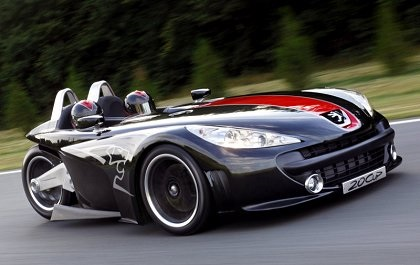
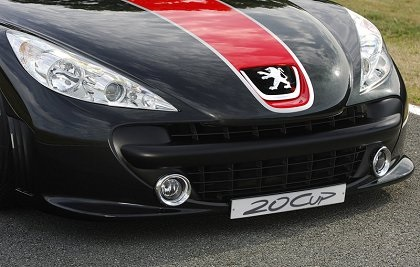
The 2005 Peugeot 20Cup Concept was a bold and imaginative experiment that blurred the lines between a car and a motorcycle. Built as a reverse trike in the “tadpole” layout—with two wheels at the front and one at the rear—it combined the front end of a Peugeot 207 with a motorcycle-style tail. Made from a lightweight carbon fiber structure, the 20Cup featured a two-seat open cockpit and striking, low-slung proportions that gave it a futuristic look.
Under the hood was a compact yet powerful 1.6-liter turbocharged inline-four engine, jointly developed by Peugeot-Citroën (PSA) and BMW. Producing 170 horsepower and 240 Nm of torque, this engine gave the tiny trike plenty of punch. Paired with a 6-speed sequential gearbox operated via paddle shifters, the 20Cup was designed for quick responses and sharp performance. With a curb weight of just 500 kg, it had a better power-to-weight ratio than the much heavier Dodge Viper SRT-10, despite the Viper’s massive 8.3-liter V10.
The 20Cup’s single rear wheel had to be extremely wide to help stabilize the vehicle, as it lacked the fourth contact point found in traditional cars. Its 377 mm rear tire was unusually large—even by supercar standards. The front-wheel drive layout, combined with double wishbone front suspension, gave the concept sharp handling characteristics, although the driving dynamics of such a setup would likely be very different from a conventional sports car.
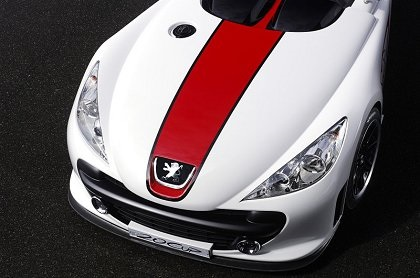
Inside, the 20Cup was just as futuristic. The steering wheel had a built-in display that could show not only speed and indicators, but also graphs of longitudinal and lateral G-forces. While some of the interior tech was purely experimental, other design cues—like the shape of the headlights, hood, and overall stance—hinted at what would soon appear in production models like the Peugeot 207.
Ultimately, the 20Cup wasn’t meant for the road, but it did show Peugeot’s creative side and served as a platform to showcase new engine technology, lightweight materials, and bold design thinking. It was a performance-focused concept that offered a glimpse into Peugeot’s future design and engineering direction.






Comments