
Every Concept Car of 2007

In 2007, concept cars were pulling the industry in several directions at once. Manufacturers experimented with compact crossovers, high-performance coupes, hydrogen fuel cells, diesel-electric hybrids, plug-in technology and unconventional city vehicles. Some proposals anticipated cars that reached showrooms a year or two later; others were ambitious one-offs that never moved beyond a motor-show stand or a designer's model.
This alphabetical Story Cars archive brings together 239 documented 2007 concept vehicles, prototypes, research cars, coachbuilt specials and design studies from major international exhibitions and smaller regional programs. Where a vehicle was a scale model, a customized production-based show car or an early engineering prototype, its description says so. Published outputs, dimensions and production plans are treated as manufacturer claims unless independently verified.
2007 Abarth Grande Punto esseesse Prototype
Abarth used the 2007 Frankfurt show to preview an uprated Grande Punto hot hatch under the revived esseesse name. The package combined the turbocharged 1.4-liter petrol engine with revised suspension, larger brakes, sport wheels and distinctive trim. It was designed as an upgrade route for buyers of the standard Abarth rather than a new small-car platform. Subsequent dealer-installed esseesse kits brought parts of the proposal into customers' hands.

2007 AC Schnitzer BMW Z4 Profile Concept
AC Schnitzer developed the Z4 Profile as a special-bodied BMW roadster demonstrating how a more dramatic exterior could be built around existing Z4 mechanicals. Extensive reshaping, a low nose, prominent rear treatment and bespoke body components made it more than a conventional wheel-and-exhaust package. The project belonged to the tuner and coachbuilder scene, not BMW's factory concept program. Its technical foundation remained a production-derived Z4.

2007 AC Schnitzer GP3.10 Concept
The GP3.10 shown at Frankfurt was a heavily reworked MINI Cooper S developed for high performance while using liquefied petroleum gas. Its turbocharged engine was retuned for alternative fuel, and the body featured wide wheel arches, a substantial aerodynamic kit and enlarged wheels. AC Schnitzer used the car to show that unconventional fuels could be paired with serious tuning. The claims belonged to a one-off demonstrator rather than a homologated MINI production model.

2007 Acura Advanced Sports Car Concept
Acura revealed this front-engined grand-tourer study at the Detroit auto show as a possible direction for an eventual NSX successor. A low roof, elongated bonnet and wide rear track replaced the original NSX's familiar mid-engine proportions. Honda discussed a high-performance V10 and its Super Handling All-Wheel Drive system but did not establish a finalized production specification. The project ultimately did not become the later mid-engined NSX, which followed a different engineering route.

2007 Aptera Typ-1 Prototype
Aptera unveiled its striking three-wheeled Typ-1 in November 2007 as an attempt to slash road-car energy consumption through extreme aerodynamic efficiency. The enclosed two-seat cabin sat within a teardrop body supported by two front wheels and one rear wheel, with a narrow track at the tail and wheel fairings outside the passenger shell. Aptera described proposed battery-electric and hybrid versions, but specifications and sales projections were developmental. This was the early prototype of the original Aptera program, not the company's much later production-intent design.

2007 Artega GT Fisker Coupe Prototype
The first Artega GT prototype debuted at Geneva in March 2007, with a compact two-seat coupe body designed by Henrik Fisker for German supplier paragon. The concept packaged a Volkswagen-derived 3.6-liter V6 in a mid-engine layout with a low roof and broad rear shoulders. An aluminum spaceframe and lightweight body panels were intended to hold curb weight near 1,100 kilograms. A fully drivable development version followed at Frankfurt. The GT later reached limited production, but the Geneva presentation was a genuine 2007 prototype debut.

2007 Aston Martin V12 Vantage RS Concept
Aston Martin created the V12 Vantage RS by fitting a powerful twelve-cylinder engine into the compact Vantage coupe package. Revealed in December 2007, the prototype used a 6.0-liter V12 associated with the company's motorsport activities, with extensive carbon-fiber components and uprated suspension and brakes. Its purpose was to test the idea of a smaller, exceptionally powerful Aston Martin. A production V12 Vantage followed, but with its own engineering and specification.

2007 Audi Cross Cabriolet quattro Concept
Unveiled at the Los Angeles show, Audi's Cross Cabriolet quattro merged the higher driving position of an SUV with a four-seat convertible body. The concept used a soft roof, frameless side windows and quattro all-wheel drive, while its diesel powertrain suggested substantial torque rather than outright sports-car performance. Design features previewed the company's coming Q5 crossover. Audi never put this open-top crossover into regular production.

2007 Audi Cross Coupé quattro Concept
Audi introduced the Cross Coupé quattro at Shanghai as a compact premium-crossover design study. The four-door body mixed a sloping roof with high ground clearance, a wide single-frame grille and pronounced shoulder lines. Its proposed 2.0-liter TDI engine drove through a quattro system, and the concept demonstrated adjustable driving characteristics. It informed the styling and packaging of the later Audi Q5, although the show car itself was not a production prototype in every detail.

2007 Audi Metroproject quattro Concept
The Metroproject quattro appeared at the Tokyo Motor Show as an early look at Audi's coming A1 supermini. Its three-door hatch body used a broad grille and strong wheel arches to make a small car look firmly part of the Audi range. A turbocharged petrol engine drove the front wheels while an electric motor could assist at the rear, creating an unconventional form of hybrid all-wheel drive. The production A1 used a much simpler conventional layout.

2007 Audi TT clubsport quattro Concept
Audi premiered the first TT clubsport quattro at the 2007 Wörthersee gathering as a radical speedster built around the second-generation TT. It discarded the normal roof and front pillars in favor of a very low wraparound screen, twin rear humps and broad roadster shoulders. A highly tuned turbocharged 2.0-liter four-cylinder was associated with the project, while quattro all-wheel drive remained part of its identity. The more developed 2008 version was a separate revision, not the original debut.

2007 Audi Virtuea Quattro RoboCar Design
Audi's California design studio entered the Virtuea Quattro in the Los Angeles RoboCar 2057 challenge. The computer-rendered proposal imagined a hydrogen-powered central vehicle that could project different holographic exterior forms. Its changing appearance was a speculative design feature, not a demonstrated physical body system. The project explored personal identity and autonomous transport rather than disclosing a production-ready chassis, battery, fuel-cell rating or road-test performance.

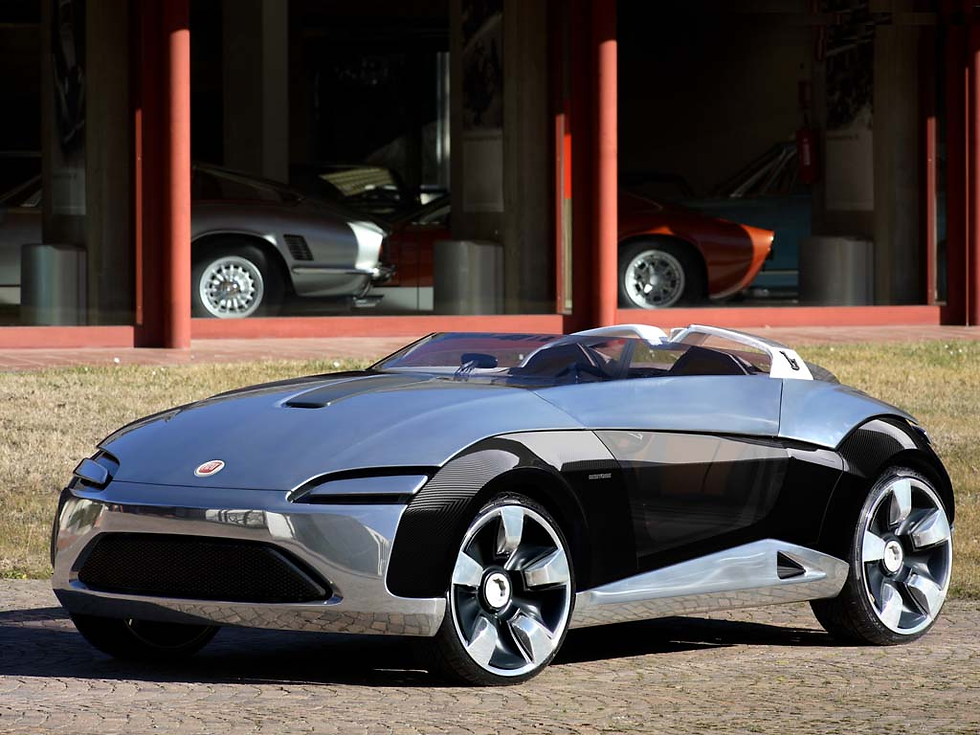
2007 Bertone Barchetta Concept
Bertone's Barchetta celebrated the coachbuilder's anniversary at the 2007 Geneva show with a compact open two-seat body. It used a Fiat Panda-based foundation, but low sides, a minimal windscreen and carefully shaped exterior surfaces gave it proportions far removed from an ordinary city car. The styling linked Bertone's early coachbuilding tradition to a modern small-car platform. It remained a design exercise rather than a Fiat-backed production program.
2007 BMW Concept 1 Series tii
BMW showed the Concept 1 Series tii at Tokyo as a lightweight motorsport-themed interpretation of its new 1 Series coupe. A contrasting bonnet, aerodynamic details, revised seats and use of lightweight materials emphasized track-day priorities. BMW did not present it as a fully certified new powertrain model, and it should not be confused with the later 1 Series M Coupe. The study helped establish the sporting potential of the compact rear-wheel-drive platform.
2007 BMW Concept CS
The Concept CS debuted at the Shanghai Motor Show as a four-door luxury sports fastback. Its long wheelbase, sweeping roof, slender lighting and aggressive kidney grilles proposed a more exclusive direction above BMW's established sedans. The four-seat interior emphasized a dramatic center console and high-grade materials. BMW investigated the possibility of a production derivative, but the program was cancelled. The CS remains an important example of BMW's late-2000s grand-tourer ambitions.
2007 BMW Concept X6
BMW introduced Concept X6 at Frankfurt, combining the height and all-wheel-drive architecture of an X-series SUV with a markedly descending coupe-style roofline. The five-door study previewed a new body style BMW called a Sports Activity Coupe. Its broad rear shoulders, high beltline and sloping hatch carried into the production X6. Unlike a purely speculative concept, it was a close preview of a model that reached showrooms the following year.
2007 BMW Concept X6 ActiveHybrid
BMW also demonstrated an ActiveHybrid application of the X6 idea in 2007. The prototype combined a petrol engine with an electric-drive system intended to save fuel under light loads while supporting stronger acceleration. Its distinctive powertrain was the point of the exhibit rather than an entirely different X6 body design. BMW subsequently developed the X6 ActiveHybrid for production, but the 2007 vehicle should be treated as an early hybrid engineering concept with development-stage specifications.
2007 BMW M3 Concept
The Geneva BMW M3 Concept previewed the E92-generation high-performance coupe before its production debut. It carried widened wheel arches, deep bumper openings, a carbon-fiber roof and characteristic M exterior details. The program centered on a naturally aspirated high-revving V8, a notable change from the straight-six used by the preceding M3. The Geneva car was a near-production design prototype, not a separate exotic sports-car program.
2007 Buick Enclave Black Platinum Concept
Mitek Corporation developed the Black Platinum Enclave for Buick's 2007 SEMA display. Its dark color-shifting finish, lowered suspension and 20-inch TIS wheels gave the three-row crossover a more aggressive street presence. Conventional exterior door handles were removed, with remote-operated doors replacing the ordinary latch presentation. The cabin carried blue leather, metal trim and a reported 4,900-watt MTX audio installation. It remained a one-off accessories and audio showcase on production-based Enclave mechanicals, separate from Buick's Urban CEO and UpTown customs.
2007 Buick Enclave UpTown Concept
Rick Bottom Designs created the Buick Enclave UpTown for the 2007 SEMA Show, dressing the family crossover in a two-tone white-chocolate-pearl and cocoa-metallic exterior. Its revised ride height, prominent 22-inch MOMO wheels and extended chrome accents were balanced by a leather-and-wood interior. A roughly 2,000-watt Eclipse multimedia and navigation system transformed the three-row cabin into a rolling entertainment space. UpTown demonstrated a luxury customization direction; it had no independent chassis or experimental engine and was a separate build from the Black Platinum and Urban CEO Enclaves.
2007 Buick Enclave Urban CEO Concept
Buick and former basketball player Jerome Williams collaborated on the Enclave Urban CEO for the 2007 SEMA Show. White-opal paint, 24-inch wheels, suede interior accents and LED lighting targeted high-end personal transportation rather than off-road capability. Its custom console, multiple video monitors and a roof-mounted satellite communications installation emphasized entertainment and connectivity. The work was carried out around the regular three-row Enclave architecture and did not represent a newly engineered production model. It was one of three distinct Enclave customs Buick officially presented that year.
2007 Buick Riviera Concept
Developed by GM's Pan Asia Technical Automotive Center, the Riviera debuted at Shanghai as a dramatic gullwing-door luxury coupe. Its elongated LED lighting, broad waterfall grille and low roof translated elements of classic Riviera coupes into a contemporary Chinese-designed study. GM said the platform could accommodate a hybrid system but did not certify a specific production drivetrain. The 2007 Riviera became an influential styling showcase without entering series production.
2007 Cadillac CTS Sport Concept
Cadillac prepared the CTS Sport as a 2007 SEMA show vehicle to emphasize the athletic potential of its newly redesigned sports sedan. Its low stance, aerodynamic trim, custom wheels and upgraded chassis parts reflected a factory-supported customization approach rather than a new Cadillac platform. The underlying rear-wheel-drive CTS architecture and mainstream powertrain stayed central. The car was a one-off appearance study, not a separate dealer-sold model with certified performance figures.
2007 Cadillac Escalade Sport Concept
Cadillac's Escalade Sport was a 2007 SEMA interpretation of the full-size luxury SUV with a lower, darker performance-oriented presentation. The custom build introduced more assertive body styling, large wheels and upgraded interior features without abandoning the regular Escalade's truck-based mechanical foundation. It was designed to demonstrate customization possibilities and the popularity of premium SUVs at tuner shows. The name did not represent a separate new-production Escalade architecture.
2007 Changan CV8 Concept
Changan presented the CV8 at Auto Shanghai as an original midsize passenger-car proposal. Contemporary reporting positioned it as part of the company's effort to build a stronger domestic-brand sedan range instead of concentrating on licensed vehicles and small cars. Its smoothly styled body was intended to communicate a more upscale direction. Public technical details were limited, so a precise engine output or platform specification should not be treated as established for the show vehicle.
2007 Changfeng Feibao CT5 Concept
Changfeng introduced the Feibao CT5, also described as the Flying Leopard CT5, at the January 2007 Detroit motor show. The concept was a pickup-truck prototype rather than the passenger car suggested by some translated accounts, extending the Chinese company's work beyond its established Liebao SUVs. Contemporary coverage described the project as a functional engineering vehicle, with production planned for a later date. It should be distinguished from the older CS7 and UU-CT3 ideas that Changfeng had already introduced in Beijing in 2006.
2007 Changfeng Liebao CS6 Detroit Prototype
Changfeng presented a road-oriented version of its Pininfarina-styled Liebao CS6 SUV during the 2007 Detroit motor show. The vehicle drew on Mitsubishi Pajero technology but showed the manufacturer refining a large crossover body for possible wider international sales. It followed the earlier CS6-Y design study displayed in Beijing in 2006, so the 2007 record refers specifically to the subsequent Detroit prototype, not the first unveiling of the entire CS6 design family. The production vehicle underwent further simplification before domestic release.
2007 Changfeng Rhombus Concept
Changfeng's unusual rhombus-wheel-layout concept was included in the manufacturer's 2007 Detroit presentation. The unconventional arrangement emphasized experimental packaging and maneuverability rather than familiar four-corner vehicle design. Little independently confirmed engineering data survives for the show exhibit, and reports do not establish production feasibility or normal roadworthiness. Its inclusion records a genuine design experiment from Changfeng's broad five-concept American motor-show appearance.
2007 Chery A5 BSG Hybrid Prototype
Chery demonstrated an A5 BSG hybrid development sedan at the 2007 Shanghai Auto Show. The BSG system used a belt-driven starter-generator, enabling engine stop-start operation, electricity generation and limited torque assistance without the complexity of a full electric-drive axle. Chery positioned the prototype as a practical way to reduce urban fuel consumption while retaining the regular A5 sedan's petrol engine and familiar packaging. It was an engineering demonstration of mild-hybrid technology, not a separately styled concept body or a confirmed mass-production specification.
2007 Chery A6CC Concept
Chery's A6CC was unveiled at the Shanghai show as a four-seat coupe proposal with European-influenced proportions. The manufacturer described both a closed coupe and a folding-soft-top interpretation, along with proposed 3.0-liter V6 and turbocharged 2.0-liter four-cylinder engine options. Its long doors, sloping roof and two-row layout separated it from Chery's mainstream sedans. Those engine configurations were development intentions, not independently tested specifications for a road-legal series model.
2007 Chery Eastar Fuel Cell Prototype
Chery showed an experimental fuel-cell version of its Eastar, also known as the Oriental Son or Dongfangzhizi, during the 2007 Shanghai exhibition. The conventional midsize sedan body disguised a research powertrain intended to demonstrate hydrogen-to-electric propulsion. It belonged to the company's wider display of fuel-cell, biodiesel and hybrid technologies during the show. Contemporary public information does not establish a reliable finished-road-car production rating, so the vehicle is best documented as a running-development or display prototype rather than as a commercially certified hydrogen sedan.
2007 Chery Shooting Sport Concept
Known in some Chinese coverage as the A2 Shooting Sport, this Shanghai concept combined a three-door coupe profile with the cargo versatility of a wagon. A long glasshouse, rounded body and pronounced rear hatch created an early shooting-brake interpretation for Chery. Its principal innovation was its crossover body style rather than a documented exotic powertrain. Although period reporting discussed possible production, the original 2007 show-car design did not enter regular manufacture unchanged.
2007 Chery Tiggo 6 Concept
Chery presented the Tiggo 6 at Shanghai as a larger five-door SUV concept above its existing compact utility vehicles. Period manufacturer material described intelligent all-wheel drive and possible 3.0-liter V6, turbocharged 2.0-liter petrol and 1.9-liter diesel engines. The proposals were development configurations rather than demonstrated production combinations. The car showed Chery's interest in a more sophisticated, higher-priced SUV segment, but did not launch as a direct series-production Tiggo 6.
2007 Chevrolet 1934 Coupe E85 Hot Rod Concept
General Motors brought a 1934 Chevrolet-inspired hot rod to SEMA in 2007, combining vintage exposed-wheel styling with a modern ethanol-powered engine. Its turbocharged 2.0-liter Ecotec four-cylinder was developed for E85 fuel and a claimed output near 500 horsepower, replacing the large traditional V8 many hot rods would use. Deeply channeled bodywork, a chopped roof and oversized rear tires made it a striking showpiece. The chassis and body were custom-built, not a restored stock 1934 Chevrolet.
2007 Chevrolet Beat Concept
The Beat was one of three small-car concepts Chevrolet introduced at the New York Auto Show. The compact three-door hatch used oversized lighting, an aggressive front grille and strong side sculpting to make inexpensive urban transport look sporty. GM canvassed public preference among Beat, Groove and Trax before choosing a production direction. The Beat's proportions and design language strongly influenced the later Chevrolet Spark sold in multiple global markets.
2007 Chevrolet Camaro Convertible Concept
Chevrolet followed its 2006 hardtop Camaro show car with a roof-down convertible concept at Detroit in January 2007. The retro-inspired shape retained the long bonnet, broad rear haunches and low beltline while exposing four passenger seats. It previewed the open Camaro that would eventually join the production range. This was a distinct 2007 show build, not a new debut for the original 2006 Camaro coupe concept.
2007 Chevrolet Corvette C6RS E85 Concept
Jay Leno and collaborators showed the Corvette C6RS at SEMA in 2007 as a dramatically modified C6 intended to demonstrate high performance on ethanol fuel. A large 8.2-liter V8 burning E85 replaced the normal Corvette engine and was associated with roughly 600 horsepower. The wide carbon-fiber body, custom wheels and aggressive aerodynamics distinguished it from factory production Corvettes. It was a special tuner-and-celebrity show build rather than a new Chevrolet Corvette model.
2007 Chevrolet Groove Concept
The Groove debuted in New York with a tall, near-vertical small-car body inspired in part by utility vehicles. Its boxier shape contrasted sharply with the sportier Beat and crossover-styled Trax displayed alongside it. GM used all three concepts to test customer reactions to possible inexpensive global Chevrolet models. The Groove remained a styling study; its distinctive upright packaging did not enter production in the form shown.
2007 Chevrolet HHR Panel SEMA Edition
Chevrolet presented a separate HHR Panel SEMA Edition in 2007 alongside the more heavily modified HHR Panel SS concept. Based on the cargo-oriented HHR Panel body, the show vehicle highlighted how commercial buyers and enthusiasts could personalize its blank rear side panels, trim, wheels and other factory-supported accessories. The vehicle's basic front-engine, front-wheel-drive small-car package remained recognizable. Unlike the performance-oriented SS proposal, the SEMA Edition principally explored appearance and utility; the two show cars should not be combined into one entry.
2007 Chevrolet HHR SS Panel Concept
Chevrolet displayed the HHR SS Panel concept at the 2007 SEMA show, marrying the windowless cargo body of the HHR Panel with the performance-focused SS treatment. The modified wagon featured sportier exterior detailing and a turbocharged-engine theme appropriate to the SS range. It demonstrated how a small commercial-style vehicle could be adapted into an enthusiast-oriented specialty model. It was a factory show build rather than a separate clean-sheet concept platform.
2007 Chevrolet Silverado Country Music Concept
Chevrolet developed a country-music-themed Silverado HD show truck for the 2007 SEMA exhibition. Special cabin appointments, audio equipment and decorative details catered to the lifestyle appeal of a heavy-duty pickup, with the usual large cargo bed and body-on-frame construction retained. It was an accessories-and-design exhibit rather than an experimental electric or diesel-hybrid truck. The concept should be distinguished from ordinary Silverado trim packages and other 2007 Chevy SEMA trucks.
2007 Chevrolet Silverado Good Morning America Edition
Chevrolet included a Silverado Good Morning America special build in its official 2007 SEMA vehicle lineup. The production-based pickup was prepared as a promotional custom, rather than as a clean-sheet mechanical prototype, to show how truck appearance and convenience features could be personalized. Details of its exact engine tune and individual aftermarket components are not consistently documented, so specifications should not be borrowed from other Silverado show vehicles. Its separate presentation matters mainly to a complete historical account of Chevrolet's extensive 2007 SEMA program.
2007 Chevrolet Silverado HD Z71 Concept
The HD Z71 Concept shown in Chevrolet's 2007 SEMA program highlighted off-road equipment for its heavy-duty pickup family. A lifted-looking body, aggressive tires, protective trim and special wheels gave the truck a more rugged stance than the showroom work-truck specification. Its basic architecture remained that of a conventional body-on-frame Silverado HD, with the focus on appearance and accessory possibilities. It did not announce a clean-sheet pickup platform.
2007 Chevrolet Silverado Major League Baseball Concept
The Silverado Major League Baseball Concept was one of Chevrolet's themed 2007 SEMA builds. Based on a full-size crew-cab pickup, it combined special baseball-themed graphics and interior detailing with a cargo-bed entertainment arrangement intended for tailgating. The rear area could be used as a viewing and social space rather than simply a load box. Chevrolet treated it as a demonstration of lifestyle customization and integrated accessories, not a new truck platform or an experimental drivetrain. It was distinct from the Country Music and heavy-duty Z71 Silverados shown in the same program.
2007 Chevrolet Suburban Z71 Diesel Concept
At SEMA in 2007, Chevrolet presented a Suburban Z71 diesel concept combining a full-size, three-row SUV body with the idea of strong diesel towing torque. Off-road Z71 styling, custom tires and a rugged exterior treatment reinforced its utility positioning. The project explored customer demand for a diesel Suburban, but it was a show vehicle and not proof that the package entered normal retail production. Specific future engine and emissions figures were development proposals.
2007 Chevrolet Tahoe Tuner Concept
Chevrolet listed a Tahoe Tuner among its official 2007 SEMA vehicle debuts. The full-size, body-on-frame SUV was used as a canvas for street-oriented aftermarket styling and accessory ideas rather than as an entirely new utility vehicle. Changes focused on presentation, stance and equipment around Tahoe's established architecture. Because a different Tahoe Street Tuner had already appeared at the 2006 SEMA Show, the two must not be conflated: the 2007 vehicle belongs here only as the separately identified 2007 show build, without transferring the older vehicle's published specifications to it.
2007 Chevrolet Trax Concept
Chevrolet's Trax was the third member of its trio of 2007 New York mini-car designs. Raised suspension, protective lower-body details and a short crossover profile suggested rough-road practicality in a very small package. The front-wheel-drive urban-car idea was distinct from the tall Groove and low Beat, allowing GM to test different market preferences. The Trax name was later reused on a production crossover, but that vehicle was not a direct production version of this concept.
2007 Chevrolet Volt Concept
The original Volt premiered in Detroit as GM's high-profile extended-range electric-car experiment. A large rechargeable battery supplied most everyday propulsion, with an onboard petrol engine intended to generate electricity for longer journeys. Its low-slung angular four-door body differed substantially from the eventual production Volt. The 2007 concept's projected battery range and efficiency were development targets; it nonetheless marked a decisive public commitment to plug-in electric technology at General Motors.
2007 Chevrolet Volt Fuel Cell E-Flex Concept
At the April 2007 Shanghai Auto Show, GM unveiled a hydrogen fuel-cell version of its newly introduced Volt electric concept. Unlike January's Detroit car, which used a combustion-engine generator for extended range, this E-Flex configuration paired GM's fifth-generation fuel-cell stack with lithium-ion energy storage and plug-in capability. GM discussed a target range of roughly 300 miles, supplied largely by onboard hydrogen converted to electricity. The shell resembled the original Volt concept, but the Shanghai show car represented a distinctly different power-generation arrangement within the same architecture.
2007 Chrysler Nassau Concept
The Nassau appeared at the 2007 Detroit show as a four-door fastback influenced by the Chrysler 300's architecture. Its long wheelbase, narrow rear glass and tapered hatch created more sporting proportions than a conventional executive sedan. The interior combined four individual seats with bold dashboard forms and a large center tunnel. Chrysler did not present the Nassau as a new experimental engine program, and the distinctive fastback body was not approved for series production.
2007 Citroën C-Cactus Concept
Citroën unveiled C-Cactus at Frankfurt as an unconventional low-cost, low-consumption family-car study. By simplifying the interior, reducing the number of individual trim components and using recycled materials, the designers sought to lower manufacturing complexity. The compact crossover-style body incorporated a diesel-hybrid concept drivetrain. C-Cactus was about material efficiency and production methods as much as fuel economy; it was not a direct production model, despite influencing Citroën's later design thinking.
2007 Citroën C5 Airscape Concept
The C5 Airscape debuted at Frankfurt as a large four-seat cabriolet concept previewing the design direction of the next-generation C5. Its long bonnet, pronounced shoulder line and retractable folding roof created an elegant open-top alternative to the sedan. Citroën also discussed advanced traction and emissions technologies for the study. No direct C5 Airscape convertible reached showrooms, but its front-end and body surfacing anticipated the subsequent production sedan and wagon.
2007 Citroën Cruise Crosser Concept by Sbarro
Sbarro created the Cruise Crosser in 2007 as a striking six-wheel adaptation of Citroën's C-Crosser SUV. An extended rear section and additional axle transformed the normal five-door crossover into an expedition-themed special, displayed at Geneva. The six-wheel layout and complex rear structure were the defining features, not an announced new factory chassis. It is also referred to as the Sbarro C-Cruise Crosser in contemporary records, but represents the same physical project.
2007 Concept Climax Sports Car
The Climax was a British lightweight sports-car concept associated with a small independent development team. Its compact open body and simple mechanical approach emphasized low mass and direct driving enjoyment rather than an oversized engine. The project drew attention in 2007 as a possible low-volume sports car, but did not become a mainstream manufacturer program. Published technical details vary by version and proposal, so it should not be described as a fully homologated volume-production car.
2007 Daewoo G2X Seoul Concept
GM Daewoo displayed the G2X at the 2007 Seoul Motor Show as a compact rear-wheel-drive roadster preview for Korean customers. Closely related to the Saturn Sky and Opel GT, it used a conventional front-engine, two-seat layout with a folding soft top. The car was near production rather than a unique futuristic design, and its existence helped introduce a sporty brand image beyond Daewoo's mainstream sedans. It should not be credited as the original design of the GM Kappa platform.
2007 Daewoo L4X Concept
The Daewoo L4X appeared at Seoul in 2007 as a long executive sedan proposal tied to GM Daewoo's planned premium model range. Its large rear-drive body, formal grille, spacious rear seating and restrained luxury styling contrasted with the marque's smaller economy vehicles. The program shared technical thinking with Holden-derived sedans, making it closer to a production preview than a radically new engineering research vehicle. The L4X name itself was not carried directly into the finished retail lineup.
2007 Daihatsu D-Compact X-Over Concept
Designed with Italdesign, the D-Compact X-Over was shown at Geneva as a small SUV-like vehicle emphasizing cabin openness and a curved windscreen that continued into the roof. Compact exterior dimensions and a high seating position were intended to suit dense urban markets without sacrificing versatility. Its body was a departure from conventional boxy mini-4x4 design. Daihatsu did not release it as an independent production nameplate, although ideas from the design were transferable to later crossovers.
2007 Daihatsu HSC Concept
Daihatsu's HSC was a Tokyo Motor Show compact-car study combining a tall practical cabin with measures aimed at improving fuel economy. The concept emphasized efficient packaging and low weight instead of large-car power. Its smooth body and everyday-use proportions illustrated the maker's ongoing interest in making small vehicles more spacious. Daihatsu did not establish the HSC as a separate retail model with fixed certified performance figures.
2007 Daihatsu Mud Master-C Concept
Unveiled in Tokyo, the Mud Master-C was a tiny all-wheel-drive commercial-utility concept built for work in narrow rural spaces. Its tall cab, short overhangs, high clearance and modular cargo equipment suggested applications in farming, mountain rescue and field maintenance. The vehicle's compact dimensions and unusual off-road appearance distinguished it from normal kei vans. Daihatsu treated it as a tool-oriented research vehicle rather than a confirmed production truck.
2007 Daihatsu OFC-1 Concept
The OFC-1 debuted at the Tokyo Motor Show as a lightweight two-seat open sports-car study closely linked to the Daihatsu Copen's size and character. It used a low windscreen, short rear deck and retractable hardtop idea while investigating compact, efficient powertrains. Its small footprint reflected the Japanese kei sports-car tradition. The concept did not enter production as a separate OFC-1 model, but explored how the roadster formula could be updated.
2007 Diatto OttoVu Zagato Concept
Zagato revived the historic Diatto name with the OttoVu coupe unveiled around the 2007 Geneva show. Its long bonnet, compact cabin and double-bubble roof linked modern grand-touring proportions to the coachbuilder's earlier sports cars. The proposal was associated with a V8 engine and ambitious performance positioning, but the public car was a limited-build design project, not an established production series. The design remains notable for its unusual modern Italian coachbuilt identity.
2007 Dodge Demon Roadster Concept
Dodge presented Demon at Geneva as a compact rear-wheel-drive two-seat roadster. A short wheelbase, sculpted front wings and simple fabric-roof idea targeted the affordable sports-car class rather than the brand's much larger muscle cars. The concept used a four-cylinder engine proposal and conventional lightweight-roadster packaging. Although the show car looked feasible, the Demon never entered production; Dodge used the name later for a very different Challenger performance model.
2007 Dodge Viper SRT10 Mopar Concept
This Detroit show car previewed a catalogue of Mopar performance upgrades for Dodge's Viper SRT10. The modified roadster featured track-oriented aero pieces, suspension and brake components rather than an entirely new chassis. Its significance was to demonstrate how factory-backed accessories could sharpen a production supercar. Since it was a specifically identified 2007 concept display, it belongs among show builds, but not among clean-sheet prototype models.
2007 EDAG LUV Concept
Engineering firm EDAG unveiled the Luxury Utility Vehicle, or LUV, at Geneva as an unusual upscale pickup and SUV interpretation. The concept used a Mercedes-Benz GL-Class-derived technical foundation with Brabus involvement and conspicuous yacht-inspired design details, including wood elements. Its open rear load area and high-riding luxury body set it apart from standard German SUVs. EDAG used the vehicle to demonstrate its ability to develop complete specialist bodies for outside manufacturers.
2007 Faurecia Tatra 603 Premium Attitude Concept
French automotive supplier Faurecia unveiled Premium Attitude at Los Angeles in 2007 using the classic Tatra 603 as an unusual showcase for modern cabin systems. A restored or heavily reworked streamlined vintage body concealed contemporary seats, trim materials, electronics and adjustable interior functions. Choosing a rear-engined Czech classic made the contrast between historic exterior and modern interior especially striking. It was a supplier technology-and-design demonstrator, not a new production Tatra model.
2007 Fiat Panda Aria Concept
Fiat showed Panda Aria at Frankfurt as a low-emissions version of its small hatchback. Its design centered on an efficient alternative-fuel powertrain and lightweight, lower-impact materials, including recycled or natural components. The recognizable Panda body made the environmental engineering easy to compare with an ordinary retail car. Aria was not a new vehicle class; it was a working-oriented demonstration of how existing city cars could be made more economical and resource-conscious.
2007 Fioravanti Thalia Concept
Italian design house Fioravanti introduced Thalia at Geneva as an unconventional interpretation of a family wagon. The passenger compartment emphasized greater comfort and usable headroom for rear-seat occupants, while the body silhouette deliberately broke from ordinary estate-car proportions. The project was primarily a packaging and industrial-design exercise; no verified high-performance engine specification was central to its presentation. Thalia remained a coachbuilder concept rather than a production model.
2007 Ford Airstream Concept
Ford's Airstream debuted in Detroit with a futuristic crossover body inspired by the American trailer manufacturer. A large side door and lounge-like interior emphasized flexible cabin space, while the proposed HySeries Drive combined rechargeable batteries with a hydrogen fuel-cell generator. Ford later demonstrated similar propulsion hardware in a drivable Edge research vehicle. Airstream itself remained a concept, with advertised range and efficiency values representing projected operation rather than regular road-test certification.
2007 Ford Edge HySeries Drive Prototype
Ford revealed the Edge HySeries Drive in Washington in January 2007 as a running plug-in hybrid and hydrogen fuel-cell research vehicle. The battery handled propulsion, while the fuel cell served as an onboard electricity generator; the architecture also permitted plug-in recharging. Ford cited approximately 25 miles of initial battery-only travel under its demonstration assumptions. This was separate from the more speculative Airstream styling concept and proved that the basic drivetrain arrangement could be made drivable.
2007 Ford Fusion Hydrogen 999 Prototype
Ford's Hydrogen 999 was a specially prepared Fusion sedan built for a hydrogen fuel-cell speed record at Bonneville in 2007. Engineers radically modified the powertrain and running gear to support a high-output fuel-cell racing system while maintaining recognizable Fusion bodywork. The car reached a recorded 207.297 mph in August 2007, illustrating what fuel-cell technology could achieve under specialized conditions. It was a land-speed research vehicle, not a customer-ready zero-emission Fusion.
2007 Ford Interceptor Concept
The Ford Interceptor appeared in Detroit as a full-size four-door American performance-sedan concept. Its tall grille, powerful shoulder lines and rear-wheel-drive proportions borrowed some cues from the Mustang while maintaining adult rear-seat accommodation. A 5.0-liter V8 powertrain proposal underscored its muscle-car identity. The car was a styling and market study rather than the preview of a subsequently launched Interceptor-badged sedan, although its design vocabulary influenced Ford's later large cars.
2007 Ford Verve Concept
The original Verve debuted at Frankfurt as a three-door supermini proposal previewing Ford's next-generation Fiesta. Its large lower grille, swept-back lighting and strongly sculpted sides brought Ford's kinetic-design language into a smaller segment. Practical front-wheel-drive packaging made it more production-oriented than many show sculptures. The concept successfully anticipated the sixth-generation Fiesta, although showroom versions used different trim, glass and lighting details.
2007 Ford Verve Five-Door Concept
Ford followed the Frankfurt three-door Verve with a distinct five-door body study at the Guangzhou motor show late in 2007. The added rear-door openings made the kinetic-design idea more practical for family buyers and global markets. The concept kept the rising waistline, bold front grille and compact hatchback proportions of the original. Both Verve show cars contributed to the design of the later Fiesta, but the five-door was a separate 2007 exhibit.
2007 GAC AEV Electric Concept
Guangzhou Automobile Group introduced the AEV at its home motor show as a battery-electric passenger-car study. It represented one of the group's first publicly displayed proposals for its own electric drivetrain, rather than a rebadged vehicle assembled through a joint venture. Details of battery chemistry, motor power and practical driving range were not independently established. The concept belonged to a broader 2007 display covering electric vehicles and hybrid propulsion.
2007 GAC AHEV Advanced Hybrid Concept
GAC's AHEV was an advanced hybrid research car displayed at the Guangzhou Auto Show in November 2007. The project demonstrated the group's electromagnetic-coupling hybrid-drive system, with a gasoline engine and electric propulsion coordinated through a transmission concept developed in-house. GAC also displayed its GEM hybrid powertrain hardware. The AHEV should be understood as an engineering demonstrator, not a retail-ready model with certified fuel-consumption figures.
2007 GAC Four-Door Coupe Concept
GAC displayed a four-door coupe design study at the 2007 Guangzhou show alongside its electric and hybrid prototypes. A long, low roofline and sedan-like passenger packaging presented an upscale styling direction for the company's own-brand vehicles. It was a separate body-design proposal from the AHEV hybrid demonstrator and the AEV electric study. Contemporary disclosures emphasized shape and brand development rather than a fully specified production engine or chassis.
2007 Geely KingKong II Concept
Geely's KingKong II was one of several styling studies displayed by the Chinese manufacturer at Auto Shanghai in 2007. Its compact four-door sedan proportions represented an evolution of the company's existing KingKong family, with revised surfacing and details previewing a more developed design language. The exhibit was a design-stage vehicle; powertrain and final production specifications were not conclusively stated in contemporary reports. It is distinct from the first-generation KingKong production sedan.
2007 Geely Meirenbao II Concept
At the 2007 Shanghai Motor Show, Geely displayed a second-generation Meirenbao sports-coupe study. The low-slung two-door body revisited Geely's earlier Beauty Leopard coupe with updated front-end graphics and an intended sportier image. It was a proposal for design evolution, not evidence that a second-generation production model subsequently reached dealers in the same form. Engine data for the original production coupe should not be carried over as if verified for this study.
2007 Geely TX4 Chinese-Market Prototype
Geely presented its Chinese-built TX4 black-cab project at Shanghai during 2007 as part of its partnership around the London-taxi design. The tall passenger cell, near-vertical windshield and accessible rear-seat packaging remained central to the concept. Unlike Geely's purely speculative sketches, the taxi program was tied to production and local assembly plans. This entry covers the early Chinese-market display vehicle rather than claiming the classic TX-series taxi was invented in 2007.
2007 Geely Vision II Concept
The Vision II at Auto Shanghai 2007 was a Geely sedan design study intended to show more refined body surfacing and a broader product ambition. It sat among several proposals covering sedans and coupes rather than launching as a mechanically independent new model. Production-feasible packaging and conventional internal-combustion layouts were more important than exotic technology. Available contemporary coverage does not firmly establish a unique engine rating or final transmission for the exhibit.
2007 GM-OnStar ANT RoboCar Design
GM and OnStar entered the 2007 Los Angeles Auto Show's RoboCar 2057 competition with ANT, a futuristic mobility proposal organized around three spherical Nanorb wheel units. The little machines could cooperate and communicate through a vehicle-to-vehicle network, imagining coordinated traffic movement without a conventional driver's seat. ANT was a speculative design presentation for life 50 years into the future, not a testable autonomous car. No real battery, power or range data were published.
2007 GMC Sierra Denali HD Concept
GMC displayed a Sierra Denali HD concept at SEMA in 2007, applying upscale Denali presentation to a heavy-duty pickup. Premium interior trim, custom body details, large wheels and an emphasis on towing capacity distinguished the proposal from a normal luxury light-duty truck. The concept explored a potential high-end work-and-travel market while retaining a conventional pickup frame and engine layout. It was not a completely different production chassis introduced in 2007.
2007 GMC Yukon All Terrain Concept
GMC's Yukon All Terrain debuted at the 2007 SEMA show as a more adventurous full-size SUV proposal. The vehicle retained the Yukon's long-wheelbase truck architecture but added off-road-oriented suspension, rugged tires, underbody protection and special equipment for travel beyond paved roads. Its design concentrated on the balance between premium SUV comfort and outdoor capability. The concept did not become a regular manufacturer-rated Yukon All Terrain series with identical parts.
2007 Great Wall i7 Concept
Great Wall displayed the i7, internally codenamed CH031, at Auto Shanghai in April 2007 as a small five-seat hatchback design preview. Its cab-forward proportions, wheels pushed toward the corners, wide grille and angular headlamps attempted to maximize room inside a compact footprint. The vehicle was related to the platform strategy that produced the Florid family, although it was promoted under a separate i7 concept identity. It was an exhibit and production-planning study rather than a verified retail model with finalized drivetrain ratings.
2007 Great Wall Peri SUV 4x4 Concept
Great Wall exhibited the Peri SUV, a four-wheel-drive crossover adaptation of its tiny city-car platform, at Auto Shanghai in April 2007. Compared with the regular Peri hatchback, the show vehicle carried a taller, more upright SUV-shaped body, extra ground clearance and rugged exterior details. A proposed 1.3-liter petrol four-cylinder and five-speed manual gearbox underpinned the compact four-wheel-drive mechanical layout. It was a new 2007 off-road-oriented prototype, unlike the ordinary Peri, Florid and Coolbear show vehicles whose initial concepts had already been introduced in 2006.
2007 Herpa New Trabant Design Model
German miniature-car maker Herpa displayed a proposed New Trabant concept model at the 2007 Frankfurt Motor Show. The idea reinterpreted the former East German Trabant's upright, simple body for a modern small-car revival and tested public response before a full-size engineering program existed. Crucially, the Frankfurt exhibit was a design and scale-model proposal, not a complete running new Trabant. Later efforts by other companies should not be backdated to this showpiece.
2007 Honda Accord Coupe Concept
Honda showed its Accord Coupe Concept at Detroit in January 2007 as a close preview of the next two-door Accord. The wide front grille, strongly raked windshield and muscular shoulders established the look of the upcoming American-market coupe. Honda indicated performance ambitions consistent with a V6-powered front-wheel-drive car, but the precise production driveline and trim were finalized later. It was a styling and packaging prototype rather than a novel experimental hybrid.
2007 Honda Accord HF-S Concept
Honda presented the Accord HF-S performance study at the 2007 SEMA show, using the contemporary Accord coupe as its foundation. The HF-S name referred to Honda Factory Performance, with aerodynamic body pieces, chassis changes, upgraded brakes and distinctive wheels showing a more aggressive factory-supported accessory direction. It was a show-car proposal rather than a separate mass-produced Accord variant. Its mechanical specification must not be conflated with the base coupe or a later tuner build.
2007 Honda Accord Tourer Concept
Honda introduced the Accord Tourer Concept at Frankfurt in 2007 to preview the next European Accord station wagon. Sharp front-end styling, a low roof and a sleek, wide rear hatch moved the practical estate away from the boxier shape of the outgoing version. Honda also highlighted its upcoming i-DTEC clean-diesel engine family, although the show car's mechanical details were not identical to every later retail variant. It was a genuine new 2007 debut rather than a repeat of the American Accord Coupe concept.
2007 Honda Civic Type R Racing Concept
Honda unveiled a racing-focused Civic Type R concept at the 2007 Tokyo Motor Show alongside the CR-Z and Puyo. The aggressive display car used competition-inspired aerodynamic bodywork and a stripped-back performance identity to demonstrate how the new-generation Type R could be adapted for circuit use. It was a distinct 2007 racing study, not the original road-going Civic Type R Concept, which debuted in 2006. Full race specifications should not be inferred from the regular production model.
2007 Honda CR-Z Concept
The CR-Z debuted at the Tokyo Motor Show as Honda's proposal for a compact hybrid sports coupe. It drew on the original CRX's sharply cut rear profile but replaced the older car's conventional engine concept with a small, efficient petrol-electric powertrain. The low nose, wide stance and distinctive rear glass created a much more radical show-car body than the later production CR-Z. Honda did not disclose complete homologated performance or economy figures for the original study.
2007 Honda Fit Daily Active Concept
Honda Access presented the Fit Daily Active at the Tokyo Auto Salon in January 2007 as a customized city-car proposal for technology-oriented younger buyers. External cameras and sensors were used to address blind spots, while LED running lamps and selectable cabin illumination helped make the small hatch feel more connected to portable electronics. The car retained normal Fit-sized front-drive packaging. It was an official accessory-division concept, not a clean-sheet drivetrain prototype.
2007 Honda Hot Wheels Racer Scale Design
Honda contributed a specially designed small-scale racer to the manufacturer-backed Hot Wheels program shown at the 2007 SEMA exhibition. Its exaggerated stance and proportions reflected toy-car aesthetics and a future-oriented sports-car silhouette rather than practical passenger packaging. The design is included as an automotive styling exercise shown in 2007, not as a drivable full-size Honda. Engine capacity, output and acceleration figures would be speculative for this model.
2007 Honda One to the Power of Four RoboCar Design
Honda's entry in the 2007 Los Angeles RoboCar 2057 Design Challenge was called One to the Power of Four, also described as Honda 14. The proposal imagined a four-passenger solar-assisted vehicle that could separate into four individual pods for different journeys, then rejoin for group travel. It explored the flexibility of a single vehicle becoming several transport units. The idea remained a speculative designer's visualization with no verified functioning separation hardware.
2007 Honda Puyo Concept
The Puyo at the Tokyo Motor Show was a small fuel-cell urban mobility study with a soft, translucent gel-like outer skin intended to feel safer and more approachable than ordinary sheet metal. A tall cabin, near-vertical glass and joystick-style control proposal maximized interior space within a tiny footprint. Honda treated its green powertrain and unusual exterior as a research design. It was not a production car with an established range or road-use certification.
2007 Honda S2000 CR Prototype
Honda used its Club Racer version of the S2000 in 2007 to show how the two-seat rear-wheel-drive roadster could be made more track-focused without changing its core layout. The development and promotional cars featured a rigid aerodynamic cover, sports suspension, bracing and reduced comfort equipment. The production S2000 CR was closely related, so this entry concerns the 2007 presentation-stage specification rather than calling it an unrelated concept. Honda's 2.2-liter four-cylinder remained the mechanical base.
2007 Honda Small Hybrid Sports Concept
Honda unveiled the Small Hybrid Sports Concept at Geneva in 2007 to explore whether low fuel use could coexist with an engaging, lightweight sports car. Designed by Honda's European operations, the compact two-door featured a rounded roof, short overhangs and dramatic side surfacing. A small petrol engine supported by electric drive was proposed, but complete engineering figures were not published as final tested specifications. The car was a design-led hybrid sports proposal, not the later production CR-Z.
2007 Honda Stream Exclusive Concept
Honda Access's Stream Exclusive appeared at the Tokyo Auto Salon in January 2007 as a premium interpretation of the practical Stream MPV. The designers removed part of the standard multi-row seating arrangement in favor of an airy rear lounge with leather seats, LED lighting and large audiovisual screens. Unlike a general styling facelift, the concept deliberately prioritized fewer, more comfortable passengers. The underlying Honda Stream platform remained conventional and production-derived.
2007 Honda Stream Hyper Sport Concept
Honda Access unveiled the Stream Hyper Sport at the January 2007 Tokyo Auto Salon to combine a sportier medium-size minivan exterior with interactive entertainment inside. Sculpted aero components, customized cabin equipment and individual audiovisual controls were the key changes over an ordinary Stream. The body was shaped to look more dynamic without replacing the entire MPV architecture. It remained a specialty accessories prototype, not a new Honda sports model with verified independent power output.
2007 Hummer H2 Safari Concept
The H2 Safari was a 2007 SEMA show vehicle that reworked the production Hummer H2 for open-air off-road use. Removed or simplified upper-body sections, roll protection and custom exterior equipment emphasized recreational driving over ordinary luxury-SUV packaging. The concept used established H2 four-wheel-drive mechanicals rather than an experimental powertrain. It was a specialty show build, not a manufacturer announcement of a standard dealer-available H2 variant.
2007 Hummer H3 Open-Top Concept
Hummer unveiled an open-roof version of the H3 at Detroit in 2007, with a large retractable soft-top panel spanning much of the passenger compartment. The compact H3's separate-frame platform and four-wheel-drive layout were retained, making this mainly a body and lifestyle concept. The open-air theme connected the smallest Hummer with the brand's rugged image. Unlike a conventional convertible, the study maintained substantial roof structure and upright SUV side glazing.
2007 Hummer H3R Off-Road Concept
The H3R was a special off-road-focused H3-based concept displayed in the 2007 SEMA scene. It used aggressive tires, raised suspension and custom expedition-style body details to demonstrate how far Hummer's compact SUV could be modified. The project prioritized trail clearance, traction and accessory packaging rather than an electric or radically different drivetrain. It was an exhibition build and should not be described as a separate H3 model sold in ordinary production numbers.
2007 Hyundai Accent Urban Assault Concept
Hyundai's 2007 SEMA program included the Accent Urban Assault, a three-door hatchback customized by Ernie Manansala. Its red-and-black paint, wide-body treatment and reshaped exterior panels transformed an inexpensive subcompact into a tuner show car. Momo sport seats and modified cabin trim reinforced the performance theme. The platform and small-car fundamentals remained production based; the vehicle was built to demonstrate appearance and component possibilities rather than to preview an independently engineered Accent generation. It was one of six Hyundai vehicles introduced at the same exhibition.
2007 Hyundai Azera VIP Luxury Tuner Concept
Street Concepts prepared a VIP Luxury Tuner edition of Hyundai's Azera sedan for the 2007 SEMA Show. The large front-wheel-drive four-door was given an upscale personalized look through exterior styling, custom wheels, interior detailing and an emphasis on executive-car comfort. Its appearance represented the VIP customization approach then popular in the aftermarket scene, rather than a manufacturer commitment to a new powertrain or body style. Hyundai displayed it alongside five other distinct customized vehicles, including an Accent, two Elantras, a Tiburon and a Veracruz.
2007 Hyundai Concept Genesis Coupe
Hyundai unveiled the rear-wheel-drive Concept Genesis Coupe at the Los Angeles Auto Show in November 2007. The show car wore orange paint, extensive carbon-fiber trim, flared wheel arches and a sculpted roofline above a 2+2 cabin. Its front-engine, rear-drive layout previewed a sports coupe intended to compete with established affordable performance cars. Hyundai discussed a future 300-horsepower-class V6, but the show car's exterior equipment was not identical to the later production Genesis Coupe.
2007 Hyundai Elantra INCUS Concept
Hyundai created the Elantra INCUS, short for Innovative Customization, as an in-house 2007 SEMA concept. The project explored how exterior details, interior trim, accessories and personal styling could change the identity of an ordinary compact four-door sedan. Rather than replacing its front-wheel-drive architecture with exotic mechanicals, the focus was on factory-aware customization around a widely available base car. It is a separate 2007 show vehicle from the five-door Elantra Touring Beach Cruiser and should not be counted as an alternate name for the same display.
2007 Hyundai Elantra Touring Beach Cruiser Concept
The Elantra Touring Beach Cruiser made its debut in Hyundai's six-vehicle 2007 SEMA collection. K-Daddyz built the custom five-door wagon with beach-inspired visual treatment, a distinctive paint scheme and unusually large wheels to explore a more lifestyle-oriented identity for a practical compact. Its core engine and front-wheel-drive engineering were secondary to the body and accessory work. The name refers specifically to this SEMA showpiece, not the later standard Elantra Touring sold to the public or Hyundai's separate INCUS sedan.
2007 Hyundai Genesis Sedan Concept
Hyundai's Concept Genesis sedan debuted in 2007 to signal a move into larger rear-wheel-drive luxury cars. The long bonnet, formal three-box body and upscale interior were a clear departure from the brand's mainstream front-drive saloons. Hyundai previewed a V8-capable powertrain and luxury equipment within a chassis aimed at established German and Japanese competitors. The production Genesis reached the market later with revised detailing; the 2007 exhibit was its early public design statement.
2007 Hyundai HND-3 Veloster Concept
The HND-3 Veloster arrived at the Seoul Motor Show in 2007 as a compact sports-hatch design developed by Hyundai's Korean design team. It used a low roof, large glass areas, pronounced wheel arches and a coupe-like cabin to mix hatchback practicality with a youthful performance image. A small front-drive engine layout was envisioned rather than a full supercar drivetrain. The design eventually informed the distinctive production Veloster, but its original show body was a separate proposal.
2007 Hyundai i-Blue Fuel Cell Concept
Hyundai presented i-Blue at Frankfurt in 2007 as a purpose-built hydrogen fuel-cell vehicle, not a gasoline SUV converted as an afterthought. The broad compact-crossover body was designed around the fuel-cell stack, hydrogen storage and electric drive components, while the passenger compartment emphasized everyday usability. Its proposed fuel-cell powertrain was part of Hyundai's developing third-generation technology. Claimed future range and performance targets were not equivalent to certified production specifications.
2007 Hyundai QarmaQ Concept
Created with GE Plastics and introduced at Geneva, Hyundai's QarmaQ was a crossover design study exploring extensive use of advanced plastics instead of conventional body metal and glass. The concept featured wraparound glazing-like polycarbonate panels, unusual door construction and a fluid body with a raised driving position. It demonstrated potential weight savings and new pedestrian-protection ideas. The QarmaQ was primarily a materials and styling experiment, not a production-ready crossover with a published final engine choice.
2007 Hyundai Tiburon Mobis Parts Expo Concept
Hyundai used the Tiburon Mobis Parts Expo show car at SEMA 2007 to demonstrate aftermarket components developed or promoted through its Mobis accessories organization. The compact front-wheel-drive coupe gained race-inspired appearance and handling changes, reinforcing the Tiburon's position as an accessible sport-compact tuning platform. The presentation centered on parts and customization rather than new vehicle architecture or a verified substantially uprated engine. It was a standalone member of Hyundai's six-vehicle SEMA lineup and not a renamed Veloster HND-3 design study.
2007 Hyundai Veracruz High-Tech Urban Escape Concept
Troy Lee Designs transformed Hyundai's new Veracruz crossover into the High-Tech Urban Escape for SEMA 2007. Its modifications included Eibach suspension components, upgraded Wilwood brakes, custom leather upholstery and multimedia equipment from Infinity. A Thule roof carrier added practical luggage capacity to an otherwise urban luxury and entertainment theme. The build retained the production-based crossover's basic packaging and all-wheel-drive positioning rather than proposing an original electric or hybrid drivetrain. Hyundai identified it as the first modified Veracruz displayed in its SEMA program.
2007 IED be-ON Concept
Students at the Istituto Europeo di Design's Turin program developed the be-ON as a futuristic urban mobility proposal exhibited at Geneva in 2007. The sculptural body focused on interior access, the connection between occupants and the surrounding city, and unconventional packaging. It was a full-scale design-model exercise arising from an automotive-design course, not a verified running prototype. Engine, speed and driving range figures should therefore not be attached to it without a technical source.
2007 Infiniti EX Concept
The EX Concept appeared at the 2007 New York International Auto Show as Infiniti's preview of a compact luxury crossover with a deliberately coupe-like roof. Sculpted shoulders, a long hood and a rear hatch packaged into a smaller footprint than the FX signaled the brand's move toward sportier urban SUVs. It used conventional front-engine performance-car engineering rather than a new hybrid layout. The subsequent EX35 production model retained much of the body concept while adding practical market-ready details.
2007 Italdesign Giugiaro Vad.Ho Concept
Giugiaro's Vad.Ho debuted in Geneva as a radical two-seat sports car with occupants arranged slightly offset within a very narrow cockpit. Its low, aircraft-like body and individual canopy glazing maximized aerodynamic drama, while rear-mounted propulsion was discussed using a hydrogen-powered V12 research idea associated with BMW technology. The show car's styling was the primary achievement; the mechanical package was exploratory rather than a validated roadgoing hydrogen sports car.
2007 Jaguar C-XF Concept
Jaguar launched the C-XF at Detroit in 2007 to demonstrate a clean break from its traditionally conservative sedan styling. A sweeping fastback roof, muscular front end, narrow lamps and a low dashboard made this executive-saloon study far more modern than the outgoing S-Type. A supercharged V8 was the performance reference for the prototype. Its appearance strongly influenced the production XF, although show-car proportions and cabin details were deliberately more extreme.
2007 Jeep Trailhawk Concept
The Trailhawk was a rugged open-air Jeep concept introduced in Detroit during 2007. Drawing on Wrangler running gear, it combined a long wheelbase, removable-roof appearance and high-clearance body with more road-car-like front styling. A diesel-powered off-road layout was proposed, with four-wheel drive at the center of its appeal. Unlike the later Trailhawk trim badge applied to production SUVs, this was a standalone concept body exploring a more refined but still capable Jeep.
2007 Karmann Volkswagen Polo Cabriolet Concept
German coachbuilder Karmann prepared a convertible interpretation of the Volkswagen Polo and displayed its proposal around the 2007 Frankfurt show. The project explored whether the small front-drive hatchback could be re-engineered into a compact open-top car with a folding roof and reinforced body shell. It was an independent engineering and packaging study made by a longstanding convertible specialist, not a Volkswagen-approved production model. Standard Polo engine ratings are not proof of a final production configuration.
2007 Kia eco_cee'd Concept
Kia showed the eco_cee'd at Frankfurt in 2007 as an environmentally oriented derivative of its new European C-segment hatchback. The study aimed to reduce consumption and emissions through changes in aerodynamics, rolling resistance and powertrain calibration rather than adopting an entirely new vehicle platform. Distinctive body detailing helped separate it from the production cee'd. It previewed practical low-emission improvements, not a standalone battery-electric concept or an already-certified showroom economy rating.
2007 Kia ex_cee'd Cabriolet Concept
Kia's ex_cee'd made its debut at Geneva in 2007 as a small four-seat convertible proposal based on the cee'd architecture. Its soft folding roof, lower windshield and reworked rear body transformed the regular five-door hatchback into an open-top car. European designers used the study to test whether Kia could move into more expressive body styles without sacrificing cost-conscious platform sharing. The show car did not become a mass-produced cee'd convertible in the same form.
2007 Kia Kee Concept
The Kee was Kia's sporty four-seat coupe study for the 2007 Frankfurt Motor Show. Featuring a low nose, wide stance, short rear deck and tightly sculpted surfaces, it pointed to a distinct design identity under Peter Schreyer's direction. The proposal used conventional front-mounted engine packaging rather than an alternative-fuel drivetrain. Its distinctive lighting and grille ideas fed into Kia's later design language even though the Kee itself never entered series production.
2007 Kia KND-4 Concept
The KND-4 premiered at Seoul in 2007 as a compact SUV concept from Kia's Korean design studio. Sharp wheel arches, a raised waistline and three-door proportions gave it a more youthful off-road personality than the company's existing sport utilities. Large wheels, dark body protection and unusual lighting helped the car stand out on the show floor. It was a styling proposal with conceptual four-wheel-drive capability, not a fully specified production SUV with independently measured off-road figures.
2007 Kia Kue Concept
Kia introduced the Kue at Detroit as a compact crossover with a low, wide stance and two-door coupe proportions. A proposed 4.6-liter V8 and all-wheel drive gave it stronger performance ambitions than a conventional small family SUV, while an exposed roof structure and sweeping glass contributed to its aggressive look. Its mechanical claims were part of a show-car specification and not a production commitment. The Kue explored a potential crossover niche that Kia did not adopt unchanged.
2007 Kia Rondo SX Concept
Kia used the Rondo SX display vehicle in 2007 to explore a sportier appearance for its practical compact MPV. The show treatment added low body pieces, wheels and cosmetic details intended to give the tall front-drive wagon a more assertive stance. Underneath, the concept remained tied to the regular Rondo's mass-market drivetrain and family-oriented platform. It was a manufacturer show build rather than a newly engineered sports-car chassis, so performance claims require care.
2007 Kleemann GTK Concept
Danish Mercedes-Benz tuner Kleemann showed the GTK in 2007 as a compact grand-tourer based on Mercedes SLK mechanicals. Its long, low carbon-composite body was specially sculpted, while a heavily modified supercharged 5.5-liter V8 was associated with the project. Kleemann presented the concept as a demonstration of what its engine and styling teams could create together. It remained a limited coachbuilt proposal rather than an ordinary Mercedes or Kleemann series-production model.
2007 Koenigsegg CCGT Racing Prototype
Koenigsegg unveiled the CCGT at Geneva in 2007 as a competition-oriented prototype developed from the company's mid-engine CCX supercar. The proposed GT1 contender used a naturally aspirated V8 instead of the road car's supercharged setup, with racing aerodynamics, reduced weight and a stripped cockpit. It was intended to meet international GT homologation requirements, but changes to production-volume eligibility rules prevented the racing program from progressing as intended. Although not a conventional styling concept, the CCGT was a distinct prototype with a specific technical purpose and no regular showroom derivative.
2007 KTM X-Bow Prototype
The original X-Bow was unveiled at Geneva in 2007 as KTM's radical first four-wheeled sports-car project, developed with partners including Dallara. A very low mass, exposed suspension, carbon-fiber passenger tub and minimalist body panels put motorcycle-style immediacy ahead of comfort. The mid-mounted turbocharged four-cylinder drove the rear wheels through an automotive transmission. Although KTM later built production X-Bows, the 2007 Geneva vehicle was the concept and early launch prototype.
2007 Lada C Hatchback Concept
Lada displayed the C hatchback proposal at the 2007 Geneva Motor Show as part of a plan to move beyond its aging low-cost models. Styled with a relatively tall hatchback cabin, broad shoulders and more contemporary headlamps, it targeted an eventual compact European-family-car segment. The concept was associated with possible new alliances and technical platforms, but final series-production engine data were not established. It should be distinguished from other Lada C sketches and variants.
2007 Lexus LF-A Revised Concept
Lexus brought a revised LF-A sports-car concept to Detroit in 2007, developing the earlier 2005 mid-front-engined supercar proposal. The low cabin, long nose, sculpted air intakes and rear-drive architecture were linked to the company's V10 development program. The 2007 body showed a distinct design stage, even though it retained the LF-A name. It was not yet the showroom LFA, whose detailed carbon-fiber construction and final engine performance were released later.
2007 Lexus LF-Xh Concept
Lexus introduced the LF-Xh at the 2007 Tokyo Motor Show to preview the design direction of a new luxury crossover. The broad spindle-like front surface, sharply creased flanks and elongated roof surrounded a spacious family cabin. Lexus specified a hybrid drive concept capable of driving all four wheels while maintaining luxury-SUV performance. The vehicle helped prepare the visual language for later RX models, but the show car's drivetrain was not presented as a final independently tested production specification.
2007 Lincoln MKR Concept
Lincoln's MKR debuted at Detroit as a four-door fastback sedan study with a sweeping roof and a prominently split grille. A twin-turbocharged, direct-injection 3.5-liter V6 running on an E85-capable fuel strategy was proposed, signaling high output without a large V8. Its rear-wheel-drive proportions and upscale four-seat cabin were meant to re-establish Lincoln as a design-led premium brand. The MKR itself never reached showrooms, but its grille treatment spread through later Lincolns.
2007 Lotus Exige GT3 Concept
Lotus Sport presented the Exige GT3 road-car concept at Geneva in 2007 as a more extreme derivative of the Exige. The mid-mounted, supercharged 1.8-liter Toyota-based four-cylinder produced a claimed 275 PS, with rear-wheel drive through a six-speed manual gearbox. Wider bodywork, race-style aerodynamics, upgraded suspension and larger brakes placed track performance above comfort. Unlike a purely static sculpture, this was a detailed development proposal using existing Lotus chassis technology.
2007 Lotus Hot Wheels Scale Concept
Lotus created a dramatic concept design for a manufacturer collaboration with Hot Wheels that appeared during the 2007 SEMA program. The physical display was a reduced-scale model, not a roadworthy Lotus supercar. It combined exaggerated track width, low cockpit placement and sports-racing proportions to appeal to die-cast collectors while retaining recognizably Lotus design ideas. No working engine or independent vehicle-performance tests belong to this design-only entry.
2007 Magna Steyr MILA Future Concept
The MILA Future appeared at Geneva in 2007 as a modular vehicle-body demonstrator from engineering supplier Magna Steyr. Rather than propose one fixed production car, the program explored a flexible underlying structure able to support several roof and body configurations. Its passenger cell, detachable body concept and alternative packaging illustrated how specialized low-volume manufacturing might accommodate changing customer needs. Specifications depended on the intended layout; it was not a single certified vehicle.
2007 Maybach Landaulet Concept
Maybach displayed the Landaulet in 2007 as an ultra-luxury open-rear-roof study based on the 62 S limousine. The front passenger compartment retained a solid roof while the rear section's soft top could be lowered for chauffeured occupants. Its twin-turbocharged V12 mechanical foundation came from the production Maybach line, with extensive white leather and polished interior surfaces illustrating bespoke craftsmanship. A limited customer version followed, but the 2007 show car was the first concept presentation.
2007 Mazda Hakaze Concept
Mazda unveiled the Hakaze at Geneva in 2007 as a small two-seat crossover-coupe proposal using the brand's Nagare design language. High ground clearance, a wide stance and sweeping lines recalling airflow gave it a personality between a beach buggy and a sports car. A possible all-wheel-drive powertrain was discussed, but Mazda did not release a final production engine and transmission combination. It was chiefly a styling and packaging study rather than an off-road-ready commercial model.
2007 Mazda Motonari RX RoboCar Design
For the 2007 Los Angeles RoboCar 2057 Design Challenge, Mazda developed the Motonari RX, a futuristic vehicle imagined as an extension of its driver's body. Its shape and control system sought a close emotional and physical connection between occupants and machine, including unconventional directional movement. The proposal was a design visualization set decades in the future. It did not contain a verified rotary engine, chassis or working multi-directional drive mechanism despite its RX name.
2007 Mazda Ryuga Concept
The Ryuga debuted at Detroit in January 2007 as a four-seat coupe continuing Mazda's flowing Nagare design approach. Its low, elongated body wore sculpted side patterns resembling the movement of wind over natural surfaces, with a deep glass canopy above the cabin. A front-mounted engine and road-car drivetrain were considered, but performance specifications were secondary to the styling exercise. Ryuga was not a production MX or RX model and did not enter serial manufacture.
2007 Mazda Taiki Concept
Mazda's Taiki premiered at Tokyo in 2007 as an exceptionally low, long coupe with a partially enclosed rear-wheel area and deep underbody channels. Influenced by the flow of air and the shape of a wind tunnel, it combined dramatic Nagare surfacing with a proposed next-generation rotary-engine layout and rear-wheel drive. The thin cockpit canopy, raised rear body and aerodynamic treatment made it more experimental than an ordinary model preview. Its claimed technology remained at concept stage.
2007 Mercedes-Benz F700 Concept
The F700 at the Frankfurt Motor Show was a large research sedan built to combine limousine comfort with much lower fuel consumption. Its experimental DiesOtto engine combined diesel-like compression ignition strategies with gasoline operation and electric hybrid assistance. Complex suspension technology was designed to anticipate road surfaces and provide a smoother ride. Despite its production-like four-door cabin, it was a technology demonstrator with research targets rather than a model ready for sale.
2007 Mercedes-Benz ML450 Two-Mode Hybrid Concept
The ML450 Hybrid technology demonstrator shown during Mercedes-Benz's 2007 Frankfurt program applied a two-mode gasoline-electric drivetrain to the midsize ML-Class SUV. Electric motors worked through the transmission with a V6 petrol engine, aiming to improve city economy without losing the utility of an all-wheel-drive luxury crossover. The proposed combined output was about 340 horsepower, with final market calibration still in development. Series-production ML hybrids came later, so the 2007 vehicle represents an earlier engineering stage.
2007 Mercedes-Benz Ocean Drive Concept
The Ocean Drive debuted at Detroit as a luxurious four-door convertible built on large Mercedes-Benz sedan underpinnings. Its oversized grille, long wheelbase, vast fabric folding top and pillarless side openings evoked classic coachbuilt touring cars. The show vehicle drew on high-end Mercedes V12 hardware, but its purpose was to explore demand for an ultra-exclusive open four-door body. Mercedes did not launch a standard production Ocean Drive, so this remains a true concept.
2007 Mercedes-Benz S300 BLUETEC Hybrid Concept
Mercedes-Benz displayed an S300 BLUETEC Hybrid study at Frankfurt in 2007 to investigate fuel-efficient propulsion in a full-size luxury sedan. Its proposed drivetrain paired a smaller four-cylinder diesel engine with electric assistance, regenerative braking and sophisticated vehicle controls, rather than using a traditional large-displacement petrol V8. Mercedes projected a combined output around 224 horsepower and much lower consumption than standard S-Class variants. The displayed system was a development proposal, not the later showroom S-Class hybrid.
2007 Mercedes-Benz Silverflow RoboCar Design
Mercedes-Benz designers submitted Silverflow to the Los Angeles RoboCar 2057 competition, imagining a vehicle formed from reconfigurable metallic particles. Under a proposed magnetic field, the body could change shape or reassemble into new configurations, with the technology framed as a futuristic response to different journeys. The project was an intentionally speculative studio rendering. It never demonstrated practical self-assembling metal, functioning propulsion or real-world performance figures.
2007 Mercedes-Benz Vision C220 BLUETEC Concept
Mercedes-Benz displayed the Vision C220 BLUETEC at Geneva in 2007 as a demonstration of cleaner four-cylinder diesel technology. Based on the new C-Class sedan, it used a 2.2-liter diesel engine producing a claimed 170 horsepower and 400 Nm of torque, together with advanced exhaust after-treatment intended to meet demanding future emissions regulations. The experimental package targeted consumption around 5.5 liters per 100 km. It was a clean-diesel test vehicle, not the unrelated S300 BLUETEC Hybrid.
2007 Mercedes-Benz Vision GL420 Bluetec Concept
The Vision GL420 Bluetec was shown at Detroit in 2007 as a full-size SUV research vehicle applying advanced exhaust after-treatment to a large diesel engine. Its proposed V8 turbo-diesel used the BlueTEC emissions-control approach to address nitrogen oxides while retaining the towing ability and long-distance range associated with the GL-Class. The concept's body was close to a production GL. The main experimental element was clean-diesel powertrain development, not a new body platform.
2007 Mitsubishi Concept-cX
Mitsubishi unveiled Concept-cX at Frankfurt as a compact crossover study with a high beltline, wedge-like profile and upright passenger cabin. A proposed 1.8-liter clean-diesel engine and Twin Clutch SST gearbox were presented with four-wheel drive, reflecting Mitsubishi's plan to apply efficient engines to smaller SUVs. The front styling and compact SUV proportions anticipated the later ASX/Outlander Sport. The original exhibit was nevertheless a separate show car, not yet the production crossover.
2007 Mitsubishi Concept-ZT
The Concept-ZT appeared at the Tokyo Motor Show as Mitsubishi's large-sedan technology study, exploring how diesel and all-wheel-drive expertise might transfer to a premium four-door format. Its broad grille, long roofline and sculpted flanks framed a spacious saloon cabin. Mitsubishi discussed low-emission diesel technology and advanced electronic control systems as part of the package. The car did not become a regular production ZT; final drivetrain figures were program targets rather than certified sales specifications.
2007 Mitsubishi Double Shotz Hot Wheels Scale Design
Mitsubishi's Double Shotz was one of the radical miniature sports-car designs in the manufacturer-backed 2007 Hot Wheels show collection. Dramatically inflated wheel arches, a very low cabin and race-car proportions made it closer to a fantasy track vehicle than a practical road car. The exhibit was a styling model and die-cast-design proposal, not a 1:1 production prototype. There is no basis for quoting actual Mitsubishi engine displacement, speed or chassis measurements for the toy-scale object.
2007 Mitsubishi i-MiEV Sport Concept
The i-MiEV Sport debuted at Tokyo in 2007 as an electric performance interpretation of Mitsubishi's tiny rear-engined city-car platform. The study combined a rear electric-drive unit with additional motors at the front wheels to demonstrate compact electric all-wheel drive and energy recovery. Its rounded two-door coupe shape, extensive glass and squat wheelbase contrasted with the basic i-MiEV hatch. Range and output claims were development targets, not production-tested specifications.
2007 Mitsubishi Prototype-X Concept
Mitsubishi introduced Prototype-X at the 2007 Detroit show as a close preview of the tenth-generation Lancer Evolution. Its aggressive four-door body incorporated large lower intakes, flared arches and a rear spoiler, while an advanced full-time all-wheel-drive system and turbocharged four-cylinder power were promised. The prototype foreshadowed the Evo X's control electronics and dual-clutch options. It was a performance development demonstrator, not the final homologated production Evo X.
2007 Mugen Civic Road to Racing Concept
Mugen displayed the Road to Racing Civic sedan at the January 2007 Tokyo Auto Salon as a red, competition-inspired tuner study. A special bonnet, revised bumpers, forged 18-inch wheels and a low, aggressive stance created a look closer to a race car than a normal street sedan. Mugen did not firmly publish a complete new engine specification at the reveal. This car was separate from the Civic MUGEN Si prototype introduced at the 2006 SEMA show.
2007 Mugen Open-Top Pure Sports Concept
Mugen brought its Open-Top Pure Sports Concept to the 2007 Tokyo Auto Salon as an extreme redesign of the Honda S2000 roadster. A drastically reduced windscreen, visible roll hoop, redesigned front bodywork, wider arches and an enlarged rear diffuser created a near-barchetta silhouette. The car demonstrated Mugen's experience with Honda racing parts and chassis tuning rather than a new sports-car platform. Its visual modifications were extensively documented, but a verified production-engine output for the one-off is not, and it never became a standard S2000 variant.
2007 Nissan Bevel Concept
Nissan showed the Bevel at Detroit as a vehicle aimed at active adults who needed cargo space without buying a conventional minivan. The asymmetrical body had a larger passenger door on one side, an unusually low roofline for its footprint and a customizable rear storage area. Its squared shoulders and wraparound glass gave it a distinctive utility-car identity. A normal petrol-powered layout was considered, but the concept's chief innovations were in packaging rather than powertrain engineering.
2007 Nissan Intima Concept
The Intima appeared at the 2007 Tokyo Motor Show as Nissan's vision of an elegant luxury sedan with an unusual cabin atmosphere. Its slender body, reclining seats, asymmetric door arrangement and warm interior materials were designed to make the car feel closer to a private lounge. A low-emission V6 diesel was discussed in the contemporary program. The name and specific body never became a production Nissan, although the project advanced ideas about passenger comfort and interior access.
2007 Nissan Micra Colour + Concept
Nissan prepared the Micra Colour + for the 2007 Frankfurt Motor Show as a bright, personalized city-car showpiece based on its established compact hatchback. Color-matched exterior details, cabin accents and trim combinations demonstrated how buyers could create a more individual small car without changing the basic front-wheel-drive engineering. The concept emphasized paint and accessory customization rather than a completely new model platform. The special display should not be confused with a new-generation Micra or EV.
2007 Nissan Mixim Concept
Nissan's Mixim was a battery-electric sports-car proposal unveiled at Frankfurt in 2007 for a generation accustomed to computer interfaces. The driver sat in the center of a three-seat cockpit, with two passengers slightly behind on either side, while prominent screen controls replaced a conventional dashboard. Motors at the front and rear were proposed, giving the compact concept an all-wheel-drive layout. The Mixim remained an experimental design and was not offered as a customer-ready EV.
2007 Nissan NV200 Concept
Nissan introduced the NV200 at Tokyo in 2007 as a compact commercial-vehicle concept with an innovative sliding rear workspace. A large storage module could extend out of the cargo body, turning a simple van into a mobile workshop or professional service vehicle. The study's nose, upright cabin and efficient footprint later informed the production NV200, though the retractable office equipment did not become standard. The original show car was about packaging innovation more than exotic engines.
2007 Nissan OneOne RoboCar Design
Nissan's OneOne was its entry in the 2007 Los Angeles RoboCar 2057 design challenge, imagining an autonomous personal assistant that could transport one or more occupants. Its flexible, compact body and adjustable interior were designed to respond to the passenger's activity rather than requiring a fixed driving posture. The speculative proposal imagined advanced navigation, communications and automated movement. It was a studio design, not a road-tested self-driving Nissan with certified performance.
2007 Nissan Pivo 2 Concept
Pivo 2 debuted at the Tokyo Motor Show as an electric city-car research vehicle with a passenger capsule able to rotate relative to its chassis. Each of its four wheels could turn independently through an advanced drive-by-wire arrangement, allowing the car to move sideways and maneuver into tight spaces. A small animated robotic dashboard companion was intended to communicate with the driver. Nissan built the study to explore low-speed urban usability, not to preview a conventional hatchback.
2007 Nissan Round Box Concept
Nissan brought the Round Box to Tokyo in 2007 as a compact, open-air vehicle aimed at younger drivers and their friends. Its distinctive tall fenders, low wraparound windshield and open roof sought a sensation of speed without requiring a high-powered sports car. The interior arranged occupants around a relaxed shared space and used playful displays instead of conventional luxury trim. It remained a recreational design study rather than a practical production roadster or a validated new drivetrain.
2007 Opel Corsa Hybrid Concept
The Corsa Hybrid at Frankfurt in 2007 combined a small conventional engine with electric assistance to show how a mainstream supermini might lower fuel use and emissions. Opel used the familiar Corsa body and passenger package to demonstrate an efficient drivetrain rather than designing an entirely new microcar. Regenerative braking and electrified engine support were part of the research direction. This was an experimental drivetrain version, not a distinct production hybrid Corsa already available at dealers.
2007 Opel Flextreme Concept
Opel unveiled the Flextreme at Frankfurt as an extended-range electric concept closely related to GM's emerging E-Flex architecture. Electric traction powered the front wheels, while a small diesel engine acted primarily as a generator for longer journeys. The body featured unusual rear-hinged doors, a panoramic cabin and a rear compartment designed to accommodate personal mobility devices. The Flextreme previewed ideas that influenced later plug-in vehicles, but it never entered production in this form.
2007 Opel GTC Concept
The GTC Concept made its debut at Geneva in 2007 as a sleek four-seat grand tourer showing a new direction for Opel design. Its broad stance, long low roof, sculpted sides and prominent nose anticipated details of later Insignia models. An all-wheel-drive powertrain and turbocharged V6 were proposed, but the design language was the car's central achievement. It was a standalone styling-and-packaging study rather than the final production Insignia or Astra GTC.
2007 Peugeot 207 SW Outdoor Concept
Peugeot showed the 207 SW Outdoor at Geneva in 2007 to preview a practical station-wagon body with light crossover styling. It combined the compact 207's front-drive architecture with an extended roof, larger glasshouse and luggage compartment, while raised ride height and protective trim suggested recreational uses. The concept previewed production 207 SW derivatives without introducing an entirely new technical platform. Its show configuration was a design exercise rather than an independently developed SUV.
2007 Peugeot 308 BioFlex E85 Demonstrator
Peugeot displayed a 308 BioFlex demonstrator at Frankfurt in September 2007 to show how its new compact hatchback could use fuel containing up to 85 percent bioethanol. The study used a 2.0-liter 16-valve flexible-fuel petrol engine calibrated to accommodate different ethanol and gasoline blends while preserving the 308's basic front-wheel-drive layout. Its importance lay in adaptable fuel-system management rather than avant-garde body design. It was a separately named environmental demonstration vehicle, not the diesel-electric 308 Hybrid HDi shown beside it.
2007 Peugeot 308 Hybrid HDi Concept
Peugeot unveiled the 308 Hybrid HDi demonstrator at the 2007 Frankfurt Motor Show as a diesel-electric version of its newly introduced hatchback. A 1.6-liter HDi diesel producing about 110 metric horsepower worked with a 22-horsepower electric motor and electronic powertrain management. Peugeot proposed electric-only movement at low speeds, regenerative energy recovery and claimed combined emissions of roughly 90 grams of CO2 per kilometer. The distinctive white-and-green show car was a development prototype, not a showroom hybrid available in 2007.
2007 Peugeot 308 RC Z Concept
The 308 RC Z debuted at Frankfurt as Peugeot's compact 2+2 coupe proposal, with a dramatically curved double-bubble rear glass and a low fastback body. It used front-wheel-drive mechanicals related to the new 308 hatchback, with a powerful turbocharged 1.6-liter petrol engine proposed for the sports version. The car's relatively attainable engineering made it a serious candidate for production. It eventually led to the Peugeot RCZ, although the market car had revised details.
2007 Peugeot 308 SW Prologue Concept
Peugeot presented the 308 SW Prologue at Frankfurt in 2007 to preview a spacious estate body for its new 308 platform. Its extended panoramic glass roof, steep rear tailgate and flexible seating layout addressed families needing more room than the regular five-door hatchback offered. The front-wheel-drive mechanical package was production-oriented and did not depend on a radically different powertrain. It previewed the 308 SW while remaining a separate early styling and interior proposal.
2007 Peugeot 4007 Holland & Holland Concept
At Geneva in 2007, Peugeot partnered with British sporting-goods company Holland & Holland on a bespoke version of its 4007 SUV. Special exterior trim, carefully finished cabin materials and specialized luggage arrangements emphasized expensive country pursuits rather than off-road competition. The concept used the conventional 4007's crossover architecture and four-wheel-drive capabilities. It was a design and accessories collaboration, not an independently engineered luxury-SUV platform.
2007 Peugeot Flux Concept
The Flux was the winner of Peugeot's international 2007 design competition, created by Mihai Panaitescu as a flexible leisure vehicle. Its low four-wheel chassis and asymmetric, open body were intended to accommodate different kinds of journeys and recreational equipment. Peugeot displayed a physical realization of the competition-winning idea at Frankfurt. Flux was fundamentally a competition design study, not a production-finished automobile; published propulsion proposals were conceptual, not validated vehicle tests.
2007 PGO P22 Concept
French sports-car maker PGO explored a new design direction with the P22 concept around the 2007 show period. Its compact sports-coupe character was intended to build on the company's existing low-volume, retro-influenced roadster expertise while testing a more modern body. Contemporary accounts provide limited independently verified mechanical details, so the specific engine and performance should not be invented. The proposal did not lead directly to a widely sold P22 series model.
2007 Pontiac G6 GXP Show Car
Pontiac showed a more aggressive G6 GXP coupe at the 2007 New York Auto Show to preview the appearance of an upcoming sport-oriented production version. A prominent rear wing, deeper front fascia, revised wheels and body trim pushed the regular front-wheel-drive coupe toward a sportier market position. It was based on the existing G6 chassis rather than a dedicated motorsport platform. The show car is included because Pontiac explicitly presented it as a preview configuration before retail specifications were finalized.
2007 Pontiac G8 GT SEMA Edition Concept
Pontiac displayed a distinctive orange G8 GT SEMA Edition in 2007, before U.S. showrooms received the new rear-wheel-drive sedan. The build used the production-intent 6.0-liter V8 rated at 361 horsepower with a six-speed automatic transmission, complemented by lowered performance suspension, upgraded brakes and 20-inch wheels. Orange leather inserts and matching cabin pieces tied the interior to the body. Unlike the heavily reworked G8 designed with rapper 50 Cent, this car previewed a more attainable factory-style accessories package built around the regular GT drivetrain.
2007 Pontiac G8 Unique Autosports 50 Cent Concept
General Motors and Unique Autosports developed a custom Pontiac G8 with rapper 50 Cent for the 2007 SEMA Show. The dramatic black sedan combined bespoke body detailing, upgraded multimedia equipment and an LSX-based high-output V8 demonstration package, setting it apart from the regular 6.0-liter G8 GT. It was presented as an individual high-performance build rather than a series-production trim. Pontiac also showed a separate orange G8 GT SEMA Edition with a largely standard powertrain, so the two cars require their own entries in a complete 2007 catalogue.
2007 Pontiac Solstice SD-290 Concept
The Solstice SD-290 was a 2007 SEMA study that stripped a Pontiac Solstice roadster into a more race-inspired speedster. A shortened windshield, modified rear deck, aggressive bodywork and lighter cabin treatment emphasized low weight and trackday use. The project used the Solstice's rear-wheel-drive platform and turbocharged four-cylinder performance hardware, with output referenced by its SD-290 name. It remained a specialty show build rather than an ordinary Pontiac catalog model.
2007 Porsche Cayenne Hybrid Prototype
Porsche publicly demonstrated a Cayenne hybrid research vehicle in 2007 to develop lower-consumption propulsion for its large SUV. A petrol V6 worked with an electric motor and control electronics in a parallel-hybrid arrangement that could supplement acceleration and recover braking energy. The prototype used recognizable Cayenne bodywork because the experiment focused on drivetrain integration. Production hybrid Cayennes arrived later with significantly developed batteries and control systems; the 2007 car was an engineering test vehicle.
2007 Proton Gen-2 EVE Hybrid Concept
Proton and Lotus Engineering displayed the Gen-2 EVE hybrid demonstration car at Geneva in 2007. EVE stood for Efficient, Viable and Environmentally friendly, emphasizing how a familiar front-drive Proton hatchback might gain an integrated stop-start and electric-assist system. The project also investigated reducing engine load and recovering energy during braking. It was a technology experiment meant to show a practical hybrid conversion pathway, not proof of a retail Gen-2 hybrid entering production.
2007 Renault Clio Grand Tour Concept
Renault unveiled the Clio Grand Tour Concept at Geneva in March 2007 as a sleek three-door estate proposal painted Comet Gold. Unlike the later five-door showroom Clio Estate, the show vehicle had only two side doors, a large glass roof, four bucket seats and multimedia equipment. Renault described a 200-hp 2.0-liter petrol four-cylinder, emphasizing performance as well as increased luggage capacity. The original display car became an especially clear preview of the production estate's proportions.
2007 Renault Kangoo Compact Concept
The Kangoo Compact Concept appeared at Frankfurt in 2007 as a shorter, more playful interpretation of Renault's small people carrier. Its tall passenger cabin, wraparound windows, cheerful interior colors and flexible storage aimed at leisure users rather than delivery fleets. The compact body explored how family and recreation needs could fit within a van-derived footprint. Its styling informed Renault's second-generation Kangoo program, but the exact Frankfurt configuration was a show vehicle rather than a regular trim level.
2007 Renault Laguna Coupe Concept
Renault introduced the Laguna Coupe Concept at Frankfurt as a low, elegant four-seat grand tourer with a long roofline and sharply cut rear deck. It previewed the marque's intention to return to the midsize coupe market, using front-engine packaging and luxury equipment derived from the new Laguna family. Dramatic exterior lighting, a sculpted rear window and a driver-oriented interior gave it a distinctive identity. A production Laguna Coupe followed, but the concept's body remained an independent 2007 show design.
2007 Renault Samsung QMX Concept
Renault Samsung Motors presented QMX at the Seoul Motor Show in April 2007 as a compact crossover proposal developed through the Renault-Nissan alliance. The high seating position, practical five-door body and diesel-engine approach previewed the company's move into SUVs. A production vehicle later appeared as the QM5, sharing engineering with the Renault Koleos. The QMX was a near-production study, not an independently designed electric SUV.
2007 Rinspeed eXasis Concept
Swiss firm Rinspeed unveiled the eXasis at Geneva in 2007, developing a striking transparent-body sports-car experiment. Its cigar-shaped shell and much of its interior structure were made from translucent plastic rather than conventional steel and glass. Two occupants sat in tandem within the extremely narrow body, and the vehicle used a small two-cylinder engine adapted for alternative fuel. The car was a physical demonstrator of materials and unusual packaging, not a proposal for a normal high-volume roadster.
2007 Roewe W2 Concept
SAIC showed the Roewe W2 at Auto Shanghai in 2007 as an upper-medium sedan proposal intended to establish the young Roewe brand's visual identity. A broad grille, long shoulder line and carefully shaped rear body reflected an effort to pair European-derived styling with an emerging Chinese premium marque. The concept previewed general thinking behind future Roewe saloons, but its display specifications should not be treated as those of a completed production car. It was distinct from the contemporary Roewe 750.
2007 Saab BioPower 100 Concept
Saab displayed BioPower 100 at Geneva in 2007 as an experiment in running a turbocharged petrol engine on pure E100 bioethanol. The study used a Saab 9-5-based platform to demonstrate the combustion, materials and control changes required for a high-ethanol fuel strategy. Saab promoted very high specific output from the small turbo engine compared with an ordinary gasoline equivalent. Unlike the earlier Saab 9-3 BioPower Hybrid, which debuted in 2006, BioPower 100 was a separate 2007 program.
2007 SAIC Shanghai Fuel Cell Vehicle Prototype
SAIC unveiled a Shanghai-brand hydrogen fuel-cell sedan in 2007 as part of China's national new-energy vehicle research. The prototype used the Roewe 750 executive-sedan body and incorporated a fuel-cell-based electric powertrain built through local engineering programs. Its purpose was to investigate practical passenger-car hydrogen propulsion and component integration, not to preview the reintroduction of a traditional petrol-powered Shanghai marque. Further revised Shanghai fuel-cell demonstrations appeared in 2008, making the original 2007 research car a distinct earlier development stage.
2007 SAIC Shanghai Hybrid Sedan Prototype
At the 2007 China International Industry Fair, SAIC displayed a Shanghai-brand hybrid research sedan with engine stop-start, motor assistance and regenerative braking. The company also described the ability to move at low speeds using electric propulsion, claiming useful urban fuel-economy improvements compared with a conventional executive car. The project showed progress in domestic Chinese hybrid integration and control rather than a new production body design. It was one of several energy-system demonstrators displayed alongside SAIC's separate Shanghai fuel-cell car and Passat Lingyu fuel-cell prototype.
2007 Saturn Astra Tuner Concept
Saturn presented a customized Astra hatchback at SEMA in 2007 to explore accessories and a sportier American-market identity for the Opel-derived compact. Upgraded wheels, low suspension and aerodynamic body parts brought tuner-show styling to a familiar front-drive platform. The exhibition vehicle did not introduce a new Saturn drivetrain or a production Astra performance variant. Its value was in demonstrating how the imported hatch might appeal to younger buyers and customization enthusiasts.
2007 Sbarro Assystem CityCar Concept
Franco Sbarro's workshop developed the Assystem CityCar for the 2007 Geneva exhibition as a compact urban-design and engineering study. The unusual body explored packaging for crowded streets and illustrated the close connection between a design school, a prototype workshop and industrial partners. Its small footprint mattered more than raw output or acceleration. This was a special exhibition prototype, not a production car with fully published homologation data or dealer availability.
2007 Sbarro Citroen Jumpy Atlante des Neiges Concept
Sbarro's Atlante des Neiges interpretation of the Citroen Jumpy appeared in the workshop's 2007 show-car program. It reimagined the utility van for alpine recreation with body and cabin equipment designed for carrying passengers and winter-sports gear. The mechanical basis remained a conventional front-engined commercial vehicle rather than an all-new 4x4 architecture. It is included as a distinct coachbuilt concept, not as a regular Citroen production trim with a new factory drivetrain.
2007 Sbarro Cyrano Concept
The Cyrano belonged to the small series of 2007 Sbarro workshop studies exploring dramatic bespoke shapes on comparatively ordinary mechanical foundations. Its body and interior treatment emphasized exterior proportion and craftsmanship rather than mainstream manufacturability. Publicly available contemporary technical specifications are fragmentary, so it would be misleading to invent an engine size, power output or road-test result for the exhibit. The vehicle is preserved in the catalogue as a separate 2007 coachbuilding project.
2007 Sbarro ESP9 Concept
Sbarro presented the ESP9 within its 2007 portfolio of experimental show vehicles and design-school projects. The car was conceived as a styling and packaging exercise rather than a conventional new-model launch, reflecting the Swiss workshop's emphasis on one-off body construction. Reliable contemporary technical disclosures are limited, particularly for engine output and production intentions. It therefore belongs in a concept-car archive without treating estimates as proven factory specifications.
2007 Sbarro Mercedes-Benz SSK Interpretation
Sbarro revisited the pre-war Mercedes SSK theme in a 2007 coachbuilt project, using a dramatic long-bonnet design to reinterpret a classic performance shape. The oversized hood, open passenger compartment and exposed sports-car proportions deliberately recalled late-1920s racing machinery. Its construction was an homage rather than a previously unknown original Mercedes factory concept from the 1920s. Precise drivetrain details of the modern display vehicle should be sourced independently before citing power or acceleration.
2007 Sbarro Turbo S20 Concept
The Turbo S20 was one of Sbarro's Geneva-era 2007 sports-car studies, designed to showcase a compact, low-slung high-performance body. Pronounced wheel arches, extensive aero shaping and a driver-focused cabin linked it with the firm's long history of dramatic prototype construction. The display emphasized a bespoke visual package more than an independently certified set of speed figures. It remained a workshop concept rather than a series-produced model.
2007 SEAT Altea Freetrack Concept
The Altea Freetrack appeared at Geneva in 2007 as SEAT's proposal for a more adventurous crossover version of its compact MPV. Its raised suspension, extensive black protective trim and prominent roof rails made the ordinary Altea XL appear ready for light off-road use. All-wheel drive and a powerful petrol engine were considered for the vehicle. A related roadgoing Freetrack followed, but the concept's exact design details and equipment belonged to the show prototype.
2007 SEAT Tribu Concept
SEAT unveiled the Tribu at Frankfurt in 2007 as a compact crossover study with three doors, high ground clearance and unusually sharp styling. A broad, sculpted front nose, deeply cut sides and steep rear roofline brought the brand's sports-car design themes to an SUV footprint. The car used conceptual all-wheel-drive packaging rather than a completed production platform. It did not become the showroom SEAT Tribu; later crossovers adopted much more conservative engineering and proportions.
2007 Shanghai Volkswagen Passat Lingyu Fuel Cell Prototype
SAIC and Shanghai Volkswagen demonstrated a hydrogen fuel-cell research version of the Passat Lingyu in 2007. It combined the existing China-market sedan body with an electric-drive system and hydrogen storage arranged around a fuel-cell power source. The project involved domestic universities and powertrain suppliers and was linked to China's government-backed new-energy vehicle development efforts. The engineering vehicle's purpose was research into real-world hydrogen propulsion, not the launch of a standard retail Passat. It was separate from the similarly timed Shanghai-brand fuel-cell sedan.
2007 Skoda Fabia Combi Scout Concept
Skoda previewed a more outdoors-oriented Fabia estate with its Combi Scout study in 2007. The car retained the small station wagon's front-wheel-drive architecture and practical cabin while adding protective wheel-arch extensions, contrast trim, raised visual stance and larger wheels. It aimed at customers wanting the look of a crossover without a new off-road drivetrain. Scout-themed Fabia variants followed later, but the 2007 exhibit was an individual show-car specification.
2007 Skoda Fabia Pick-up Engineering Prototype
Skoda's prototype department constructed four unusual Fabia pick-up vehicles in 2007 for internal transport duties, creating a genuine low-volume engineering special. Each retained the forward body of the first-generation Fabia but replaced the rear structure with a bespoke open load bed and components from the Roomster, including its rear axle. A 1.9-liter TDI diesel rated at 74 kW supplied power, and the rear axle could carry almost one metric ton. The prototypes were working development-shop utility tools, not motor-show studies or ordinary catalogued Fabia derivatives.
2007 Spyker C12 Zagato Concept
The C12 Zagato debuted at Geneva in 2007 as a spectacular twelve-cylinder coupe created by Dutch maker Spyker with Italian design house Zagato. A long roof, dramatic front grille and double-bubble styling cues framed a mid-engined sports-car proposal based on Spyker's advanced chassis. A Volkswagen-group W12 engine was discussed as the heart of the performance package. High projected power and speed figures were claims for an unbuilt series model; the program never became regular production.
2007 SsangYong WZ Concept
SsangYong showed the WZ in 2007 as a large premium sports-sedan proposal that departed from the Korean brand's familiar SUV and MPV shapes. A long bonnet, sharply tapered roof and angular front styling suggested an attempt to enter the performance luxury-car market. The company described a powerful diesel-engine direction, but detailed showroom-ready drivetrain specifications were not fixed. The vehicle remained a design concept rather than an eventual production WZ sedan.
2007 Stola Phalcon Coupe Concept
Stola brought the Phalcon, also referred to as the Falcon, to Geneva in 2007 as a made-to-order luxury coupe built around Brabus mechanicals. Its proposed 6.3-liter twin-turbo V12 was rated at about 750 horsepower, with a large low body and 22-inch wheels expressing the intended grand-touring identity. Stola talked about a 25-car limited series with extensive customer personalization, but the displayed coupe remained a concept and the projected production program did not become a mainstream offering.
2007 Subaru Exiga Concept
Subaru unveiled the Exiga at the Tokyo Motor Show as a seven-seat touring wagon intended to combine an MPV's cabin with the handling and all-wheel-drive image of a Subaru. Its long roof, oversized glasshouse and flexible three-row seating were designed around easy family use. A horizontally opposed engine layout underpinned the familiar brand identity. The concept led toward the later production Exiga, though the show car carried its own lighting, interior and body detailing.
2007 Subaru G4e Electric Concept
The G4e debuted at Tokyo as a battery-electric five-seat compact sedan with an emphasis on light weight and usable everyday range. Subaru discussed a high-energy lithium-ion battery system and an efficient electric drivetrain housed under an aerodynamic, tear-shaped passenger body. The car's unusual proportions were more radical than an ordinary Impreza conversion, underscoring its status as a clean-sheet study. Published range estimates were concept-stage targets rather than independently tested sales specifications.
2007 Subaru Impreza WRC Concept
Subaru revealed a WRC-inspired Impreza concept at Frankfurt in 2007 to preview the rally look of the new-generation hatchback. Wide fenders, a large rear wing, aggressive front intakes and competition-style wheels distinguished it from the road car, while Subaru's turbocharged boxer engine and all-wheel-drive system provided the technical foundation. The concept informed the factory rally program, but it should not be mistaken for a fully homologated works competition car with a final engine tune.
2007 Suzuki Kizashi 2 Concept
Suzuki followed its Frankfurt Kizashi wagon study with Kizashi 2 at the Tokyo Motor Show in 2007. The new body raised the roof and ride height to create a muscular crossover while keeping a long nose, sweeping glass and a prominent grille. A proposed large V6 and all-wheel drive reinforced its sporting grand-tourer positioning. It was a separate 2007 concept from Kizashi 1, not a facelift of a vehicle already available to customers.
2007 Suzuki Kizashi Concept
Suzuki unveiled the first Kizashi at Frankfurt in 2007 as a low-slung grand touring wagon proposal, signaling a move into larger, more sophisticated vehicles. Its long hood, sweeping roof and dramatic grille were much more ambitious than Suzuki's familiar small cars and SUVs. Advanced all-wheel-drive packaging was considered in the design. The first Kizashi was distinct from the later 2007 Kizashi 2 crossover study and from the production sedan that eventually adopted the name.
2007 Suzuki Palette Concept
Suzuki displayed the Palette at the 2007 Tokyo Motor Show as a tall, space-efficient kei-car proposal intended for urban families. Its sliding side doors, upright cabin and nearly vertical rear body made passenger access and interior room the main priorities despite the very short Japanese kei-class footprint. Unlike the brand's sports concepts, the engineering was geared to modest-displacement commuter use. A related production Palette followed, though the show model had distinctive presentation details.
2007 Suzuki Pixy and SSC Concept
Suzuki used the Tokyo show to present Pixy and SSC as a linked urban mobility system. Pixy was a compact single-occupant electric pod intended for short journeys, while SSC was a larger carrier vehicle into which a Pixy could dock for travel on public roads. The two parts formed one integrated concept rather than separate competing passenger cars. It was an imaginative study of personal and shared mobility, with no public proof of normal production readiness or certified road range.
2007 Suzuki SX4 Makai Concept
Suzuki unveiled the SX4 Makai at the Los Angeles Auto Show in November 2007 as a surf-inspired convertible based on the SX4 Sport compact sedan. Its roof was removed in favor of a low windshield, roll bar and four open-air seats, with surfboard-carrying equipment emphasizing Southern California beach use. The interior received special audio equipment, sport trim and distinctive accents. The 2007 show car was a customized SX4 Sport, not a new Detroit-debut four-wheel-drive SUV.
2007 Suzuki X-Head Concept
The X-Head debuted at Tokyo as a tiny cab-forward off-road utility concept combining the proportions of a light truck with an extremely short wheelbase. Its high ground clearance, squared bed and modular rear fittings suggested uses ranging from outdoor sports to emergency support. Suzuki's four-wheel-drive heritage was central to the idea, but the vehicle's unusual load bed and packaging remained experimental. The X-Head did not enter series production unchanged.
2007 Suzuki XL7 Flix Concept
Suzuki's XL7 Flix was a 2007 Detroit show car conceived as a mobile cinema for families and outdoor events. Built around the XL7 SUV platform, it featured an opening rear roof and a large projecting screen that could unfold for movie viewing. Special lighting, audio equipment and seating details transformed the practical crossover into a mobile entertainment demonstration. Its petrol powertrain was conventional; the concept's novelty was its retractable screen and interior equipment.
2007 Tata Elegante Concept
Tata unveiled the Elegante at Geneva in 2007 to demonstrate that the Indian manufacturer could envisage a modern compact luxury sedan as well as economy cars. Smooth flanks, a prominent grille and a contemporary passenger cabin formed a more polished design than Tata's established models. A conventional front-drive layout and several engine possibilities were discussed, but the car was primarily a styling statement. The Elegante did not reach production as an identically designed model.
2007 Toyota 1/X Concept
Toyota introduced 1/X at Tokyo in 2007 as an ultra-lightweight passenger-car idea weighing a fraction of a conventional family vehicle. The name was read as one-Xth, referring to the desire to reduce fuel use and mass substantially. A lightweight composite structure, compact cabin and proposed plug-in hybrid powertrain were used to illustrate the package. The unusual materials and claimed efficiency were research objectives rather than specifications for a completed consumer-ready Toyota.
2007 Toyota Biomobile Mecha RoboCar Design
Toyota's Biomobile Mecha was a studio entry in the 2007 Los Angeles RoboCar 2057 Design Challenge. The proposal imagined a future vehicle that could adapt its form and draw energy from air pollution as part of an environmental cleanup process. Its bio-inspired outer structure moved far beyond any technology available for a road car in 2007. It was an explicitly futuristic design visualization, with no verified vehicle capable of the proposed energy conversion or shape shifting.
2007 Toyota Crown Hybrid Concept
Toyota showed the Crown Hybrid Concept at the Tokyo Motor Show to preview electrification of its traditional Japanese-market executive sedan. The understated four-door body concealed an advanced gasoline-electric drivetrain, while integrated chassis and stability controls were intended to preserve refined handling. Cabin electronics and passenger comfort remained priorities. A production Crown Hybrid followed with evolved technology, but the 2007 show car was a distinct early demonstrator.
2007 Toyota FT-HS Concept
The FT-HS was Toyota's bold hybrid sports-coupe proposal unveiled at Detroit in January 2007. It combined a low 2+2 body and rear-wheel-drive performance ambitions with a high-output hybrid powertrain built around a 3.5-liter V6, with a target near 400 horsepower. The unusual roof arrangement and angular rear deck were designed to evoke a future successor to Toyota's performance icons. FT-HS remained a concept, although its ideas helped shape later sports-car design discussions.
2007 Toyota FT-MV Concept
Toyota unveiled the FT-MV at Tokyo in 2007 as a large luxury people carrier emphasizing the comfort of rear passengers. A broad upright nose, low floor, sliding side doors and spacious multi-row seating gave it the presence of an executive lounge on wheels. Sophisticated interior trim and multimedia equipment were more important than unusual propulsion technology. The concept explored a potential next-generation premium minivan rather than a completely new mass-market sports model.
2007 Toyota Hi-CT Concept
The Hi-CT at Tokyo in 2007 was a tall, short urban car proposal with a boxy cabin and a removable cargo area. Toyota envisioned a plug-in hybrid drivetrain that could also provide power to personal devices and small electrical equipment. Its high seating position, short nose and surprisingly versatile small footprint were meant for young city users. It was an experimental lifestyle car rather than a certified production model, and its proposed plug-in system remained at show stage.
2007 Toyota Hybrid X Concept
Toyota revealed Hybrid X at Geneva as a compact family-car study designed to make hybrid technology visible in the exterior and cabin. A broad windshield, layered glass roof, deeply sculpted sides and unusual lighting made the car immediately different from the Prius. The concept used Toyota's gasoline-electric hybrid expertise while proposing more flexible interior arrangements. It was a forward-looking styling vehicle, not a distinct production Hybrid X model sold alongside Toyota's regular hybrids.
2007 Toyota i-REAL Personal Mobility Concept
Toyota's i-REAL appeared at the Tokyo Motor Show as a one-person electric mobility device that could change its wheelbase between low-speed upright operation and faster movement. The occupant sat in an open chair-like seat while three wheels provided stability and steering. Sensors and electronic controls formed part of a concept intended to make short urban travel more accessible. It was a personal-mobility prototype rather than a conventional enclosed automobile or commercially certified highway car.
2007 Toyota iQ Concept
The iQ Concept debuted at Frankfurt in 2007 as Toyota's proposal for a premium-quality microcar just under three meters long. Compact mechanical packaging made room for three adults and a small additional rear seat within an unusually short, wide cabin. Large wheel arches, upright seating and a distinctive rear bumper emphasized its practical proportions. A production Toyota iQ followed in 2008, but the original 2007 exhibit was a separate design and packaging study.
2007 Toyota Plug-in HV Research Prototype
Toyota announced its road-certified Plug-in HV research vehicle in July 2007, using the second-generation Prius as the basis for an early plug-in hybrid. A larger nickel-metal-hydride battery and charging equipment added the ability to replenish electrical energy from household power rather than relying solely on regenerative braking and the petrol engine. Toyota's Japanese test-cycle figures indicated about 13 kilometers of electric driving, and the vehicle entered public-road research programs. This specific 2007 prototype predates the later third-generation Prius Plug-in Hybrid launch and should not be described using its successor's battery specification.
2007 Toyota RiN Concept
Toyota showed RiN at Tokyo in 2007 as a small personal wellness-oriented vehicle rather than a sports or luxury car. Its rounded body, large windows and unusually upright door openings were designed to reduce stress and make occupants feel closer to the surrounding environment. Interior lighting, air quality and comfort were emphasized more than horsepower. The project was a mobility and cabin-design experiment that never became a production Toyota with a finalized engine specification.
2007 Volkswagen Golf GTI W12-650 Concept
Volkswagen built the sensational Golf GTI W12-650 for the 2007 Wörthersee gathering. Beneath a radically widened three-door Golf silhouette sat a mid-mounted twin-turbo 6.0-liter W12 rated at about 650 PS, sending power to the rear wheels rather than the front. Huge side intakes, wider arches and heavily modified suspension were necessary to accommodate the exotic drivetrain. The one-off demonstrated engineering bravado rather than a plausible showroom GTI variant.
2007 Volkswagen Golf Variant RaVe 270 Concept
Volkswagen's RaVe 270 was a highly tuned Golf Variant estate displayed in 2007 to show how a practical wagon could take on a sporting personality. A high-output turbocharged engine, large wheels, lowered suspension and dramatic body graphics made it more aggressive than a normal Golf wagon. The name referenced a roughly 270-PS performance target, while the roomy cargo body remained central to its identity. It was a manufacturer concept rather than a regularly available GTI estate.
2007 Volkswagen Slipstream RoboCar Design
Volkswagen's Slipstream was its proposal for the 2007 Los Angeles RoboCar 2057 design competition. In city mode, the narrow electric pod could travel upright on two wheels to save road space; at higher speeds it was imagined reclined into a lower, aerodynamically efficient configuration. The car's futuristic automated control system was part of the fiction of a distant mobility world. It was a rendering and design study, not a working balance-and-transform vehicle with certified performance.
2007 Volkswagen Space up! blue Concept
Volkswagen showed the Space up! blue concept at the 2007 Los Angeles Auto Show as a fuel-cell electric development of its Space up! city-mobility family. The small boxy body carried a hydrogen fuel-cell system and lithium-ion battery arrangement, with roof-mounted solar cells contributing auxiliary electricity. It demonstrated a different propulsion strategy from the conventional rear-engine up! studies. The car was not homologated for retail sale and did not become a production fuel-cell microvan.
2007 Volkswagen Space up! Concept
Volkswagen introduced the Space up! at the Tokyo Motor Show shortly after showing the original up! city car at Frankfurt. The Space up! enlarged the idea into a compact microvan with four side doors and a very short nose, maximizing passenger space in an urban footprint. It explored rear-engine packaging and a flexible seat layout while retaining simple, clear exterior surfaces. The model was a distinct 2007 body study, not the exact same vehicle as the smaller up! hatchback.
2007 Volkswagen up! Concept
Volkswagen launched the up! concept at Frankfurt in 2007 as a stripped-back vision of a new ultra-compact city car. A rear-engine, rear-wheel-drive layout was proposed beneath its upright tailgate, short bonnet and unusually wide cabin for the car's length. The design placed simplicity, interior usefulness and low manufacturing cost ahead of complex driver displays or excessive power. A production up! arrived years later using a different front-engine layout, but the basic compact styling idea survived.
2007 Volvo BeeVan Quarter-Scale Truck Concept
Volvo Trucks North America showed BeeVan at Detroit as a futuristic heavy-truck design study presented at one-quarter scale. Its centrally positioned driver was surrounded by panoramic glazing intended to provide more than 180 degrees of forward visibility, while cameras and electronic assistance addressed conventional truck blind spots. The model was part of the Michelin Challenge Design competition. This was a truck-cab design model rather than a running prototype or a Volvo passenger-car product.
2007 Volvo C30 Heico Sportiv SEMA Concept
German tuning firm Heico Sportiv collaborated on a special Volvo C30 show car for SEMA in 2007. The compact hatchback featured bold surf-inspired paint, an orange interior, uprated suspension and a tuned turbocharged five-cylinder powertrain. It was a performance-and-design demonstrator using the production C30's front-wheel-drive chassis rather than an entirely new platform. The build should be recorded as a tuner concept, not the standard European Volvo C30 trim sold at dealerships.
2007 Volvo C70 Caresto Edition Concept
Swedish coachbuilder Leif Tufvesson introduced the Volvo C70 Caresto Edition at the 2007 SEMA Show as a refined custom based on Volvo's folding-hardtop convertible. The project used bespoke interior treatments, wheels and restrained coachbuilt styling to give the C70 a more exclusive identity without abandoning its four-seat luxury-convertible layout. It was shown alongside the earlier Caresto V8 Speedster, which had debuted at the 2006 SEMA event and therefore should not itself count as new for 2007. This C70 was the distinct 2007 contribution.
2007 Volvo ReCharge Concept
The ReCharge concept debuted at Frankfurt as Volvo's proposal for a plug-in hybrid based on the C30 hatchback. Four independent electric wheel motors drove the car from a rechargeable battery, with a small four-cylinder petrol engine available to generate power after the electric range was used. The system eliminated several conventional drivetrain components and emphasized home charging. It was a technology demonstrator rather than a production-ready C30 with separately verified customer range.
2007 Volvo S80 Heico Sportiv High Performance Concept
Heico Sportiv prepared a high-performance Volvo S80 T6 sedan for the 2007 SEMA exhibition, combining engine tuning with new wheels, suspension and aggressive but restrained exterior parts. The program was intended to show how a normally comfort-focused luxury sedan could have a sportier image. Its underlying platform remained Volvo's regular S80 with a transverse engine and all-wheel-drive option. The Heico show version was not a separate mass-production Volvo model.
2007 Volvo XC60 Concept
Volvo unveiled the XC60 concept at Detroit in 2007 as a compact premium crossover positioned below the XC90. A rising beltline, broad rear shoulders and striking tail lamps gave it a dynamic stance, while the cabin featured the brand's floating center-console design. Its layout blended SUV ride height with a relatively car-like footprint and safety-oriented engineering. The later XC60 carried over many styling cues, although the show car's glass and interior treatment was more radical.
2007 Volvo XC70 Surf Rescue Concept
Volvo built the XC70 Surf Rescue, or XC70 SR, for the 2007 SEMA show as a functional safety-themed rescue wagon. A five-inch suspension lift, oversized 20-inch wheels and dedicated sand-oriented tires improved ground clearance, while a roof rack, warning lights and onboard emergency supplies supported a beach-lifeguard role. The production-derived 3.2-liter straight-six and all-wheel drive remained intact. It was a distinctive one-off vehicle, not a normal factory XC70 trim.
2007 Yamaha Tesseract Concept
Yamaha introduced the Tesseract at the Tokyo Motor Show in 2007 as a four-wheeled leaning motorcycle concept. Two wheels at the front and two at the rear were linked by articulated suspension intended to let the rider bank through corners more like a motorcycle than a conventional car. Yamaha described a hybrid drive idea rather than an ordinary sports-bike engine alone. The narrow machine remained a research showpiece and never became a regular production motorcycle or passenger car.


Comments