
Every Concept Car of 2006

The concept cars of 2006 showcased an increasingly diverse approach to automotive design, combining futuristic technology with renewed interest in classic styling. Saab introduced the aircraft-inspired Aero X, Mazda unveiled the compact Kabura sports coupe, and BMW reimagined its racing heritage with the Mille Miglia Concept. Citroën's C-Métisse, Renault's Nepta, and the Dodge Challenger Concept demonstrated how manufacturers were exploring everything from alternative powertrains and unconventional proportions to modern interpretations of iconic vehicles.
International motor shows in Detroit, Geneva, Paris, and Los Angeles introduced ambitious designs, while independent studios, engineering firms, and specialty exhibitions contributed additional experiments. This alphabetical guide brings together 254 concept cars, research prototypes, design studies, and special show vehicles documented in 2006. The collection covers everything from electric and biofuel-powered experiments to luxury grand tourers, compact urban vehicles, and radically styled performance cars.
2006 ACREA Zest Pre-Production Roadster
French startup ACREA presented its Zest at Geneva in 2006, introducing a tiny, doorless recreational roadster classified as a quadricycle. The symmetrical thermoplastic body could accept interchangeable panels, while a 505 cc two-cylinder engine mounted behind the seats produced around 21 horsepower through a continuously variable transmission. The lightweight aluminum structure and simple cabin made it closer to a beach buggy than a conventional sports car. Unlike many static studies, Zest progressed into limited production after the prototype's debut.

2006 Acura Advanced Sedan Concept
Unveiled at the Los Angeles show in late 2006, the Advanced Sedan explored a much more architectural look for Acura's large luxury cars. A sharply wedged body, strong beltline, narrow glasshouse and unusual vertical surfaces gave the four-door a dramatic stance. Acura treated it as a styling investigation rather than announcing a production engine or chassis specification. Its proportions and lighting direction informed later interpretations of the marque's flagship-sedan identity.

2006 Acura MD-X Concept
Acura introduced the MD-X at the New York show as a preview of its next-generation MDX luxury crossover. The three-row SUV wore a low, angular front end, pronounced wheel arches and a more sporting roofline than its predecessor. The concept anticipated a V6-powered, all-wheel-drive production vehicle and emphasized handling rather than extreme off-road capability. Its design was close to the 2007 MDX that followed, but the show car remained a separate pre-production study.

2006 Acura RDX Prototype
Debuting at Detroit, the RDX Prototype previewed Acura's compact premium crossover. It combined a short overhang, pronounced wheel arches and an aggressive nose with the packaging of a practical five-door SUV. The production-intent technical direction was a turbocharged four-cylinder and Acura's Super Handling All-Wheel Drive system, unusual choices for the brand at the time. The prototype was an advance look at the first-generation RDX rather than a completely experimental vehicle architecture.

2006 Alfa Romeo Diva by Sbarro
The Franco Sbarro design school and Alfa Romeo presented the Diva at Geneva as a low, mid-engined sports-car exercise. Its short nose, broad rear haunches and upward-opening doors recalled Alfa's competition cars, while the engineering proposal used an Alfa Romeo 3.2-liter V6 behind the seats. Students developed the body under Sbarro's supervision, combining contemporary construction with classic Italian sports-car proportions. It was a fully built design-study vehicle, not a planned production Alfa Romeo.

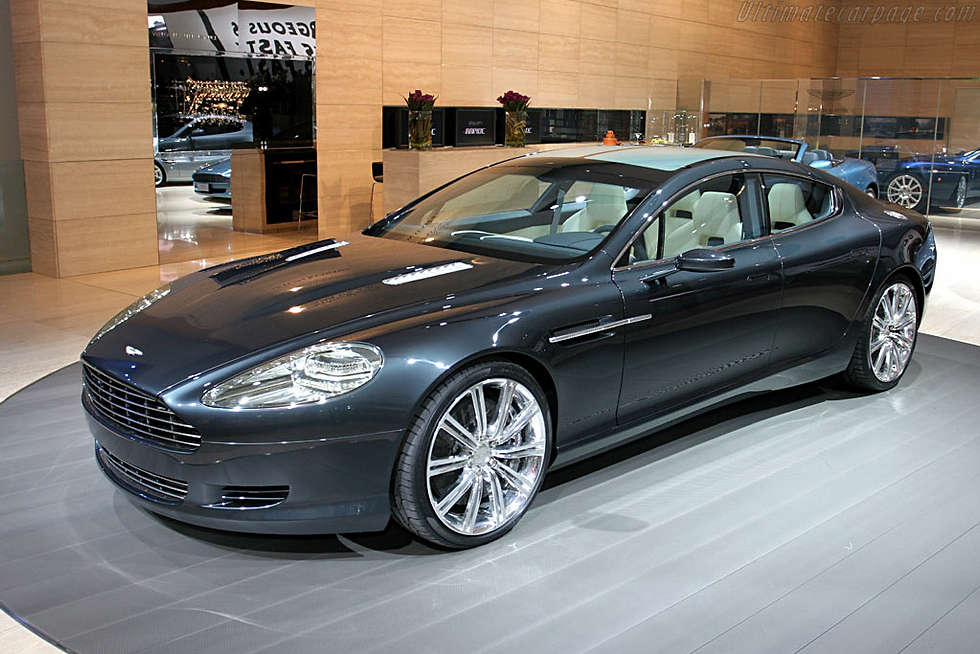
2006 Aston Martin Rapide Concept
Aston Martin unveiled Rapide at Detroit as a four-door grand tourer based on the company's VH architecture. Behind the long bonnet sat a proposed 6.0-liter V12, while the coupe-like roof enclosed four individual seats and a rear hatch. Rear-hinged back doors aided access without breaking up the profile. Rapide demonstrated how Aston's front-engine sports-car layout could be stretched into a fast luxury sedan; a substantially developed production version followed years later.
2006 Audi Q7 V12 TDI Pre-Production Prototype
Audi revealed a spectacular twelve-cylinder diesel version of its Q7 at Paris in 2006. The 6.0-liter twin-turbocharged V12, developed using lessons from Audi's diesel Le Mans program, was rated at 500 PS and 1,000 Nm, driving all four wheels through a six-speed automatic transmission. Revised front styling, large brakes and specialized cooling hardware distinguished it from ordinary Q7 models. The display car previewed a later limited-market production version rather than being a completely unrelated SUV concept.

2006 Audi Roadjet Concept
Shown at Detroit, the Roadjet imagined a fast four-seat Audi combining hatchback practicality with the stance of a sports coupe. It used a longitudinally mounted 3.2-liter FSI V6, quattro all-wheel drive and a proposed seven-speed S tronic dual-clutch transmission. A long glass roof and spacious cabin emphasized everyday versatility, while the sharply styled body introduced design details that later appeared across Audi's range. The concept previewed technology rather than directly becoming one specific production model.

2006 Bertone Suagnà Concept
Bertone used the Fiat Grande Punto as the basis for Suagnà, a compact convertible study presented at Geneva. A retractable hardtop transformed the hatchback-derived proportions into a four-seat open car, with a bespoke rear deck and carefully integrated folding roof. The mechanical platform remained related to Fiat's front-wheel-drive supermini, so the novelty was the packaging and roof mechanism rather than an exotic drivetrain. Bertone intended the prototype to demonstrate an attainable alternative to larger coupe-cabriolets.

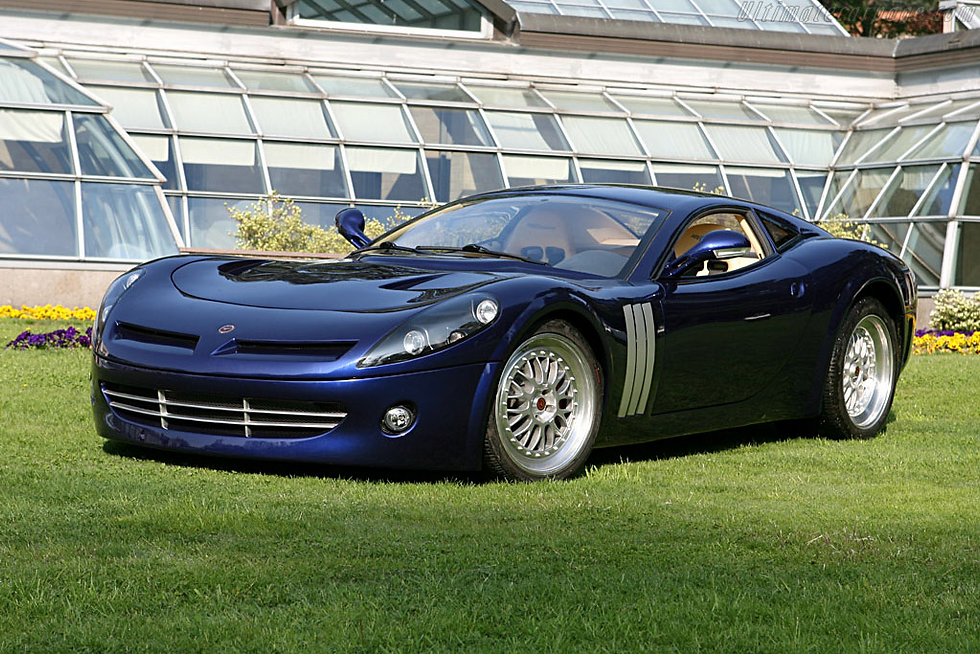
2006 Bizzarrini Ghepardo Concept
VGM Motors presented the Bizzarrini Ghepardo at Geneva in 2006 as an attempt to revive Giotto Bizzarrini's storied grand-touring name. Its wide, low body, long front section and dramatic side treatment wrapped around an intended high-performance V8 layout. Contemporary specifications cited a 4.1-liter V8 producing approximately 550 horsepower, but no homologated series-production version followed. The project was a built show prototype from an independent marque-revival effort rather than a new model from an established high-volume manufacturer.
2006 BMW CLEVER Research Vehicle
BMW's CLEVER was a European research project built around a narrow, enclosed three-wheeled commuter that leaned into corners. The tandem two-seat cabin and tilting suspension aimed to combine motorcycle-like footprint and agility with more protection from the weather. The research vehicle explored a compressed-natural-gas powertrain, low mass and active stability control. Its public demonstrations in 2006 were mobility and chassis experiments rather than previews of a conventional BMW passenger car.

2006 BMW Concept Coupe Mille Miglia
BMW presented the Concept Coupe Mille Miglia in 2006 as a modern homage to the 1930s BMW 328 racing coupes. A long, tapering hood, enclosed rear wheels and an asymmetrical-looking low roof borrowed period cues without copying the old body. The running study used modern BMW Z4 M mechanical underpinnings, including a high-revving straight-six. It celebrated the brand's competition heritage and explored coachbuilt surfaces rather than proposing a showroom sports coupe.

2006 Bolloré BlueCar Running Prototype
Bolloré returned to Geneva in 2006 with a driveable version of its electric BlueCar, following the original 2005 concept display. The little city car was designed around the company’s lithium-metal-polymer battery technology rather than a conventional engine layout. Reports at the show described a claimed range of around 155 miles. This entry covers the newly running 2006 development prototype, not a second debut of the 2005 design.
Contemporary source / supporting archive: autoblog.com
2006 Brilliance M3 Concept
Brilliance's M3 was displayed during the 2006 Chinese motor-show season as a sporting sedan proposal linked to the company's ambition to move beyond basic family cars. A coupe-like roof, wide front grille and stronger shoulder line distinguished the styling exercise from Brilliance's regular saloons. It drew on conventional front-engine passenger-car packaging; highly specific production performance figures were not established for the display car. The study belongs to China's early wave of internationally styled domestic-brand concepts.
2006 Buick Enclave Concept
Buick introduced the Enclave at Detroit as a premium crossover previewing the move away from traditional body-on-frame SUVs. The smooth, heavily sculpted seven-seat body used a three-row cabin, substantial glass area and a refined interpretation of Buick's waterfall grille. The architecture anticipated GM's later Lambda-based family crossovers and conventional V6 propulsion. The show vehicle was more than a styling fantasy: it set much of the shape and positioning of the production Enclave.
2006 Buick Lucerne CXX Luxury Liner
Rick Bottom prepared the CXX Luxury Liner as Buick’s partner custom car at the 2006 SEMA show. Using the Lucerne sedan as a basis, the project brought a lowered, more assertive presence to a model otherwise associated with restrained comfort. It was a styling and customization exercise created for the show, not a separate Buick production model or the larger Enclave concept from Detroit.
Contemporary source / supporting archive: carbodydesign.com
2006 BYD F3e Electric Prototype
BYD displayed an electric adaptation of its F3 sedan during the 2006 Beijing motor-show period. Known as the F3e, the car was used to demonstrate the company's emerging lithium iron phosphate battery technology and electric-drive ambitions before it had a commercial battery-electric passenger car. Its conservative four-door body concealed the experimental propulsion system. Contemporary range and charging figures were developmental targets, not certified customer-car data, and the F3e never entered volume production in the form shown.
2006 BYD F8 Coupe-Cabriolet Prototype
BYD revealed the F8 during the 2006 Beijing show as an ambitious two-door coupe with a retractable metal roof. Its rounded front, long doors and relatively short rear deck were intended to move the Chinese manufacturer into a very different segment from its low-cost sedans. The display car concentrated on styling and the folding-hardtop mechanism using conventional front-engine packaging. A production adaptation appeared later as the BYD S8, making this an early prototype rather than an entirely unrelated show car.
2006 Cadillac Escalade EXT by DUB
Cadillac teamed with DUB magazine for a customized Escalade EXT at the 2006 SEMA show, focusing on the dramatic wheels, appearance and personalized luxury associated with the magazine’s car culture. The upscale pickup received a distinctive presentation compared with the standard Escalade range. Its place in this archive is as an individual collaborative show build rather than a new Cadillac body-style proposal.
Contemporary source / supporting archive: carbodydesign.com
2006 Cadillac SRX Sport by Dana Buchman
The designer Dana Buchman helped create a special Cadillac SRX Sport for SEMA 2006 that drew on upscale fashion and interior design. Rather than treating a crossover solely as a mechanical machine, the concept explored the relationship between automotive trim, materials and luxury-lifestyle presentation. The result was a one-off themed show vehicle unrelated to Cadillac’s regular SRX equipment packages.
Contemporary source / supporting archive: carbodydesign.com
2006 Caparo T1 Development Prototype
Caparo advanced its single-seat-racer-inspired T1 road-car project in 2006, when the featherweight, open-cockpit machine was publicly presented as an extreme track-oriented prototype. Its narrow tandem-fighter-style cockpit, exposed aerodynamic surfaces and enormous performance targets made an unlikely proposal for road registration. The initial development cars preceded the better-known production-intent T1 unveiled later in the decade.
Contemporary source / supporting archive: en.wikipedia.org
2006 Carcerano Sonny Concept
Italian design house Carcerano showed Sonny in 2006 as a compact, futuristic mobility concept with an unusually clean exterior. Its high, rounded passenger cell and smooth body panels prioritized usable interior volume within city-car dimensions. The exercise placed design and ergonomics ahead of a finalized, publicly certified drivetrain specification. Sonny is significant as a small independent Italian studio's attempt to rethink everyday transport, not as a vehicle that entered production or carried validated performance claims.
2006 Castagna Imperial Landaulet Concept
Castagna revived the Isotta Fraschini Imperial name at Geneva with an enormous luxury-car study built around chauffeur-driven travel. A long wheelbase, imposing hood and formal cabin led to an openable rear passenger roof in the landaulet tradition. The project was a coachbuilt styling and packaging showcase, drawing on premium donor-car engineering rather than a newly homologated marque platform. Its size and extravagant appointments made it one of the more unusual luxury exercises of the 2006 show.
2006 Castagna MINI Hybrid Concept
Carrozzeria Castagna presented a running MINI hybrid demonstration at Geneva in 2006 as part of its coachbuilding program. The original petrol engine and front-wheel-drive mechanicals remained in place, while an electrically driven rear axle provided an additional propulsion source. Strengthened suspension components and electronic controls allowed the driver to choose different operating modes. Unlike the older CrossUp and Tender bodies on the same stand, this specific hybrid powertrain arrangement was the new 2006 engineering demonstration. It was not a factory-developed MINI production model.
2006 Changan Xingqing Concept
Changan's Xingqing appeared at Beijing in 2006 as an imaginative compact MPV aimed at urban families. It used an unusually tall passenger cell, glass-heavy sides and a flexible door arrangement to extract cabin space from a relatively short footprint. The design emphasized access and reconfigurable seating rather than outright performance, and a finalized production powertrain was not announced. The concept captured the experimentation taking place among Chinese manufacturers before small MPVs became a familiar market category.
2006 Changfeng Liebao CS6-Y Concept
Changfeng exhibited the Liebao CS6-Y during the 2006 Beijing show as an SUV study anticipating the company's later crossover designs. Its higher beltline, squared wheel arches and less utilitarian nose attempted to modernize the company's established off-road image. The vehicle retained conventional SUV packaging and did not demonstrate a radically new propulsion system. The 2006 concept should be distinguished from the later production CS6 and from other Changfeng studies displayed under similar numerical names.
2006 Changfeng Liebao CS7 Concept
The CS7 was another Changfeng concept presented during the 2006 Beijing motor show, separate from the CS6-Y. A more compact, city-oriented SUV profile used soft body contours, a broad grille and a raised driving position to suggest a lifestyle crossover rather than a heavy-duty utility vehicle. The display emphasized design direction and passenger accommodation, with final engine specifications not established for this configuration. It previewed an approach later used on Changfeng's smaller SUV products.
2006 Changfeng UU-CT3 Concept
Changfeng's UU-CT3 formed part of its 2006 Beijing concept program and explored a different compact passenger-car direction from its Liebao SUVs. The prototype emphasized unusual body packaging and a contemporary, rounded exterior intended to appeal to younger drivers. Published period accounts documented the show appearance but did not establish a fully developed production drivetrain or series-manufacturing plan. It is a distinct named show study and should not be merged with the CS6-Y or CS7.
2006 Chery A3 Hatchback Concept
Chery unveiled the A3 at Beijing in November 2006 as an unusually sophisticated five-door hatchback for a domestic Chinese brand. Developed with design input from Pininfarina, it featured flowing side surfaces, a sharply integrated rear hatch and more polished interior than Chery's earlier small cars. The show vehicle anticipated front-wheel-drive petrol versions and a broader range of modern safety equipment. A production A3 arrived in 2008, but the 2006 prototype was the first public reveal.
2006 Chery A5 ISG Hybrid Prototype
Chery used an A5 sedan to demonstrate an integrated starter-generator hybrid system during 2006. Rather than constructing a futuristic body, engineers fitted electric assistance and stop-start functionality to a familiar four-door shell. The approach targeted fuel consumption and emissions while preserving most conventional sedan packaging. It was a research demonstrator for Chery's early hybrid program, so contemporary economy improvements were test and development claims, not measurements from a marketed production version.
2006 Chery A6CC Concept
Chery exhibited the A6CC as an experimental two-door coupe-cabriolet concept during its mid-2000s design expansion. The study explored an international-looking sporting body style distinct from Chery’s everyday sedans and small hatchbacks. Its retractable-roof emphasis made it an especially unusual project for a Chinese manufacturer then concentrating on rapid growth in conventional passenger cars.
Contemporary source / supporting archive: en.wikipedia.org
2006 Chery LEI / Fengyun Coupe II Concept
Turin-based Torino Design developed the Chery LEI for display at Beijing in 2006. Also identified in period coverage as Fengyun Coupe II, it was a sharp, low two-door concept intended to give the Chinese brand a more sporting visual identity. Its pointed nose, tense side surfaces and large wheels made the design more dramatic than Chery's mainstream products. The project was chiefly a styling study with no confirmed production drivetrain, and the alternate names identify the same car.
2006 Chery LUI / Tiggo 5 Concept
The Chery LUI was developed with Torino Design and appeared at the 2006 Beijing show. Sometimes referred to as the Tiggo 5 or Running-5 study, it imagined a sportier, more sophisticated crossover than the contemporary Tiggo. A tall body, compact overhangs and expressive glazing emphasized cabin utility without abandoning dramatic design. Technical figures were not published as a finalized specification. LUI and the alternative Tiggo 5 designation describe the same proposal, so it is counted only once.
2006 Chevrolet Camaro Concept
Chevrolet's Camaro returned as a concept at Detroit in January 2006. The rear-drive coupe combined an elongated hood, high rear quarters and a modernized interpretation of the 1969 Camaro's shape with large wheels and an aggressive track. A 6.0-liter LS2 V8 producing a claimed 400 horsepower was fitted to the running display car. Enthusiastic reaction helped justify the fifth-generation production Camaro, but the concept had its own body detailing and prototype hardware.
2006 Chevrolet HHR Panel Pre-Production Showcase
Chevrolet unveiled the HHR Panel at the South Florida auto show in October 2006 as a near-production cargo-focused variation of its retro-styled wagon. Its solid rear-side panels and flat loading area offered a dramatically different use case from the passenger HHR. Although the model reached production in 2007, the initial 2006 preview belongs alongside other production-intent vehicles in this article.
Contemporary source / supporting archive: carbodydesign.com
2006 Chevrolet Prisma Y Concept
Chevrolet developed Prisma Y as a small-car design study for the South American market in 2006. Its youthful three-box proportions and sporty surface treatment went beyond the conventional economy-sedan styling of the region. The project was connected to GM's Brazilian design organization and explored customer tastes rather than an entirely new experimental powertrain. It is distinct from the later production Prisma and should be treated as a regional styling concept rather than a standardized showroom model.
2006 Chevrolet Sequel Fuel-Cell Demonstrator
GM's Sequel advanced from earlier fuel-cell concept work into a publicly demonstrated running crossover prototype in 2006, including a Los Angeles presentation. It combined hydrogen fuel-cell generation with electric motors and advanced vehicle controls, aiming for everyday usability without a conventional gasoline engine. A tall, roomy body packaged the tanks and power electronics without sacrificing a full passenger cabin. Its impressive projected range remained a technology-development claim; Sequel never became a mass-produced Chevrolet.
2006 Chevrolet Silverado 427 Concept
The Silverado 427 was one of GM’s headline concepts at SEMA 2006. It placed the Corvette Z06’s 7.0-liter LS7 V8, rated at 505 horsepower, into the new Silverado pickup to explore a factory-style street-performance truck. The numerical badge referenced the engine’s traditional cubic-inch displacement. It was a distinct concept from GM’s low-slung custom hauler and Dale Earnhardt Jr.’s off-road Silverado.
Contemporary source / supporting archive: carbodydesign.com
2006 Chevrolet Silverado Big Red by Dale Earnhardt Jr.
Dale Earnhardt Jr. collaborated with Chevrolet on a new Big Red off-road Silverado for SEMA 2006. The truck borrowed the personality of his earlier high-profile Silverado project but was developed around the then-new pickup. Its larger-than-life stance made it a counterpoint to the street-oriented 427 concept, showing how the same vehicle platform could be customized for radically different uses.
Contemporary source / supporting archive: carbodydesign.com
2006 Chevrolet Silverado OCC Hauler Concept
Orange County Choppers influenced a special low-riding Silverado hauler shown by General Motors at SEMA 2006. Its appearance borrowed visual cues from the extravagant custom motorcycles built by the Teutul family, translating them into a practical-looking but highly stylized pickup. It was separate from the 427 high-performance concept and the rugged Big Red off-road truck on the same display.
Contemporary source / supporting archive: carbodydesign.com
2006 Chevrolet WTCC Ultra Concept
Chevrolet unveiled the WTCC Ultra at Paris in 2006 as a dramatic reinterpretation of its touring-car racing program. Its compact, deeply sculpted hatchback body featured a low nose, outsized aerodynamic additions and flared arches, with a competition-inspired diesel engine proposal. Designers pursued a global Chevrolet identity rather than previewing a named production road car. The vehicle was a show-oriented racing study, not a homologated WTCC competitor or a conventional Chevrolet hatchback.
2006 Chrysler Imperial Concept
The Imperial debuted at Detroit as a large, formal luxury sedan inspired by Chrysler's historical flagship nameplates. It placed a towering grille, high shoulder line and unusually spacious cabin on a long rear-wheel-drive platform related to the Chrysler 300. Rear-hinged back doors and substantial chrome detailing reinforced its limousine image. The concept used familiar V8-oriented American luxury-car engineering and did not enter series production, but it demonstrated how Chrysler might reposition itself above its existing sedans.
2006 Citroën C-Buggy Concept
Citroën unveiled the C-Buggy at Madrid in 2006 as a roofless two-seat interpretation of the C-AirPlay design language. High wheel arches, an open cabin, exposed structural elements and a compact body gave it a recreational beach-car character. The study prioritized lightness and the feeling of being outdoors rather than extreme performance. The drivetrain was conventional small-car engineering, and Citroën made no production commitment. It was a distinct concept, not simply the earlier enclosed C-AirPlay rebadged.
2006 Citroën C-Métisse Concept
Citroën presented the C-Métisse at Paris with a four-door fastback body, extremely low roof and dramatic door arrangement. The proposed diesel-electric hybrid system used an HDi diesel engine at the front and electric motors to help drive the rear wheels, suggesting performance with improved efficiency. Long front overhangs and finely shaped side panels made the design as much about aerodynamics as luxury. It remained a prototype, so its power and economy figures were manufacturer projections rather than production-car ratings.
2006 Citroën C4 WRC Development Car
Citroën used the 2006 Paris Motor Show to present the C4 WRC that would take over its World Rally Championship effort. The four-wheel-drive rally machine turned the C4 hatchback into a flared, winged competition car with a heavily reworked chassis and turbocharged power. It belongs in this broader archive as a newly presented motorsport development vehicle, not as an ordinary road-car styling concept.
Contemporary source / supporting archive: en.wikipedia.org
2006 Citroën GT-C1 by Espera Sbarro
Sbarro's Espera students transformed a first-generation Citroën C1 into the GT-C1, an exceptionally wide, mid-engined-looking compact sports-car study. The rebody adopted large side intakes, a low front air dam and exaggerated arches while retaining city-car origins beneath the custom structure. Reports identified a 1.6-liter Citroën C2 VTS engine providing around 125 horsepower, far beyond the donor C1's usual specification. It was a one-off student project rather than a factory Citroën concept or an intended production variant.
2006 Climax CR1 Ethanol Sports-Car Concept
Three designers associated with Coventry University promoted the Climax CR1 in 2006 as an ultra-light British sports car with an ethanol-fueled engine. The early proposal used exposed-wheel and minimal-bodywork themes rather than conventional grand-tourer proportions. Its proposed production volumes and power figures were ambitions at this stage: contemporary reporting said a complete running prototype was planned for 2007.
Contemporary source / supporting archive: caradisiac.com
2006 Colani Street-Ray Study
Luigi Colani's Street-Ray was catalogued among his mid-2000s vehicle-design projects as a streamlined, tightly enclosed single-seat road-machine concept. Its enveloping shell and organic proportions followed Colani's fascination with forms derived from nature and aerodynamic efficiency. The design was concerned primarily with body geometry and the rider's position, not a manufacturer-certified performance package. It belongs with independent studies rather than mass-production car proposals and should not be confused with Colani's earlier vehicles.
2006 Colani SuperTruck Study
Colani continued his aerodynamic heavy-vehicle work with a highly streamlined SuperTruck design associated with the 2006 design archive. An extraordinary curved nose and integrated cab attempted to address the blunt frontal shape of conventional tractor units. The project illustrates industrial design applied to road transport rather than a road-legal production truck with independently verified fuel-consumption results. Its engineering details changed among Colani's truck demonstrators, so specific savings claims are not treated as certified 2006 specifications.
2006 Colani Yellow Egg Study
The Yellow Egg was a compact, enclosed mobility-design study associated with Luigi Colani's 2006 work. A bulbous, almost uninterrupted body shell, small glazed canopy and tightly packaged wheels emphasized his bio-inspired approach to efficient transport. It was a form and packaging exercise rather than an announced commercial microcar with a fully documented drivetrain. The design is included separately from his larger aerodynamic truck work because its purpose, scale and underlying proposal were entirely different.
2006 Dacia Logan Steppe Concept
Dacia revealed the Logan Steppe at Geneva as a more adventurous wagon interpretation of its inexpensive Logan sedan. Increased ride height, cladding, roof rails and a tall rear cargo space suggested an affordable family vehicle that could also handle recreational use. The drivetrain and underlying platform remained closely tied to the front-wheel-drive Logan. Steppe was particularly important because its practical proportions foreshadowed the Logan MCV estate, even though the concept's rugged accessories were not all carried into production.
2006 Daihatsu D-Compact Wagon Concept
Daihatsu unveiled the D-Compact Wagon at the 2006 Geneva Motor Show as a family-sized packaging study on an unusually small footprint. A relatively tall roof, flexible seating and practical interior were meant to make the car feel more spacious than its exterior dimensions suggested. The manufacturer explicitly called it a world-premiere prototype, separate from the later D-Compact X-Over shown in Paris.
Contemporary source / supporting archive: daihatsu.com
2006 Daihatsu D-Compact X-Over Concept
The D-Compact X-Over appeared at the 2006 Paris show as a small crossover derivative of Daihatsu's compact-car research. It combined a tall cabin, short body and lightly rugged exterior detailing in a package that would be easy to maneuver in crowded cities. The model explored flexible interior accommodation with efficient small-displacement propulsion rather than full-size SUV power. Daihatsu used it to test how a conventional city-car platform might serve customers looking for a higher seating position.
2006 Daihatsu Sirion Sport Concept
At the 2006 Paris show, Daihatsu presented the Sirion Sport as a livelier interpretation of its tiny city hatchback. Sportier bumpers, a deeper front grille, 16-inch wheels and distinctive cabin details accompanied a tuned 1.5-liter engine. The car was a specific factory concept rather than merely a regular Sirion wearing a higher trim badge, and it appeared alongside the equally unusual Terios Sport.
Contemporary source / supporting archive: daihatsu.com
2006 Daihatsu Terios Sport Concept
The Terios Sport arrived at Paris in 2006 with a lowered stance, a cleaner tailgate stripped of its external spare wheel and more assertive bodywork. Daihatsu also displayed sports seats, larger wheels and chassis revisions. It was a street-oriented experiment based on a four-wheel-drive small SUV, not the separate Italdesign-assisted D-Compact X-Over crossover concept.
Contemporary source / supporting archive: daihatsu.com
2006 DC Design Accord Coupe
Indian coachbuilder DC Design developed a radical, low-slung custom body around Honda Accord components for exhibition in 2006. The prototype used an aggressive nose, a much more dramatic glasshouse and show-car door treatments to disguise its family-sedan roots. It illustrated the company's ability to produce one-off coachwork from existing road-car hardware rather than Honda's own future design program. The donor mechanical system was conventional, and no mass-manufacturing plan accompanied the display.
2006 DC Design Minute Concept
DC Design's Minute was presented during the company's mid-2000s experimental period as a tiny urban-transport design. The compact body, upright packaging and stylized surfaces aimed to make very small personal mobility look like a deliberately designed product rather than a cut-down ordinary car. Published technical specifications were limited, so it should not be assigned a definitive power or range figure. The vehicle remained an independent Indian studio proposal rather than an officially developed production model.
2006 DC Design Rolls-Royce Black Ruby
The Black Ruby was a flamboyant one-off interpretation of a Rolls-Royce developed by Indian custom-design firm DC Design. Its dramatically reworked front end, roofline and door arrangement attempted to turn a formal luxury car into a more theatrical showpiece. The project relied on donor-car mechanical components and custom bodywork rather than a new Rolls-Royce engineering program. It is best classified as a coachbuilt custom, with design changes distinct from factory-sanctioned Rolls-Royce concepts.
2006 Dodge Avenger Concept
Dodge's Avenger appeared as a near-production concept at Paris in 2006, introducing a sharply edged front-wheel-drive sedan for global markets. The squared shoulders, crosshair grille and practical four-door body presented an angular alternative to the softer Chrysler Sebring, with related mechanical underpinnings. The show vehicle emphasized styling and market positioning instead of a new research propulsion system. Its forms were carried quickly into the subsequent production Avenger with relatively modest revisions.
2006 Dodge Challenger Concept
Unveiled at Detroit, the Challenger was Dodge's modern interpretation of its early-1970s muscle coupe. A wide, long-nosed body surrounded a rear-wheel-drive platform, with a proposed 6.1-liter HEMI V8 and six-speed manual transmission lending the display car real performance credibility. The full-width grille, inset headlights and broad rear shoulders deliberately referenced the 1970 Challenger. Demand for the concept helped secure a closely related production model, though its concept body and cabin were not identical to the retail car.
2006 Dodge Hornet Concept
Dodge displayed the Hornet at Geneva as a compact, upright hatchback designed to carry the brand's muscular styling into European city-car dimensions. Its tall body, short overhangs, high-mounted headlights and oversized crosshair grille contrasted with the typical low-slung Dodge. The cabin prioritized four adults and flexible seating, while a small supercharged petrol engine was proposed. It never became the eventual production Hornet, which was a different vehicle conceived many years later.
2006 Dodge Rampage Concept
The Rampage debuted at Chicago as a front-wheel-drive pickup with the passenger comfort and packaging of a crossover. A broad, low bed, sliding rear-cabin doors and clever pass-through storage arrangements were designed for drivers who occasionally needed to carry large items without committing to a traditional full-size truck. The prototype used conventional V8-powered pickup ideas within an unusual unibody layout. It remained a one-off study and did not lead to a production Rampage revival.
2006 EDAG Biwak Concept
German engineering company EDAG transformed the Volkswagen New Beetle into the Biwak, an odd combination of small utility wagon, compact crossover and leisure vehicle. The Geneva display used a squared-off rear body, added luggage capacity and a raised roofline instead of the donor's recognizable rounded hatch. Underneath, the familiar front-wheel-drive Beetle platform remained. EDAG used the car to demonstrate how manufacturing methods and new body panels could extend a mass-market vehicle's usefulness without designing a platform from scratch.
2006 EDAG Pontiac Solstice Hardtop Concept
EDAG showed a removable-roof Pontiac Solstice conversion during the 2006 auto-show season. A custom fastback-style roof transformed GM's small rear-wheel-drive roadster into a more practical coupe-like vehicle while preserving its basic chassis, front-engine layout and two-seat cabin. The design was produced by an engineering specialist, not by Pontiac's factory design studio. Although Pontiac later sold a Solstice Coupe, the EDAG version was an independent roof-system demonstration with different detailing.
2006 Ferrari 575 GTZ by Zagato
Zagato created the 575 GTZ in 2006 as a limited coachbuilt interpretation of the Ferrari 575M Maranello. Its voluptuous front wings, double-bubble roof and rounded rear drew from classic Ferrari and Zagato designs, while the underlying front-mounted V12, transaxle and chassis remained Ferrari production hardware. The commission demonstrated the continuing appeal of bespoke Italian grand touring bodies. It was a small-run special coachbuilt car rather than a Ferrari factory concept for a future model.
2006 Ferrari P4/5 by Pininfarina
Pininfarina unveiled the Ferrari P4/5 at Pebble Beach in 2006, a one-off commissioned by collector James Glickenhaus. Built from a Ferrari Enzo, it received completely new carbon-fiber bodywork inspired by Ferrari's historic P3 and P4 endurance racers. The 6.0-liter V12 and central chassis architecture came from the Enzo, while much of the exterior design and aerodynamic work was bespoke. The result was a fully functional road car but never a Ferrari production project.
2006 Fiat Ducato Truckster Concept
Fiat Professional presented the Truckster in 2006 as an exaggerated race-support interpretation of the Ducato commercial van. A very low cab roof, deep front bumper, huge rear wheels and radical bodywork gave the heavy-duty utility vehicle a hot-rod character. The project explored brand visibility, aerodynamic styling and commercial-vehicle customization rather than a practical fleet model. It remained a specialist show car, with no certified mass-production performance specification for the dramatically modified configuration.
2006 Fiat FCC Adventure Concept
Fiat's Brazilian design team developed the FCC Adventure for the 2006 São Paulo motor show. The open, rugged two-seat body combined off-road cues, sweeping wheel arches and an almost dune-buggy-like cabin with short overhangs. It was built to illustrate how Fiat might appeal to younger outdoor-oriented South American buyers. The vehicle's central achievement was its original styling and packaging; it did not enter series production or establish a finalized showroom drivetrain.
2006 Fiat Panda Dakar Rally Prototype
Fiat displayed a competition-prepared Panda Dakar as part of its late-2006 Bologna Motor Show activities. Rather than previewing an ordinary showroom Panda, the raised, rugged prototype demonstrated how the small hatchback platform could be transformed for marathon rallying. Its inclusion here follows the archive’s broader treatment of experimental competition vehicles; it was not a standalone road-car styling concept.
Contemporary source / supporting archive: media.stellantis.com
2006 Fiat Panda Hydrogen Prototype
Fiat demonstrated the Panda Hydrogen fuel-cell vehicle in 2006 as part of its alternative-propulsion research. Compressed hydrogen fed a fuel-cell system that generated electricity for an electric traction motor, producing water as the primary exhaust output at the vehicle. The compact Panda body housed experimental tanks, electronics and drivetrain components at the expense of some conventional packaging. It was a working engineering demonstrator, not a commercially available fuel-cell Panda with certified consumer specifications.
2006 Fiat Panda Jolly by Stola
Stola reimagined Fiat's second-generation Panda as the Jolly, an open-sided leisure vehicle with minimal doors, a light roof structure and a casual interior. Created for the 2006 show circuit, it evoked the classic Mediterranean beach cars derived from Fiat's small models. The donor Panda's modest front-engine, front-wheel-drive mechanical foundation remained relevant beneath the custom bodywork. Jolly was an Italian coachbuilder's bespoke concept, not an additional production Panda body style.
2006 Fiat Panda Multi Eco Concept
The Panda Multi Eco appeared at Geneva as a technology study around fuel-efficient city transportation. Its tall body and generous glazing sat on familiar Panda underpinnings, but the proposed propulsion arrangement explored lower-impact fuel and hybridization possibilities. Fiat also investigated lighter materials and packaging changes to support reduced energy use. The concept was a broader mobility laboratory than a simple low-trim Panda, and its published consumption targets were developmental rather than road-tested production ratings.
2006 Fiat Panda Tanker Concept
Fiat unveiled the Panda Tanker at the December 2006 Bologna motor show, developed with Italian protective-equipment maker Dainese. Its satin-grey three-door body dispensed with the rear seats and used a specially organized load area for skis, climbing equipment and other sports gear. Titanium-colored protective pieces, unusual wheel trim and a stripped-back interior made it look like a utility vehicle for younger adventurers. The prototype was based on the Panda 4x4 platform and never became a standard Fiat production body style.
2006 Fioravanti Skill Concept
Fioravanti introduced Skill at Geneva as a compact, multipurpose vehicle meant to challenge conventional distinctions between pickup, passenger car and urban utility. A tall cab, innovative rear loading arrangement and clean, simple surfaces prioritized flexible use in a limited footprint. The project's technical platform was a conventional compact-car starting point; its novelty lay in body functionality and manufacturing possibilities. Skill remained a design-house concept rather than an announced mass-market vehicle.
2006 Ford Edge by 3dCarbon
Ford displayed 3dCarbon’s customized Edge at SEMA in 2006 as a demonstration of how far the new crossover could be personalized. A lowered stance, eight-piece California Crossover body kit, oversized 22-inch wheels and leather-lined cabin replaced the everyday family-car look with a boulevard-style show build. It was an aftermarket-design exhibit, not a Ford production proposal.
Contemporary source / supporting archive: carbodydesign.com
2006 Ford Edge by H&R Special Springs
H&R Special Springs transformed the new Ford Edge for the 2006 SEMA exhibition with a two-inch drop, large wheels, additional lighting and vivid orange paintwork. The company kept the basic production powertrain while concentrating on stance, body trim and suspension, showing how the crossover might appeal to customers beyond traditional SUV buyers. The result was a specific one-off promotional build.
Contemporary source / supporting archive: carbodydesign.com
2006 Ford Expedition Funkmaster Flex Concept
Ford and radio personality Funkmaster Flex developed a custom Expedition concept for the 2006 SEMA show. The full-size SUV wore an aggressive front fascia, custom paint, large wheels and a heavily reworked interior emphasizing entertainment and luxury. The underlying Expedition platform and conventional engine layout remained, making it a factory-backed show custom rather than an experimental drivetrain. It illustrated the personalization possibilities Ford was promoting around the redesigned SUV.
2006 Ford Explorer Fuel-Cell Prototype
Ford presented a hydrogen-powered Explorer research SUV in 2006 as part of its work on longer-range fuel-cell vehicles. The large body provided room for hydrogen storage, fuel-cell hardware and an electric drivetrain without abandoning the family-SUV format. Engineers aimed to demonstrate that an alternative propulsion system could suit a heavier vehicle, not just a tiny commuter. Performance and range figures were prototype targets under controlled conditions, and the test platform was not placed into regular production.
2006 Ford Explorer Sport Trac Super Muscle Truck
Barry’s Speed Shop turned the Ford Explorer Sport Trac into a lowered muscle-truck experiment for SEMA 2006. Its 4.6-liter V8 fed through a functional Mustang-inspired shaker scoop, while lowered suspension and a more aggressive look pushed the pickup toward street performance. The vehicle used a familiar utility platform to make a deliberately impractical but memorable show-car statement.
Contemporary source / supporting archive: carbodydesign.com
2006 Ford F-150 Bigfoot Offroad Show Truck
Bigfoot Offroad & Performance built a heavily modified F-150 for Ford’s 2006 SEMA collection, using a substantial suspension lift, a supercharger and extra off-road lighting. The truck served as a showcase for extreme aftermarket hardware rather than a preview of an upcoming factory F-150 variant. Its approach contrasted with Ford’s lower, street-oriented FX2 Sport Extreme concept already covered in the original list.
Contemporary source / supporting archive: carbodydesign.com
2006 Ford F-150 by DeBerti Designs
Shane DeBerti’s personalized F-150 appeared on Ford’s SEMA 2006 stand with an enormous custom suspension lift, specialized wheels and a high-output entertainment system. The pickup mixed exaggerated off-road proportions with the visual culture of mid-2000s custom trucks. It was a distinct 2006 four-wheel-drive show build, not the unrelated six-wheel F-650 created under the same DeBerti name.
Contemporary source / supporting archive: carbodydesign.com
2006 Ford F-150 FX2 Sport Extreme Concept
Built for the 2006 SEMA show, the F-150 FX2 Sport Extreme demonstrated a lowered, street-focused alternative to high-riding four-wheel-drive pickups. Its sport body kit, large wheels and lowered suspension emphasized road presence and handling, while the truck's core V8 and rear-wheel-drive layout remained recognizable. Ford treated it as a factory-supported customization exercise. The concept should be distinguished from standard FX2 appearance packages and the many independently modified F-150s displayed at the same show.
2006 Ford F-250 Super Chief Concept
The Super Chief debuted at Detroit as a luxurious heavy-duty pickup study inspired by historic American passenger trains. It paired an oversized four-door cabin, long bed and striking front grille with a proposed tri-flex-fuel supercharged V10 capable of using gasoline, ethanol or hydrogen. The vehicle explored alternative fueling on an unusually large truck platform, though hydrogen operation was experimental rather than commercially proven. Its formal proportions and premium interior demonstrated how far Ford could push the F-Series image.
2006 Ford F-250 Super Duty by Fabtech
Fabtech prepared a lifted Super Duty for the 2006 SEMA display, using the soon-to-be-launched 2008-model-year truck as its starting point. The point of the build was to demonstrate oversized suspension and wheel upgrades on Ford’s revised heavy-duty platform. The 2006 date records its show debut, not its model year, and the truck was a customization display rather than a new standalone vehicle.
Contemporary source / supporting archive: carbodydesign.com
2006 Ford F-250 Work-A-HAUL IT by Skyjacker
Skyjacker’s Work-A-HAUL IT project took the newly redesigned Super Duty pickup to SEMA 2006 with a visually emphatic heavy-duty treatment. The truck was built around a 2008-model-year Ford that was previewed before dealer availability. This was a distinct aftermarket demonstration of Ford’s work-truck customization possibilities, not a second version of the unrelated Fabtech F-250.
Contemporary source / supporting archive: carbodydesign.com
2006 Ford F-650 DeBerti 6×6 Custom
The DeBerti 6×6 stood out among Ford’s 2006 SEMA displays by taking an already massive F-650 and giving it a six-wheel-drive layout. A Caterpillar diesel rated at roughly 330 horsepower powered the truck, supported by elaborate suspension and visual modifications. More than a conventional accessory package, the build was an engineering spectacle demonstrating how far a commercial chassis could be reimagined.
Contemporary source / supporting archive: carbodydesign.com
2006 Ford Fusion All-American Grand Touring by Steeda
Steeda Autosports gave the Fusion sedan a sharper character at SEMA 2006 with a patriotic paint-and-graphics scheme and a revised 3.0-liter Duratec V6 breathing through a tuned cold-air system. It aimed to reinterpret Ford’s ordinary midsize sedan as a sporty American grand tourer. This build was separate from the mechanically more ambitious turbocharged Fusion T5 prepared by MRT for the same show.
Contemporary source / supporting archive: carbodydesign.com
2006 Ford Fusion T5 by MRT
MRT created the Fusion T5 for SEMA 2006 around a turbocharged 3.0-liter V6, all-wheel drive and upgraded suspension and brakes. An aggressive body kit and dark trim tied the mechanical work to a distinctive look. While the base Fusion was an everyday family sedan, this show car demonstrated a serious performance direction that Ford did not subsequently place into regular T5-series production.
Contemporary source / supporting archive: carbodydesign.com
2006 Ford iosis X Concept
Ford unveiled the iosis X at Paris to translate the company's emerging kinetic-design language into an athletic crossover. A high beltline, deeply sculpted sides, dramatic front lighting and large wheels made it look like an off-road-capable extension of the earlier iosis sedan. Unlike the original 2005 iosis, this was a new 2006 vehicle. The design explored crossover styling and packaging, eventually influencing the Kuga, without committing to a specific production off-road drivetrain.
2006 Ford Mondeo Estate Preview Concept
Ford gave the public an early look at its next European Mondeo as a wagon-format concept at the 2006 Paris Motor Show. Broad shoulders, a rising beltline and the brand’s kinetic-design surfacing translated the earlier iosis experiment into a much more practical family car. The finished next-generation Mondeo would appear in 2007, making this a genuine pre-production show presentation.
Contemporary source / supporting archive: en.wikipedia.org
2006 Ford Mustang by Giugiaro Concept
Italdesign Giugiaro collaborated with Ford on a new interpretation of the Mustang unveiled at Los Angeles in late 2006. A completely reworked body, long fastback roof, muscular rear shoulders and upward-opening doors made the coupe far more dramatic than the fifth-generation production car beneath it. The prototype retained V8-powered rear-wheel-drive Mustang engineering, modified for higher performance. It was an independent design-house rebody endorsed by Ford rather than a factory replacement for the contemporary Mustang.
2006 Ford Mustang GT Chopped-Roof Show Car
A customized Mustang GT on Ford’s 2006 SEMA stand had its roof lowered by approximately one and three-quarter inches. A dark finish with orange-pearl accents, ducktail rear wing, Vortech supercharger and electronic upgrades completed the unusually low silhouette. The period Ford release listed the car simply as “Ford Mustang GT”; the descriptive title here distinguishes it from the several other GT show cars.
Contemporary source / supporting archive: carbodydesign.com
2006 Ford Mustang GT Convertible by Stitchcraft
Stitchcraft Interiors brought a heavily personalized Mustang GT convertible to Ford’s 2006 SEMA lineup. Although a Vortech supercharger and performance exhaust gave the car more power, the main attraction was its unusually elaborate seats, upholstery, sound system and comfort accessories. The project focused on luxury custom craftsmanship instead of the aggressive styling approach used by Ford’s other Mustang show cars.
Contemporary source / supporting archive: carbodydesign.com
2006 Ford Mustang GT Drop Top by K-daddyz Kustomz
K-daddyz Kustomz supplied a one-off Mustang GT convertible for the 2006 SEMA show with both supercharging and nitrous equipment. Shaved exterior trim, custom paint and bodywork gave the car an extremely clean, modified profile. It was a separate show vehicle from Stitchcraft’s luxury-focused convertible, even though both were based on the contemporary Mustang GT.
Contemporary source / supporting archive: carbodydesign.com
2006 Ford Project Mustang GT by Vehicle Personalization
Ford Vehicle Personalization used a Mustang GT at SEMA 2006 to showcase a concentrated package of Ford Racing Performance Parts and genuine accessories. The company claimed substantial quarter-mile improvement over a stock GT after fitting multiple catalog components. It was a demonstration of factory-supported tuning rather than a new Mustang design; its reason for inclusion is the fully specified individual show build.
Contemporary source / supporting archive: carbodydesign.com
2006 Ford Reflex Concept
Ford introduced the Reflex at Detroit as a small three-door sport hatch intended to combine youthful styling with low fuel consumption. A diesel-electric hybrid powertrain and roof-mounted solar panels were proposed, along with lightweight seating and extensive use of recycled materials. The doors and cabin were designed to accommodate passengers in a surprisingly short car. Reflex was a technology and packaging exercise, and Ford did not manufacture a retail model using its unusual combined propulsion system.
2006 Ford Shelby GT500 40th Anniversary Show Car
Shelby brought its anniversary interpretation of the modern GT500 to Ford’s 2006 SEMA stand, featuring special badges, numbered trim and distinctive cabin details. The package celebrated four decades of the original Shelby GT500 and previewed a limited run of conversions. Its 2006 entry reflects the event where this special presentation appeared rather than the calendar year commemorated by the 40th anniversary.
Contemporary source / supporting archive: carbodydesign.com
2006 Geely Fengying Concept
Geely presented the Fengying during the 2006 Beijing show as a sporty Chinese-market styling study. Its low coupe profile, sharp nose and sculpted body sides attempted to move the brand beyond inexpensive utilitarian vehicles. The display emphasized a modern design identity; detailed powertrain performance was not established as a finished production specification. Fengying was one of the company's exploratory designs before it expanded its international product development operations.
2006 GM EcoJet Concept
Jay Leno and General Motors displayed the EcoJet at the 2006 SEMA show as a turbine-powered supercar experiment. The mid-engined body used a lightweight composite shell and had the distinctive wide, low proportions of a two-seat exotic. A Honeywell aviation-derived gas turbine developed roughly 650 horsepower, using a fuel-system concept that differed from normal piston-engine cars. The vehicle was a functioning custom one-off, not a Chevrolet or Cadillac development project with a production release scheduled.
2006 GMC PAD Concept
General Motors' California design studio won the 2006 Los Angeles Design Challenge with PAD, a proposed six-wheel 'living activity vehicle' that combined an urban apartment and a mobile office. Its boxy design envisioned a configurable living space, entertainment equipment, wireless connectivity, solar panels and a diesel-electric hybrid generator system. The proposal addressed expensive urban housing and nomadic work rather than normal automotive performance. It was a studio design-challenge concept, not a functioning road-registered GMC motorhome.
2006 GMC Sierra All Terrain Crew Cab Concept
The Sierra All Terrain Crew Cab formed part of GMC’s dedicated 2006 SEMA concept-truck display. It focused on an aggressive off-road presentation for the redesigned Sierra rather than the sporting or urban themes seen elsewhere on the GM stand. The configuration differed from GMC’s NFL-themed and Texas-focused trucks, making it a separate named show vehicle from the same launch program.
Contemporary source / supporting archive: carbodydesign.com
2006 GMC Sierra NFL Crew Cab Concept
GMC prepared an NFL-themed Sierra Crew Cab for the 2006 SEMA show, using special exterior and cabin treatments to reflect American football. The project demonstrated the value of personalization and branded interiors for the truck market, rather than proposing a radical new chassis. It was one of several distinctly themed Sierra concepts presented by GM during the model’s redesign rollout.
Contemporary source / supporting archive: carbodydesign.com
2006 GMC Sierra Texas Extended Cab Concept
The 2006 SEMA GMC Sierra Texas Extended Cab was aimed at the enormous Texas pickup market, with its regional theme forming the identity of the concept. Based on the next-generation Sierra, it explored a more specialized appearance than the standard showroom truck. It was announced as a distinct GM show vehicle alongside the NFL Crew Cab and All Terrain Crew Cab concepts.
Contemporary source / supporting archive: carbodydesign.com
2006 GMC Yukon Denali XL Big Max Concept
GM described the Yukon Denali XL Big Max at SEMA 2006 as an extremely capable, heavily equipped take on its largest luxury SUV. The concept emphasized presence, power and utility without abandoning the Denali identity. Its role was to demonstrate the platform’s outer limits of customization and equipment, rather than introduce a new nameplate or an experimental powertrain.
Contemporary source / supporting archive: carbodydesign.com
2006 Great Wall Coolbear Pre-Production Concept
Great Wall introduced the Coolbear at Beijing in 2006 as a sharply box-shaped small MPV with a tall passenger cabin and remarkably short front and rear overhangs. Its upright sides and high roof maximized interior volume, while planned small petrol engines and front-wheel drive targeted inexpensive urban transportation. The concept was one of three new Great Wall passenger vehicles first displayed together. A more production-ready Coolbear reached Chinese buyers later, so the Beijing car belongs in the prototype archive.
2006 Great Wall Florid Pre-Production Concept
The Florid made its first public appearance at the 2006 Beijing show as part of Great Wall's expansion from trucks and SUVs into small passenger cars. It used a practical five-door hatchback body, wide rear opening and rounded lines to prioritize affordability and everyday usability. A 1.3-liter petrol engine was part of the proposed technical package. Production began later in the decade, making this 2006 display an early prototype rather than a vehicle already sold in showrooms.
2006 Great Wall Hover Pi Limousine Concept
Great Wall displayed an unusually elongated Hover Pi limousine during the 2006 Beijing auto show as a luxury image exercise based on its conventional Hover SUV. A dramatically stretched wheelbase accommodated a lounge-style passenger compartment while retaining the tall front fascia and SUV-derived proportions. The prototype illustrated the company's ambitions to create premium specialty vehicles alongside utility pickups. It was a custom show build, not evidence that the standard Hover platform had become a mass-produced limousine model.
2006 Great Wall Peri Pre-Production Concept
Great Wall revealed the Peri, also spelled Perey or GWPeri, at Beijing in 2006 as a compact, inexpensive city-car prototype. The small five-door hatchback relied on a proposed 1.3-liter engine and conventional front-wheel drive. Its upright cabin and rounded exterior would later become controversial because of similarities to the Fiat Panda. The 2006 display predated retail Peri sales and is counted once under its common English name despite the alternative spellings.
2006 H&R Dearborn Deuce JDRF Charity Roadster
This highly modified Dearborn Deuce roadster appeared in Ford’s 2006 SEMA program to benefit the Juvenile Diabetes Research Foundation. A traditional 1932-Ford-inspired form concealed modern independent suspension, a 4.6-liter Ford V8 and a retractable top. Rather than a manufacturer styling concept, the car was an individually built modern hot rod commissioned for a charity auction.
Contemporary source / supporting archive: carbodydesign.com
2006 Haima S1 Sports Coupe Concept
Haima debuted the S1 at the 2006 Beijing show as a low two-door coupe previewing the company's ambitions beyond ordinary sedans. The long, flowing front, rounded wheel arches and sculpted rear shoulders contrasted with its more conservative road-car products. Contemporary material described 19-inch wheels and a distinctive twin-exhaust treatment, but did not establish a production-ready engine range or launch date. It remained a genuine 2006 show concept rather than the later production Haima S1 nameplate.
2006 Heuliez Peugeot 407 Macarena Concept
French coachbuilder Heuliez unveiled the 407 Macarena at Geneva as a radical four-door convertible based on the Peugeot 407. A complex multi-section retractable hardtop had to fold away while preserving access to a full rear seating area, making the roof mechanism the primary engineering showcase. The prototype retained much of the donor sedan's front-engine, front-wheel-drive packaging. Heuliez proposed it as a demonstration of its roof-building expertise, but a production 407 Macarena did not follow.
2006 Honda A&L Racing Element SC
A&L Racing exhibited a specially modified Honda Element SC within Honda’s official 2006 SEMA display. The project took the boxy sport-utility vehicle as a platform for an independent tuner’s interpretation, rather than following the factory’s conventional accessories program. Honda listed it as a named partner-built show vehicle, separate from its own rear-wheel-drive Element-D drift racer.
Contemporary source / supporting archive: hondanews.com
2006 Honda AEM/Memphis Car Audio Drift S2000
The AEM and Memphis Car Audio S2000 appeared among Honda’s invited tuner projects at SEMA 2006, with its identity centered on drifting and show-car presentation. It highlighted the aftermarket’s interest in Honda’s rear-drive roadster, a particularly unusual choice among the brand’s front-drive compact cars. Honda documented the individual build in its official lineup.
Contemporary source / supporting archive: hondanews.com
2006 Honda Airwave Modulo Concept
Honda Access showed the Airwave Modulo at the Tokyo Auto Salon in January 2006 as a more luxurious interpretation of Honda's compact station wagon. It introduced LED lighting, illuminated exterior details, rich leather upholstery, wood-grain trim and upgraded speaker housings. The familiar transverse-engine, front-wheel-drive Airwave mechanical layout was not the subject of the experiment. Honda presented the concept to explore accessory-led personalization for mature buyers, not as a new engineering platform.
2006 Honda Civic Hybrid Modulo Concept
Honda Access revealed the Civic Hybrid Modulo at the 2006 Tokyo Auto Salon. A speed-sensitive louvered intake, diffuser, rear spoiler and aerodynamic wheel covers were intended to improve airflow around the hybrid sedan. A multimedia touch panel, camera-based mirrors and additional in-car connections highlighted advanced cabin technology. Underneath, the study retained the Civic Hybrid's petrol-electric basis. It was a factory-accessory research concept rather than an independently engineered high-performance hybrid model.
2006 Honda Civic MUGEN Si Sedan Prototype
Honda unveiled the Civic MUGEN Si Sedan prototype at SEMA 2006 with a motorsport-inspired body kit, carefully tuned suspension and a sport exhaust. It used the new Civic Si sedan as a more understated basis for a performance-focused concept. The project helped preview a limited MUGEN-influenced factory special rather than merely displaying a third-party tuner’s accessories.
Contemporary source / supporting archive: hondanews.com
2006 Honda Civic Si Sedan Concept
Honda demonstrated a performance-oriented Civic four-door at the 2006 Chicago auto show before launching its Si Sedan. The near-production concept matched the eighth-generation Civic's angular styling to a four-door cabin, prominent sport wheels and a deeper front bumper. Its drivetrain direction was a high-revving 2.0-liter i-VTEC engine with a close-ratio manual transmission and front-wheel drive. The car previewed an attainable performance sedan rather than a new platform or a futuristic motor-show sculpture.
2006 Honda Civic Type R Concept
Honda unveiled the Civic Type R concept at Geneva to preview a more extreme performance version of the European three-door hatchback. Its triangular lighting, deep front air intake, extended roof spoiler and 19-inch-style visual treatment reinforced the distinctive futuristic Civic shape. The planned production formula used a naturally aspirated 2.0-liter VTEC four-cylinder, six-speed manual gearbox and front-wheel drive. The show study was close to the Type R that appeared later but carried its own presentation details.
2006 Honda DSO Eyewear Element
The DSO Eyewear Element was a brand-partnership customization displayed in Honda’s official 2006 SEMA exhibit. Its unusual backer made the vehicle an example of the period’s lifestyle-driven show-car culture: everyday utility cars could become rolling design statements for companies outside the auto industry. Honda identified the project by name but did not position it as a new factory Element model.
Contemporary source / supporting archive: hondanews.com
2006 Honda DVS/Drag Cartel Fit Concept
DVS and Drag Cartel collaborated on a Honda Fit project named “Get In Where You Fit In” for SEMA 2006. The partnership turned the newly introduced American-market hatchback into an independent tuner showcase. Its appearance within Honda’s factory press lineup shows the company’s effort to seed a performance and customization scene around the small Fit rather than leaving it as an economy-car proposition.
Contemporary source / supporting archive: hondanews.com
2006 Honda Element SC Concept
The Element SC concept debuted at New York as a lower, street-oriented version of Honda's boxy compact utility. Rather than increasing off-road clearance, it used a reduced ride height, sport suspension, 18-inch wheels, aggressive bodywork and a reworked cabin. The familiar transverse four-cylinder and front-wheel-drive-based Element architecture remained. The concept served as a direct preview of the subsequent Element SC production trim, showing how a utilitarian car could be redirected toward urban customization.
2006 Honda Element-D Drift Prototype
Honda R&D engineers turned the Element SUV into the Element-D drift machine for SEMA 2006. Its standard four-cylinder and all-wheel-drive system gave way to a longitudinal twin-turbocharged 3.2-liter V6 rated around 500 horsepower driving the rear wheels. The radical powertrain conversion was intended for Formula Drift competition, making it a genuinely engineered prototype rather than a cosmetic accessory exercise.
Contemporary source / supporting archive: hondanews.com
2006 Honda Fit Forever Orange by Ryan Shutt
Ryan Shutt’s Forever Orange Fit was one of the individually named partner cars presented within Honda’s 2006 SEMA collection. Built around the small hatchback, it demonstrated how striking color and personal styling could move the Fit away from its strictly practical image. The vehicle was a tuner creation rather than a manufacturer-designed production preview.
Contemporary source / supporting archive: hondanews.com
2006 Honda Fit Sport Extreme Concept
Honda’s own Fit Sport Extreme Concept appeared at SEMA 2006 with assertive styling, customized bodywork and a high-contrast look. Rather than inventing an entirely new vehicle, Honda used its new compact hatchback to demonstrate the scope for factory-supported personalization. It appeared alongside the Sport Concept CR-V and the MUGEN Civic prototype as one of the company’s headline concepts.
Contemporary source / supporting archive: hondanews.com
2006 Honda H&R Springs Fit Sport
H&R Springs contributed a modified Fit Sport to Honda’s 2006 SEMA stand, focusing on the sort of handling and appearance customization associated with the specialist suspension manufacturer. The individual car demonstrated that the tiny hatchback could be a platform for sporty aftermarket development. Honda’s official release listed it separately from the many other Fit projects at the event.
Contemporary source / supporting archive: hondanews.com
2006 Honda Hasport Civic Sedan
Hasport’s Civic sedan appeared on Honda’s 2006 SEMA project-vehicle list as an independent performance-oriented interpretation of the new four-door model. The build underscored how enthusiast companies were already treating the new Civic platform as a starting point for ambitious modifications. It was not the same vehicle as the factory-backed Civic MUGEN Si Sedan prototype on the stand.
Contemporary source / supporting archive: hondanews.com
2006 Honda King Motorsports Super Fit
King Motorsports prepared a project car called the Super Fit for Honda’s 2006 SEMA exhibition. The name itself made the idea clear: the newly arrived small hatchback could support a more entertaining, performance-minded personality than its economy-car brief suggested. This was a specialist show build, distinct from the factory Fit Sport Extreme Concept and the other named tuner Fits.
Contemporary source / supporting archive: hondanews.com
2006 Honda MUGEN Civic Dominator Concept
MUGEN presented the Civic Dominator at the January 2006 Tokyo Auto Salon as an ambitious performance version of the new Japanese-market Civic sedan. Its supercharged K20A engine was described as producing nearly 300 metric horsepower, alongside dramatic aerodynamic bodywork and a large rear wing. Although images appeared in December 2005, the physical Auto Salon appearance came in 2006.
Contemporary source / supporting archive: hcs-japan.com
2006 Honda MUGEN Fit spec-D Concept
MUGEN’s Fit spec-D was another unusual 2006 Tokyo Auto Salon project, stretching the definition of the humble Fit into a more committed performance or track-oriented machine. It appeared in MUGEN’s own official archive alongside the Civic Dominator under the 2006 show. The study was distinct from the numerous American-market Fits customized for the later SEMA event.
Contemporary source / supporting archive: mugen-power.com
2006 Honda REMIX Concept
Honda's REMIX appeared at the Los Angeles show in late 2006 as a small, low sports coupe drawn by its American design studio. It combined sharply creased bodywork, a short front overhang and a practical rear hatch, with space for two passengers and luggage. Honda discussed an affordable front-engine, front-wheel-drive sports-car philosophy but did not specify a finalized production powertrain. REMIX remained a design exploration rather than a direct predecessor of a marketed Honda model.
2006 Honda SCORE Ridgeline Racing Truck
Honda included a SCORE-prepared Ridgeline racing pickup in its official 2006 SEMA program. Unlike the passenger-car tuning projects surrounding it, this vehicle was developed around the demands of desert and off-road competition. It helped present the Ridgeline as an enthusiast platform with motorsport ambitions, while keeping the build separate from the ordinary showroom pickup.
Contemporary source / supporting archive: hondanews.com
2006 Honda Skunk2 Racing Fit R
Skunk2 Racing brought the Fit R project to Honda’s 2006 SEMA booth, translating the company’s racing and performance-parts identity onto an entry-level hatchback. The build joined a crowded field of Fit interpretations at the event, showing how strongly Honda was courting aftermarket companies for the new model. It is counted here as a documented show vehicle, not a factory concept.
Contemporary source / supporting archive: hondanews.com
2006 Honda Sport Concept CR-V
The Honda Sport Concept CR-V debuted at SEMA 2006 as a factory styling study for a more athletic crossover. Its lowered sports suspension, redesigned bumpers, 19-inch wheels and distinctive blue paint emphasized road presence rather than rugged utility. The interior used Civic Si-inspired surfaces and carbon-fiber trim. It was one of Honda’s clearly identified manufacturer concept vehicles at the show.
Contemporary source / supporting archive: hondanews.com
2006 Honda Step Bus Concept
Honda introduced Step Bus at the 2006 Los Angeles show as a tiny urban utility car shaped around interior volume. A cab-forward silhouette, tall roof, sliding side doors and boxy rear storage area made it unusually practical for its footprint. The concept proposed a small mid-mounted engine driving the rear wheels, leaving the passenger cabin surprisingly free of mechanical intrusions. It was aimed at creative city commuters and did not result in a commercial Honda Step Bus.
2006 Honda Step Wagon Modulo with Final Form Concept
Honda Access collaborated with fashion label Final Form on an unusual Step Wagon displayed at the January 2006 Tokyo Auto Salon. Its removable seat covers were designed to be worn as clothing, while camera and sensor systems, built-in welcome lighting and portable entertainment features expanded the minivan's role outside the vehicle. The mechanical architecture remained that of Honda's regular Step Wagon. This was a factory-supported lifestyle and accessory demonstration rather than a new passenger-car platform.
2006 Honda Super Street Fit of Fury
Super Street magazine’s Fit of Fury appeared among the named Honda tuner projects at SEMA 2006. The independent interpretation pushed the small Fit further into magazine-style enthusiast culture through an individualized appearance and modification theme. It represented a collaboration with the aftermarket rather than an effort by Honda to preview a future factory production trim.
Contemporary source / supporting archive: hondanews.com
2006 Honda Thunderhill Civic Si Racecar
Honda’s 2006 SEMA lineup included a Civic Si prepared for Thunderhill circuit competition. Its race-car purpose distinguished it from the styling-driven MUGEN Si Sedan and Hasport show-car entries at the same exhibit. The project illustrated how the newly introduced Civic Si could be converted from an affordable street performance car into a focused track machine.
Contemporary source / supporting archive: hondanews.com
2006 Honda TJIN Edition Unique Fit
The TJIN Edition Unique Fit was one of the many specialty Fit builds Honda displayed at SEMA in 2006. Created by an outside customizing operation, it emphasized individual expression on a compact platform that had only recently reached American buyers. Honda’s period press release identifies it as a separate project vehicle; it should not be confused with the company’s own Fit Sport Extreme concept.
Contemporary source / supporting archive: hondanews.com
2006 Hongqi C601 Concept
Hongqi revealed the C601 at Beijing in 2006 as a mid-to-large luxury-sedan proposal for both official and private use. Its distinctive face incorporated design elements inspired by Chinese cultural motifs, while the long wheelbase and four-door cabin targeted chauffeur-grade comfort. Public plans mentioned a range of petrol engines, but the displayed concept was primarily a styling model and its intended chassis technology was unresolved. The C601 program was later suspended, so the show car did not become a retail Hongqi sedan.
2006 Hummer H3 E85 Demonstrator
One of Hummer’s 2006 SEMA display vehicles was an H3 adapted to run on E85 ethanol fuel and equipped with a selection of accessories. The project explored alternative-fuel compatibility in a rugged SUV at a time when biofuels were being promoted as an environmental option. It was a technical and accessory demonstration, not a wholly new Hummer design like the speculative O2 study.
Contemporary source / supporting archive: carbodydesign.com
2006 Hummer H3 Open Top by ASC
ASC prepared a canvas-roof Hummer H3 for GM’s 2006 SEMA stand, transforming the conventional fixed-roof SUV into a more open-air off-road machine. The idea of an open-top H3 had been shown previously; this entry refers to the specific 2006 ASC conversion and should not be counted as the first-ever presentation of the basic open-roof concept.
Contemporary source / supporting archive: carbodydesign.com
2006 Hummer O2 Design Challenge Study
The Hummer O2 was a conceptual environmental response to the 2006 Los Angeles Auto Show Design Challenge. Instead of a full-size conventional Hummer, its speculative form imagined an off-road machine with a body that would help process the air around it. The award-winning proposal was a design-rendering exercise, not a drivable show car; that distinction matters when counting it alongside working prototypes.
Contemporary source / supporting archive: presseportal.ch
2006 Hyundai HCD-10 Hellion Concept
The Hellion debuted at Los Angeles in late 2006 as Hyundai's idea of a compact, active-lifestyle crossover with serious mechanical character. Its three-door body had a long hood, broad fenders and a sharply cut rear section, while the concept envisioned a diesel engine and four-wheel drive. The design intentionally avoided conventional family-crossover softness in favor of a more adventurous silhouette. It remained a study from Hyundai's American studio, without a finalized commercial powertrain or production schedule.
2006 Hyundai HCD-9 Talus Concept
Hyundai introduced the HCD-9 Talus at Detroit as a striking crossover coupe developed by its California design studio. Its rear-biased proportions, long hood, high seating position and steeply raked rear roof combined sports-car and SUV cues. The company proposed a high-output V8 and all-wheel-drive architecture as a theoretical premium performance package. Talus was a design and market-positioning investigation rather than a direct precursor to a production Hyundai coupe.
2006 Hyundai HED-2 Genus Concept
Hyundai's European design team unveiled the HED-2 Genus at Geneva, blending elements of a luxury estate, crossover and roomy people carrier. A long glass roof, sharply defined shoulders and extensive interior space gave it a more sophisticated image than a conventional MPV. The design proposed comfortable long-distance travel and flexible cabin arrangements using familiar front-engined packaging. Genus was primarily a design-direction study for Hyundai's expanding European range, not a directly scheduled production wagon.
2006 Hyundai HED-3 Arnejs Concept
Hyundai presented the Arnejs at Paris in 2006 as an early preview of the company's new European compact-hatch direction. Its short overhangs, pronounced side sculpture and high tail combined sporty proportions with practical five-door access. The project was developed with Hyundai's European design team and focused on mass-market packaging rather than a novel propulsion system. The production i30 family later adopted a different but related design philosophy from this near-production concept.
2006 Hyundai Sonata SXi Concept
Hyundai Australia showed the Sonata SXi at the 2006 Sydney Motor Show as a sportier and more visually aggressive treatment of the conventional Sonata sedan. The regional project was intended to test public enthusiasm for a stronger performance image, including changes in exterior appearance and cabin presentation. It was a local motor-show study, not a new international Hyundai model.
Contemporary source / supporting archive: carsales.com.au
2006 Infiniti Coupe Concept
Infiniti revealed its Coupe Concept at Detroit as a preview of the second-generation G coupe. A low, flowing roof, distinctive front lighting and sculpted shoulder line wrapped around front-engine, rear-drive proportions, with all-wheel drive also contemplated for the model family. The display car's premium cabin and wide stance emphasized everyday grand touring rather than track-only performance. It led closely to the production G37 Coupe, although the show car was a separate styling prototype.
2006 Inovodesign Lirica Concept
Inovodesign displayed the Lirica at Geneva as an Italian independent-design proposal exploring a compact, elegant passenger-car silhouette. Its smoothly shaped body, strongly curved roof and unusual glasshouse contrasted with the increasingly angular styling of many contemporary motor-show cars. The design did not establish a production-ready drivetrain or manufacturer commitment. Its importance lies in the work of a small specialist studio demonstrating vehicle proportions and craftsmanship through a dedicated concept model.
2006 Isdera Autobahnkurier AK116i
Isdera completed the extraordinary Autobahnkurier AK116i in 2006 as a retro-futuristic, one-off grand tourer inspired by 1930s streamlined luxury cars. A long bonnet, sweeping wheel arches and rounded roof concealed an unconventional arrangement of two Mercedes-Benz V8 engines driving different axles. The car was engineered as a drivable custom project rather than a style-only model, although it was never an intended volume-production vehicle. Its name deliberately evoked the great high-speed touring cars of prewar Germany.
2006 Kia Cee’d Concept
Kia showed the Cee'd at Geneva in 2006 as a compact European hatchback proposal developed around the expectations of buyers in that market. It combined a clean five-door body, high-mounted lamps and a practical cabin with a comparatively sporting shoulder line. The prototype pointed toward the production Cee'd that would be built in Slovakia, using conventional transverse-engine, front-wheel-drive architecture. It was a near-production styling study rather than a radical engineering demonstrator.
2006 Kia pro_cee’d Concept
Kia's pro_cee'd concept was introduced at Paris as a more expressive, three-door companion to the practical five-door Cee'd study. A lower roof, elongated front doors and stronger rear shoulders emphasized coupe-like proportions without abandoning hatchback usefulness. The engineering basis remained the forthcoming European compact-car platform, with conventional petrol and diesel engine options envisaged. The design previewed the production pro_cee'd, but its original concept detailing was unique to the 2006 show.
2006 Kia Soul Concept
The original Soul concept debuted at Detroit with a boxy, four-door crossover body, a high roof and unusually pronounced wheel arches. Its short overhangs and upright windscreen maximized cabin room, while the personalized interior and ruggedized lower body aimed at young American buyers. The show car explored packaging and brand personality using conventional small-car drivetrains rather than an exotic powertrain. Soul later became a major Kia production nameplate, though the first concept had distinctive proportions and details.
2006 Kirkham Motorsports RUSH Concept
Kirkham Motorsports displayed the RUSH at SEMA 2006 as a radical, lightweight two-seat performance machine. The highly exposed tubular chassis, racing-style pushrod suspension and supercharged Ford 3.5-liter Duratec engine made it closer in spirit to a track special than an ordinary sports coupe. This independent engineering project was distinctive enough to merit inclusion beyond the factory Ford show cars.
Contemporary source / supporting archive: carbodydesign.com
2006 Lada Raid Concept
AvtoVAZ's Lada Raid was a compact rally-inspired off-road styling study shown in 2006. An aggressively raised body, prominent wheel arches and purposeful protective details suggested a small vehicle capable of tackling difficult terrain. The prototype was largely a design exercise meant to explore an adventurous image for Lada, with no reliably established finalized production drivetrain. It is distinct from later Niva- and XRAY-related studies and was not sold as a regular Lada model.
2006 Lamborghini Miura Concept
Lamborghini revealed the Miura Concept at Detroit to mark the fortieth anniversary of its iconic mid-engined supercar. Walter de Silva's design recreated the long, low roof, blacked-out headlamp treatment and broad rear shoulders in a modern, precisely surfaced body. Lamborghini did not develop it into a new factory Miura production model or announce a production-ready mechanical package. The show car was a deliberately evocative homage, contrasting with the angular Murciélago then in production.
2006 Lancia Delta HPE Concept
Lancia introduced the Delta HPE at Paris in 2006 as a sophisticated five-door compact car with more interior room and luxury detailing than a conventional hatchback. Its tall roofline, short rear overhang and prominent side-glass treatment focused on passengers rather than rally heritage. The car used front-engine, front-wheel-drive packaging related to Fiat Group compact architecture. The concept anticipated the third-generation production Delta, although the showroom vehicle's materials and equipment were more conventional.
2006 Lancia Haizea by IED Concept
Students at Turin's Istituto Europeo di Design created the Haizea for Lancia and displayed it at Geneva. The low two-seat sports car had a sweeping canopy, dramatic body surfacing and a compact footprint intended to reinterpret the brand's historic performance image. It was principally a student-built styling model, not a road-legal running prototype with a finalized production engine. Its appearance at a major auto show demonstrated how manufacturers used design schools to test daring ideas outside normal product planning.
2006 Land Rover Land-e Concept
Land Rover's Land-e at Geneva was a technology demonstrator exploring hybrid propulsion and more sophisticated vehicle-control systems. Built around an SUV configuration, it considered electric assistance, reduced fuel consumption and integrated management of engine, braking and chassis systems during both road and off-road operation. Land-e was intended to show future engineering possibilities rather than introduce a single new production model. Its claimed efficiency benefits were development targets; the company continued refining these technologies in later vehicles.
2006 Lincoln MKS Concept
The MKS debuted at Detroit as a premium large sedan pointing to a new design language for Lincoln. Its substantial grille, clean body sides, long wheelbase and richly finished four-seat-style interior aimed to move the marque beyond traditional American luxury-car conventions. The concept used front-engine, all-wheel-drive-capable passenger-car architecture and contemplated powerful V6 propulsion. It previewed the production MKS closely but was presented as a design and customer-positioning exercise rather than a mass-market model at its first reveal.
2006 Lincoln MKX by 3dCarbon
3dCarbon reworked the new Lincoln MKX crossover for Ford’s 2006 SEMA program with a white exterior, elaborate Euro Series body kit, lowered suspension and large custom wheels. Its lavishly finished cabin and enhanced entertainment equipment emphasized the potential for premium personalizing of Lincoln’s new utility vehicle. The show car was a separate project from 3dCarbon’s MKZ sedan.
Contemporary source / supporting archive: carbodydesign.com
2006 Lincoln MKZ by 3dCarbon
The Lincoln MKZ by 3dCarbon explored a more decorative, European-influenced treatment of the newly renamed sedan at SEMA 2006. It used a six-piece aerodynamic kit, altered grille, stainless roof trim, revised suspension and elaborate leather-and-video interior. The custom treatment did not represent a future production Lincoln specification, but it is a separately documented one-off show vehicle.
Contemporary source / supporting archive: carbodydesign.com
2006 Lincoln Navigator by Exotic Cars
Exotic Cars transformed a Lincoln Navigator into a rolling mobile office for the 2006 SEMA show. Its central theme was multimedia, including television, satellite reception, video playback, a game console and cabin modifications intended for business or entertainment on the move. The result emphasized interior technology instead of the exterior luxury styling seen on Galpin’s different Navigator show car.
Contemporary source / supporting archive: carbodydesign.com
2006 Lincoln Navigator by Galpin Auto Sports
Galpin Auto Sports approached the Lincoln Navigator as a luxury interior-design project for SEMA 2006. Oxblood-colored paint, coordinated leather, maple-burl accents and bright trim created a rich alternative to the ordinary factory SUV. Compared with the other customized Navigator on the same Ford stand, Galpin’s version made cabin materials and color a more central part of its identity.
Contemporary source / supporting archive: carbodydesign.com
2006 Loremo LS Concept
German startup Loremo showed the LS at Geneva as a radically streamlined, light four-seat commuter intended to consume very little fuel. A narrow body, enclosed rear wheels and unusual front-hinged cabin access prioritized aerodynamics and weight savings over conventional styling. Loremo proposed a small diesel engine and extremely low fuel use, but these were development projections rather than certified showroom results. The concept attracted attention for efficiency claims but never became a significant mass-produced passenger car.
2006 Lotus APX Concept
Lotus unveiled the APX at Geneva as an unusually large and practical vehicle for a company known for lightweight two-seat sports cars. The crossover-like body enclosed seating for seven and demonstrated Lotus Engineering's versatile lightweight architecture, with an anticipated supercharged V6 supplying performance. APX was primarily a proof of chassis and platform capability that Lotus could offer to manufacturers. It was not an announcement that Lotus would begin selling a family SUV in the form shown.
2006 Lotus Exige 265E Bioethanol Demonstrator
Lotus Engineering developed the Exige 265E in 2006 to investigate high-performance running on E85 bioethanol. Based on the lightweight Exige sports car, it used a modified supercharged 1.8-liter four-cylinder with altered fuel delivery and engine calibration. The project aimed to demonstrate that alternative fuels need not compromise the rapid throttle response and focused handling associated with Lotus. It was an engineering research vehicle, not a separate homologated Exige production variant sold in significant numbers.
2006 Mazda Kabura Concept
Mazda's Kabura appeared at Detroit as a compact rear-wheel-drive coupe with an unconventional seating layout. Its door arrangement provided occasional rear accommodation while preserving the long-front-door profile of a two-seat sports car. The concept drew on RX-8 and MX-5 engineering ideas, favoring a conventional front-mounted engine and balanced chassis rather than an extravagant horsepower figure. Kabura explored how a relatively affordable Mazda sports coupe could carry more than two people without becoming a traditional sedan.
2006 Mazda Nagare Concept
Mazda introduced the Nagare at Los Angeles in late 2006, launching a new design theme whose Japanese name means 'flow.' The low sports-car body used layered, wave-like surfaces, an elongated windscreen and unusual doors inspired by movement in nature. The prototype focused on exterior form, aerodynamics and cabin packaging rather than a finalized production powertrain. Nagare became the starting point for a family of Mazda show cars using organic flowing lines over the following several years.
2006 Mazel Identity Concept
Spanish design studio Mazel presented Identity at Geneva as an independent sports-coupe styling proposal. The low-slung body used an elongated bonnet, tightly enclosed cabin and sculpted surfaces to create a distinctive grand-touring silhouette. The studio's main interest was exterior design and the feasibility of bespoke vehicle construction; a production-ready engine and certification program were not established. Identity belonged to the European coachbuilding and design-house scene rather than a conventional carmaker's model launch.
2006 Mercedes-Benz Vision CLS 320 BLUETEC
Mercedes-Benz presented the Vision CLS 320 BLUETEC at Geneva in 2006 to demonstrate advanced diesel emissions-control technology in its coupe-like four-door CLS. The experimental 3.0-liter V6 diesel package used modular exhaust aftertreatment, including particulate control and nitrogen-oxide reduction systems, to pursue demanding future emissions standards. The shape remained close to the production CLS because the engineering was the main attraction. It was a technology prototype rather than a separate new four-door body design.
2006 Mercedes-Benz Vision GL 320 BLUETEC Concept
Mercedes-Benz displayed the Vision GL 320 BLUETEC during 2006 as an SUV research and emissions-technology demonstrator. The large GL-Class body housed diesel exhaust aftertreatment development intended to meet increasingly strict North American emissions requirements while maintaining high torque. Unlike a highly stylized concept coupe, the vehicle's visual changes were modest; its focus was on clean-diesel engineering and the potential for future retail application. Consumption and emissions targets were development figures rather than universal real-world results.
2006 MINI Concept Detroit
MINI's Detroit 2006 concept explored a longer, more versatile small-car body inspired by the historic Mini Traveller and Countryman. It retained recognizable MINI headlamps and wheels-at-the-corners proportions but added extra length, a practical rear load area and ingenious rear access solutions. The drivetrain was conventional MINI front-wheel-drive architecture; the innovation was how a familiar premium supermini could become a compact family or leisure vehicle. The concept helped establish a direction later pursued by MINI's larger body styles.
2006 MINI Concept Geneva
The Geneva variation of MINI's 2006 Traveller-inspired concept developed the original Detroit idea with revised styling, interior fittings and a more lifestyle-focused presentation. The tall, elongated cabin and unusual rear access arrangements were retained, but the display was treated as a distinct evolving show configuration. It explored accessory integration and cabin flexibility rather than a new engine family. This entry describes the Geneva show version specifically, not a duplicate copy of the Detroit prototype.
2006 Mitsubishi Concept-CT MIEV
Mitsubishi introduced the Concept-CT MIEV at Detroit as a compact hatchback built around its Mitsubishi In-wheel motor Electric Vehicle research. The design used a short nose, space-efficient passenger cabin and individual wheel motors to explore electric propulsion without a conventional central drivetrain. Mitsubishi considered hybrid and fully electric approaches across the MIEV program, so the show car should not be confused with the later production i-MiEV. It was a packaging and engineering research prototype rather than a commercial EV.
2006 Mitsubishi Concept-EZ MIEV
The Concept-EZ MIEV debuted at Geneva as a spacious electric minicar exploiting the absence of a bulky conventional powertrain. In-wheel motor technology and a centrally managed electric system allowed a tall, practical interior beneath the compact exterior. The study used unusual doors and a modern glass-heavy body to illustrate how electric components could transform cabin layout. Mitsubishi did not announce a certified production range or immediate mass-manufacturing plan for the vehicle in its show configuration.
2006 Mitsubishi Evolander Concept
Mitsubishi developed the Evolander for the 2006 SEMA show as a performance-focused interpretation of the Outlander crossover. Aggressive bumpers, racing-inspired interior details, oversized brakes and more powerful engine tuning gave the compact SUV a very different identity from the standard family vehicle. Its conventional front-engine, all-wheel-drive architecture was retained, with much of the novelty in the performance and appearance package. The car was a manufacturer-supported specialty concept, not a separate production crossover program.
2006 Mitsubishi TMR 380 Concept
Mitsubishi presented the TMR 380 at the 2006 Sydney show as a high-performance interpretation of the Australian-built 380 sedan. Developed around the capabilities of Team Mitsubishi Ralliart, the car aimed to give the mainstream sedan a more muscular identity and hint at possible specialist performance versions. It was an Australia-specific program rather than another global Lancer Evolution concept.
Contemporary source / supporting archive: carsales.com.au
2006 Nismo Fairlady Z RS Concept
Nismo presented a harder-edged Fairlady Z RS project during the 2006 Japanese performance-show season. Built around the Nissan Z-car platform, it combined a wider, more aggressive body, competition-oriented aerodynamic components and chassis changes to suggest track use. The engine and drivetrain remained rooted in Nissan's V6-powered rear-wheel-drive sports-car architecture. This was a specialist tuning and motorsport-inspired show vehicle, distinct from the ordinary factory roadster or coupe and not proof of an independently homologated new Nissan model.
2006 NISMO Wingroad Racing Service Concept
At the 2006 Tokyo Auto Salon, NISMO showed a Racing Service version of the Wingroad wagon next to its Fairlady Z RS. Borrowing visual inspiration from the company’s racing machines, the concept asked whether an everyday load-carrier could project the same energetic identity as a motorsport entry. Contemporary Japanese show coverage explicitly identifies it as a concept, not a catalog accessory trim.
Contemporary source / supporting archive: response.jp
2006 Nissan Terranaut Concept
Nissan unveiled the Terranaut at Geneva as an expedition vehicle intended for scientific research far from paved roads. Its asymmetrical, high-roof body provided a front driving area and a dedicated rear mobile workspace filled with instruments. A four-wheel-drive SUV configuration and robust suspension were envisioned for difficult terrain, while the interior prioritized a single field scientist and advanced communications equipment. The concept was a purpose-built design study and not a commercial replacement for the Terrano or Patrol.
2006 Nissan URGE Concept
The three-seat Nissan URGE debuted at Detroit with the exposed simplicity of a sport motorcycle translated into a small roadster. Its low screen, unusual side openings, slender seats and front-engine, rear-drive layout made the body feel open to the road. A small high-revving engine and sequential transmission were proposed, and the cabin famously featured an Xbox 360 gaming interface. It was a youthful design exercise rather than a direct production roadster program.
2006 Opel CorsaVan Concept
Opel presented a CorsaVan study at Paris in 2006, turning the latest Corsa supermini into a small, city-friendly commercial vehicle. Rear-seat space was replaced by a practical load compartment, while the front cabin and transverse-engine, front-wheel-drive layout remained familiar. Body panels and trim emphasized the carrying role without transforming the vehicle into a separate van platform. The concept previewed an affordable urban delivery solution rather than announcing an entirely new propulsion technology.
2006 Peugeot 207 Épure Concept
Peugeot's 207 Épure appeared at Paris as a stylish coupe-cabriolet study incorporating hydrogen fuel-cell technology. A retractable roof and smooth two-seat body echoed the brand's small convertible tradition, but the proposed electric drivetrain replaced the usual petrol engine. The concept explored how zero-tailpipe-emission propulsion could fit a fashionable urban car without changing its basic character. It was never offered as a retail 207 fuel-cell model, and its range figures remained experimental targets.
2006 Peugeot 207 RCup Concept
The RCup debuted at Geneva as an aggressive competition-inspired version of the new Peugeot 207. Its widened body, large air openings and dramatic rear wing accompanied a proposed naturally aspirated 2.0-liter engine with roughly 280 horsepower and sequential transmission. The study evoked the French brand's rally history while testing the 207's visual potential as a motorsport platform. It was not a standard production 207 GTI and did not carry a published homologated race-series specification.
2006 Peugeot 207 Spider Concept
Peugeot developed the 207 Spider as an open-cockpit, track-oriented concept during 2006. Drawing on 207 design cues, it used an extremely low two-seat body and exposed sport-racer layout rather than conventional road-car roof and windscreen construction. The project explored lightweight competition packaging and helped establish interest in an affordable one-make sport prototype. It was a distinct experimental vehicle, not an ordinary convertible version of the Peugeot 207 hatchback.
2006 Peugeot 307 CC Hybrid HDi Demonstrator
Peugeot used a 307 CC coupe-cabriolet as a diesel-electric hybrid demonstration during 2006, showing that its efficiency research could extend beyond hatchbacks and saloons. The conventional 307 body and folding hardtop accommodated experimental electric-assist hardware alongside a diesel engine. The project sought lower fuel consumption while retaining the everyday appeal of a four-seat convertible. It was a technology prototype and should not be described as a mass-produced 307 CC hybrid with official customer economy figures.
2006 Peugeot 908 HDi FAP Le Mans Prototype
Peugeot revealed its diesel-powered 908 HDi FAP endurance-racing program at the 2006 Paris Motor Show. The low-slung, enclosed-cockpit prototype was engineered around a V12 diesel engine for a return to top-level sports-car racing. It is entirely different from the brand’s four-door 908 RC design concept, even though the two shared the same numerical designation and 2006 Paris spotlight.
Contemporary source / supporting archive: en.wikipedia.org
2006 Peugeot 908 RC Concept
Peugeot unveiled the 908 RC at Paris as an extraordinary four-door super-saloon powered by a mid-rear-mounted diesel V12 derived from its Le Mans racing program. A long, low body, roofline that flowed into the tail and enormous passenger compartment wrapped around the racing-oriented 5.5-liter HDi engine. The layout placed the engine behind the occupants while maintaining a luxury-sedan silhouette, a major packaging challenge. Peugeot never put the 908 RC into production; it remained a showcase for its diesel racing technology and design ambitions.
2006 Pontiac G6 GXP Concept
Pontiac displayed the G6 GXP concept during the 2006 New York show to preview a more sporting version of its front-wheel-drive mid-size coupe. The vehicle used an aggressive front air dam, rear spoiler, larger wheels and striking exterior treatment to distinguish itself from ordinary G6 models. Its engine and transmission were derived from GM's existing passenger-car program rather than a new experimental platform. The show car led toward the later GXP trim, though its styling details changed for production.
2006 Pontiac Solstice Club Sport Z0K Racer
The SCCA-ready Solstice Club Sport Z0K appeared on the GM stand at SEMA 2006, showing how the compact Pontiac roadster could be adapted for sanctioned competition. The project was closely tied to the model’s early club-racing success. It differed from both the Solstice GXP-R show concept and the SD-290 experimental racer already represented in the original archive.
Contemporary source / supporting archive: carbodydesign.com
2006 Pontiac Solstice GXP-R Concept
Pontiac built the Solstice GXP-R for the 2006 SEMA show as a race-inspired interpretation of its new rear-wheel-drive roadster. A stripped and reinforced interior, dramatic aerodynamic add-ons and competition-style wheels suggested a more focused track car than the standard turbocharged GXP. The concept preserved the Solstice's front-engine layout and was designed to showcase motorsport modifications. It remained a factory-supported specialty concept rather than a regular retail GXP-R model.
2006 Pontiac Solstice SD-290 Concept
The Solstice SD-290, also shown at SEMA in 2006, stripped Pontiac's roadster back to a lightweight speedster-style racer. A shortened or low-profile windscreen, reduced cabin trim and aggressive exterior gave it a vintage competition silhouette. Pontiac quoted a performance-oriented turbocharged four-cylinder setup approaching 290 horsepower in concept specification. It was not merely a second name for the GXP-R: the SD-290 had a more extreme open-cockpit appearance and a distinct development purpose.
2006 Prodrive P2 Working Prototype
Prodrive revealed the P2 in physical form in 2006 as a compact two-seat sports car created to demonstrate its engineering abilities. The British firm developed the rear-drive-looking proportions around a Subaru-derived turbocharged engine, all-wheel-drive system and active control technology. It was principally a working demonstration of what a specialist engineering company could build, not a confirmed production model.
Contemporary source / supporting archive: supercars.net
2006 RE Amemiya Super GReddy 7-20B Show Car
Japanese rotary specialist RE Amemiya displayed the extreme Super GReddy 7-20B at the 2006 Tokyo Auto Salon. The Mazda RX-7-based project used a highly reworked nose and three-rotor turbocharged engine layout, making it considerably more radical than a normal body-kit conversion. It was a tuner competition entry rather than a new Mazda factory concept, and its origin is identified accordingly.
Contemporary source / supporting archive: autoweek.com
2006 Renault Altica Concept
Renault presented Altica at Geneva as a sleek two-door shooting brake that combined sports-coupe drama with wagon luggage space. Its low roof, dramatically opening doors and large rear hatch provided unusually practical packaging for such a streamlined body. The study proposed a 2.0-liter diesel with advanced turbocharging and aerodynamic systems intended to improve efficiency. Renault used Altica to explore new body proportions and engine technology; it did not put the concept into production.
2006 Renault Clio Renault Sport Concept
Renault showed an early Clio Renault Sport version during the 2006 Geneva cycle, previewing the next hot hatch based on the third-generation Clio. The show car wore deeper bumpers, wider wheel arches and competition-influenced exterior details around a compact three-door body. A naturally aspirated 2.0-liter four-cylinder and six-speed manual gearbox formed the basic high-revving front-drive formula. It was a near-production performance prototype rather than a standalone futuristic Renault sports car.
2006 Renault Koleos Concept
The Koleos concept debuted at Paris as Renault's proposal for a compact, all-wheel-drive family crossover. It had a long glass roof, tall seating position, wide-track body and a comfortable, flexible interior designed around road travel and occasional rough surfaces. The technical direction used conventional petrol and diesel engines with four-wheel-drive technology sourced through Renault's alliance. The concept anticipated the first production Koleos, though the 2006 show car was more dramatic and luxurious than the retail SUV.
2006 Renault Nepta Concept
Nepta was Renault's dramatic four-seat cabriolet revealed at Paris in 2006. A low, very long hood and open rear deck framed a luxurious passenger compartment accessed through enormous upward-opening doors that exposed both seating rows. The concept paired a proposed twin-turbocharged 3.5-liter V6 with an automatic gearbox and rear-wheel-drive grand-touring character. Although it was conceived as a glamorous technical showcase, Nepta did not become a production luxury cabriolet.
2006 Renault Twingo Concept
Renault previewed the second-generation Twingo at Paris with a compact, youthful hatchback featuring a much sharper body than the original 1990s model. Its prominent lamps, aggressive bumper openings and sporty cabin reflected youth culture and digital entertainment. The show car proposed a turbocharged small petrol engine rather than the basic city-car power units of the old Twingo. The subsequent production car retained some proportions and themes but softened the more dramatic elements.
2006 Rinspeed zaZen Concept
Swiss engineering firm Rinspeed displayed zaZen at Geneva as a transparent-roof coupe derived from Porsche 911 running gear. A bespoke body, unusual seamless rear glazing and a large translucent roof were designed to create a light, open cabin without losing the structure of a fixed-roof sports car. The prototype also showcased innovative lighting and materials technology. ZaZen was a functional specialty concept with Porsche-derived mechanicals, not an officially commissioned future Porsche model.
2006 Roewe 750 Hybrid Prototype
SAIC displayed a hybrid research vehicle based on its newly introduced Roewe 750 at Beijing in November 2006. The ordinary executive-sedan body concealed electric-assist equipment designed to reduce fuel consumption while keeping familiar driving and passenger accommodation. The program was part of SAIC's effort to develop a domestic hybrid powertrain alongside the revival of Rover-derived car engineering. This early show demonstrator should not be mistaken for the considerably later commercially released Roewe 750 hybrid.
2006 Rolls-Royce 101EX Concept
Rolls-Royce introduced the 101EX at Geneva as an experimental two-door grand tourer. It used the Phantom's large aluminum spaceframe and V12 architecture while replacing the formal four-door body with a long, elegant coupe featuring rear-hinged coach doors. Hand-finished wood, leather and a famously illuminated headliner explored the next stage of contemporary British luxury design. The concept helped shape the later Phantom Coupé, though 101EX remained a distinct experimental model.
2006 Russo-Baltique Impression Concept
Presented at the 2006 Villa d’Este concours, the Impression revived the Russo-Baltique name with a large, extravagantly proportioned luxury coupe. Russian studio A:Level worked with German engineering partner Gerg on the project, combining 1930s-inspired styling, a long front end, rear-hinged doors and modern Mercedes-based mechanicals. A tiny bespoke production run was discussed but never became a mainstream manufacturing effort.
Contemporary source / supporting archive: carbodydesign.com
2006 Saab 9-5 Aero BioPower Concept
Saab displayed a high-performance E85-capable 9-5 Aero BioPower study at Detroit in 2006. The concept explored how a turbocharged engine calibrated for high-ethanol fuel could develop more power than its conventional petrol counterpart, with Saab promoting output around 310 horsepower from the 2.3-liter unit. The body remained recognizably 9-5 while chassis and trim carried sporting changes. This was a specific 2006 performance study, distinct from earlier ordinary BioPower demonstrations.
2006 Saab Aero X Concept
Saab unveiled the Aero X at Geneva as a dramatic two-seat sports coupe with an aircraft-inspired canopy that lifted to provide access to the cockpit. A low, smooth body and carefully integrated lighting created a futuristic look without conventional doors or windscreen pillars. Its proposed twin-turbo V6 ran on E85 ethanol and powered all four wheels through a performance-oriented drivetrain. Aero X became one of Saab's most recognizable concept cars, but no production version was built.
2006 Saab BioPower Hybrid Concept
Saab’s 2006 BioPower Hybrid study combined its enthusiasm for ethanol-capable turbocharged engines with an electrified drivetrain. Shown in 9-3 convertible form, it explored how biofuel combustion and electric assistance could work together instead of treating them as rival technologies. The experiment was distinct from the brand’s much more theatrical Aero X sports-car concept of the same year.
Contemporary source / supporting archive: ultimatecarpage.com
2006 Saturn Outlook Adventure Concept
Saturn used the 2006 SEMA show to present an Outlook Adventure study focused on active, outdoors-oriented family use. The concept relied on themed accessories and a recreational-lifestyle interpretation of the new crossover, illustrating a more specialized direction than a regular production Outlook. It was a named manufacturer-backed show treatment, not a radical redesign of the underlying platform.
Contemporary source / supporting archive: carbodydesign.com
2006 Saturn PreVUE Concept
The PreVUE debuted at New York as an early look at Saturn's next compact SUV, moving away from the rounded styling of the first-generation Vue. Its taut body panels, wide grille and high-set lighting reflected the design direction being applied across General Motors' Opel and Saturn brands. The architecture anticipated a conventional front-engine crossover with available all-wheel drive. It was a near-production preview and did not incorporate a novel fuel-cell or hybrid system in the show configuration.
2006 Saturn Sky by Gravana Speed Shop
Gravana Speed Shop worked with GM Design on an extravagant Saturn Sky show car displayed at SEMA 2006. The customized roadster exaggerated the production car’s crisp styling through more dramatic surfaces and special exterior treatment. Its role was to show the Sky’s appeal to tuning enthusiasts, making it a separate one-off from Saturn’s SUV-oriented Outlook Adventure concept.
Contemporary source / supporting archive: carbodydesign.com
2006 Sbarro Canam Elva-McLaren Revival
In 2006 Franco Sbarro completed a remarkable one-off racing vehicle around an unused 1965 Elva-McLaren Can-Am chassis once associated with designer Luigi Colani. A bespoke body adapted from Lola-style competition coachwork enclosed a highly tuned 5.9-liter Chevrolet V8 reported at about 650 horsepower, driving the rear wheels through a Hewland racing transaxle. Although its chassis dated back four decades, the assembled vehicle was completed in 2006. It is a historic-chassis revival rather than a wholly new 2006 platform.
2006 Sbarro Mille Miglia II Concept
Sbarro's Mille Miglia II appeared during the 2006 show period as a modern, lightweight roadster influenced by the open competition cars of the Italian long-distance race. The long nose, simple passenger cell and low body used familiar Sbarro experimental design methods to reinterpret historic sports-car proportions. It was a coachbuilt one-off rather than a new racing class or a series-production sports-car proposal. Its name also distinguished it from earlier Mille Miglia-inspired Sbarro work.
2006 Scion Fuse Concept
Scion's Fuse premiered at New York as a highly stylized sports coupe aimed at younger urban buyers. Its wide track, low roof and large doors framed an interior that could be rearranged for driving, relaxing or entertainment. The concept explored digital controls and a more powerful, rear-drive sports-car identity than Scion's existing small hatchbacks, although its technical details were not production-final. Fuse remained a styling and lifestyle experiment rather than a production Scion coupe.
2006 SEAT Ibiza Vaillante Concept
SEAT introduced the Ibiza Vaillante at Geneva as a racing-inspired interpretation of its small three-door hatchback. The model celebrated French comic-book racing hero Michel Vaillant with distinctive color and graphics, a widened body, competition-style bumpers and sporting cabin details. Mechanical changes were based on familiar front-wheel-drive Ibiza hot-hatch engineering rather than an experimental platform. It was a special show concept and brand promotion, not a production homologation model sold in volume.
2006 Shanghai Maple CI-1 Qianghua Hybrid Concept
Shanghai Maple displayed the CI-1, also known as Qianghua 1, at the 2006 Beijing motor show. The research sedan combined a petrol engine and front electric drive with additional rear in-wheel electric motors, creating an unusual multi-mode hybrid architecture. Electronic energy management was proposed to improve efficiency and traction. The concept was a collaboration involving Chinese research institutions and the Geely-affiliated Maple brand, not an established production hybrid with independently certified real-world economy figures.
2006 SIVAX Izana Concept
Japanese-backed design house SIVAX presented the Izana at the 2006 Paris Motor Show as a sharply sculpted sports-coupe experiment. Its unusual roofline, complex doors and dramatic surfaces made it look more like an independent industrial-design exercise than a new model from an established manufacturer. The concept illustrated how contract design companies could use international auto shows as showcases for their own ideas.
Contemporary source / supporting archive: ultimatecarpage.com
2006 Škoda Joyster Concept
Škoda unveiled Joyster at Paris as a small three-door hatchback designed to show a younger, more playful side of the Czech brand. Its upright passenger cell, clean body surfaces and broad rear opening emphasized useful space within compact urban dimensions. A flexible cabin and clever storage features were more important than extreme power output, and the car used conventional small-car mechanical assumptions. Joyster did not become a direct production model, but helped explore future Škoda entry-level design.
2006 Spyker D12 Peking-to-Paris Concept
The D12 Peking-to-Paris was unveiled at Geneva as Spyker's proposal for an extravagant four-door luxury SUV. Its high body combined supercar-inspired oval grille and exposed detail work with a spacious elevated cabin and rear-hinged doors. A proposed 6.0-liter Volkswagen Group W12 engine would have delivered performance very different from ordinary SUVs. The name referenced the historic long-distance rally, but the show vehicle remained a luxury concept; subsequent attempts to develop a Spyker SUV did not reach series production.
2006 Stola Carlo Mollino Record Car Tribute
Stola revisited a famous aerodynamic land-speed design associated with Italian architect Carlo Mollino in a modern coachbuilt record-car homage. The smooth, elongated body, carefully faired wheels and airplane-like cabin emphasized minimum drag more than everyday road usability. Presented as a tribute project during the 2006 design period, it was not a standard vehicle sold to customers or a formal world speed-record homologation attempt. The concept illustrates the links between industrial design, motor racing and bespoke coachwork.
2006 Suzuki Splash Concept
Suzuki unveiled Splash at Paris as a tall, compact European supermini with short overhangs and unusually generous cabin height. The five-door body emphasized upright seating and practical luggage accommodation while retaining a city-friendly footprint. The underlying technical direction was small petrol-engine, front-wheel-drive architecture developed within Suzuki's European small-car program. The show car closely previewed the production Splash but used distinct concept detailing around the front and rear surfaces.
2006 Suzuki SX4 WRC Concept
Suzuki developed the SX4 WRC concept around its newly introduced compact crossover and showed it during the 2006 European motor-show season. Flared wheel arches, a prominent front air dam and enormous rear wing turned the ordinary five-door body into a prospective rally machine. Engineers envisioned turbocharged four-wheel-drive racing hardware and competition suspension to support a World Rally Championship campaign. It was a motorsport-development concept rather than a normal SX4 road model.
2006 Suzuki SX4 Zuk Concept
The SX4 Zuk was developed for the 2006 SEMA show as an extreme custom version of Suzuki's compact SX4. A bolder exterior, lowered sporting appearance and display-oriented performance modifications emphasized the car's tuner potential rather than its ordinary crossover role. The mechanical basis remained a transverse-engined small hatchback. It was a distinct factory-supported show build and not the same vehicle as the Los Angeles SXBox or SX4 WRC competition proposal.
2006 Suzuki SXBox Concept
Suzuki's SXBox appeared at the Los Angeles show as a sporty, audio-focused interpretation of the SX4 compact car. Its bold graphics, bespoke body kit, premium sound installation and heavily customized interior targeted younger enthusiasts interested in entertainment and personal expression. The small-car drivetrain and tall-roof SX4 architecture remained largely familiar. SXBox was an accessories and marketing show car, separate from the brand's more competition-oriented SX4 WRC study.
2006 Suzuki Thunderhill SX4 GodZUKI Racecar
Suzuki showcased an SX4 prepared for the demanding Thunderhill endurance event at SEMA 2006, informally known as GodZUKI. The competition-oriented build demonstrated how the all-wheel-drive-capable compact crossover might translate into an enthusiast racing project. It was a distinct vehicle from the brand’s ZUK lifestyle concept and its separate SX4 WRC rally-car study.
Contemporary source / supporting archive: theautochannel.com
2006 Suzuki XL7 BaseCamp Concept
Suzuki presented the XL7 BaseCamp at SEMA as an expedition-themed custom SUV. External storage, rugged accessories, a high-end interior and outdoor equipment attempted to turn the production crossover into a versatile recreation vehicle. The concept retained the conventional front-engine, available-all-wheel-drive XL7 architecture instead of introducing a specialist rock-crawling platform. It was primarily an accessories demonstration and lifestyle proposal, showing buyers how the seven-seat crossover could be personalized.
2006 Tata Cliffrider Concept
Tata displayed the Cliffrider at Geneva as a passenger-focused pickup concept drawing on the company's Xover study. Its double-cab body, powerful front end and elevated ride height blended the practicality of a working truck with more comfortable crossover styling. A rear cargo bed offered genuine load-carrying potential, while the engine and four-wheel-drive plans used conventional utility-vehicle ideas. Tata developed the show car to explore export-market tastes rather than launch a confirmed Cliffrider production line.
2006 Technical Studio TS07 Concept
The TS07 appeared at the 2006 Paris Motor Show as an engineering-oriented sports car from French company Technical Studio. A lightweight architecture and configurable mechanical package were central to the project, with its compact two-seat body designed to accommodate different high-performance powertrains. The idea was to offer an unusual small-series sports-car platform rather than simply a static styling sculpture.
Contemporary source / supporting archive: carbodydesign.com
2006 Tesla Roadster Prototype
Tesla Motors revealed its first running Roadster prototype in California in July 2006, bringing lithium-ion electric propulsion to a recognizable lightweight sports-car body. Derived from Lotus Elise chassis concepts, the two-seat roadster used a powerful electric motor, a large pack of cylindrical lithium-ion cells and a single-speed transmission. The prototype was a major departure from slow neighborhood electric vehicles, although its published range and performance figures were still developmental. Customer Roadsters arrived after further extensive engineering work.
2006 Thoroughbred Stallion Trike Prototype
Thoroughbred Motorsports showed the Stallion at Ford’s 2006 SEMA stand as an unusual fully enclosed three-wheeler. A Ford 2.3-liter engine powered the fiberglass-bodied cabin machine, which also included car-like amenities such as air conditioning. Its layout blurred the boundary between automobile and motorcycle, making it relevant to an archive that already includes experimental three-wheeled road vehicles.
Contemporary source / supporting archive: carbodydesign.com
2006 Toyota Aurion Future Performance Concept
At the 2006 Melbourne Motor Show, Toyota Australia partially revealed the Future Performance Concept, an early preview of a hotter, supercharged Aurion sedan. The showpiece suggested styling inspired by Toyota’s Formula One program, while the future powertrain was being developed locally. This was an earlier, partially revealed development exercise, distinct from the completed Aurion Sports show car seen later that year in Sydney.
Contemporary source / supporting archive: globalautoindex.com
2006 Toyota Aurion Sportivo Concept
Toyota Australia displayed an Aurion Sportivo concept at the 2006 Melbourne Motor Show alongside the new standard sedan and a partially revealed Future Performance Concept. It explored how the locally engineered Camry relative could wear a sportier everyday personality. The Sportivo show car should not be confused with the more extreme Aurion Sports Concept displayed at the Sydney show in October.
Contemporary source / supporting archive: staging.goauto.com.au
2006 Toyota Aurion Sports Concept
The finished Aurion Sports Concept debuted at the October 2006 Sydney Motor Show, dressed in dramatic Inferno Red with contrasting dark trim, wide aerodynamic elements and oversized wheels. It foreshadowed the TRD Aurion performance sedan developed for Australia. Unlike the earlier partially shown Future Performance Concept, the Sydney car supplied a complete, public-facing preview of the intended performance styling.
Contemporary source / supporting archive: goauto.com.au
2006 Toyota Auris Space Concept
Toyota presented the Auris Space at Paris as a preview of its European compact-hatch replacement for the Corolla nameplate. The five-door body combined a high waistline, short overhangs and an upright cabin designed around practical everyday packaging. It used familiar transverse-engine, front-wheel-drive compact-car architecture rather than experimental propulsion. The show car emphasized Toyota's attempt to establish a distinctive European hatchback identity ahead of the first production Auris.
2006 Toyota Aygo for Sports Concept
Toyota used a modified Aygo city car to demonstrate a sportier, more playful identity during the 2006 Geneva season. Wider wheels, exaggerated bumpers, lowered stance and striking body treatment helped a basic three-cylinder supermini look like a rally- or track-inspired special. The compact front-wheel-drive architecture and small-car engineering were retained. The show vehicle explored image and accessories rather than a new high-performance engine line for everyday customers.
2006 Toyota F3R Concept
The F3R debuted at Detroit as a boxy, three-row people carrier inspired by socializing and outdoor leisure. Its asymmetrical rear doors, low, wide stance and configurable seating allowed the cabin to transform from passenger transport into a lounge. Toyota explored younger buyers' expectations for comfort and flexibility rather than a radical powertrain; a conventional front-engine layout was envisaged. F3R was an independent concept and did not become a production Scion or Toyota minivan in its shown form.
2006 Toyota RAV4 Sports Concept
Toyota presented a more aggressive RAV4 styling study during the 2006 European show cycle to explore how its compact crossover could appeal to performance-minded drivers. Larger wheels, lower body treatment and a sport-oriented cabin distinguished it from the practical production RAV4. The underlying front-engine, available-all-wheel-drive mechanical package remained familiar. It was a factory show customization and a design demonstration rather than a separate SUV with a completely new suspension or drivetrain architecture.
2006 Toyota Urban Cruiser Concept
Toyota unveiled Urban Cruiser at Geneva as a compact, tall-roof urban crossover below the RAV4. Its upright silhouette, broad shoulders and short overall length suggested SUV confidence in a city-friendly package, while the interior emphasized flexible passenger accommodation. Efficient small petrol and diesel engines with optional all-wheel-drive capability formed the likely technical direction. The concept helped preview a later production Urban Cruiser, although the Geneva study had more exaggerated exterior proportions.
2006 Toyota Yaris TS Concept
The Yaris TS was presented in 2006 as Toyota's sport-oriented version of its second-generation European supermini. More prominent bumpers, a roof spoiler, larger alloy wheels and performance-oriented trim framed a proposed 1.8-liter petrol four-cylinder and front-wheel-drive chassis. The display vehicle showed how the practical Yaris could become a livelier road car without changing its platform. It was a near-production concept rather than a radical experimental engine program.
2006 Venturi Astrolab Solar-Electric Concept
French electric-vehicle company Venturi developed Astrolab in 2006 as a solar-assisted, two-seat battery-electric open car. A broad platform carried large solar panels above a lightweight cabin, allowing the vehicle to supplement battery charging directly from sunlight. The design stressed low energy consumption and practical small-scale solar generation, rather than sports-car acceleration. Published autonomy and solar contribution figures were sensitive to weather and operating conditions; Astrolab remained a specialist research vehicle.
2006 Venturi Eclectic Concept
Venturi's Eclectic explored the idea of a self-supporting electric city vehicle using solar panels and a small wind turbine as supplementary energy sources. Its open-sided upright cabin, compact wheelbase and deliberately simple body were intended for low-speed everyday trips. The primary propulsion remained battery-electric, with on-board renewable generation providing only limited additional energy. The concept was a technology statement rather than a proof that a full-sized car could reliably run solely on sunlight and wind.
2006 Volkswagen Atacama 4WD Van Concept
Volkswagen Commercial Vehicles unveiled the Atacama at the 2006 IAA commercial-vehicle show in Hanover as an adventure-oriented interpretation of the new Crafter van. All-wheel-drive capability, a lifted-looking stance and rugged equipment transformed the working van into an expedition proposal. It belongs to a different branch of concept-vehicle design from the passenger-car-focused IROC and Concept A Volkswagen showed that year.
Contemporary source / supporting archive: newatlas.com
2006 Volkswagen Concept A
Volkswagen introduced Concept A at Geneva as a high-riding compact crossover with coupe-inspired styling. A short, muscular nose, sloping rear body and unusual door arrangement gave it an athletic appearance distinct from a conventional SUV. The concept explored how Volkswagen's compact platform could support a new lifestyle category with available four-wheel drive and efficient petrol or diesel engines. It helped inform the company's later compact-crossover strategy without becoming a production Concept A.
2006 Volkswagen GX3 Concept
VW showed the GX3 at the Los Angeles auto show in January 2006 as a three-wheeled, open-cockpit sport vehicle with two wheels at the front and one at the rear. An exposed structural chassis and a small Volkswagen four-cylinder engine drove the rear wheel, combining motorcycle simplicity with car-like stability. Volkswagen investigated whether a low-cost recreational machine could be viable in the United States. Legal and product-planning challenges prevented the unusual GX3 from reaching normal dealerships.
2006 Volkswagen IROC Concept
The IROC debuted at Paris as a modern interpretation of Volkswagen's original Scirocco sports hatch. Its wide grille, shallow roof and strong shoulder line wrapped around a front-wheel-drive compact-car platform, with a turbocharged engine proposed. The concept's dramatic green paint and four-seat cabin framed a practical performance coupe rather than an impractical supercar. A production Scirocco followed in 2008, retaining much of the IROC's silhouette but changing its nose and details.
2006 Volkswagen Neeza Concept
Shanghai Volkswagen unveiled Neeza at the 2006 Beijing motor show as a large crossover-wagon study tailored to Chinese tastes. Its high roof, generous rear passenger area and unusual rear-hinged access mixed limousine comfort with more adventurous proportions. The concept used familiar front-engine Volkswagen technology but focused on spaciousness, lifestyle and an upscale appearance. Neeza was a regional styling exercise and was not released as a production model under the same name.
2006 Volkswagen R GTI Concept
Volkswagen's R GTI was prepared for the 2006 SEMA show as a more extreme interpretation of the Mk5 Golf GTI. A bold aerodynamic kit, uprated turbocharged engine, larger brakes and special wheels created an enthusiast-focused road-car concept. The regular GTI's transverse front-engine, front-wheel-drive layout remained recognizable rather than being replaced by a new platform. It was a performance and accessories showcase, not a mass-produced R GTI trim sold through Volkswagen dealers.
2006 Volkswagen Thunder Bunny Concept
Thunder Bunny was Volkswagen's factory-backed 2006 SEMA interpretation of the Rabbit hatchback for the American compact-tuning scene. It combined old-school VW performance references with wide bodywork, sport suspension, distinctive wheels and engine modifications. The underlying front-wheel-drive Rabbit platform and five-cylinder engine family remained central to the project. Thunder Bunny was a show car demonstrating customization potential rather than a new-generation Golf platform or a production Volkswagen model.
2006 Volkswagen Tiguan Concept
The Tiguan concept appeared at the Los Angeles show in late 2006 as a compact Volkswagen SUV below the Touareg. Its short overhangs, carefully integrated cladding and tall passenger cabin emphasized a usable family crossover rather than a dedicated off-road machine. Volkswagen promoted efficient diesel technology and available all-wheel drive in the development program. The show car closely previewed the production Tiguan but featured some concept-specific surfaces and cabin presentation details.
2006 Volvo C30 by Evolve Concept
Volvo supported an Evolve-modified C30 for SEMA 2006, promoting the emerging hatchback through the American tuning scene. The custom car featured aggressive bodywork, larger wheels, sport suspension and performance modifications while preserving the C30's transverse-engine, front-wheel-drive mechanical core. Its visual treatment aimed to make the compact Volvo appealing to enthusiasts accustomed to more conventional import hot hatches. It was a distinct show build rather than a retail Volvo specification.
2006 Volvo C30 by HEICO Sportiv Concept
German tuner HEICO Sportiv prepared a specially modified Volvo C30 for the 2006 SEMA show. The project emphasized a more premium performance theme through engine tuning, aerodynamic trim, suspension and bespoke interior details while retaining the C30's production-derived platform. The vehicle represented an established Volvo specialist's interpretation of the hatchback rather than a separate model from Volvo's factory development program. It is counted separately from the Evolve and IPD projects.
2006 Volvo C30 by IPD Concept
Volvo tuning specialist IPD developed its own C30 concept for the 2006 SEMA show, demonstrating a different performance and appearance direction from the other Volvo-sponsored builds. Upgraded running gear, show-oriented exterior components and a more aggressive engine presentation were based on the standard compact hatch. The project demonstrated the breadth of customization possibilities offered by the new C30. It was not a production Volvo C30 variant or a duplicate of HEICO's show car.
2006 Volvo C30 Design Concept
Volvo unveiled its C30 Design Concept at Detroit as a compact premium three-door hatch with broad rear shoulders and an unusually large glass tailgate. The rear treatment deliberately referenced Volvo's historic P1800 ES and 480, while the interior followed the brand's floating-console design philosophy. The front-wheel-drive platform and five-cylinder engine options were conventional Volvo engineering. It was a striking near-production preview of the C30, but the 2006 show car had its own distinctive presentation.
2006 Volvo Caresto V8 Speedster Concept
Swedish coachbuilder Caresto showed a remarkable Volvo-powered V8 Speedster in 2006, later appearing in the SEMA performance-show scene. Its low open-cockpit body, long nose and distinctive rear deck disguised a powerful Volvo-derived V8 mechanical package. The coachbuilt car was developed as a serious running custom, not as a Volvo factory model for dealerships. It demonstrated how the brand's engines could support radically different proportions beyond its sedans, wagons and SUVs.
2006 Volvo V70 Multi-Fuel Research Car
Volvo demonstrated a V70 Multi-Fuel research vehicle in 2006 capable of operating on an exceptionally wide range of fuel blends. The experiment explored gasoline, E85, natural gas, biomethane and hydrogen-enriched natural gas using a flexible combustion system. Its purpose was to test pathways toward lower-emission motoring with existing fuel infrastructure, rather than propose a new station-wagon exterior design.
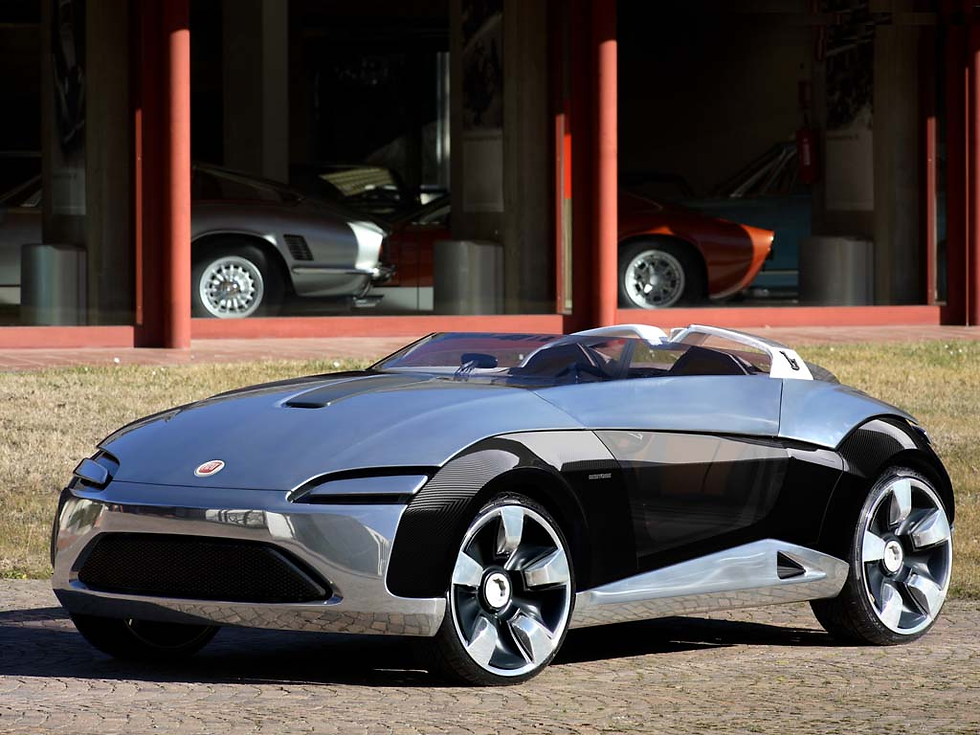


Comments