
Every Concept Car of 2005

The concept cars of 2005 reflected an automotive industry experimenting with new technologies, unconventional designs, and the future of personal transportation. Nissan introduced the rotating-cabin Pivo, Jeep demonstrated extraordinary maneuverability with the Hurricane, and Volkswagen explored lightweight diesel performance with the EcoRacer. Meanwhile, Chrysler's Firepower, Mazda's Senku, and Mercedes-Benz's F 600 HYGENIUS offered different visions of future sports cars, luxury vehicles, and alternative powertrains.
Major debuts took place at the Detroit, Geneva, Frankfurt, and Tokyo motor shows, alongside independent unveilings and specialty exhibitions around the world. This alphabetical guide features 251 concept cars, prototypes, design studies, and special show vehicles associated with 2005. From experimental city cars and hydrogen-powered vehicles to high-performance coupes and coachbuilt one-offs, the collection highlights the creativity and engineering that defined automotive design in 2005.
2005 AC Schnitzer Tension (BMW M6) Custom Show Car
AC Schnitzer based its 2005 Frankfurt Tension on the BMW M6's front-mounted 5.0-liter V10, raising output to a quoted 552 hp and 540 Nm through engine management and exhaust changes. The rear-drive coupe retained the M6's seven-speed SMG transmission but gained adjustable RS suspension lowered approximately 30 mm, 20-inch forged wheels, and eight-piston front brake calipers gripping 374-mm rotors. A reshaped hood, cooling vents, carbon aerodynamic components and quickly removable rear wing and diffusers were functional parts of the conversion. Schnitzer claimed 0–100 km/h in 4.5 seconds and a top speed above 320 km/h.

2005 Acura RD-X Concept
The RD-X displayed at Detroit in January 2005 was Acura's second study for an entry-level premium SUV, not the earlier 2002–03 show car. Its 181.5-inch body was fitted with independent suspension, 19-inch wheels carrying 255/50 tires and Brembo disc brakes with slotted rotors. The key engineering feature was Super Handling All-Wheel Drive, able to apportion torque between axles and independently between the rear wheels to aid cornering. It previewed the production RDX's positioning, although Acura did not disclose a definitive engine-output specification for this particular 2005 concept.

2005 Acura RL A-Spec Factory Accessory Concept
Acura's RL A-Spec show car used the contemporary RL's aluminum-intensive 3.5-liter V6, five-speed automatic transmission and torque-vectoring SH-AWD system as its underlying mechanical package. The factory accessory treatment concentrated on aerodynamic appearance pieces, distinctive wheels and a more assertive stance rather than a newly developed engine or platform. The production RL on which it was based made 300 hp in period U.S. specification, but that figure should not be mistaken for a separately certified output for the show build. The technically significant point was combining Acura's advanced AWD sedan with a manufacturer-developed personalization package.

2005 Acura RSX A-Spec Factory Accessory Concept
The RSX A-Spec was an Acura accessory demonstrator based on the front-wheel-drive RSX coupe, whose contemporary Type-S mechanical specification included a naturally aspirated 2.0-liter i-VTEC four-cylinder engine, close-ratio six-speed manual gearbox and independent front/rear suspension. The A-Spec program added a more aggressive aero appearance package and sport-oriented detailing; it did not announce a new powertrain. The RSX remained a lightweight, transverse-engine platform, unlike Acura's larger rear-wheel-drive sporting studies. Exact output for the individual display vehicle was not separately published, so stock Type-S figures should not be passed off as a modified performance claim.

2005 Acura TSX A-Spec Factory Accessory Concept
The TSX A-Spec examined how Acura could give its Euro Accord-derived sport sedan a stronger performance identity without redesigning the body shell. The underlying U.S. TSX used a transverse 2.4-liter DOHC i-VTEC four-cylinder engine driving the front wheels, with a double-wishbone front suspension and multilink rear arrangement. A-Spec changes focused on exterior aero pieces, wheels, suspension-oriented presentation and interior accessories rather than a new motor. The regular 2005 TSX was rated at 200 hp; there was no independently confirmed higher output for the A-Spec show vehicle.

2005 Alfa Romeo 8C Spider Concept
Alfa Romeo's 8C Spider concept opened up the original 8C Competizione's classic front-engine, rear-drive proportions for a two-seat barchetta unveiled at Monterey in 2005. The concept was associated with a roughly 4.2-liter Maserati-derived V8 and a claimed output around 400 hp; the later production Spider instead used a larger 4.7-liter V8, so the two specifications must not be conflated. Prominent 20-inch wheels, a low windscreen, carbon-fiber bodywork and the short 'coda tronca' tail distinguished the show car. Its purpose was to test demand for an exclusive open 8C, not to launch the production model immediately.

2005 Audi allroad quattro Concept
Audi's 2005 Detroit allroad quattro concept was an A6 Avant-based preview of the next-generation allroad, adding raised ride height, underbody protection and Audi's permanent quattro drivetrain to the large estate layout. Adjustable air suspension was central to its dual road-and-trail purpose, while widened arches, contrasting lower cladding and roof rails differentiated it from the conventional Avant. The show car was a near-production vehicle rather than a clean-sheet crossover. Its engineering story lay in combining road-car independent suspension and passenger-car comfort with variable ground clearance and traction; definitive concept-specific output figures were not the centerpiece of the display.

2005 Audi Q7 Hybrid Research Prototype
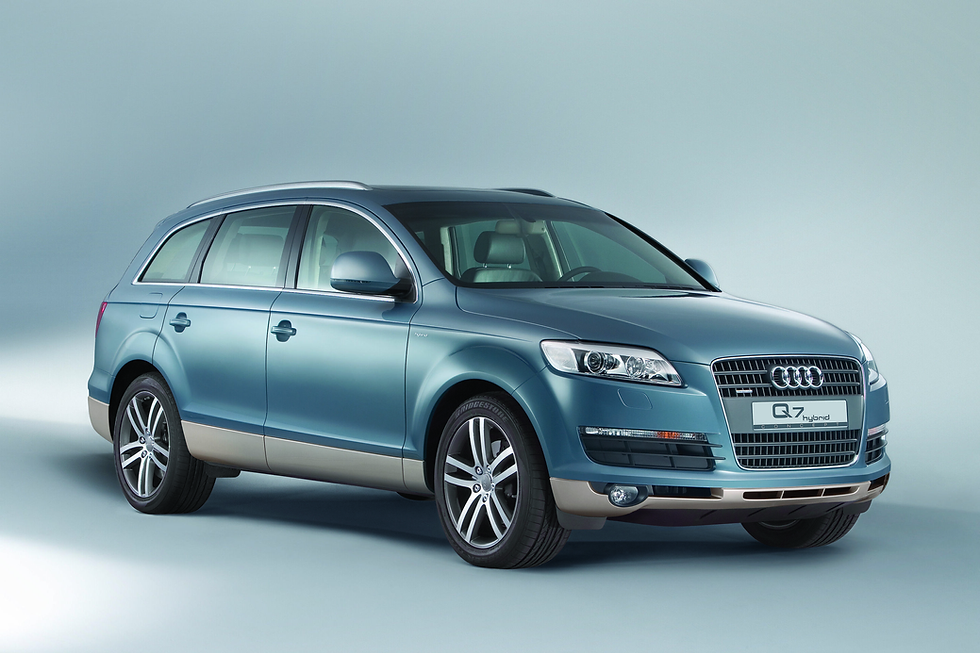
The Q7 Hybrid shown at Frankfurt paired Audi's 4.2-liter FSI gasoline V8 with an electric motor integrated into the powertrain, retaining the large SUV's quattro all-wheel-drive architecture. Contemporary Audi descriptions cited roughly 350 hp from the V8 plus electrical assistance, with the hybrid system intended to support engine-off operation, recuperate braking energy and improve low-speed response. Battery packaging and control logic were the experimental elements; the heavy three-row Q7 body remained recognizable. This was a technology demonstrator anticipating hybrid luxury SUVs, not the same vehicle as the later production Q7 hybrid variants.
2005 Audi Shooting Brake Concept
The Tokyo Shooting Brake was a functional compact grand-tourer study with a front-mounted 3.2-liter six-cylinder engine delivering 250 hp and about 320 Nm through a six-speed manual gearbox and quattro all-wheel drive. Audi quoted 0–100 km/h in 6.0 seconds and a governed 250-km/h maximum. Under the three-door wagonlike body were technology previews including magnetic-ride variable damping, LED lighting and a touch-operated navigation system. Rear seats folded to extend luggage volume, making the car a genuine packaging experiment rather than a conventional TT coupe with a decorative hatch.

2005 Bentley Continental GT Shooting Brake by Castagna Coachbuilt One-Off
Milan-based Carrozzeria Castagna converted the Bentley Continental GT into a one-off shooting brake, replacing the standard coupe's descending rear roofline with an extended roof and a reworked tail and luggage opening. The donor car supplied Bentley's front-mounted 6.0-liter twin-turbocharged W12, six-speed automatic transmission and all-wheel-drive chassis, while the coachbuilder concentrated on body reconstruction, glass and trim. It was a bespoke conversion rather than a Bentley-engineered production wagon or a clean-sheet chassis. No independently verified weight, acceleration or cargo-volume figures were published for the finished one-off, so standard Continental GT figures should not be treated as measurements of the conversion.

2005 Bertone Cadillac Villa Coachbuilt Concept
Bertone created the 2005 Geneva Cadillac Villa around an advanced GM fuel-cell-oriented chassis concept, using a long 3,200-mm wheelbase to maximize cabin space inside a 4,900-mm-long body. At 2,000 mm wide and 1,660 mm tall, it emphasized passenger volume instead of sports-car proportions. Large glass areas and unconventional passenger access formed part of its proposed luxury architecture, with a lounge-like interior intended to demonstrate new opportunities created by alternative propulsion layouts. It was fundamentally a design and packaging study: reliable completed-vehicle acceleration, battery capacity and production-range figures were not established.
2005 Bizzarrini GTS 4.4 V Coachbuilt Concept
The reborn Bizzarrini GTS 4.4 V made its Geneva appearance with an Alpina-developed 4.4-liter V8 quoted at approximately 530 hp, coupled to a six-speed ZF Switch-Tronic automated transmission. Projected performance included a sub-four-second 0–100-km/h sprint and a claimed maximum above 360 km/h; these were manufacturer targets, not independently verified road tests. Large 20-inch BBS wheels, very wide rear tires and an extended front-engine grand-touring body echoed the 1960s 5300 GT. The project was intended for extremely low-volume production under VGM Motors, but those ambitions should be distinguished from completed customer deliveries.
2005 BMW Concept X3 EfficientDynamics Research Concept
BMW's Frankfurt X3 EfficientDynamics research car used the production X3's compact-SUV structure to explore hybrid assistance, recuperation and more efficient control of engine-driven accessories. The significant engineering subject was how to integrate electrical drive components into an existing longitudinal-engine, all-wheel-drive vehicle while retaining the packaging and dynamic response expected of an X3. It was not a newly styled SUV, and the later production X3's engine choices must not be automatically assigned to the prototype. BMW had not established a single universally reported combined horsepower, battery-capacity or acceleration figure for this particular experimental configuration.
2005 BMW Z4 Coupé Concept
The 2005 Frankfurt Z4 Coupé concept converted BMW's rear-drive Z4 roadster architecture into a fixed-roof two-seat fastback with a dramatically sculpted rear hatch and reinforced body structure. The production direction ultimately centered on a longitudinal 3.0-liter straight-six, six-speed manual transmission and near-50:50 weight balance, but those later showroom figures should not be presented as final specifications for the styling show car. The rigid roof promised better torsional stiffness than the open Z4 and supported a more focused grand-touring identity. Double-kidney grille, long hood and pronounced rear wheel arches remained pure Z4 design.
2005 Bolloré Blue Car Research Prototype
Bolloré's 2005 Blue Car was an early urban electric-vehicle proposal built to publicize the French group's lithium-metal-polymer battery technology rather than a conventional gasoline platform. Compact city-car packaging, a low-mounted traction battery and electric-motor propulsion were its essential technical elements. The chemistry used a solid polymer electrolyte and required a different thermal-management approach from later lithium-ion EV packs. The 2005 prototype preceded both the later Pininfarina-styled Bluecar and its eventual production deployment, so later battery sizes, advertised ranges and motor outputs should not be retroactively assigned to this first development stage.
2005 Cadillac BLS Pre-Production Show Car
Cadillac's BLS show vehicle at Geneva previewed an entry-level premium sedan developed on the transverse-engine Saab 9-3/Epsilon architecture. Front-wheel drive, four-cylinder turbocharging and compact European dimensions were important departures from traditional full-size rear-drive Cadillacs. The production family subsequently offered gasoline and diesel four-cylinder options, including a turbocharged 1.9-liter diesel for Europe, but the original display car was primarily a design-and-market preview. Its sharp lamp clusters, central grille and angular deck lid translated Cadillac's Art and Science styling into the smaller platform.
2005 Cadillac CTS-V European Killer Custom Show Car
The CTS-V European Killer was a SEMA customization of Cadillac's first-generation, rear-wheel-drive performance sedan rather than a new Cadillac engineering platform. Its underlying CTS-V specification paired a six-speed manual gearbox with a 5.7-liter LS6 V8 on early cars or a 6.0-liter LS2 on 2006-model-year vehicles, using Brembo brakes and a sport-tuned chassis. The 2005 show build emphasized the idea of challenging AMG and BMW M sedans with American V8 hardware. Without a verified build sheet, its exact installed engine, tuning level and output should not be inferred from the nickname alone.
2005 Castagna Aria Coachbuilt Concept
Castagna's 2005 Aria was a coachbuilt derivative of the Ferrari 575M Maranello, not an independent engine or chassis project. The donor Ferrari supplied a front-mounted 5.75-liter V12, rear-drive grand-touring layout and long wheelbase, while Castagna concentrated on reshaping the exterior and creating a highly personalized interior. The standard 575M's V12 was rated near 515 hp, but a distinct performance certification for Aria has not been established. As a one-off design evolution following Castagna's earlier Rossellini, its importance was the breadth of body and trim changes possible on Ferrari mechanical foundations.
2005 Castagna MINI CrossUP Coachbuilt Design Proposal
Carrozzeria Castagna presented the CrossUP as a proposal for a more outdoors-oriented MINI derivative in 2005. The styling study envisaged an adaptable, higher-riding utility body with a more practical load area and specialized accessories for leisure trips, drawing on the existing front-engine, front-wheel-drive MINI architecture. The coachbuilder described equipment packages tailored to different activities rather than publishing a new engine program. No verifiable completed prototype weight, suspension travel, ground-clearance measurement or performance figures accompanied the proposal. It is therefore listed as a coachbuilding design proposal, not as a production MINI crossover or a confirmed mechanically re-engineered vehicle.
2005 Castagna MINI Tender Coachbuilt Design Proposal
The Tender was Castagna's 2005 reinterpretation of the small open resort or beach car, using the contemporary MINI as the starting point for a bespoke leisure vehicle. It was proposed as a yacht-side tender with special tie-down and transportation equipment for carrying it aboard larger boats. The idea prioritized an open body, easy access, weather-friendly materials and owner-selected interior colors over outright road performance. Castagna published the design and customization possibilities, but period material does not establish a verified series-produced powertrain, measured curb weight, range or acceleration. This entry describes the documented design proposal rather than an independently verified volume-production model.
2005 Chery M14 by Pininfarina Concept
The Chery M14 shown at Shanghai was a two-seat retractable-hardtop roadster designed with Pininfarina, representing a serious chassis-development project rather than merely a styling mock-up. Planned CheryPower gasoline engines included 1.6- and 2.0-liter options, paired with manual or continuously variable transmissions. Period technical coverage described MacPherson-strut front suspension, a multilink rear axle, four-wheel disc brakes and electronic stability control as an option. Its power-folding metal roof and intended crash-performance development were particularly ambitious for a Chinese sports-car program in 2005. Proposed driveline choices should not be confused with a final retail specification.
2005 Chery S16 WOW Concept
The Chery S16 WOW was a tiny city-car design associated with Enrico Fumia, unveiled during Chery's rapid expansion of its Shanghai show lineup. Its upright compact packaging, short overhangs and playful exterior shapes were intended to make a low-cost urban vehicle distinctive while retaining practical interior space. Unlike the Pininfarina M14 roadster, contemporary coverage treated the S16 predominantly as a styling and market-positioning proposal. A reliable dedicated engine displacement, battery configuration, gearbox and measured performance dataset for the WOW show car is not available; assigning specifications from unrelated later Chery city cars would be misleading.
2005 Chevrolet Cobalt Phase5 Drag Racer Competition Prototype
GM Performance Parts' Phase5 Cobalt Drag Racer was a specialized front-drive competition build centered on the 2.0-liter supercharged Ecotec family. Its 2005 SEMA presentation advertised approximately 500 hp, demonstrating components and tuning stages above the stock Cobalt SS Supercharged's 205-hp rating. The car required drag-racing-specific intake, fuel delivery, cooling, exhaust and drivetrain preparation rather than only wider wheels or body trim. It served as a parts-development showcase, showing how much performance could be extracted from the Ecotec platform under race conditions, not a street-legal factory Cobalt derivative.
2005 Chevrolet Cobalt SS by California Street Rods Custom Show Car
California Street Rods' student-built Cobalt SS was prepared for GM Performance Division's Bonneville program and presented at SEMA in 2005. It drew on the compact Cobalt's transverse Ecotec four-cylinder architecture but was engineered around land-speed demands: aerodynamic stability, safety equipment, gearing and sustained high-load engine operation. Its purpose was different from a dealer-accessory Cobalt; the work involved transforming a practical front-drive shell into a specialist competition machine. Individual horsepower and speed-record figures for other GM Ecotec Bonneville vehicles should not be attributed to the student build without its own documentation.
2005 Chevrolet Cobalt SS Coupe Open Air Custom Show Car
This 2005 SEMA Cobalt SS Open Air was a roof-technology showcase built with Webasto. Its central modification was a five-panel electronically operated glass roof that opened the normally fixed-roof coupe over both seating rows. The donor SS Supercharged used a 2.0-liter, four-cylinder Ecotec with an Eaton supercharger, front-wheel drive and a five-speed manual transmission, although the roof study was not promoted as an upgraded-power engine program. Special interior fabrics, a leather-trimmed upper dashboard and body-colored trim highlighted the factory-customization theme. It remained a coupe underneath, not a purpose-engineered structural convertible.
2005 Chevrolet Cobalt SS Time Attack Unlimited Competition Prototype
GM Performance Division's Cobalt SS Time Attack Unlimited used the supercharged 2.0-liter Ecotec with an uprated Eaton M62-based Stage 2+ package. The team quoted 264 hp and 230 lb-ft on engine boost alone, climbing to approximately 344 hp and 350 lb-ft when nitrous oxide was added. Suspension, tires, braking, cooling and safety preparation were adapted for timed circuit laps, not drag racing. The car's 2005 program was promoted after defeating a much more powerful Nissan Skyline in a tuner time-attack comparison; that result depended on the whole chassis package rather than headline horsepower alone.
2005 Chevrolet Cobalt SS Wide Body Custom Show Car
The Cobalt SS Wide Body was a factory-supported 2005 SEMA styling and handling experiment. GM widened its stance by about 64 mm and reshaped the wheel openings, rocker extensions and front/rear fascias around the new track, giving the compact front-drive coupe a more planted appearance. The underlying SS Supercharged chassis used a 2.0-liter Ecotec four-cylinder, Eaton supercharger and independent front suspension with a torsion-beam rear axle. The display principally investigated body geometry and personalization; no separate, reliably documented higher-output engine figure was claimed for this particular wide-body build.
2005 Chevrolet Colorado Yamahauler Custom Show Car
The Colorado Yamahauler was a purpose-built, motorcycle-oriented Chevrolet Colorado SEMA pickup with cargo and accessories designed around transporting Yamaha recreational machines. Its underlying midsize-truck package used a body-on-frame chassis, rear drive or available four-wheel drive, and a rear pickup bed that could accommodate racks and loading equipment. Colorado's period production engine family included 2.8-liter inline-four and 3.5-liter inline-five gasoline choices, but the precise engine in the Yamahauler needs a build record before one can be assigned. The show's engineering emphasis was useful equipment integration, not supercar-level performance figures.
2005 Chevrolet HHR Open Air Custom Show Car
The HHR Open Air illustrated a different use of Webasto's large, electronically operated five-panel glass-roof system. It could expose both the front and rear seats to the sky while preserving the Chevrolet HHR's original five-door structural layout. The build also received distinctive interior and exterior trim; its fundamental architecture remained a front-wheel-drive compact wagon with a transverse Ecotec four-cylinder powertrain. Compared with the chopped two-door HHR shown at the same SEMA event, this was a supplier-led demonstration of modular roof technology rather than a wholesale change to the body shell or engine.
2005 Chevrolet HHR Tuner Panel Custom Show Car
Chevrolet's 2005 HHR Tuner Panel converted the retro-styled compact wagon into a security-conscious delivery-van concept. Aluminum panels covered the rear-door glass and quarter windows, providing opaque sides around a cargo space quoted at up to 63.1 cubic feet with the rear seats removed. Modified front and rear fascias, rocker panels and grille completed the commercial-style appearance. Beneath the custom bodywork it retained the HHR's transverse-engine, front-wheel-drive passenger-car structure. The central design question was whether a small urban delivery vehicle could borrow the HHR's silhouette without requiring a separate van platform.
2005 Chevrolet HHR Two-Door Custom Show Car
The two-door HHR Concept took the five-door production Chevrolet HHR and rebuilt its side apertures with elongated doors, altered pillars and a windshield header lowered by roughly four inches. GM widened the track by approximately two inches at the front and four at the rear, and fitted fresh fascias, hood, grille and polished air ducts. The donor HHR was a front-drive unibody vehicle using transverse Ecotec four-cylinder engines, but the SEMA car's major work was body fabrication and changed proportions. It was a chopped-roof custom, not evidence that Chevrolet developed a production two-door HHR platform.
2005 Chevrolet Silverado Born to Tow Custom Show Car
The Silverado 3500 Born to Tow was a 2005 SEMA heavy-duty truck focused on trailering, load management and auxiliary equipment rather than straight-line speed. Its underlying Silverado HD platform used a full ladder frame, heavy-duty axles, trailer-compatible hitching and the choice of large gasoline V8 or Duramax diesel powertrains depending on configuration. The show truck added towing-oriented equipment and a customized exterior to demonstrate that aftermarket engineering extended well beyond compact tuner coupes. A specific engine calibration, maximum trailer rating or horsepower number for this unique build cannot be assumed from a similarly named production Silverado.
2005 Chevrolet So-Cal HHR Bonneville Competition Prototype
The So-Cal Speed Shop HHR was a Bonneville land-speed project based on the silhouette of Chevrolet's retro compact wagon. A heavily reworked, turbocharged and intercooled 2.0-liter Ecotec was reported at more than 800 hp, with boost pressure reaching approximately 45 psi. A specially fabricated chromoly tube chassis, extensive streamlining, lowered roof and NASCAR-style roof flaps addressed speeds targeted near 250 mph. This was a competition-bodied vehicle borrowing HHR styling, not a tuned version of an otherwise stock front-drive street HHR; the 2005 SEMA display celebrated GM's land-speed-development work.
2005 Chrysler Akino Concept
Chrysler's 2005 Tokyo Akino was developed around the idea of a compact, efficient drivetrain liberating the cabin from conventional sedan proportions. Designer Akino Tsuchiya arranged one door on the right and a pair of opposing doors on the left, opening a wide entry into an asymmetric lounge interior with a pivoting passenger chair and boothlike rear seating. Its upright one-box body made generous headroom possible in a very short footprint. Chrysler did not publish a production-ready engine displacement, gearbox or verified acceleration figure; the engineering proposition was passenger packaging, visibility and unconventional door construction.
2005 Chrysler Firepower Concept
The Detroit Firepower concept placed a 6.1-liter naturally aspirated HEMI V8 in a sophisticated two-seat grand-touring coupe engineered around Dodge Viper-derived rear-drive hardware. Chrysler quoted 425 hp, 420 lb-ft, a five-speed automatic transmission and a 0–60-mph projection around 4.5 seconds. Independent double-wishbone suspension and substantial 19-inch front/20-inch rear wheel sizes supported the lower, more polished body. At roughly 3,380 lb, it was intended as a luxury counterpoint to the raw Viper; despite its production feasibility, Chrysler never launched the Firepower as a showroom model.
2005 Chrysler KICKER Crossfire Custom Show Car
The KICKER Crossfire was an audio-system demonstrator based on Chrysler's compact, rear-drive two-seat coupe, whose Mercedes-Benz-derived chassis used independent suspension and a front-mounted V6. Its main modifications were in cabin trim, speaker installation, amplifiers and packaging of high-output audio components within the Crossfire's relatively limited interior and luggage space. It should be classified as a SEMA custom rather than a new Chrysler concept platform. The model's available factory 3.2-liter V6 and supercharged SRT-6 variant provide background, but documentation is insufficient to claim the specific modified car had either output without a build sheet.
2005 Citroën C-Airplay Concept
Citroën unveiled C-Airplay at Bologna in late 2005 as a compact, two-seat urban car with an unusually open-feeling cockpit. A broad windscreen, glass elements extending into the side doors and a removable roof treatment were designed to make occupants feel almost outside despite the small body. Rounded forms and large wheels framed a cabin intended for short, sociable trips rather than high-speed grand touring. The concept was principally about access, light and passenger experience, and Citroën did not release a confirmed full production powertrain and performance specification for it.
2005 Citroën C-SportLounge Concept
The 2005 Frankfurt C-SportLounge combined a low, swept sports-wagon body with the seating height and adaptability of a luxury four-seater. Citroën concentrated on airflow around the long roof, tapering tail and sculpted rear quarters while creating an interior capable of changing between more upright passenger seating and a relaxed lounge configuration. Its unusual body proportions and retractable or adjustable cabin details were the technical story, rather than a published acceleration target. It foreshadowed elements of the later DS5's fastback packaging, but was not itself a finished diesel-hybrid production car.
2005 Covini C6S Roadster Coachbuilt Concept
Covini's C6S was the open-roof evolution of the earlier C6W six-wheeled coupe, shown for the 2005 Essen season. Two closely spaced front axles carried four narrow front tires, while the rear axle was driven by a 4.2-liter Audi V8 rated around 380 hp. Reported construction combined a steel tubular spaceframe with fiberglass and carbon composite body panels, bringing weight to roughly 1,150 kg and a claimed top speed of about 300 km/h. Covini argued the four-front-wheel system improved brake distribution, wet-weather water displacement and stability after a front puncture.
2005 Daihatsu Be-go Pre-Production Show Car
Daihatsu's Be-go was a Tokyo-show preview of the compact, rugged SUV that became the production Be-go and Toyota Rush in Japan. It used a traditional small-SUV layout with short overhangs, upright body sides and ground clearance suited to mixed city and light off-road use. The subsequent production Be-go adopted a 1.5-liter gasoline four-cylinder and offered rear-wheel-drive-based four-wheel-drive configurations, though the exhibition prototype did not disclose every final-market drivetrain detail. Its main importance was the transition from Daihatsu's older Terios formula to a more usable five-door crossover body.
2005 Daihatsu Costa Concept
Costa was Daihatsu's recreation-oriented Tokyo concept, using a compact footprint and open, easy-clean interior treatment to suit beach and resort driving. The emphasis was on body architecture: simplified sides, durable cabin materials, access for passengers carrying equipment and a light recreational atmosphere rather than luxury-trimmed doors and conventional boot space. It was a styling and usability investigation rather than a published high-performance drivetrain program. Period material does not consistently establish its precise engine, output, wheelbase and curb weight, so later kei-car specifications cannot responsibly be copied across.
2005 Daihatsu D-Compact Concept
Daihatsu's Frankfurt D-Compact 4x4 was an approximately 1.5-liter four-cylinder compact SUV concept combining European-friendly exterior dimensions with a higher driving position and four-wheel-drive ambition. The show car used short overhangs, strongly modeled fenders and large wheel openings to suggest genuine utility despite a small footprint. It foreshadowed the later Daihatsu Terios-generation design and was distinct from a plain city hatchback. The technical headline was its new 1.5-liter engine and mini-SUV packaging, rather than a confirmed set of performance tests or final production gear ratios.
2005 Daihatsu Esse Pre-Production Show Car
The Daihatsu ESSE shown in Tokyo was a near-production example of Japan's ultra-small kei-car class, with an upright five-door body engineered to extract headroom from a minimal road footprint. The resulting showroom ESSE used a 658-cc three-cylinder gasoline engine with a compact transverse front-drive layout and low curb weight, while some domestic configurations were offered with four-wheel drive. The concept emphasized uncomplicated manufacture, comfortable access and minimal operating costs rather than sporty horsepower. It is best understood as a launch-stage design preview, not an unrelated experimental electric vehicle.
2005 Daihatsu HVS Concept
Daihatsu's Frankfurt HVS hybrid sports roadster combined a front-mounted 1.5-liter gasoline four-cylinder with an electrically assisted four-wheel-drive system. Rear electric-drive hardware could distribute torque separately to the left and right rear wheels, providing a form of torque vectoring to improve cornering balance. Daihatsu argued the combination offered the response of a larger sports engine with consumption better than an ordinary 1.0-liter car. The shallow open two-seat body helped demonstrate that hybrid technology need not be restricted to tall family hatchbacks. Specific aggregate horsepower claims should be treated as concept-stage estimates.
2005 Daihatsu SK Tourer Concept
The SK Tourer explored how Daihatsu could provide flexible touring accommodation within very compact exterior dimensions. Its high roof, adaptable seats and open passenger-to-luggage space were the point of the engineering exercise: usable interior volume per meter of body length mattered more than top speed. Large windows and easy access created a vehicle closer to a mini-MPV than a conventional performance concept. Detailed original drivetrain drawings, engine calibration and independently measured acceleration figures are not consistently published for this particular study, so the design should not be assigned the specifications of another Daihatsu kei model.
2005 Daihatsu UFE-III Concept
The Tokyo UFE-III was Daihatsu's third Ultra Fuel Economy experiment, built around extremely low mass and drag. Its narrow, tapered, three-wheel architecture, smooth covered body and canopy cockpit reduced frontal area and aerodynamic losses, with lightweight materials helping minimize rolling and acceleration energy. The seating arrangement concentrated occupants along the centerline rather than following a normal five-seat city-car layout. Daihatsu reported exceptionally high laboratory fuel-economy ambitions, but those concept-test figures were not equivalent to a later certified production rating. Its importance was demonstrating how radical body packaging could amplify small-engine efficiency.
2005 Dodge Caliber Pre-Production Concept
Dodge's Caliber concept, unveiled at Geneva, mixed a conventional transverse-engine compact-car platform with a taller five-door hatchback body. The large crosshair grille, pronounced shoulders, chunky wheel arches and high seating position positioned it between an ordinary sedan and a soft-roader. It previewed the production Caliber, which would adopt front-wheel drive and available all-wheel drive on a car-derived platform with four-cylinder engines. This was a styling and product-positioning prototype, not a finished racing or experimental-fuel vehicle. The show car's distinctive surfacing was more significant than an independently certified concept power figure.
2005 Dodge Nitro Concept
The Chicago Dodge Nitro concept was based on Jeep Liberty-related SUV architecture and explored a more road-biased, squared-off Dodge identity. A substantial wheelbase, blocky grille, large alloy wheels and broad stance gave it visual mass, while its conventional longitudinal-engine, rear-drive/four-wheel-drive underpinnings preserved utility. The subsequent production Nitro offered V6 gasoline engines and diesel variants in some markets, but those final showroom specifications should be distinguished from the initial concept exhibit. The project previewed the Nitro's core body shape and seating package rather than a novel drivetrain or lightweight composite chassis.
2005 EDAG Roadster Show Car No. 8 Design Study
EDAG's Show Car No. 8 was an independent supplier demonstration focused on changing what could be engineered into a compact vehicle body. Its experimental body construction and passenger-space arrangement were intended to show automakers alternative routes for packaging, modularity and manufacturability. Unlike a manufacturer's near-production reveal, it was a technology-and-design exercise from a company specializing in prototype engineering. Reliable released specifications for engine type, displacement, drive layout, weight and performance are not well preserved; the model should be treated as a concept proposal rather than given an invented production-equivalent engine.
2005 Fenomenon Stratos Coachbuilt Concept
Fenomenon brought a modern Stratos proposal to Geneva with a compact mid-engine chassis, composite construction and wedge-shaped coachwork paying homage to the Lancia rally original. Contemporary specifications described a Ferrari-derived 3.6-liter V8 producing about 420 hp, linked to a six-speed sequential transmission driving the rear wheels. A quoted mass near 950 kg supported ambitious claims of 0–60 mph in roughly 3.8 seconds and a top speed around 195 mph; these were project figures rather than independent tests. The proposal combined dramatic short-wheelbase proportions with production aspirations that ultimately did not materialize as announced.
2005 Ferrari GG50 by Italdesign Coachbuilt Concept
Designed by Giorgetto Giugiaro for his 50th anniversary in car design, the Ferrari GG50 used the Ferrari 612 Scaglietti's front-mounted 5.75-liter V12, rear-wheel drive and rear transaxle arrangement. The donor powertrain provided roughly 540 hp through a six-speed F1-style automated gearbox. Italdesign shortened the overall body, enlarged the rear hatch opening and reshaped the tail to give a four-seat Ferrari unusually practical luggage access, while retaining the long-wheelbase 2+2 cabin. Introduced at Tokyo, it was a commissioned coachbuilt exercise rather than an official preview of a new Ferrari production range.
2005 Fiat Oltre Concept
Fiat unveiled the gigantic Oltre at Bologna on running gear derived from the military Iveco Light Multirole Vehicle. Its approximately 3.0-liter four-cylinder turbo-diesel produced around 185 hp and 456 Nm, driving four wheels through a six-speed automatic and heavy-duty off-road drivetrain. At over three metric tons with extreme ride height and massive tires, the Oltre demonstrated capability and theatrical styling rather than lightweight efficiency. A working prototype was later driven off road, but its sheer bulk and expense made production unlikely. It was the opposite of Fiat's usual compact city-car engineering philosophy.
2005 Fiat Sportiva Latina Design Study
Sportiva Latina was a compact Fiat-themed sports-car design exercise from a Spanish studio rather than a production-intent factory model. Its low, tightly packaged body, unusual upward-opening doors and very short overhangs attempted to give a small vehicle the visual drama of a more expensive coupe. The study centered on body construction, driver access and exterior surfacing instead of a validated new powertrain. No reliable technical release establishes a completed engine, gearbox, driven axle or measured top speed, so specific numbers attached to unrelated Fiat production models should not be applied to it.
2005 Fiat X 1/99 (IED/CECOMP) Student Design Concept
Developed by transportation-design students at IED Turin with Fiat, Cecomp and roof specialist Webasto, the X1/99 revisited the spirit of Fiat's mid-engined X1/9 as a modern city-friendly coupe-cabriolet. The design integrated an unusual multifunction roof designed to change the enclosure and use of the cabin, with a compact two-seat body intended for everyday driving. The 2005 Geneva project was a built design model, not proof of a completed production powertrain. Engine displacement, horsepower and acceleration were not publicly established; its most concrete engineering contribution was the alternative roof and passenger-access arrangement.
2005 Fioravanti Lancia Kandahar Coachbuilt Concept
Fioravanti's Kandahar was a 2005 Geneva-era Lancia design study investigating how a premium passenger vehicle could combine airy interior space with a distinctive, practical body. The technical interest lay in modular passenger packaging, generous glazing, access and the efficient use of length and height, rather than in a racing-oriented chassis. The project belonged to Leonardo Fioravanti's long tradition of experimentally rethinking passenger-car architecture. Public contemporary information does not provide a trustworthy final displacement, transmission design, battery rating or tested performance figures for the individual exhibit, and these should not be invented.
2005 Fisker Latigo CS Coachbuilt Concept
Fisker Coachbuild's Latigo CS was a low-volume rebody of BMW's 6 Series coupe, not a six-cylinder sports-car prototype. Its front-engine, rear-drive grand-touring chassis retained BMW's independent suspension, and the documented 4.8-liter naturally aspirated V8 specification was rated at approximately 367 bhp and 490 Nm with a six-speed manual gearbox. Fisker replaced the coupe's exterior surfaces with new lightweight composite coachwork, revised the front fascia, rear deck and side panels, and specified custom luxury trim. The published specification quotes a curb weight near 1,696 kg and a limited 250 km/h maximum speed. Planned numbers and optional modifications changed over the project, so tuner-engine claims should not be generalized to every Latigo.
2005 Fisker Tramonto Coachbuilt Concept
The Tramonto was Fisker Coachbuild's Mercedes-Benz SL-based open grand tourer, featuring custom body panels and a fully retractable hardtop on the donor car's front-engine, rear-drive architecture. Project announcements discussed versions related to SL55 AMG and SL65 AMG hardware, including supercharged V8 or twin-turbocharged V12 power depending on the donor and build. The distinguishing changes were bespoke front and rear bodywork, hand-finished trim and limited coachbuilt production, not a novel chassis. Because different Tramonto examples used different Mercedes mechanical packages, a single horsepower figure would inaccurately describe every 2005 car.
2005 Ford E-350 Sportsmobile Ultimate Adventure Custom Show Car
The Sportsmobile Ultimate Adventure converted a Ford E-350 full-size van into a serious expedition vehicle for SEMA 2005. It relied on the E-Series' truck-derived frame, heavy-duty axles and substantial cargo volume while adding off-road preparation, tall all-terrain tires, protective equipment and camping-oriented storage. Sportsmobile conversions of this type used specialized four-wheel-drive running gear rather than the normal two-wheel-drive commercial-van setup. The exact diesel or gasoline engine and axle ratio depended on the donor vehicle and build; neither should be assumed without the specific show-van specifications. This was a real-use adventure conversion, not a passenger-car concept.
2005 Ford Equator Concept
Ford's Tokyo Equator explored a compact SUV silhouette for Asian urban customers, borrowing the practical upright proportions and utility emphasis of the Escape class. Large side glass, short ends and an elevated driving position aimed to combine city maneuverability with light-duty recreational versatility. Its importance was exterior design, passenger space and potential regional adaptation rather than a newly announced proprietary engine. The name should not be confused with the later production Ford Equator sold in China. Reliable published technical data for the 2005 stand vehicle do not support an exact horsepower, displacement or measured fuel economy claim.
2005 Ford Explorer Northern Edition Custom Show Car
The Explorer Northern Edition was a 2005 SEMA utility-oriented custom rather than a ground-up Ford SUV design. It used the contemporary body-on-frame Explorer's passenger/cargo architecture and four-wheel-drive-capable chassis as a platform for winter-weather equipment, rugged exterior trim and travel accessories. Explorers of the period offered V6 and V8 drivetrains, but the individual show truck's engine, axle gearing and output are not sufficiently documented to claim one without a build sheet. Its most relevant technical features were traction, durable cargo arrangements and equipment for cold-climate travel rather than changes to fundamental engine design.
2005 Ford Explorer Sport Trac Concept
The Detroit Explorer Sport Trac concept previewed Ford's second-generation pickup-SUV crossover. It combined a four-door passenger cabin with a short exterior pickup bed and moved toward an updated Explorer architecture with a stronger chassis and more refined rear suspension. The subsequent production model introduced an available 4.6-liter V8 alongside V6 power, but the 2005 display was principally a body-and-packaging preview rather than a final powertrain launch. The bed, rear access, larger grille and broad fenders were developed to make a small lifestyle pickup more usable for passengers without sacrificing everyday load space.
2005 Ford F-150 Red Thunder Custom Show Car
Red Thunder was a Ford F-150 custom from the 2005 SEMA truck display, designed around the short-bed, street-truck end of the F-Series spectrum. Its fabrication concentrated on personalized paint, exterior detailing, wheels, a lower-looking stance and truck-specific aftermarket components. The underlying F-150 used body-on-frame construction with a solid rear axle and engine options that ranged from six-cylinder to Triton V8 power in normal production. Which exact motor, internal modifications and power figure the Red Thunder show vehicle carried cannot be established from its name alone, so the safe technical emphasis is its donor architecture and documented customization focus.
2005 Ford F-150 Water Search and Rescue Custom Show Car
Ford's F-150 Water Search and Rescue was a 2005 SEMA special-purpose truck using the full-size pickup's payload capacity and available four-wheel-drive driveline to support emergency-response equipment. The build's defining features were rescue-oriented storage, exterior equipment mounting and the practical access afforded by an F-Series crew cab and pickup bed. Unlike an experimental concept, it remained a conventional body-on-frame truck transformed for a specialist job. The precise onboard rescue inventory, engine calibration, output and legally certified towing capacity were not consistently released for this unique build, and should not be borrowed from unrelated F-150 trims.
2005 Ford F-250 General Contractor Custom Show Car
The General Contractor F-250, or 'GC,' was a SEMA showcase of how Ford's Super Duty platform could function as a mobile workshop. Its heavy ladder frame, front and rear truck axles and four-wheel-drive configuration provided a foundation for job-site accessories, secure tool storage and equipment handling. The show build emphasized practical integration, cargo organization and work lighting, rather than trying to set a horsepower record. Ford offered gasoline V8/V10 and Power Stroke diesel options in the Super Duty range, but an exact engine and power rating for the individual GC display truck requires its specific build documentation.
2005 Ford F-250 Joyride Custom Show Car
The Joyride F-250 at SEMA 2005 adapted a heavy-duty Ford pickup for the high-end lifestyle market. Its crew-cab Super Duty chassis offered substantial payload and ride height, while the customization emphasized striking wheels, exterior refinishing, cabin comfort and aftermarket electronics. Large truck axles, a full frame and an available four-wheel-drive system remained fundamental; this was not an independent compact crossover concept. Detailed period records do not consistently identify the exact Joyride engine, transmission ratio, dyno result or unique suspension settings. Those figures should not be fabricated merely because other F-250 models used powerful V8, V10 or diesel engines.
2005 Ford Fairlane Concept
Ford's Detroit Fairlane concept explored a six-passenger alternative to both the conventional SUV and the low-roof minivan. It sat on a midsize passenger-car-derived architecture rather than a full-size truck frame, with a long, boxy body, upright windows and side-opening/sliding-door ideas to simplify access. Three rows and a remarkably airy cabin made interior volume the engineering priority. Its clean, rectangular exterior helped inspire the later Ford Flex, although the Flex was longer and differently engineered. The concept wasn't offered with a separately verified high-performance engine; its technical importance was packaging and structural layout.
2005 Ford Focus Little Red Custom Show Car
The Little Red Focus ZX3 was a 2005 SEMA hatchback customization using Ford's compact front-wheel-drive Focus platform. The three-door shell and independent front suspension made it suitable for aftermarket wheels, suspension work, body styling and a lightweight street-performance character. The standard Focus ZX3 engine family used transverse four-cylinder power, but published detail for this exact show build does not verify a unique cylinder-head setup, turbocharger or output number. The model should be described as a carefully modified tuner car rather than an all-new Ford factory prototype, with attention focused on its body and chassis personalization.
2005 Ford GT GTX1 Roadster Coachbuilt Concept
The Ford GT GTX1 was a 2005 SEMA open-top conversion developed by Genaddi Design Group, transforming Ford's mid-engined GT supercar into a removable-roof roadster. The underlying aluminum spaceframe, rear transaxle and supercharged 5.4-liter V8 remained central to the project; the standard Ford GT made about 550 hp. Removing the fixed roof required special attention to the upper structure, windshield framing and weather protection. The distinctive rear deck and open cockpit were the major engineering and styling changes. It was a specialist coachbuilt conversion, not an official Ford-produced second-generation GT body style.
2005 Ford Iosis Concept
The Frankfurt Iosis previewed Ford of Europe's 'kinetic design' language through a dramatic four-door fastback with fluid, tensioned surfaces. Its novel arrangement of opening front and rear doors provided a wide pillar-free-looking side aperture, while the low roof, broad stance and advanced cabin set it apart from a conventional Mondeo. Under the show-car design, engineers explored contemporary midsize passenger-car packaging rather than a publicly certified experimental supercar engine. Its importance was how its beltline, headlamps, side sculpting and interior layout fed later Ford production design, especially the following Mondeo generation.
2005 Ford Mustang California Dreamer Custom Show Car
California Dreamer was a 2005 SEMA Ford Mustang interpretation built around the new S197 pony-car platform, with retro proportions, a long hood and a live rear axle. The build's theme focused on cruising, customized bodywork and a distinct cabin/exterior identity rather than the architecture of a new Mustang model. Stock 2005 Mustangs came with either a 4.0-liter V6 or a 4.6-liter three-valve V8 in GT trim; without the individual builder specification it would be wrong to assign one of these outputs or claim a particular supercharger. Its significance lay in how quickly the redesigned Mustang became a canvas for special builds.
2005 Ford Mustang Racecar Competition Prototype
Ford's Mustang Racecar Prototype followed the launch of the S197 Mustang platform and used the rear-drive coupe as a basis for race preparation. The engineering subject was conversion of a production-type unibody into a competition shell, with appropriate roll structure, braking, suspension, cooling and powertrain durability for sustained circuit operation. Ford also developed separate GT-R and racing Mustang programs around this period, so their specific horsepower and equipment should not automatically be copied into the entry. The show vehicle belongs in a competition-prototype category, not among clean-sheet road-car design studies.
2005 Ford Mustang Woodward GT Custom Show Car
The Woodward GT was a personalized Mustang created around Detroit's famous Woodward Avenue cruising tradition for the 2005 SEMA season. It was based on the new-generation front-engine, rear-drive Mustang coupe with its long hood, short rear deck and solid rear axle. The show treatment emphasized paint, wheels, trim and a street-performance appearance suitable for the summer cruise scene. Mustang GT's contemporary production 4.6-liter V8 made 300 hp, but there is no reliable basis to declare the Woodward GT's exact modified output or engine parts from its show name alone.
2005 Ford Ranger STX Zero Gravity Custom Show Car
The Ranger STX Zero Gravity was a compact pickup customization designed for SEMA 2005. It retained the Ranger's body-on-frame architecture, open cargo box and rear-drive/four-wheel-drive truck proportions, with equipment and styling intended for recreational users. The STX badge identified the donor's more aggressive exterior trim, while the Zero Gravity project applied a distinct personal-use theme. The build's specific engine, axle gearing, suspension lift and aftermarket package are not comprehensively recorded in accessible manufacturer material; claiming a V6 output or a particular off-road component list without that documentation would be conjecture.
2005 Ford SAV Concept
Ford introduced the SAV, or Sport Activity Vehicle, at Geneva as a precursor to its next European generation of larger people carriers. It combined a pronounced rising waistline, tall passenger compartment and versatile seating with more dynamic, passenger-car-like proportions than the boxier Galaxy. Underneath, the concept prioritized transverse-engine/front-drive family-vehicle architecture and a long wheelbase over truck-style four-wheel drive. The technical story was interior packaging, folding seats and a comparatively low roof. Its design and proportions informed the S-MAX, rather than revealing a new high-output competition drivetrain.
2005 Ford Shelby GR-1 Running Development Prototype
The Shelby GR-1's more complete 2005 Detroit running-stage presentation developed a design that Ford originally revealed in 2004. A front-mid-mounted aluminum 6.4-liter V10 was quoted at approximately 605 hp and 501 lb-ft, feeding a six-speed manual transaxle and rear wheels. The underlying architecture drew heavily from Ford GT aluminum structures, while the polished-aluminum fastback body evoked 1960s Shelby Daytona racers. The running prototype brought the ambitious drivetrain closer to reality, but no customer production series followed. The two debut stages must be distinguished when dating the GR-1.
2005 Ford Shelby GT500 Mustang Pre-Production Show Car
The New York Shelby GT500 show car announced SVT's return to a high-output Mustang using the new S197 rear-drive chassis. Ford fitted a supercharged 5.4-liter DOHC V8 quoted at more than 450 hp and 450 lb-ft, coupled to a heavy-duty Tremec six-speed manual gearbox. The live rear axle received revised springs, dampers and stabilizer bars, while Brembo front brakes and large wheels addressed stopping power. Its 1960s-inspired stripes and Shelby badges were backed by genuine powertrain development; it previewed the production GT500 rather than being an appearance-only Mustang trim.
2005 Ford SYNus Concept
The armored-looking SYNus was Ford's deliberately unconventional Detroit concept based on the European Fiesta's small-car architecture. A compact engine compartment, thick body sides, minimal rear glass and a vault-like rear door made a city car resemble a security vehicle. The passenger area was designed as a configurable retreat with electronic entertainment and a rear-facing display, not just a normal hatchback interior. Its unusual high-sided body investigated psychological safety, cabin privacy and urban parking within a supermini footprint. Published material did not emphasize an independent high-output engine or production acceleration target.
2005 Geely Chengbao Concept
Geely's Chengbao appeared among the Chinese company's 2005 Shanghai studies during a period of rapid experimentation with small passenger-car bodies. Its contribution was design positioning and low-cost vehicle packaging, with a proposed exterior and passenger compartment intended for China's expanding private-car market. Detailed period technical evidence is thin: no reliable completed-vehicle specifications confirm a particular gasoline displacement, final drivetrain, wheelbase or tested performance. It is therefore more responsible to identify its design role and show context than to import figures from later Geely hatchbacks carrying unrelated model codes.
2005 GM Daewoo T2X Concept
GM Daewoo's T2X was a sporty crossover-coupe study shown at the 2005 Seoul Motor Show on architecture related to the S3X SUV project. Raised ground clearance, strong fender arches and a fast-sloping roof combined SUV stance with passenger-car proportions. Designers planned adaptable luggage arrangements and a more athletic Chevrolet-family front graphic, foreshadowing the visual language of future GM small SUVs. Unlike the production Chevrolet Captiva that emerged from related engineering, T2X was a styling and packaging study, and neither the Captiva's eventual engine outputs nor its final AWD calibration should be attributed to the concept as tested facts.
2005 GM Ecotec Lakester Competition Prototype
GM Performance Division's Ecotec Lakester was a single-purpose Bonneville land-speed car built around GM's compact Ecotec four-cylinder engine family. Its tiny, enclosed streamliner-style body and specialized chassis reduced aerodynamic drag while accommodating a tuned boosted engine, racing transmission and competition safety equipment. During 2005 speed-week activity it was credited with a record around 189 mph in the G/Blown Gas Lakester class, with a pass reportedly exceeding 200 mph. These were measured competition achievements, separate from the much more powerful So-Cal HHR and Phase5 drag Cobalt that also appeared at SEMA.
2005 GM Sequel Research Prototype
GM's 2005 Sequel applied hydrogen fuel-cell propulsion to a five-passenger crossover based on its earlier AUTOnomy and Hy-wire research. A fuel-cell stack powered a front drive motor and two rear wheel-hub motors, with lithium-ion energy storage, regenerative braking and steer-by-wire/brake-by-wire systems replacing many conventional mechanical or hydraulic controls. GM targeted a 300-mile range, refueling in under ten minutes and acceleration to 60 mph in under ten seconds. These were concept development goals and demonstrations, not specifications of a mass-produced SUV; the distinctive feature was integration of propulsion and control in a skateboard-like structure.
2005 GMC Grand Canyon Custom Show Car
The GMC Grand Canyon was a themed SEMA pickup based on the brand's contemporary midsize Canyon platform. The donor's body-on-frame structure, pickup bed and available four-wheel drive gave builders a foundation for recreational equipment, custom trim and a more adventurous stance. Canyon production models at the time offered compact four- and five-cylinder gasoline engines, but available summaries of the Grand Canyon show vehicle do not clearly establish which powertrain or specific suspension modifications it used. It should not be confused with a new GM architecture or given the horsepower of an unrelated racing pickup.
2005 GMC Graphyte Concept
GMC's Graphyte was an aerodynamic Detroit crossover study equipped with a version of GM's advanced two-mode gasoline-electric hybrid drivetrain concept. The engineering proposition was to package SUV utility and all-wheel-drive potential in a lower, more efficient vehicle with regenerative braking and electrical assistance. A steep windshield, flowing roof and compact wagon-style rear aimed to reduce the visual and aerodynamic bulk of a full-size truck. The hybrid technology represented development work for later production GM systems, not a verified retail powertrain configuration with a finalized battery or independent fuel-economy rating.
2005 GMC Sierra Arctic Stealth Custom Show Car
The Sierra Arctic Stealth was a 2005 SEMA full-size GMC pickup dressed for severe-weather recreation and dramatic visual presence. Its donor body-on-frame Sierra structure, truck payload capability and available four-wheel-drive system made mounting auxiliary equipment and carrying winter gear practical. The show build emphasized custom exterior equipment and interior treatment rather than developing a new Sierra engine. Because press listings do not consistently preserve an exact engine, battery, axle ratio, tire fitment or measured performance for this particular one-off, normal Sierra HD or half-ton specifications should not be copied into the concept as though they were verified.
2005 Holden Efijy Coachbuilt Concept
Holden's Efijy was a spectacular 2005 Sydney one-off paying homage to the 1953 FJ Holden with a pillarless, 5.16-meter-long coupe body on modified Chevrolet Corvette underpinnings. A supercharged 6.0-liter LS2 V8 produced approximately 645 hp and 775 Nm through a four-speed automatic rear transaxle. Height-adjustable air suspension could dramatically lower the glassfiber body for display, while huge 20-inch front/22-inch rear wheels and six-piston front brakes supported the mechanical package. Its richly detailed purple coachwork combined Australian hot-rod design with a fully engineered modern sports-car chassis.
2005 Honda All Terrain Concept Ridgeline Factory-Tuned Concept
The Ridgeline All-Terrain was a Honda-backed 2005 SEMA specialty pickup promoting the off-road potential of Honda's unibody, independent-suspension truck. The production Ridgeline's 3.5-liter V6, five-speed automatic and VTM-4 four-wheel-drive system supplied the technical starting point, while the display concentrated on tires, ground clearance, protection and utility equipment for recreation. The underlying truck was unusual among pickups for its in-bed trunk and dual-action tailgate, features that remained important to the conversion. No independently verified radically increased horsepower figure accompanied this particular All-Terrain vehicle.
2005 Honda Civic Concept
Honda's 2005 Civic Concept previewed the eighth-generation Civic's sharply wedge-shaped body and highly unusual two-tier digital instrument panel. The underlying production direction emphasized a transverse-engine, front-wheel-drive compact platform with a long wheelbase and improved passenger space despite the sharply raked windscreen. Strong shoulder lines, a compact nose and short rear overhang differentiated it from earlier upright Civics. Honda displayed design details ahead of the launch of gasoline, hybrid and natural-gas variants, but the stand concept itself was not specified as a completed high-performance engine development car.
2005 Honda Civic Si Concept
The Chicago Civic Si Concept previewed a genuinely upgraded front-drive performance coupe: Honda quoted a 200-hp 2.0-liter DOHC i-VTEC four-cylinder with an approximately 8,000-rpm redline and a close-ratio six-speed manual gearbox. Wider wheels, enlarged front air intakes, sport suspension tuning and a low coupe roof reinforced its intent, while the eventual production Si adopted a limited-slip front differential. The show car celebrated 20 years of U.S. Civic Si models and provided a close advance look at the 2006 showroom car, rather than simply adding accessories to the older 160-hp EP3 hatchback.
2005 Honda Civic Si Racecar Concept
Honda included a Civic Si Racecar Concept among its factory-supported exhibits at the November 2005 SEMA show, alongside other separately named Civic Si project cars. The racecar concept explored turning the new eighth-generation Civic Si coupe into a circuit vehicle rather than merely fitting cosmetic factory accessories. The donor platform introduced a 2.0-liter i-VTEC four-cylinder, front-wheel drive, a six-speed manual gearbox and a helical limited-slip differential. Its racing preparation concerned competition suspension, safety equipment and aerodynamic development. Honda's surviving vehicle list establishes the exhibit's identity but does not substantiate a separately measured racecar horsepower or lap-time figure; the stock Civic Si's output should not be presented as the racecar's confirmed result.
2005 Honda FCX Concept Research Prototype
The 2005 Tokyo Honda FCX Concept was a clean-sheet hydrogen fuel-cell sedan, not simply the earlier 2002–05 leased FCX with a new front fascia. Honda spread the fuel-cell stack, lithium-ion electrical storage and high-pressure hydrogen tanks through a low-floor platform to preserve cabin space. A compact high-output fuel-cell system fed an electric drivetrain, while the purpose-built body explored a wide, airy passenger compartment and styling that could not easily accommodate a conventional combustion engine. It foreshadowed the production-intent FCX Clarity, but later Clarity range and motor-output figures should not be assigned to the initial concept without qualification.
2005 Honda Sport Concept Civic Si Factory-Tuned Concept
Honda's 2005 SEMA Sport Concept Civic Si started with the new 2006 Si coupe and widened the body by 50 mm. Lightweight carbon-fiber front and rear aero pieces, side skirts, rear diffuser, adjustable rear wing and a central exhaust formed a coordinated track-focused body package. Honda also presented a lowered, circuit-oriented suspension and revised cabin treatment, finished in Anniversary White Pearl. The mechanical baseline was the new Si's 2.0-liter i-VTEC engine and six-speed manual transmission, but the 2005 release concentrated on the altered aerodynamics and chassis rather than announcing an independently tested higher-output engine. The official Honda exhibit name was Sport Concept Civic Si, distinct from the earlier Civic Si Concept shown in Chicago.
2005 Honda Sports 4 Concept
The Tokyo Sports 4 Concept was Honda's study of a sophisticated four-door sports sedan with a long, low cabin and four individualistic seats. Its layout investigated sporty driving without sacrificing passenger room, integrating a driver-focused console and advanced electronic control ideas into a relatively compact body. Honda linked the study to performance and all-wheel-drive ambitions, although an independently validated displacement, combined output and transmission specification for this show car were not made central to the release. It belongs to Honda's engineering-and-design research program rather than the ordinary Civic Si product-preview sequence.
2005 Honda Street Sport Concept Ridgeline Factory-Tuned Concept
Honda's Ridgeline Street Sport Concept took the same transverse-engine, unibody pickup platform and moved it in the opposite direction from its off-road builds. The 2005 SEMA project focused on a lowered-looking stance, a wider wheel-and-tire package, custom lower bodywork and sportier visual details. The donor's 3.5-liter V6, five-speed automatic and independent rear suspension provided a relatively carlike starting point compared with traditional solid-axle trucks. Changes addressed handling and appearance rather than replacing the architecture with rear-wheel drive or a bespoke V8. Exact modified engine output was not separately established.
2005 Honda Team Honda Research Civic Si Competition Prototype
Team Honda Research revealed a Civic Si competition build at the 2005 SEMA show as a vehicle intended for endurance road racing. It was a Honda associate-led motorsport project using the newly launched Civic Si's transverse 2.0-liter DOHC i-VTEC architecture and front-wheel-drive platform. In contrast to the separately listed Civic Si show styling concepts, the research team's goal was track durability, cooling, handling and safety preparation for competitive running. The project was publicly identified in Honda's official SEMA release, but a definitive separate dyno output, race weight and event result cannot be assumed from the standard road car's specifications. The 2005 date denotes the racing project's SEMA presentation, not the donor model year.
2005 Honda W.O.W. Concept
Honda's W.O.W. — 'Wonderful Open-hearted Wagon' — was a Tokyo people-carrier concept engineered around pets rather than only human passengers. The tall, almost rectangular body incorporated a low, accessible floor, washable surfaces, wide side openings, accommodation for dogs and flexible seating and restraint arrangements. The practical engineering questions were ventilation, ease of cleaning, animal safety and passenger access in a compact exterior footprint. The show car was not presented with a prominently certified engine-output or top-speed specification, and its unusual pet-centered equipment is far more important than a guessed drivetrain borrowed from a Honda minivan.
2005 Hongqi HQD Limousine Concept
FAW's Hongqi HQD was a large Chinese state-limousine concept presented at the 2005 Shanghai motor show and subsequently associated with the HQE program. Its monumental upright grille, long bonnet, formal passenger compartment and extended wheelbase sought to revive the ceremonial proportions of earlier Hongqi limousines using a more modern chassis and powertrain strategy. The vehicle was developed as a flagship and official-transport study rather than a normal luxury sedan launched for sale in 2005. Published reporting is inconsistent about the precise 2005 display car's engine specification, dimensions and mechanical completeness; later HQE and CA7600J limousine figures are not substituted here as though they were confirmed for the original HQD.
2005 Hummer H3 Rugged Custom Show Car
The Hummer H3 Rugged was a SEMA version of GM's compact H3 SUV emphasizing trail use. The donor H3 rode on a ladder-type frame with independent front suspension, a live rear axle and a four-wheel-drive system with a low-range transfer case. The Rugged package concentrated on improved approach protection, all-terrain tires, underbody resilience and carrying outdoor equipment rather than an entirely new SUV layout. H3 production power initially came from a 3.5-liter inline-five, but a unique build's engine and torque output should only be specified if supported by its own documentation.
2005 Hummer H3 Street Custom Show Car
Hummer's H3 Street was the road-oriented counterpart to the 2005 SEMA H3 Rugged. It used the same compact body-on-frame SUV as a base but emphasized a lower-looking stance, custom body details, large street-oriented wheels and an urban appearance. The production H3 was powered initially by a 3.5-liter inline-five and retained a truck-style transfer-case drivetrain, although the SEMA display's installed engine and exact suspension settings are not fully preserved. The project explored whether a traditionally off-road marque could appeal to customers focused on styling and pavement handling without redesigning its basic chassis.
2005 Hyundai Accent SR Concept
The Accent SR, unveiled at the Frankfurt motor show, was a sporty small-car styling study from Hyundai's European design operation and one of the company's officially recorded 2005 concepts. Based around the size and packaging of the new-generation Accent, it adopted a sharper three-door hatchback silhouette, pronounced wheel arches, lowered stance, large alloy wheels and a prominent rear spoiler. Contemporary descriptions gave approximately 4,035 mm length, 1,745 mm width and 1,470 mm height, emphasizing wider, more athletic proportions than the ordinary Accent. Hyundai used the show car to test a European-oriented performance identity; no definitive prototype-specific engine output or independently tested performance result was established.
2005 Hyundai HCT 6×2 Concept
Hyundai's HCT 6×2 was an unusual six-wheeled concept recorded at the 2005 Seoul Motor Show. The '6×2' description pointed to unconventional wheel and drive packaging rather than the two-axle layout of an ordinary small car. Beyond that, contemporary readily accessible material is thin, and the engine, powered wheels, suspension mechanism and dimensions cannot be established confidently enough for numerical claims. Its value as a historical entry is the documented six-wheel experiment at Hyundai's home-market show; the technical record should be treated as incomplete rather than filled in with speculative driveline details.
2005 Hyundai HED-1 Concept
HED-1, developed by Hyundai's European design operation for Geneva, investigated a more sophisticated approach to compact-car shape and cabin flexibility. Its high-roof passenger volume, changeable rear-seat/luggage arrangement and adjustable load platform were intended to make a short vehicle operate like a larger family car. A two-tier sliding luggage floor could extend rearward for loading or move to accommodate greater passenger legroom. The show car's distinctive contribution was this practical interior mechanism and European-oriented styling rather than a separately verified novel engine. The HED-1 name identified a design program, not a production drivetrain designation.
2005 Hyundai HND-1 Portico Concept
The 2005 Chicago Portico was a large, six-passenger family-vehicle study using an aluminum-block Lambda V6 and six-speed Shiftronic automatic as its basic drivetrain. Hyundai also designed it to accommodate a hybrid AWD arrangement with one electric motor driving the front axle and another driving the rear, creating traction without a conventional mechanical propshaft. Its pillarless side openings, opposing doors, long 3,070-mm wheelbase and two staggerable rows of three seats challenged the standard minivan layout. The large panoramic roof and reconfigurable luggage floor made interior engineering the concept's strongest feature. Hyundai's 2005 annual report identifies HND-1 as the Portico program; these are two names for the same car, not two separate concepts.
2005 Hyundai NEOS-III Concept
Hyundai's NEOS-III was a substantial Tokyo SUV concept with a broad, flowing body, a tall passenger compartment and long-wheelbase luxury packaging. The project explored a more carlike cabin and expressive exterior for future premium crossovers, including large glazing, electronic interfaces and a prominent front fascia. It was considerably larger and more luxurious than HED-1 and Portico's city-family ambitions. Period descriptions do not agree consistently on a final displacement, motor output or complete chassis specification for the exhibit, so these details should not be fabricated or imported from Hyundai's later production SUVs.
2005 Hyundai NTT Concept
The Hyundai NTT is a sparsely documented 2005 prototype-index entry whose exact relationship to other contemporary Hyundai design experiments is uncertain. Surviving summaries do not reliably identify a separately built body, the number of wheels, a powertrain layout or a public engineering data sheet. It should therefore be treated as an archival identification pending a primary show catalogue or manufacturer release, not assigned specifications from Portico, NEOS-III or any ordinary production Hyundai. The distinction matters because a claimed engine displacement or measured speed for such an entry would create false precision rather than preserve real concept-car history.
2005 I.DE.A Emerald Design Study
I.DE.A's Emerald was a 2005 Shanghai styling proposal from the Italian engineering and design house as Chinese carmakers rapidly expanded their model programs. It explored a passenger-car silhouette and interior layout for a market in which affordable family transport and modern visual identity were increasingly important. Contemporary archival mentions identify the project and event, but do not supply a reliable standalone engine type, drivetrain, brake dimensions or performance test. In this case the concept's body engineering and role as a supplier-produced design proposal should be discussed without inventing technical numbers.
2005 I.DE.A Gobi Design Study
The I.DE.A Gobi was a contrasting 2005 Shanghai concept developed by the same Italian design-and-engineering consultancy that presented Emerald. Its body theme explored utility and flexible passenger/cargo use rather than simply restyling an existing European sedan. The industrial-design work illustrated how specialist prototype firms could offer Chinese clients different vehicle architectures from one exhibition program. No consistently documented production-intent powertrain, engine output or independently measured acceleration figure survives in readily available period records; treating it as a fully homologated road-going model would misrepresent the evidence.
2005 Infiniti G35 Racing Revolution Custom Show Car
The G35 Racing Revolution was a 2005 SEMA tuner project based on Infiniti's FM-platform sports coupe. The underlying car had a front-mid-mounted VQ35 3.5-liter V6, rear-wheel drive, independent multilink suspension and a choice of manual or automatic transmission, making it a natural starting point for track or street customization. The build focused on performance-oriented exterior treatment, chassis attitude and the G35's established aftermarket appeal. Its exact fitted engine parts and dyno output are not consistently preserved in accessible documentation, so stock VQ figures should be clearly distinguished from any claimed modifications.
2005 Infiniti Kuraza Concept
The Detroit Kuraza was Infiniti's large, six-passenger luxury crossover study designed around three rows of two individual seats. Oversized side openings and an unusually long wheelbase were intended to provide easier access to the rearmost row than in conventional SUV bodies. The low roofline, tall beltline and lounge-quality cabin proposed a vehicle more focused on rear-passenger comfort than off-road travel. Although it belonged to the same luxury-SUV design conversation as the QX56, no definitive Kuraza-specific engine, gearbox and power rating were disclosed. Its major technical achievement was passenger packaging and body access.
2005 Infiniti M35 xM Custom Show Car
Infiniti's M35 xM was a 2005 SEMA customization of its new M-series rear-wheel-drive sedan. The donor M35 used a longitudinal VQ35 3.5-liter V6, a five-speed automatic and a sophisticated independent multilink chassis, providing a solid basis for wheels, suspension tuning and aggressive lower-body detailing. The xM presentation targeted luxury-car enthusiasts who wanted a sportier look without losing the M's roomy four-door cabin. The modified vehicle's precise engine calibration, brake hardware and final output are not reliably documented; the stock M35 specification must not be represented as a confirmed tuned result.
2005 Italdesign Giugiaro Otto-Vu Coachbuilt Concept
Giugiaro's 2005 Otto-Vu gave the Fiat Croma's basic vehicle package a dramatically lower, two-door grand-touring body, evoking Fiat's historic 8V name. Unlike an ordinary Croma, the show vehicle was associated with a Maserati-sourced V8 powertrain concept rather than the family car's standard transverse four-cylinder engines. Its long hood, flowing roof and close-coupled cabin were intended to demonstrate how a practical donor's components could be reorganized into a luxury coupe. Exact completed-vehicle performance and transmission specifications were not consistently published, and those of a stock Croma would be misleading here.
2005 Jaguar Advanced Lightweight Coupé Concept
Jaguar's Advanced Lightweight Coupé at Detroit was the pivotal aluminum-structure preview of the second-generation XK. It featured a long, rear-drive grand-tourer configuration with a broad grille, curved roofline and pronounced rear haunches, but the engineering highlight was Jaguar's rivet-and-bond aluminum body construction. That architecture reduced weight compared with conventional steel while improving structural rigidity. The eventual XK used 4.2-liter V8 power, a six-speed automatic and independent suspension, though the stand car should be treated as a launch preview rather than assigned all later-production performance numbers. Its lightweight construction informed Jaguar's larger aluminum-vehicle strategy.
2005 Jay Leno Bowtie Deuce Roadster Coachbuilt Concept
Jay Leno's Bowtie Deuce was a highly customized 1932-style roadster unveiled as a GM-associated 2005 SEMA project. It blended a traditional exposed hot-rod layout with Chevrolet's modern 7.0-liter LS7 small-block V8, closely related to the 505-hp Corvette Z06 engine, feeding the rear wheels. Custom chassis fabrication, modern brakes and upgraded suspension were needed to support the power in a much lighter vintage-style body. The engineering contrast was deliberate: a classic high-boy appearance with contemporary fuel-injected V8 hardware and driving controls. Published engine ratings should be treated as the LS7 baseline unless a separate modified dyno figure is established.
2005 Jeep Compass Rallye Concept
Jeep's Compass Rallye examined a smaller, street-oriented crossover with a lower, hatchback-like roof and more sculpted bumpers than the Wrangler and Liberty. Its compact unibody direction anticipated the production Compass's transverse-engine four-cylinder platform, while the broad grille and oversized wheels preserved some Jeep identity. The 2005 concept's most significant distinction was its road-biased stance and passenger-car packaging rather than low-range trail gearing. Later production Compass engine choices, including 2.4-liter gasoline power and available AWD, should not be misrepresented as certified show-car specifications.
2005 Jeep Gladiator Concept
The 2005 Detroit Gladiator was a serious Wrangler-derived compact pickup concept with a traditional body-on-frame, four-wheel-drive layout and open cargo bed. A 2.8-liter turbo-diesel four-cylinder was quoted at about 163 hp and 295 lb-ft, combined with a six-speed manual transmission. The extended-cab body used a side access door to reach rear storage space and a practical pickup box intended for long recreational loads. Solid axles, short overhangs and rugged tires maintained real Jeep off-road priorities. It anticipated the later market appetite for a Wrangler pickup but was distinct from the much newer production Gladiator.
2005 Jeep Hurricane Concept
The Jeep Hurricane was one of Detroit 2005's most mechanically extraordinary concepts, carrying a 5.7-liter HEMI V8 at each end of its carbon-fiber-bodied open chassis. Combined output was quoted at 670 hp and 740 lb-ft, with power distributed through an unusual central drivetrain. Four-wheel steering could turn all wheels the same way for sideways 'crab' movement or in opposing directions for a zero-radius turn. Its engines could deactivate cylinders to run on fewer than all 16, and a special suspension and wheel-drive layout supported off-road maneuvering. The Hurricane was a running technology statement, not a practical production SUV.
2005 Jeep Patriot Concept
The Patriot concept gave Jeep a more traditional small-SUV appearance than the Compass Rallye. A tall rectangular greenhouse, pronounced wheel arches, flat hood and seven-slot grille wrapped a compact car-derived crossover package that could be offered with front- or all-wheel drive. The eventual production Patriot used transverse four-cylinder gasoline engines on the same broad platform family as the Compass and Dodge Caliber. The 2005 show car was primarily a design preview of the more rugged-looking member of this group, not a body-on-frame rock crawler with the Wrangler's solid axles.
2005 Karmann Sport Utility Cabrio Coachbuilt Concept
Karmann's Sport Utility Cabrio was an engineering-supplier concept unveiled at Frankfurt 2005 to demonstrate whether a tall crossover body could incorporate a fully open roof. Retaining SUV-like seating height and useful passenger access while eliminating the upper steel structure posed obvious challenges for body stiffness, side sealing and retractable roof packaging. The show car explored the hardware and design compromises of such a convertible rather than launching a manufacturer-specific SUV. A reliable final engine, power output and curb-weight specification is not central to the documented exhibit, and borrowing numbers from a similarly sized production SUV would misstate its scope.
2005 Kia KCD-II Mesa Concept
Kia's California-designed KCD-II Mesa arrived at Detroit as a three-row, substantial SUV concept measuring about 192 inches long on a 116-inch wheelbase. At approximately 10.2 inches of ground clearance, it wore 22-inch wheels and 33-inch tires. Practical hardware ideas included retractable running boards, a powered towing-hitch cover and footstep, adaptive cruise control, hill-start and downhill assistance, and a full-length rooflight. Its cabin added a DVD display and modular storage. Kia deliberately left room for future engine families rather than promoting a separately verified concept horsepower figure; the emphasis was packaging and electronics in an upscale utility vehicle.
2005 Kia Multi-S Concept
The Kia Multi-S explored a flexible compact MPV/crossover designed for urban families who needed more passenger capacity than an ordinary hatchback. Its upright seating, large windows and foldable passenger/cargo arrangements emphasized interior volume rather than a classic three-box sedan. The concept formed part of Kia's 2005 push into European-oriented practical vehicles, combining crossover details with people-carrier efficiency. Contemporary specification summaries vary on whether final powertrain proposals were assigned, so an exact displacement, horsepower or EV battery capacity should not be invented. Its main technical interest was the conversion of a relatively short footprint into a versatile multi-passenger interior.
2005 Kia Rio Blue Missile Custom Show Car
One of Kia's factory-supported 2005 SEMA projects, the Blue Missile used the redesigned Rio sedan as a compact performance and personalization platform. Its front-mounted four-cylinder engine was fitted with a turbocharging package in contemporary show coverage, with claims exceeding 200 horsepower, a substantial increase over the standard subcompact. The build also emphasized custom bodywork, modified suspension, wheels, and distinctive interior and audio detailing. It was not the announcement of a turbocharged production Kia Rio: the displayed vehicle was a specialty-equipment demonstration. No manufacturer-certified acceleration, braking or maximum-speed tests for this individual car were published, so claimed tuner output should not be conflated with validated production specifications.
2005 Kia Rio Silver Streak Custom Show Car
Kia's Silver Streak was a sedan-based show build for the 2005 SEMA exhibition, created to demonstrate how far the new Rio's appearance and performance could be taken by specialty-equipment suppliers. A turbocharged four-cylinder conversion was described in period coverage, alongside bespoke aerodynamic body components, prominent wheels, lower ride height and upgraded cabin equipment. The project retained the Rio's small front-engine, front-wheel-drive mechanical architecture rather than introducing an entirely new platform. Its styling and hardware were tailored to display purposes; a rigorously tested power figure, curb weight and top speed for the specific exhibit were not released. It belongs to the tuner-show-car category, not the same class as Kia's KCD-II Mesa concept.
2005 Kia Rio5 Orange Blur Custom Show Car
The Orange Blur was Kia's brightly finished 2005 SEMA reinterpretation of the new Rio5 hatchback, with performance and multimedia work that made it distinct from the company's other Rio projects. Period accounts describe a forced-induction gasoline four-cylinder with output claimed above 200 horsepower, altered exhaust and intake hardware, lowered suspension and extensive audio electronics. The Rio5's transverse engine and front-wheel-drive layout were retained as the basis of the conversion. Custom body treatments and large wheels reinforced its show-car role. The modified engine specification was a tuner claim rather than a homologated Kia production rating, and verified drag-strip or road-test results have not been established for this car.
2005 Kia Rio5 Purple Haze Custom Show Car
Kia showed the Rio5 Purple Haze at SEMA in 2005 as an audio-centered concept build, using the practical five-door Rio platform as the foundation for an extreme entertainment installation. The show car incorporated enlarged sound-system hardware and a heavily reworked interior, along with distinctive exterior paint, wheels and show-oriented suspension changes. Contemporary accounts associate the Rio SEMA program with custom powertrain and forced-induction work, but the exact measured output of the Purple Haze hatchback should not be inferred from Kia's separately prepared Sportage or other Rio exhibits. The production Rio5 had a conventional front-engine, front-drive layout. Purple Haze was a manufacturer-supported personalization demonstration, not a new factory-developed Rio body or production trim.
2005 Kia Rio5 Red Rocket Custom Show Car
Kia's Rio5 Red Rocket was another individually named SEMA 2005 show build using the five-door Rio hatchback as its starting point. It combined an aggressive color scheme and bodywork with specialty interior trim and an open-air modification incorporating a Webasto roof treatment. Show accessories, seats, suspension and audio equipment were part of the personalization exercise rather than evidence of a distinct new Kia vehicle architecture. The donor car used a transverse four-cylinder and front-wheel drive. Kia documented the car as a show project, but did not publish a separately certified Red Rocket engine output or road-test figures. It should not be confused with the other Rio5 SEMA builds, Orange Blur and Purple Haze.
2005 Kia Sportage Solid Gold Custom Show Car
The Solid Gold Sportage was a 2005 SEMA project based on Kia's contemporary compact SUV. Its show specification reportedly included a supercharger package for the gasoline V6, altered body and door treatments, upgraded suspension and a large multimedia installation. The production Sportage provided the front-engine SUV structure and mechanical foundation, while the specialty-equipment work demonstrated possible appearance, power and cabin customization rather than a new series-production Kia. Some period reports quoted output around 265 horsepower for the supercharged display conversion; this was a project claim, not a standard Sportage rating. Final speed, acceleration and independent certification figures were not published for the show vehicle.
2005 Lada Antel-2 Research Prototype
Lada's Antel-2 was a hydrogen fuel-cell research vehicle developed by AvtoVAZ to investigate electric propulsion using Russian components and alternative-energy systems. Rather than relying on a conventional combustion engine, its electric traction system was fed by a fuel-cell generator and hydrogen storage, within a relatively compact hatchback-type body. The program represented an incremental step after the original Antel fuel-cell prototype and was demonstrated during the mid-2000s show season. Specific versions and tests varied; public accounts do not support treating every quoted range or maximum output from the Antel program as unique to this exact 2005 exhibit.
2005 Lamborghini Concept S Concept
Luc Donckerwolke's Geneva Concept S removed the usual windscreen and roof from a Lamborghini Gallardo to create two separate open cockpits divided by a central body spine. The mechanical foundation was the Gallardo's mid-mounted 5.0-liter naturally aspirated V10, approximately 500 hp, six-speed transmission and all-wheel drive. The central spine improved structural rigidity and fed air toward the engine, while small 'saute-vent' wind deflectors replaced normal windshield glass. A retractable central rear-view mirror, rear diffuser and dramatic rollover structures completed the design. It began as a styling model, with a functional prototype built later.
2005 Lancia Ypsilon Sport by Zagato Coachbuilt Concept
The Ypsilon Sport by Zagato transformed Lancia's compact front-wheel-drive three-door into a genuinely quick diesel hot hatch for Geneva 2005. Its 1.9-liter 16-valve Multijet turbo-diesel four-cylinder produced 150 PS (110 kW) at 4,100 rpm and 306 Nm at 2,000 rpm through a six-speed manual transmission. Lancia quoted a 212 km/h maximum speed and 0–100 km/h in 7.9 seconds. Zagato added a bolder grille and front air intake, widened wheel arches, 17-inch alloy wheels and a dark rear hatch beneath a largely glazed roof. Sports seats and a focused driving position made this much more than a paint-and-trim special.
2005 Laraki Borac V12 Coachbuilt Concept
Morocco's Laraki unveiled the Borac at Geneva as a front-engined, rear-wheel-drive grand-tourer proposal with a 6.0-liter V12 quoted at about 540 hp and 750 Nm. A six-speed sequential transmission was planned, with a reported 1,500-kg weight, claimed 0–100-km/h acceleration near 4.4 seconds and a maximum around 310 km/h. The body measured approximately 4.63 meters long and was much more of a luxurious GT than a stripped racing car. These were the maker's project specifications; the tiny independent company did not establish a mass-production model with independently certified performance.
2005 Lexus LF-A Concept
Lexus launched the original LF-A sports-car concept at Detroit with a front-mid-engined, rear-drive configuration and a high-revving engine projected to make more than 500 hp from under five liters. The two-seat body was low, with a long wheelbase relative to overall length, compact overhangs and a tall rear exhaust arrangement. Lexus targeted a 200-mph-class maximum speed, though this was an engineering ambition, not a tested specification of a finished retail car. The 2005 LF-A began the concept-development line culminating in the later carbon-fiber production LFA, whose 4.8-liter V10 details should not be retroactively copied into this first study.
2005 Lexus LF-Sh Concept
The Tokyo LF-Sh previewed the next Lexus LS flagship with a long luxury-sedan body, broad shoulder lines and the evolving L-finesse front-end design. The concept's engineering brief included hybrid power assistance and all-wheel-drive capability, reflecting Lexus's plans to electrify its largest sedans rather than confine hybrids to small cars. An exceptionally quiet cabin, large rear-passenger area and sophisticated electronic displays were integral to the proposal. The later production LS 600h used a 5.0-liter V8 hybrid system, but it is important not to claim that entire finalized production specification was measured or formally certified for the LF-Sh show car.
2005 Magna Steyr MILA Research Prototype
Magna Steyr's MILA at Frankfurt was a compact mid-engined sports prototype engineered around compressed natural gas. Its converted 1.6-liter four-cylinder produced roughly 150 hp, enough for a maker-claimed 0–100-km/h time of 6.9 seconds and a maximum above 200 km/h. A lightweight 6000-series aluminum spaceframe weighing about 100 kg sat beneath composite body panels, while a 76-liter CNG pressure cylinder was mounted behind the driver. Magna quoted approximately 200 km of operating range. Unlike a mere show mock-up, MILA was intended to demonstrate integrated vehicle engineering, alternative fuel and low mass.
2005 Maybach Exelero Coachbuilt Concept
The one-off Maybach Exelero was commissioned as a high-speed tire test vehicle for Fulda, pairing spectacular 5.89-meter coupe coachwork with Maybach's twin-turbocharged 5.9-liter V12. Output reached 700 hp and 1,020 Nm through a five-speed automatic transmission and rear-wheel drive. The 2,660-kg two-seater rode on special 23-inch Fulda tires, and testing at Nardò recorded a maximum of 351.45 km/h. Developed with design students and built by Stola, its purpose was to validate high-performance tire loads and show what Maybach engineering could do outside a formal limousine body.
2005 Mazda MX-5 Troy Lee Designs Custom Show Car
Troy Lee Designs' 2005 SEMA MX-5 combined the newly launched third-generation Mazda roadster with custom graphics, colors, interior trim and carefully chosen wheels. Beneath the creative treatment, the NC MX-5's front-mid-engine, rear-drive layout, independent suspension and compact wheelbase remained central to its appeal. U.S. production NC models initially used Mazda's 2.0-liter four-cylinder engine, but the exact show vehicle's engine modifications, if any, require its specific builder record. It was an artist-and-accessory collaboration, not a separate racing chassis or a new Mazda rotary-engine concept.
2005 Mazda MX-Crossport Concept
Mazda's MX-Crossport appeared at Detroit as a sporty, five-door crossover concept with a steep windshield, muscular shoulder line and aggressive front fenders. The car was engineered as a credible packaging preview for the future CX-7, combining a relatively low roof and carlike road manners with the passenger space and loading practicality of an SUV. It was not advertised as an already-certified 2007 CX-7 with that production model's exact 2.3-liter turbo output. The styling and chassis brief, rather than final showroom engine trim, were what the 2005 exhibit established.
2005 Mazda Premacy Hydrogen RE Hybrid Research Prototype
The Premacy Hydrogen RE Hybrid shown in Tokyo placed Mazda's experimental dual-fuel rotary combustion system in a practical family MPV. Its front-mounted power unit combined a gasoline-or-hydrogen-capable rotary engine with electrical motor assistance, using a front-wheel-drive layout and a transverse engine package. The hydrogen route avoided conventional piston-engine combustion while the gasoline fallback helped address limited hydrogen refueling infrastructure. Batteries and an integrated hybrid drive were intended to improve efficiency and everyday usability. The 2005 concept was a research demonstrator; later lease-vehicle power figures should not be treated as unchanged initial show specifications.
2005 Mazda RX-8 Hydrogen RE Research Prototype
Mazda's RX-8 Hydrogen RE research car used a modified twin-rotor RENESIS engine capable of running on either compressed hydrogen or gasoline. Hydrogen was introduced through dedicated injectors, with the rotary engine's relatively separated intake and combustion zones helping reduce abnormal combustion and backfire. The four-seat RX-8 body retained rear-wheel drive, rear-hinged rear doors and a near-central engine position, while hydrogen tanks occupied additional storage volume. Mazda's early test configuration carried a 35-MPa high-pressure hydrogen supply and a separate gasoline tank. This was an operating alternative-fuel vehicle rather than a new-body sports-car design.
2005 Mazda Sassou Concept
Mazda's Frankfurt Sassou was an especially detailed small-car technology study with a turbocharged, direct-injection 1.0-liter three-cylinder gasoline engine and idle-stop capability. The lightweight three-door hatchback used an innovative USB stick as a key and portable data interface, while a 'morphing' rear seat used compressed air to switch between one central or two separate seating places. The seats could fold flat for luggage, and selective exterior illumination evoked Japanese shoji screens. It was a test of low-displacement performance, adaptable cabin hardware and personalized electronics, not simply a scaled-down Mazda3 body.
2005 Mazda Senku Concept
Tokyo's Senku was Mazda's long, low four-seat rotary grand-tourer study with a next-generation 13B direct-injection gasoline rotary engine combined with a generator, traction motor and battery. The engine sat behind the front axle in a front-midship layout, helping Mazda target a near-50:50 weight distribution and low center of gravity. Very long electrically operated 'flying wing' doors opened into a four-seat cabin with advanced display technology. Its sweeping roof, long wheelbase and hybrid rotary system presented a more mature alternative to the RX-8, while remaining a pure concept rather than a production car with final power figures.
2005 Mazel Dune-Buggy Concept
The Spanish design firm Mazel displayed an open recreational dune-buggy study at the 2005 Geneva motor show, providing a second, distinctly different 2005 project alongside the company's JAV X sports-car design. The buggy used compact, exposed-body proportions, a high-clearance stance, open wheel surrounds and a minimally enclosed passenger space, all emphasizing leisure use over road-car refinement. Contemporary show documentation establishes the vehicle's presentation but does not establish a verified series-production engine installation, displacement, gearbox, weight or speed. It is therefore cataloged as a styling-led recreational concept, not described with the technical figures of an unrelated Mazel or Hispano-Suiza project.
2005 Mazel JAV X Design Study
Mazel's JAV X was a Spanish studio's open recreational show vehicle at the 2005 Geneva show, with a minimal body and buggy-like emphasis on access and driver exposure. The lightweight-looking design prioritized short overhangs, simple panel forms and a cabin that could be used for weekend recreation rather than long-distance luxury touring. It demonstrated design-house experimentation with vehicle type and body construction, not a comprehensively published racing powertrain. Period sources do not reliably establish its exact finished engine, displacement, transmission or measured top speed; quoting one would produce unjustified precision.
2005 Mercedes-Benz B-Class F-Cell Research Prototype
Mercedes-Benz's B-Class F-Cell was an early hydrogen-fuel-cell study using the tall B-Class 'sandwich' floor arrangement to package an electric drivetrain without losing a conventional family cabin. The hydrogen storage, electrical conversion hardware and traction motor were the important engineering systems, with water as the intended direct fuel-cell exhaust product. This preceded later leased B-Class F-CELL vehicles, whose stack power, range and market certifications changed as development continued. The 2005 project is best understood as a practical platform feasibility demonstration rather than a new styled sports model.
2005 Mercedes-Benz Bionic Car Research Prototype
Mercedes-Benz's roadworthy Bionic Car translated the surprisingly streamlined boxfish into a four-seat compact vehicle with a measured drag coefficient near 0.19. A roughly 2.0-liter, 140-hp turbo-diesel and selective catalytic reduction emissions technology contributed to the research program's fuel-economy and NOx goals. It measured about 4.24 meters long and used structural optimization inspired by natural forms to reduce material without sacrificing stiffness. Mercedes reported substantially lower fuel use than comparable production designs, but the famous Cd of 0.06 referred to an idealized boxfish shape model, not this full-size car.
2005 Mercedes-Benz BLUETEC Hybrid Research Prototype
The BLUETEC Hybrid was Mercedes-Benz's 2005 Frankfurt attempt to combine an efficient diesel engine with electric assistance and sophisticated exhaust after-treatment. A diesel particulate filter and NOx-reduction hardware were central to the BLUETEC approach, while regenerative braking and electrical assistance targeted fuel use in stop-start driving. The hybrid technology was an engineering demonstrator based on familiar Mercedes vehicle architecture rather than an all-new sporting body. Exact aggregate output figures varied across related Mercedes research vehicles and should not be attributed to this exhibit without identifying the specific development configuration.
2005 Mercedes-Benz CL 500 G.M. by Castagna Coachbuilt One-Off
Carrozzeria Castagna created the CL 500 G.M. as a one-off interpretation of the C215-generation Mercedes-Benz CL 500. The donor grand tourer used a 5.0-liter naturally aspirated V8 rated around 306 metric horsepower in European specification, rear-wheel drive, a five-speed automatic transmission and Mercedes' hydraulic Active Body Control suspension. Castagna's contribution was bespoke external and cabin presentation rather than a new engine or chassis; precise alteration lists are poorly documented and should not be invented. This is a coachbuilt customization of a production Mercedes, not a Mercedes-Benz factory concept. Neither a separately tested output for the finished one-off nor its altered mass or handling figures are independently established.
2005 Mercedes-Benz DIRECT HYBRID Research Prototype
Mercedes-Benz displayed DIRECT HYBRID as a distinct 2005 gasoline-electric powertrain concept alongside its diesel-hybrid work. The research combined a direct-injection gasoline engine with an electric machine, energy recuperation and coordinated engine shut-off/restart to improve efficiency without requiring an entirely new passenger compartment. Its purpose was powertrain control and transmission integration rather than a stand-alone concept-car shape. The term described a technology direction used across Mercedes prototypes; a single definitive horsepower, engine displacement or battery capacity should not be assigned unless the exact vehicle configuration is identified.
2005 Mercedes-Benz F 600 Hygenius Research Prototype
The 2005 Tokyo F 600 HYGENIUS was a family-oriented Mercedes fuel-cell research vehicle, quoted at 85 kW, or about 115 hp, from its electric propulsion system. Mercedes claimed a driving range exceeding 400 km and fuel consumption equivalent to around 2.9 liters per 100 km. The tall compact body featured unusual door and seat arrangements, adaptable interior space and a layout intended to improve the practical packaging of hydrogen equipment. Fuel-cell cold-start capability, electrical conversion efficiency and compactness were more important than straight-line acceleration. The program helped develop components for later Mercedes fuel-cell road trials.
2005 Mercedes-Benz Vision SL 400 CDI Research Prototype
Mercedes-Benz's Vision SL 400 CDI used the SL roadster as a demonstration platform for high-performance diesel technology at Geneva. The concept installed a 4.0-liter V8 common-rail turbo-diesel with roughly 315 hp and high torque in the front-engine, rear-drive SL chassis, linking the engine to the luxury roadster's automatic transmission. Its significance was placing a powerful diesel in a car traditionally associated with gasoline V8 and V12 engines while retaining refined touring performance. This was a working powertrain study rather than a diesel SL production announcement.
2005 Mercury Meta One Concept
The Detroit Mercury Meta One was a diesel-electric hybrid crossover concept based on Ford's car-derived D3/Freestyle family architecture. Its 2.7-liter twin-turbocharged V6 diesel used common-rail injection and advanced emissions after-treatment, with the combined drivetrain quoted at approximately 431 lb-ft of torque. A hybrid electrical machine and sophisticated controls were intended to demonstrate very low nitrogen-oxide emissions while retaining long-range utility. Ford also explored synthetic diesel fuel and advanced occupant-protection electronics. It was a substantial propulsion-research vehicle, not just an appearance package for a Freestyle.
2005 MINI Traveller Frankfurt Concept
MINI's 2005 Frankfurt Traveller-inspired concept explored extending the contemporary MINI hatchback into a longer estate body without losing short overhangs or recognizable retro graphics. A longer cargo floor, revised rear-door arrangement and flexible loading system focused on practical luggage access. The design echoed the classic Mini Traveller's exterior wood-frame associations while adopting modern front-drive MINI mechanical packaging. Engine figures from the later production Clubman should not automatically be ascribed to the 2005 show model; the important experiment was how rear access and a longer cabin could work inside MINI's small-car proportions. The full study belonged to MINI's Traveller concept series, shown in distinct Frankfurt and Tokyo presentations during 2005.
2005 MINI Traveller Tokyo Concept
The 2005 Tokyo MINI Traveller variant further developed the Frankfurt estate idea with regional color, trim and luggage-access interpretations. Its extended rear body, highly practical cargo opening and reconfigurable cabin differentiated it from a standard three-door MINI, whose transverse engine and front-drive platform were the logical foundation. The Tokyo car was a separate show specification of the same general design study, not proof of an all-new chassis or bespoke hybrid system. Its engineering and market relevance centered on cabin and cargo flexibility, particularly how a small premium car might accommodate outdoor equipment and personal accessories. This was the Tokyo iteration of the Traveller concept series, not the same physical presentation as the Frankfurt version.
2005 Mitsubishi Colt EV Research Prototype
Mitsubishi's Colt EV research program investigated fitting electric propulsion to a practical, small hatchback, using a compact battery supply and electrically driven wheels instead of a conventional transverse combustion drivetrain. Mitsubishi's mid-2000s work helped develop the in-wheel-motor and high-voltage control technologies later seen in other concept cars and the i-MiEV program. The Colt body was valuable as a familiar urban test vehicle whose packaging limited motor and battery installation. Details varied between test cars, so precise combined horsepower, wheel-motor count and range should not be transferred indiscriminately between the Colt EV and later Mitsubishi studies.
2005 Mitsubishi Concept-D:5 Concept
Mitsubishi's Tokyo Concept-D:5 previewed a new generation of Delica people mover that combined minivan space with SUV-like durability. The high-roof body was designed around generous passenger visibility, multiple rows of seating and a broad grille, with all-wheel-drive intent and raised ground clearance. Its long wheelbase and versatile cabin made it more practical for recreational families than a conventional crossover coupe. The 2005 exhibit established the shape and functional brief of the eventual Delica D:5, but the later production vehicle's exact diesel and gasoline engine options should not be retroactively assigned to the show car.
2005 Mitsubishi Concept-Sportback Concept
At Frankfurt, Mitsubishi's Concept-Sportback proposed a five-door fastback interpretation of the company's future compact sports-sedan design. The swept roofline, sharply creased shoulders, sloping rear hatch and bold trapezoidal grille previewed styling that would reach the next-generation Lancer family. Its chassis plan emphasized a compact front-engine passenger platform and usable rear-seat/luggage capacity, distinct from the all-out all-wheel-drive technology of Concept-X. Production Lancer engine outputs and transmission selections should not be treated as verified 2005 Sportback concept specifications; this show car's importance was integrating practicality with highly aggressive body design.
2005 Mitsubishi Concept-X Concept
The Tokyo Concept-X previewed the technology direction of the Lancer Evolution X with a turbocharged, intercooled all-aluminum MIVEC four-cylinder engine, electronically controlled AWD and an advanced Super All-Wheel Control system. Mitsubishi discussed an automated six-speed manual gearbox operated by paddles, and lightweight aluminum panels for the hood, trunk, roof and doors. Active steering, braking and roll-control systems were intended to work together rather than simply increase engine power. Reports suggested around 300 PS as a target, but Mitsubishi's initial release did not certify a final output. The mechanical integration was as radical as the aggressive exterior design.
2005 Mitsubishi Eclipse Ralliart Custom Show Car
Mitsubishi's Eclipse Ralliart was a 2005 SEMA performance interpretation of the new fourth-generation Eclipse coupe, combining more assertive aero parts and track-inspired wheels with the donor model's front-wheel-drive architecture. The standard Eclipse range offered a 2.4-liter four-cylinder and a 3.8-liter V6, with independent front and rear suspension and a low coupe seating position. The Ralliart show build explored suspension, performance accessories and styling beyond the normal GT, but a unique manufacturer-certified output cannot be established from the title alone. It was a tuner demonstration rather than a new Mitsubishi all-wheel-drive Evo coupe.
2005 Mitsubishi Goku Shin Ka Design Challenge Design Proposal
Goku Shin Ka was Mitsubishi's proposal for the 2005 Los Angeles Auto Show Design Challenge, exploring an ultimate L.A. vehicle that blended sports-car, SUV, pickup and convertible functions. It existed as digital drawings and a design narrative rather than a completed, drivable prototype. The ideas revolved around transforming body sections, changing cargo/passenger use and distinctive advanced styling. Because no complete powertrain was manufactured for road evaluation, battery capacity, transmission ratios and acceleration figures would be fictitious. Its inclusion documents a real design project, but it belongs among unbuilt styling proposals, not independently tested automobiles.
2005 Mitsubishi Nessie by Italdesign Coachbuilt Concept
Italdesign's 2005 Geneva Nessie used architecture derived from the Mitsubishi Pajero but proposed a dramatically different fastback SUV with alternative-fuel propulsion. Created with Mitsubishi and industrial-gas company Linde, it was designed around a hydrogen-fueled V8 and automatic transmission. Its sculpted coupe-like body carried a small third side door for access to the rear seats, extensive glass including lower-door panels, and huge 22-inch front/23-inch rear wheels. The study investigated how a hydrogen-compatible powertrain and unconventional visibility features might coexist with a rugged SUV foundation. It was not simply a reskinned gasoline Pajero.
2005 Mitsubishi Street Raider Custom Show Car
The Street Raider was Mitsubishi's 2005 SEMA road-oriented reinterpretation of its new Raider pickup, derived from the Dodge Dakota chassis. Its truck body-on-frame foundation and conventional rear-drive/four-wheel-drive architecture were retained, while the show treatment used a lower stance, aggressive wheel fitment and hot-rod styling. The Raider's period V6 and V8 engines supplied the relevant production baseline, but an exact Street Raider tune and output are not clearly established in the public show record. The interest was adapting a practical midsize truck into a pavement-focused personal vehicle without building a separate sports-car platform.
2005 Mitsuoka Orochi Development Prototype
Mitsuoka's Orochi reached another development stage in 2005 with its dramatic organic bodywork and a mid-engined, rear-wheel-drive sports-car layout. Wide, flowing fenders, intricate headlamp shapes and an unusually low cabin distinguished it from more angular Japanese performance coupes. The production Orochi later used a Toyota-derived 3.3-liter V6 and automatic transmission, but the show program evolved through multiple prototypes and those showroom specifications should not simply be assumed for every earlier concept. The project was a long-running attempt by a small Japanese manufacturer to create an exotic car on attainable mechanical foundations.
2005 Morgan AeroMax Coachbuilt Concept
Morgan's AeroMax was commissioned as a one-off, fixed-roof grand tourer based on the Aero 8's modern bonded-aluminum chassis and traditional handcrafted body-making. The period Aero 8 used a front-mounted BMW 4.4-liter V8, rear-wheel drive and a manual transmission, with independent suspension beneath a lightweight body. For AeroMax, Morgan added a sweeping hardtop roof, long tail, specialized glazing and a more enclosed luxury cabin. The fastback shape was intended to make the open Aero 8 suitable for all-season grand touring. Its later limited-series production developed from this initial commissioned concept.
2005 Nissan 350Z Top Gun Custom Show Car
The Top Gun 350Z was a SEMA 2005 Nissan 350Z tuner project on Nissan's front-mid-engine FM platform, where a longitudinal 3.5-liter VQ V6 drove the rear wheels through a manual or automatic gearbox. Its technical potential came from the Z-car's independent multilink suspension, large four-wheel discs and balanced coupe layout. The specific show build emphasized an aggressive exterior and aftermarket identity rather than a replacement vehicle architecture. A specialized turbocharger kit, wheel size or engine output should only be stated when tied to the individual builder's records; normal 350Z statistics are not a certified custom tune.
2005 Nissan Amenio Concept
Nissan's Tokyo Amenio was a luxury six-seater concept with an unusually roomy, high-roof cabin designed around three rows of two passengers. Large windows, distinctive door architecture and a central information/entertainment layout were intended to create an inviting interior rather than a conventional van cockpit. Nissan used the design to explore its 'Modern Living' approach, which treated seat arrangement, legroom and passenger interaction as engineering priorities. The show materials emphasized packaging and hospitality, not a specific high-performance engine or verified electric driving range. It is distinct from the tiny Pivo despite sharing the same exhibition.
2005 Nissan AZEAL Concept
The 2005 Detroit AZEAL was the first concept created at Nissan Design America's then-new Michigan studio, intended as an attainable sporty coupe beneath the 350Z. Its reported powertrain was a turbocharged 2.5-liter four-cylinder paired with a six-speed manual gearbox, on a compact front-drive sporting package. Wide wheel arches, 19-inch wheels, a sharply sloping rear roof and an active rear airfoil gave it a much more aggressive stance than an ordinary economy coupe. Nissan treated it as a design exercise, not a promise of a production model with independently measured horsepower or acceleration.
2005 Nissan Bluebird Sylphy Pre-Production Show Car
The new Bluebird Sylphy was previewed in Japan in 2005 as Nissan prepared a more spacious, comfort-oriented compact sedan. Based on the company's front-wheel-drive small-car architecture, the G11-generation Sylphy was developed for transverse four-cylinder powertrains and a cabin deliberately generous in rear legroom despite its relatively modest exterior dimensions. The Japanese-market range would use 1.5- and 2.0-liter engines, with continuously variable transmission offered on some versions. Its sweeping dashboard, low cowl and carefully controlled interior noise were more significant than radical mechanical experimentation. This was a production-model presentation, not a separate zero-emission research vehicle.
2005 Nissan Foria Concept
Nissan's Tokyo Motor Show Foria was a compact front-engine, rear-wheel-drive 2+2 coupe conceived as a contemporary interpretation of the elegant original Silvia. Short front and rear overhangs, an unusually long hood and 18-inch wheels created classic sports-coupe proportions; small rear-hinged back doors made the occasional rear seats easier to reach without a visible central pillar. Nissan described a mid-sized engine driving through a paddle-shift automatic, and the concept included active four-wheel steering. The company never announced a definitive displacement, output or production performance figure. Its engineering proposal was a compact rear-drive chassis with genuine everyday access rather than another front-drive hatchback wearing coupe styling.
2005 Nissan Frontier Impulse Beach Breaker Custom Show Car
The Frontier Impulse Beach Breaker was a 2005 SEMA lifestyle conversion of Nissan's newly redesigned D40 pickup. The underlying second-generation Frontier used a fully boxed ladder frame, front independent suspension and a live rear axle, with the strong 4.0-liter VQ40DE V6 available in the range; rear- and part-time four-wheel-drive configurations existed for the production truck. The Beach Breaker's practical interest was its recreation-focused cargo-bed arrangement, beach-use accessories and changed body treatment, intended to carry outdoor equipment more conveniently than an ordinary work-spec pickup. The original exhibition record does not establish a unique engine tune, transmission ratio set or verified horsepower result for this particular custom.
2005 Nissan GT-R PROTO Concept
Revealed at Tokyo in 2005, the GT-R PROTO previewed the styling and packaging direction of Nissan's next-generation GT-R, later launched as the R35. Its low roof, broad rear shoulders, deep front air intakes and signature four circular tail lamps represented a decisive break from the outgoing Skyline-based GT-R. The concept communicated the stance of a front-engined, all-wheel-drive high-performance coupe but was primarily a design demonstrator, not a published production-specification test car. Nissan did not certify an engine displacement, turbocharger arrangement, output or lap time for the 2005 PROTO. The later production GT-R's 3.8-liter twin-turbo V6 figures should not be retroactively assigned to it.
2005 Nissan Moco Pre-Production Show Car
The Moco display car was Nissan's personalized take on a Japanese kei-class tall hatchback, a vehicle category constrained by regulations governing length, width, displacement and output. The production Moco was a Suzuki-built, Nissan-badged compact with a 660-cc three-cylinder engine and a high-roof, front-drive package, making everyday cabin access and storage efficiency more important than acceleration. For the 2005 Tokyo presentation, finishes and cabin details illustrated how a tiny domestic commuter could become more expressive without sacrificing its narrow footprint. No distinct show-car engine, gearbox or upgraded performance figures were publicly substantiated, so the Moco concept should not be described as a high-output standalone prototype. Nissan classified this Tokyo show vehicle as a model preview; its 2005 appearance did not make it a separate clean-sheet motor-show concept.
2005 Nissan Note Inspired by adidas Concept Show Car
Nissan's Note Inspired by adidas applied fashion and sportswear ideas to the practical E11 Note five-door hatchback, rather than developing a separate sports-car chassis. The Note's tall front-drive platform placed its transverse small-displacement engine ahead of a flexible passenger compartment and generous rear-seat travel, with a wheelbase unusually long for its overall length. adidas-specific materials, colors, graphics and interior surfaces were intended to make the compact car feel like a personal accessory. The project mattered as an early manufacturer-brand collaboration focused on modular trim and identity. Neither a competition suspension nor a unique adidas engine specification was established for the display vehicle.
2005 Nissan Pivo Research Prototype
The three-seat Nissan Pivo was a battery-electric city-car experiment whose entire passenger pod could turn through 360 degrees above its compact running gear. Drive-by-wire steering and controls eliminated the need for a fixed mechanical steering-column connection, while a Nissan-developed lithium-ion battery and compact electric motor supplied propulsion. Camera-based 'see-through' pillars and an Around View Monitor reduced blind spots, and an infrared gesture interface let occupants operate selected cabin functions by pointing at the dashboard. With its centrally positioned driving seat and rotating cabin, the Pivo attacked maneuverability as a packaging problem: the driver could point the cabin toward the intended direction instead of reversing the car.
2005 Nissan Rock'd Frontier Custom Show Car
Rock'd Frontier was a specialist 2005 SEMA interpretation of Nissan's second-generation D40 midsize truck. The production platform combined a boxed ladder frame, independent front suspension, rear leaf springs and available four-wheel drive, while its 4.0-liter DOHC V6 formed the higher-output factory powertrain option. The customization was oriented toward off-road identity, cargo use and aftermarket truck hardware rather than a clean-sheet Nissan architecture. Because individual Rock'd build-sheet details are poorly preserved, a particular lift height, axle ratio, winch model or engine horsepower should not be invented. The documented point is a customized truck displayed at SEMA, not an experimental manufacturer-developed propulsion system.
2005 Nissan Sport Concept
The 2005 New York Sport Concept proposed a compact three-door Nissan hatchback with the visual aggression of a club-racing car. A short rear overhang, wide track, pronounced wheel arches, low-profile tires and a roof spoiler emphasized handling and cornering grip, while its interior used lightweight-looking seats and a driver-focused instrument layout. Nissan positioned it as an affordable youth-performance direction below the 350Z. Unlike the Z, the concept did not establish a certified rear-wheel-drive sports-car platform or publish a definitive engine-output figure. The principal innovation was packaging a sporting stance and potentially usable hatchback cargo area into a small urban car.
2005 Nissan Wingroad Pre-Production Show Car
Nissan's Wingroad presentation previewed the Y12-generation compact Japanese wagon with a longer-feeling roofline, practical rear loading aperture and flexible seating for everyday cargo duties. The production Wingroad adopted front-wheel-drive small-car components, with 1.5- and 1.8-liter four-cylinder engine options and continuously variable transmissions on relevant versions. Sliding and folding seat arrangements, a low loading threshold and easily cleaned luggage surfaces were central to the wagon's usability proposition. As a 2005 preview of a market-bound vehicle, it should not be confused with an unrelated concept featuring novel hybrid batteries or a new four-wheel-steering system. Its technical achievement was efficient vehicle packaging.
2005 Nissan Zaroot Concept
The Geneva-show Nissan Zaroot imagined a compact off-road vehicle with the silhouette of a performance coupe. Its angular bodywork, very short overhangs, substantial ride height and huge gullwing-style side doors removed much of the traditional visual separation between sports coupe and utility vehicle. The concept emphasized access and seating within a rugged-looking shell, using large wheels, strong protective forms and a substantial lower-body structure to imply off-road ability. Nissan did not release a thoroughly validated engine, transfer-case, approach-angle or suspension-travel specification. Consequently, its significance lies in radical body and door packaging, not a verifiable claim of production-grade rock-crawling performance.
2005 Opel Antara GTC Concept
Opel unveiled the Antara GTC at Frankfurt as a two-door, four-seat sport-crossover study roughly 4.53 meters long. The concept combined an all-wheel-drive chassis with a 1.9-liter twin-turbo diesel four-cylinder quoted at about 212 hp and 400 Nm, driving through a six-speed automatic. Its 20-inch wheels, low coupe-like roof and high beltline hid the sort of elevated seating and road clearance expected of an SUV. Opel claimed a 0–60 mph time around 7.8 seconds, but that was a projected concept figure rather than an independently certified production result. The design provided an early preview of the forthcoming Antara SUV's visual language.
2005 Opel Astra Diesel Hybrid Concept
General Motors revealed the front-wheel-drive Opel Astra Diesel Hybrid at Detroit in January 2005. A 1.7-liter turbo-diesel four-cylinder produced 125 hp and 280 Nm, assisted by two electric motors rated at 30 and 40 kW and integrated with a two-mode hybrid transmission. Electric launch, engine shutdown at idle and regenerative braking were all included in the engineering concept. GM projected fuel consumption below 4.0 liters per 100 km and a 0-100 km/h sprint in less than eight seconds, but those were development targets rather than independently certified road-test figures. The Astra-based demonstrator anticipated diesel-electric powertrains in family cars without entering production in that configuration.
2005 Orca SC7 Development Prototype
The Swiss-built Orca SC7 was pitched as an extreme mid-engined supercar around a carbon-fiber monocoque and ultra-light bodywork. Its planned power unit was an approximately 4.2-liter Audi-derived V8 with twin turbochargers, quoted at roughly 850 hp and 1,000 Nm, routed to the rear wheels through a sequential gearbox. The developers cited a mass near 850 kg, a sub-2.5-second 0–60 mph sprint and a potential top speed around 400 km/h. These are contemporary project claims, not independently measured homologated results. More than its flamboyant shape, the technical story is an unusually aggressive power-to-weight target pursued by a tiny specialist manufacturer.
2005 Pantac ALA.s Design Study
Pantac's ALA.s was an obscure prototype recorded at the 2005 Shanghai Motor Show, a venue where local industrial and design firms increasingly exhibited experimental vehicle bodies alongside large automakers. The available record establishes its show presence, but does not reliably specify whether it had a running internal-combustion engine, an electric drivetrain, or only a static design-model chassis. Its correct historical treatment is therefore as an experimental appearance with limited documentation, not as a car for which invented horsepower, acceleration or battery figures can fill the gaps. A credible mechanical profile would require period engineering sheets or original builder material that has not been substantiated.
2005 Peugeot 1007 D-Day Custom Show Car
The D-Day was a themed derivative of Peugeot's compact 1007, a tall front-wheel-drive city car notable for its electrically operated sliding doors on both sides. The underlying 1007 platform offered transverse 1.4- and 1.6-liter gasoline engines and a small 1.4-liter HDi diesel in its regular range, with conventional manual or automated-manual transmission configurations depending on variant. It also used Peugeot's removable Cameleo interior trim panels to personalize the cabin. The D-Day show treatment explored how the unusual door apertures, compact wheelbase and interchangeable cabin surfaces could support a themed display car. A unique D-Day engine conversion or measured performance figure has not been firmly documented.
2005 Peugeot 1007 RC Custom Show Car
Peugeot's 1007 RC dressed the sliding-door city car as a compact hot hatch, with Onyx Black paint, aluminum detailing, a more aggressive bumper treatment, rear spoiler and 18-inch alloy wheels. Unlike the ordinary 1007's modest petrol and diesel options, the RC was described with a specially developed 1.6-liter engine producing approximately 140 bhp. Leather and Alcantara gave its small cabin a more premium sporting character, while the electrically operated sliding side doors remained the defining engineering feature. The RC was publicly displayed in 2004 and continued to appear in 2005-era concept archives; it should not be presented as an entirely new 2005 design debut.
2005 Peugeot 20Cup Concept
The three-wheeled Peugeot 20Cup combined two widely spaced front wheels and one rear drive wheel in a stripped-down, two-seat carbon-fiber speedster. It used the PSA-BMW-developed 1.6-liter turbocharged four-cylinder, quoted around 170 hp and 240 Nm, driving through a six-speed sequential transmission controlled by steering-wheel paddles. Peugeot targeted a mass of roughly 500 kg, far below a normal sports coupe, while the exposed front suspension and narrow central fuselage created motorcycle-like immediacy. Unveiled at Frankfurt, the machine showed how a small turbo engine, low mass and unconventional three-wheel layout might generate sports-car responsiveness without a large-capacity powertrain.
2005 Peugeot 407 Prologue Coupé Pre-Production Show Car
The Geneva 407 Prologue was an almost production-ready presentation of Peugeot's upcoming 407 Coupe, sharing the sedan family's front-drive transverse-engine platform and front double-wishbone, rear multi-link suspension architecture. The eventual coupe was offered with six-cylinder petrol and diesel engines, including a 3.0-liter V6 gasoline engine and a 2.7-liter twin-turbo HDi V6, but these later showroom specifications should not be mistaken for a separate Prologue tuning claim. Its unusually long front overhang, deep central intake, sweeping roof and large doors delivered more dramatic proportions than the four-door 407. This was a luxury grand-tourer design and engineering preview, not a bespoke race car.
2005 Peugeot Moovie Concept
Moovie was Peugeot's winner from its design competition, conceived by Portuguese designer André Costa as a microscopic urban two-seater. The concept used a near-spherical glazed central cabin between giant wheels, with its body shape intended to maximize visibility, interior room and maneuverability within a tiny footprint. Oversized side openings and an almost toy-like wheel-to-body ratio made its packaging more unusual than its proposed powertrain. Presented as a design-study mock-up rather than a fully homologated test car, the Moovie had no confirmed road-ready engine, battery capacity or performance test figures. Its technical interest was the reduction of urban-vehicle architecture to wheels, cabin and access.
2005 Phiaro Eternity Design Study
Phiaro's Eternity showcased the Japanese design and engineering firm's ability to produce an exotic sports-car form outside the mainstream manufacturer system. The low cockpit, deep side intakes, broad rear shoulders and pronounced wheel arches suggested a mid-engine layout and track-focused aerodynamics. But exhibition material available for the Eternity does not consistently confirm a completed running powertrain, displacement, gearbox, final mass or certified maximum speed. It should be treated as an independent advanced styling and prototype-manufacturing exercise, not assigned a generic supercar V8. Its importance lies in showing how a specialist engineering house could package and build complex show-quality bodywork.
2005 Pininfarina Maserati Birdcage 75th Coachbuilt Concept
Pininfarina's Birdcage 75th celebrated the coachbuilder's anniversary with a full-size futuristic supercar built around Maserati MC12-derived racing hardware. Beneath its transparent bubble canopy was a mid-mounted 6.0-liter V12 with approximately 700 hp, coupled to a sequential gearbox and rear-wheel-drive layout. The carbon-fiber chassis, dramatic enveloping glazing and tightly integrated cockpit reinterpreted the classic Maserati Birdcage racer as a rolling glass sculpture. Its body dispensed with conventional doors in favor of a large upward-opening canopy, while cameras and digital displays supplemented the driver's view. The mechanical foundation was real racing technology; the extreme canopy and cabin were concept-level ideas.

2005 Pontiac G6 by Roush Custom Show Car
Roush's G6 concept translated Pontiac's front-drive midsize coupe into an aftermarket performance-and-appearance package for SEMA 2005. The G6 base architecture used a transverse engine, independent front and rear suspension and a body shell shared with the sedan range, so suspension calibration, wheels and aerodynamic trim were natural targets for customization. Roush's involvement signaled an attempt to give the two-door a sharper handling and visual character than the standard commuter model. Public summaries do not consistently preserve a unique Roush dyno figure, calibrated supercharger specification or verified brake-component inventory. Those details cannot responsibly be inferred from unrelated Roush Ford packages.
2005 Pontiac G6 Performance Coupe Custom Show Car
GM Performance Division's G6 Performance Coupe was a 2005 SEMA development of Pontiac's front-drive Epsilon-platform two-door. The road-going G6 offered transverse V6 power, independent suspension and four-wheel disc brakes on higher specifications; the performance display added more aggressive aerodynamic components, wheels, upgraded braking treatment and firmer chassis presentation. The point was to show how a mainstream midsize coupe could be packaged for a stronger enthusiast identity. Specific claimed horsepower, displacement or transmission changes should be attached only to the actual SEMA build sheet, not borrowed from later G6 GXP production models. It remained an accessory-and-tuning demonstrator rather than a new Pontiac architecture.
2005 Pontiac Solstice Weekend Club Racer Competition Prototype
The Solstice Weekend Club Racer was GM's 2005 SEMA interpretation of its new front-engine, rear-wheel-drive Kappa-platform roadster for amateur track use. A detachable hardtop, prominent roll protection, competition-inspired seating, modified body detailing and performance-oriented wheels and tires reduced the emphasis on casual open-air touring. The production Solstice supplied a near-50:50 weight-distribution target, independent suspension and a 2.4-liter Ecotec four-cylinder rated at about 177 hp, but show-specific racing hardware should be distinguished from factory road-car equipment. The concept foreshadowed the small roadster's real-life autocross and club-racing potential, not an entirely separate mid-engine race platform.
2005 Pontiac Torrent Winter Sports Custom Show Car
Pontiac's Torrent Winter Sports was a 2005 SEMA accessory concept built around GM's compact Theta-platform crossover. The regular Torrent used a transverse 3.4-liter V6 and five-speed automatic, with front- or all-wheel-drive configurations available. The show vehicle's roof-mounted snowboard hardware, cargo-management accessories, all-weather detailing and trail-minded tires were chosen to support ski and mountain trips while retaining a five-seat cabin. Unlike a factory 4x4 concept with low-range gearing, its technical basis remained the production crossover's road-oriented suspension and electronically managed AWD option. No unique engine output or serious off-road performance rating was certified for the exhibition vehicle.
2005 Proto Motors Spirra Development Prototype
South Korea's Proto Motors developed the Spirra as a genuinely low-slung, mid-engined rear-drive sports-car program, rather than a reshaped economy hatchback. Its prototypes used lightweight body construction, a central two-seat cabin, independent suspension and a mid-mounted V6 powertrain; later development versions adopted supercharging and different outputs. The 2005 Seoul appearance belonged to that evolving preproduction program, so its specific engine tune and performance must not be conflated with the more powerful versions launched later under Oullim. The technical ambition was a domestic Korean specialty coupe with a low center of gravity and exotic-car configuration, built in very small numbers rather than mainstream mass production.
2005 Renault Clio Renaultsport Concept
Unveiled at Frankfurt in 2005, Renault's Clio Sport Concept previewed the hot hatchback based on the third-generation Clio. Its transverse 1,998-cc naturally aspirated DOHC 16-valve four-cylinder was quoted at 182 bhp at 6,500 rpm and 200 Nm at 5,250 rpm, driving the front wheels through a six-speed manual transmission. The steel unibody rode on a 2,585-mm wheelbase and had wider tracks, performance suspension and a more aggressive body, including enlarged wheel arches and a rear underbody diffuser. The subsequent 2006 Clio Renaultsport reached 197/200 PS, so its later production output must not be retroactively attributed to this particular 2005 prototype.
2005 Renault Egeus Concept
Renault's Egeus at Frankfurt was a four-seat luxury crossover with a muscular high-riding body, panoramic glazing and rear-hinged rear doors that could open without a conventional B-pillar obstructing access. The drivetrain specification centered on a 3.0-liter turbocharged diesel V6 producing approximately 250 hp and 550 Nm, matched to a seven-speed automatic transmission and all-wheel drive. Large wheels, pronounced shoulders and raised seating combined SUV packaging with the driving position and interior materials of a premium grand tourer. Its engineering premise was long-distance diesel torque, all-weather traction and improved cabin access, rather than a battery-electric or hydrogen powertrain.
2005 Renault Zoé (Z17) Concept
The 2005 Geneva Zoé was Renault's compact three-seat gasoline concept, unrelated mechanically to the much later all-electric production Zoe. A turbocharged 1.2-liter four-cylinder was proposed for the tiny city-car package, with low fuel use and emissions as primary targets. Its asymmetric interior prioritized two adult seats and a smaller third place, using a curving glass canopy and compact exterior length of approximately 3.45 meters to brighten a minimal footprint. The panoramic roof, customized cabin fittings and carefully arranged luggage space made packaging the main innovation. Exact acceleration and certified power output for the single show car were not consistently published.
2005 Rinspeed Chopster Custom Prototype
Rinspeed presented the Chopster in 2005 as a radically modified Porsche Cayenne, developed to turn a tall, practical SUV into a lower and more dramatic performance vehicle. The construction demanded changes to the upper body, roof, glazing and doors rather than just bolt-on styling components; the signature treatment substantially reduced the roof height and altered the Cayenne's side profile. The underlying Porsche chassis and all-wheel-drive SUV drivetrain remained central to the project, although advertised power upgrades and precise engine outputs varied between configurations. Rinspeed itself records Chopster as a 2005 novelty, separate from its 2005 Senso. The vehicle should be identified as a Porsche-based custom prototype rather than a new Porsche factory concept.
2005 Rinspeed Senso Concept
Rinspeed's Senso explored a three-seat sports-coupe cockpit that could react to how its driver was feeling. Developed with technical partners, the Geneva concept used biometric and behavioral sensors to influence ambient lighting, visual displays and other cabin responses, aiming to reduce fatigue or overstimulation. Reconfigurable seating, extensive use of advanced plastics and a smooth aerodynamic body were just as important as raw performance. The project was also discussed in connection with alternative-fuel operation, but a consistently validated powertrain-output sheet is harder to establish than the human-machine interface. Treat the Senso as a biofeedback and materials research vehicle, not merely another generic mid-engine supercar.
2005 Saturn Aura Concept
Saturn's 2005 Detroit Aura concept previewed the next generation of GM's midsize Saturn sedan on the front-drive Epsilon architecture. Its long wheelbase, comparatively short overhangs, low greenhouse and sharply defined side surfaces marked a deliberate move away from the brand's earlier plastic-panel aesthetic. The concept was associated with a transverse V6 and a six-speed automatic transmission, aligning Saturn with more sophisticated mainstream European-style sedans. The Aura's engineering focus included stiffness, ride isolation and cabin refinement rather than an entirely novel propulsion system. The resulting production Aura arrived for the 2007 model year, but its later range of engines and trims should not be treated as all belonging to the original show car.
2005 Saturn Ion Red Line Wide Body by LJ Garcia Custom Show Car
LJ Garcia's SEMA wide-body Ion Red Line started with Saturn's Delta-platform performance coupe, whose factory engine was a supercharged 2.0-liter Ecotec four-cylinder rated at 205 hp and paired with a five-speed manual. The stock Red Line also included a sport-tuned suspension, performance brake hardware and front-wheel drive. The custom show car added striking yellow paint, heavily widened fenders, an aggressive aero kit and an elaborate high-power audio installation, shifting its focus toward the tuner scene. The underlying supercharged Ecotec specification is documented, but a particular upgraded boost pressure, horsepower figure or competition lap time for Garcia's finished vehicle should not be assumed.
2005 Saturn Sky Pre-Production Show Car
The Sky shown by Saturn in 2005 was a production-bound two-seat roadster built on GM's new rear-wheel-drive Kappa platform, sharing much of its basic engineering with the Pontiac Solstice. The production-intent specification used a front-mounted 2.4-liter Ecotec four-cylinder developing roughly 177 hp, a five-speed manual gearbox and independent suspension at all four corners. A long hood, rear-set cabin, pronounced fenders and manually operated fabric roof gave it more classic sports-car proportions than Saturn's existing compact cars. The turbocharged Sky Red Line powertrain arrived later and should not be attributed to this original 2005 presentation.
2005 Sbarro Citroën C2 V6 Student Design Concept
The Sbarro school transformed a Citroën C2 into a mid-engined, rear-wheel-drive two-seat sports machine for Geneva 2005. A 3.0-liter V6 producing approximately 165 kW (221 hp) replaced the small hatchback's standard transverse four-cylinder powertrain, driving through a five-speed manual gearbox. Custom carbon-fiber body panels, enlarged wheel arches and 19-inch wheels created the radically widened exterior; rear seating was sacrificed to accommodate the engine and revised structure. It was a working engineering conversion, not merely a C2 with a spoiler and a V6 badge.
2005 Scion Futura xA Art Car
The Futura xA was an art-car interpretation of Scion's small five-door hatchback, which was based on Toyota's front-wheel-drive subcompact architecture and normally powered by a transverse 1.5-liter four-cylinder. Artist-designed graphics transformed the car's compact metal body, bumpers and glazing into a continuous surface for visual work rather than modifying its suspension or drivetrain. Scion displayed the project within its 2005 SEMA creative-collaboration program, where personal expression was a deliberate counterpart to the usual horsepower-focused tuner builds. A distinct Futura engine output, transmission conversion or performance test is not documented; the project is best understood as vehicle-body design rather than performance engineering.
2005 Scion Justin Hampton xB Art Car
Artist Justin Hampton's xB at SEMA used Scion's first-generation, tall-sided five-door box as a mobile illustrated canvas. Beneath the graphics was Toyota's compact front-wheel-drive xB architecture, with a transverse 1.5-liter four-cylinder, comparatively long wheelbase for its exterior length and an exceptionally upright, easy-loading cabin. Hampton's design exploited the flat doors, rectangular tailgate and broad roof surfaces in ways a conventional curved sports coupe would not permit. This was a one-off art installation on a fully recognizable road-car shell, not a mechanically distinct concept with its own engine specifications. Its engineering relevance comes from the xB's unusual body proportions and accessible surface area.
2005 Scion Saber tC Art Car
The Saber tC at Scion's 2005 SEMA Art Car display turned the brand's front-drive sport coupe into a graphic design object. The underlying tC used Toyota's 2.4-liter DOHC four-cylinder, independent rear suspension, a panoramic roof and a practical hatchback tailgate, giving it a noticeably more substantial mechanical package than the smaller xA and xB. The Saber presentation was distinguished by its customized artwork, finishes and body graphics rather than a new engine or laboratory-developed suspension. No show-specific dyno number or experimental powertrain was publicly substantiated. It demonstrated how Scion used conventional production cars as a starting point for individual creative identity.
2005 Scion t2B Concept
Developed at Toyota's Calty design center, the Scion t2B offered a dramatically reworked take on the boxy urban people carrier. The concept used a 2.4-liter four-cylinder and four-speed automatic, with 20-inch wheels and 14-inch brakes helping establish its substantial show-car stance. Its most unusual engineering feature was access: a sliding door on one side and rear-hinged doors on the other, creating different ways to load passengers and equipment. With a wheelbase around 106 inches, the t2B was longer and roomier than the original xB despite its youth-market styling. Interior entertainment features and a practical upright roof mattered as much as the powertrain.
2005 Scion xA Speedster by Five Axis Custom Show Car
Five Axis cut down the Scion xA's roof and radically changed its silhouette to create the open-top Speedster for SEMA. Unlike the standard five-door xA, the customized body required substantial reworking around the windshield, door apertures, rear deck and visible upper structure to achieve a low, roadster-like appearance. The donor car's mechanical roots were a compact front-wheel-drive Toyota platform powered by a transverse 1.5-liter four-cylinder, but the altered shell was a one-off showpiece, not a validated factory cabriolet with production rollover and weather-sealing certification. Published reports focus on the body conversion and show-car presentation rather than a separate verified engine tune.
2005 SEAT Altea FR Prototype
SEAT displayed the Altea FR prototype at the September 2005 Frankfurt motor show to demonstrate a sportier diesel version of its compact MPV. The front-mounted 2.0-liter turbo-diesel four-cylinder was developed for 170 PS and approximately 350 Nm of torque, sending drive to the front wheels through a six-speed manual gearbox. Revised bumpers, larger air intakes, alloy wheels, sport suspension and a more supportive cabin differentiated the study from the regular Altea. The concept was a nearly production-ready performance derivative rather than a clean-sheet platform; the production FR subsequently appeared in 2006. Published acceleration and top-speed figures for the later road model are not treated as independently measured prototype results.
2005 SEAT León Pre-Production Prototype
SEAT's Geneva León prototype provided a near-final look at the second-generation hatchback, transferring the Altea's angular Walter de Silva design language to a lower and sportier five-door. The engineering package combined Volkswagen Group's transverse-engine front-drive architecture with a 2.0-liter turbocharged direct-injection TFSI four-cylinder quoted at about 185 metric horsepower and 270 Nm, paired with a six-speed manual transmission. Hidden rear-door handles, a steeply raked windshield and a strong shoulder line gave the car coupe-like proportions without losing the practicality of rear doors. The prototype previewed a mass-produced hatchback rather than a distinct motorsport homologation special.
2005 Škoda Yeti Concept
The 2005 Geneva Yeti was Škoda's first major look at a compact, upright crossover that balanced all-weather utility with the packaging of a small family car. Its boxlike passenger cell, distinctive front lamps, exceptionally large windows and split rear tailgate made it unusually practical for a design study. The bottom tailgate section could become a seat or loading platform, and the cabin incorporated features such as a removable navigation unit and storage for outdoor equipment. Škoda prioritized configurable interior space, access and visibility rather than publishing an exotic engine specification. The concept anticipated the production Yeti that arrived several years later, but it was not yet the final showroom chassis.
2005 Škoda Yeti Roadster Concept
Škoda followed the Geneva Yeti with a more radical orange open-top version at the 2005 Frankfurt show. Developed with roof specialist Karmann, its removable front roof panels and folding rear canvas section could turn the little crossover from enclosed SUV into a semi-open pickup-style leisure vehicle. The rear seats folded to create a flatter load floor, and the clever split tailgate carried over from the original Yeti study. The body retained compact crossover proportions while asking whether one roof system could support multiple seasonal uses. No exclusive turbo engine or measured top-speed figure was central to the concept; its key technology was adaptable body and roof packaging.
2005 Smart Crosstown Concept
Smart's 2005 Frankfurt Crosstown brought hybrid propulsion and offbeat open-air engineering to the fortwo formula. Its transverse rear-mounted 698-cc turbocharged three-cylinder gasoline engine was paired with electric assistance in a rear-drive hybrid arrangement; period figures gave roughly 60 hp for the combustion engine and an overall weight near 825 kg. Just 2.69 meters long, it retained the tiny turning and parking footprint of a city car. Its windscreen could be removed and stowed ahead of the passenger cell, while a powered textile roof transformed the cabin into an unusually exposed runabout. The Crosstown was a demonstration of alternative body and drivetrain possibilities rather than a catalog-ready Smart model.
2005 Spyker C12 LaTurbie Development Prototype
Spyker's C12 LaTurbie was an enlarged Dutch exotic based on an aluminum spaceframe and a front-mid-mounted Audi/Volkswagen-group 6.0-liter W12—not the V12 sometimes incorrectly assigned to it. The naturally aspirated twelve-cylinder produced a quoted 500 hp and around 600 Nm, sending power to the rear wheels through a six-speed manual gearbox. A claimed mass near 1,400 kg and a projected 325 km/h top speed reflected the builder's ambitions, not independently certified testing. Exposed gear-linkage details, quilted leather, aircraft-style switches and polished metalwork carried Spyker's aviation-inspired identity into a higher-performance grand-touring configuration.
2005 SsangYong Chairman Limousine Concept
The Chairman Limousine shown by SsangYong at Seoul elaborated on the company's rear-wheel-drive luxury-sedan architecture, itself historically associated with Mercedes-derived engine and chassis technology. An extended wheelbase, elongated passenger compartment and more formal rear-seat treatment were used to prioritize legroom and chauffeured travel. The ordinary Chairman family had offered longitudinal inline-six powertrains and automatic transmissions, but an exact exhibition-car engine code and revised output cannot be reliably inferred from its limousine appearance. Unlike SsangYong's off-road studies, this concept's engineering proposition was a long, refined sedan cabin with additional rear-passenger equipment and isolation.
2005 SsangYong Rodius Limousine Concept
SsangYong's Rodius Limousine used the firm's large, tall MPV as the basis for an executive transport study shown at Seoul. The standard Rodius package combined an exceptionally long passenger compartment with three seating rows, while rear-drive and four-wheel-drive versions were available and a Mercedes-derived 2.7-liter five-cylinder turbodiesel powered many markets. The limousine variation emphasized rear-seat luxury, greater individual passenger comfort and customized trim rather than sacrificing its high roof and sliding-load practicality. Published information does not consistently distinguish a unique show-car engine tune or transmission specification, so the production Rodius powertrain should be treated only as the donor reference.
2005 SsangYong SV-R Concept
The SV-R was part of SsangYong's 2005 Seoul experimental-vehicle display, reflecting the manufacturer's effort to diversify beyond conventional body-on-frame SUVs. Its exterior treatment and concept-level passenger-vehicle package were presented alongside the very different XCT and XMT, allowing the company to test several design directions at one show. Precise contemporaneous specifications for the SV-R's actual engine, transmission, suspension geometry and all-wheel-drive system are not consistently available in the surviving public record. It would be misleading to copy a Rexton or Korando drivetrain into this vehicle without clear evidence. The entry is therefore an identified exhibition concept rather than a verified high-performance production prototype.
2005 SsangYong XCT Concept
SsangYong's XCT appeared among the company's design and utility studies at the 2005 Seoul Motor Show. The study belonged to a period when SsangYong was rethinking the size, cabin packaging and visual character of its SUV portfolio for domestic and export buyers. Its documented significance is the experimental body format and show appearance, not a proven mechanical specification: available contemporary material does not conclusively settle the XCT's engine displacement, torque split, transmission or suspension construction. Those details should not be filled with specifications from another SsangYong simply because it shared the same brand. It remains a separately named design exploration within the 2005 display.
2005 SsangYong XMT Concept
The XMT was another separately identified SsangYong experiment presented in Seoul during 2005. As with the contemporary XCT, the record is clearer on its inclusion in the motor-show design program than on an independently verified running mechanical configuration. The company was assessing alternative proportions and practical vehicle formats, particularly for buyers seeking more than a conventional passenger sedan. No trustworthy original sheet establishes a unique XMT horsepower rating, wheelbase, axle arrangement or battery specification, and the car should not be described as a tested electric or hybrid prototype without that evidence. Its value in the archive is as a documented, named 2005 design study.
2005 Stola S86 Diamante Coachbuilt Concept
Italian prototype specialist Stola presented the S86 Diamante, a sharply sculpted luxury coupe whose design was associated with Marcello Gandini. Built in an exceptionally short development period, the full-size study measured approximately 4,275 mm long, 1,930 mm wide and 1,225 mm high, riding on a 2,600-mm wheelbase. Its broad, low body, tightly proportioned passenger cell and geometric surfacing emphasized Stola's ability to construct complex coachwork rapidly. Published information does not establish a road-certified engine, gearbox or acceleration result. Rather than pretending it was a 600-hp production supercar, the Diamante should be understood as a high-fidelity styling and coachbuilding prototype.
2005 Subaru B5-TPH Research Prototype
Subaru's B5-TPH at Tokyo married a low-slung crossover-like body to its Turbo Parallel Hybrid development program. The system used a 2.0-liter turbocharged Miller-cycle horizontally opposed four-cylinder with an electric motor assisting the combustion engine, supported by a lithium-ion battery and Subaru's symmetrical all-wheel-drive philosophy. The motor was quoted at roughly 10 kW, serving primarily as low-speed torque assistance rather than enabling a long electric-only range. A wedge-shaped five-door cabin and raised ride height demonstrated how hybrid equipment might fit a vehicle for daily travel and occasional outdoor use. The concept's principal technical feature was boxer-engine hybrid integration, not plug-in charging.
2005 Subaru IVX-II Technology Demonstrator
The IVX-II was shown by Subaru in 2005 as an intelligent-vehicle research exhibit rather than an entirely new production-model body. Its emphasis was on electronics, sensing and driver-assistance functions that could make a future Subaru easier and safer to control, building on research in cameras, vehicle monitoring and human-machine interfaces. That distinguishes it from the mechanically focused B5-TPH hybrid displayed during the same period. Surviving public summaries do not substantiate a standalone IVX-II engine displacement, certified output, electric range or unique transmission. Treating this research exhibit as a road-tested new sports sedan would manufacture specifications that were never established. Subaru's official Tokyo presentation categorized IVX-II as a technology exhibit, not the debut of a separately engineered complete production-model body.
2005 Subaru WRX Perrin H6 STI Custom Show Car
The Perrin H6 STI was a SEMA performance conversion exploring what Subaru's horizontally opposed six-cylinder could do in a WRX-based chassis normally associated with a turbocharged 2.5-liter flat four. The project centered on an H6 flat-six engine installation and the packaging challenges that accompany a longer engine block, including cooling, exhaust routing, engine management and drivetrain integration. Subaru's production Impreza platform offered a front-engine layout, symmetrical all-wheel drive, independent suspension and manual-transmission sports hardware, but the custom car was not a factory-authorized production STI specification. A confirmed Perrin dyno reading, final displacement or particular forced-induction setup should not be asserted without the individual build record.
2005 Suzuki Concept X Concept
Suzuki's Detroit Concept X previewed an ambitious, seven-seat midsize SUV with a broad, angular body and a more refined on-road stance than the brand's older small off-roaders. At almost five meters long, it used all-wheel-drive engineering and a proposed 3.6-liter V6, with a mass-production derivative planned around GM-related crossover architecture. The show vehicle carried large 20-inch wheels, an imposing grille and dramatic passenger-door arrangements intended to improve access to the second and third rows. Its engineering story was Suzuki's move toward a larger V6 family SUV, not a tiny body-on-frame Samurai successor. It was a design and development preview rather than a production-verified performance test.
2005 Suzuki Concept-X2 Concept
Unveiled at New York, Suzuki's Concept-X2 concentrated the original Concept X idea into a five-seat compact SUV. Suzuki specified a DOHC V6 producing an expected 185 hp, matched to a five-speed automatic and a four-mode full-time four-wheel-drive system with a lockable center differential. The structural package combined unit-body construction with an integrated ladder-frame arrangement, and the chassis employed independent suspension on all four corners. Electronic stability control, ABS, traction control and multiple airbags were part of the safety proposal. It was more than decorative SUV styling: Suzuki documented the driveline and control technology that would underpin a smaller crossover with credible rough-road capability.
2005 Suzuki Ionis Research Prototype
The Suzuki Ionis, shown at Tokyo and developed with Musashino Art University, was a kei-size hydrogen fuel-cell electric concept that made extreme cabin flexibility its central engineering goal. Fuel-cell electricity supplied an electric drive rather than a gasoline combustion engine, while steer-by-wire, brake-by-wire and drive-by-wire systems reduced the packaging restrictions imposed by conventional mechanical linkages. Those changes allowed the driving position and seating arrangement to be reconsidered inside the tiny body. Its glass-rich cabin, compact wheels-at-the-corners stance and unusual control layout treated the automobile as a reconfigurable personal space. Suzuki did not publish a reliably comparable road-tested range, battery capacity or peak motor output for the single exhibition car.
2005 Suzuki LC Concept
Suzuki's LC revived the rounded, minimalist charm of the company's 1955 Suzulight in a two-seat kei-class city-car concept. Its almost vertical windshield, short nose, rounded lamps and tiny footprint were designed for Japan's tightly regulated 660-cc minicar category, although a completed road-going engine specification was not the point of the display. The cabin placed two occupants in a simple, space-efficient environment with a broad glass area and retro-style controls. Unlike a heavily disguised production hatchback, the LC was deliberately nostalgic, asking whether a narrow, lightweight city car could feel more personal through body shape and ergonomics. Its exact horsepower and acceleration were not substantiated.
2005 Suzuki Mom's Personal Wagon Concept
The Mom's Personal Wagon was Suzuki's Tokyo preview of the next MR Wagon, engineered around Japan's narrow kei-car dimensions and a high-roof passenger compartment. Its compact footprint and upright seats were intended to preserve room for child seats, shopping bags and daily family equipment. One side employed an unusual opposing-door arrangement to improve access, while practical interior features included easy-to-reach storage and seating designed around caring for young passengers. Maroon-brown and beige materials conveyed the intended lounge-like feel, but the practical innovations were in door operation, sight lines and use of the limited cabin volume. No exclusive high-output engine or hybrid driveline was substantiated for the concept.
2005 Suzuki P.X. Concept
Suzuki's Tokyo P.X. explored the compact three-row MPV as a more individualistic lounge vehicle, complete with large 20-inch wheels and a muscular rounded body. The package gave each side three separate doors to change access to the three seating rows; the rear door slid rearward, and the middle-row seats could stack or slide behind the fronts to create a more open cabin. By emphasizing the first and third seating rows, Suzuki made the interior flexible for adults and leisure equipment rather than following a conventional seven-passenger minivan layout. The manufacturer's showcase emphasized structural access, interior mechanisms and personal space; definitive running-engine and transmission specifications were not established.
2005 Tata Xover Concept
Tata's Geneva Xover was a roughly 4.85-meter crossover-MPV developed with the Italian design house I.DE.A, based on a robust frame-oriented vehicle proposal rather than a compact hatchback platform. It was designed to carry up to seven adults with flexible seating and useful luggage room, combining the raised stance of an SUV with the long cabin of a people carrier. Tata envisaged Euro IV-compliant petrol and diesel powertrains from its expanding engine family, but did not present one universally certified Xover horsepower or acceleration figure. The technical promise was spacious multi-row packaging, durable underpinnings and adaptability to different emerging-market and export requirements.
2005 Toyota Aygo DJ Custom Show Car
Aygo DJ transformed Toyota's newly introduced A-segment European city car into a rolling music and entertainment installation. The base Aygo was built around an extremely short front-wheel-drive platform with a 1.0-liter three-cylinder gasoline engine, light body construction and compact dimensions suited to dense cities. The DJ adaptation prioritized sound equipment, controls and presentation, using the little hatch's passenger and luggage space as part of a mobile performance concept. It was not a new Toyota electric platform or a motorsport homologation exercise. Any extra batteries or audio hardware installed for the show should be identified as sound-system equipment rather than evidence of an alternative traction powertrain.
2005 Toyota bB Pre-Production Show Car
The 2005 bB Concept previewed the second generation of Toyota's box-shaped youth-market compact, with an upright front fascia, high beltline and music-lounge interior. Its cabin experimented with reclining front seating and an audio-focused environment, putting space and personal entertainment ahead of conventional sports-hatch performance. The subsequent production bB used transverse small-displacement engines, front-wheel drive and compact Toyota/Daihatsu underpinnings; exact showroom engine options should not all be treated as confirmed specifications of the display model. By keeping a near-vertical roof and compact exterior, Toyota maximized headroom and cabin flexibility in a small urban footprint. This was essentially a production-direction design preview.
2005 Toyota Camry TS-01 Custom Show Car
Toyota Australia's Camry TS-01 replaced the ordinary sedan's restrained image with a properly engineered supercharged front-drive sports-sedan package. A TRD-developed Roots-type blower added approximately 0.5 bar of boost to the 3.0-liter V6, lifting output from roughly 145 kW to 185 kW and torque from 284 Nm to 320 Nm. Revised engine management, exhaust, chassis tuning, wheels and more aggressive bodywork supported the power increase, while the donor five-speed automatic and transverse layout remained. Toyota quoted an estimated 0–100 km/h time in the mid-six- to low-seven-second range; contemporary tests and predictions varied. The TS-01's technical distinction was a working forced-induction Camry, not a merely styled show model.
2005 Toyota Endo Concept
Designed at Toyota's ED2 studio in France, the Frankfurt Endo measured only 3.0 meters long, 1.69 meters wide and 1.52 meters high yet accommodated up to four occupants in a highly adaptable 2+2 cabin. Its doors used an articulated two-link opening mechanism to permit easier access in narrow parking spaces. The small rear seats could be reconfigured into load-support surfaces, and a continuous digital display swept across the dashboard. The engineering case was maximizing interior function while minimizing urban road space and mass. Toyota did not publish a definite Endo engine, motor output or electric range, so assigning Aygo's production engine as its confirmed powertrain would be speculative.
2005 Toyota Estima Hybrid Concept Research Prototype
The Estima Hybrid Concept at Tokyo previewed Toyota's next generation of electrified family minivan. Its Toyota Hybrid System II combined a gasoline engine with electric propulsion and energy recovery, while an electrically driven rear axle contributed to Toyota's E-Four all-wheel-drive arrangement without a conventional mechanical propshaft. Vehicle Dynamics Integrated Management linked stability and braking controls to help the tall vehicle remain predictable during abrupt maneuvers. Beneath the sleek body, the key research topic was distributing hybrid torque through a spacious three-row vehicle while preserving interior usability. Its future showroom specification should be distinguished from the particular 2005 display prototype.
2005 Toyota Fine-X Research Prototype
The Fine-X, also referred to as Fine-T in some markets, was Toyota's unusually maneuverable fuel-cell electric concept at the 2005 Tokyo Motor Show. The hydrogen fuel cell generated electricity for independent in-wheel motors, and all four wheels could steer separately, allowing extremely tight turns and near-sideways parking movements. Large upward-opening doors worked with rotating and extending seats to help occupants enter without squeezing past fixed door pillars. Extensive external sensing and display systems were intended to increase low-speed safety. The innovation was the integration of fuel-cell power, four-motor drive, all-wheel steering and accessible cabin mechanisms; conventional front-engine transmission specifications do not apply.
2005 Toyota FSC Concept
Toyota's Flexible Saloon Concept, or FSC, used a Camry-related vehicle package to investigate a six-seat people carrier with a lower and sleeker silhouette than an ordinary minivan. Its first two rows had individual seats, while the rear bench could be arranged for passengers, folded into a long cargo platform or reconfigured to make a deeper luggage well. The body measured approximately 4.67 meters long and used a wide roof and large glazing area to maximize cabin openness. Toyota later developed related packaging ideas for the Japanese-market Mark X ZiO. The key published engineering detail was the transforming passenger/load compartment, not a novel electric-motor rating.
2005 Toyota FT-SX Concept
The Detroit FT-SX, created by Toyota's California-based Calty studio, blended a wagon, SUV and performance sedan in one unusually broad vehicle. It measured about 4.76 meters long and 1.89 meters wide, with 21-inch wheels, a panoramic glass roof and an innovative rear tailgate to make loading bulky cargo easier. Toyota proposed a powerful front-mounted V6 with all-wheel drive; contemporary technical references associate the project with a 3.5-liter engine, but no independently tested FT-SX horsepower was announced. Its low roof relative to an SUV, high seating position and long wheelbase previewed the crossover-coupe market years before that body style became widespread.
2005 Toyota i-Swing Personal Mobility Prototype
The i-Swing was Toyota's one-person robotic mobility concept shown at Tokyo, designed to shift its posture according to speed and surroundings. At walking pace the occupant sat upright in a compact, narrow machine suitable for mixing with pedestrians; in a faster mode the body reclined to lower its center of gravity and improve stability. Electric propulsion, balance control and artificial-intelligence-based interaction were integrated with a customizable outer shell. Toyota proposed that the control system could learn driver behavior and communicate through connected devices. It was not a conventional four-wheel automobile with engine displacement, manual gearbox and rear seats, but a robotic mobility research platform.
2005 Toyota i-unit Personal Mobility Prototype
Toyota's i-unit was a single-seat electric mobility vehicle prominently demonstrated at Expo 2005 in Aichi. Its leaf-inspired structure changed between a high, upright low-speed configuration and a long, reclining high-speed configuration, with drive-by-wire control and rear in-wheel electric motors. Toyota described a lithium-ion battery and a mass of roughly 180 kg, making the i-unit closer to a powered robotic chair than an automobile. Its very tight turning radius, biometric recognition and driver-information functions allowed operation in dense public spaces. The electronics were designed to support future guided mobility networks; it was not intended to carry conventional vehicle crash or highway-performance ratings. This single-person mobility vehicle was a personal-transport demonstrator, not a conventional passenger car.
2005 Toyota RAV4 Pre-Production Show Car
Toyota's 2005 RAV4 presentation previewed the third-generation compact SUV with a longer, wider body and substantially reworked interior packaging. The forthcoming vehicle adopted a more spacious car-based platform, independent suspension and an electronically managed four-wheel-drive option in relevant markets, while offering transverse four-cylinder and V6 engine choices depending on region. A higher beltline, enlarged rear door and new cabin layout reflected the RAV4's shift from tiny recreational runabout toward family transport. This was a production launch preview, not an independent engineering study with a bespoke battery system. Engine options announced later for specific markets should not be combined into one fictional concept specification.
2005 Toyota Tacoma PreRunner SEMA Custom Custom Show Car
A 2005 SEMA Tacoma PreRunner custom used Toyota's redesigned second-generation midsize truck, whose boxed-and-reinforced ladder-frame construction, double-wishbone front suspension and rear leaf springs made it well suited to specialty desert-inspired builds. A conventional PreRunner typically paired the two-wheel-drive layout with the higher ride height and off-road visual stance of a four-wheel-drive Tacoma, with four-cylinder or 4.0-liter V6 power available depending on specification. The exhibition vehicle's modifications focused on wheels, suspension presentation and lifestyle equipment, rather than a new electric propulsion system. Its specific lift travel, axle ratios and horsepower were not reliably documented in the original inventory.
2005 Toyota Tacoma Smittybilt Rock Crawler Custom Show Car
The Smittybilt Tacoma rock crawler illustrated how the new Toyota midsize pickup could be adapted for technical off-road trails. The donor Tacoma used a ladder frame, a front independent suspension and rear solid axle, while its available 4.0-liter V6 and four-wheel-drive transfer case provided a solid mechanical starting point. Smittybilt's specialty-truck focus was the protection and recovery equipment required for steep rock sections: bumper and underbody protection, traction-oriented tires and trail accessories rather than dramatic body sculpture alone. Individual tire diameter, differential gearing, winch load rating and final suspension travel cannot be assumed without a confirmed build sheet, and stock Tacoma engine output is not a measured custom result.
2005 Tramontana Roadster Coachbuilt Concept
The 2005 Geneva A.D. Tramontana concept was a Spanish-built, tandem-seat open supercar designed to blur the boundary between a road vehicle, aircraft cockpit and single-seat racer. Its long, low aluminum spaceframe carried a mid-mounted longitudinal 5.5-liter twin-turbo V12, with early show specifications citing roughly 500 hp and 825 Nm through a six-speed manual transmission to the rear wheels. At about 950 kg in its initial published form, the project promised an exceptional power-to-weight ratio, independent double-wishbone suspension and four-wheel ventilated disc brakes. Later development cars quoted substantially higher power; those later 720-hp claims must not be assigned automatically to the initial 2005 concept.
2005 Valmet RaceAbout Research Prototype
The final 2005 Valmet RaceAbout was a lightweight Finnish engineering roadster developed with Helsinki automotive engineering students and Valmet Automotive. Its riveted aluminum monocoque used thousands of aircraft-style fasteners beneath removable carbon-composite body panels, helping deliver a quoted mass near 795 kg. A longitudinal 2.0-liter Saab turbocharged inline-four produced approximately 200 kW and 420 Nm in 2005 specification, driving the rear wheels through a five-speed manual and Torsen limited-slip differential. Double-wishbone suspension, adjustable Koni dampers and AP Racing ventilated brakes were genuinely specified components. Quoted top speed was about 235 km/h with 0–100 km/h under five seconds, figures associated with the developed prototype rather than a production homologation run.
2005 Volkswagen EcoRacer Concept Prototype
Volkswagen's Tokyo EcoRacer demonstrated how extreme weight reduction could make a small diesel engine genuinely quick. Its carbon-fiber-intensive structure weighed approximately 850 kg, with a mid-mounted 1.5-liter turbocharged diesel four-cylinder generating about 136 PS and 250 Nm through a six-speed dual-clutch gearbox to the rear wheels. Volkswagen claimed 0–100 km/h in around 6.3 seconds, a 230 km/h top speed and consumption near 3.4 liters per 100 km. Removable and interchangeable upper body sections allowed speedster, roadster and coupe configurations. Rather than simply reducing engine size, the prototype used lower mass, aerodynamic efficiency and flexible coachwork to preserve strong performance.
2005 Volkswagen Jetta R GT Concept Show Car
Volkswagen and HPA Motorsports built the Jetta R GT for SEMA 2005 around a 3.2-liter VR6 fitted with twin Garrett turbochargers, yielding a quoted 550 horsepower. A DSG dual-clutch gearbox, 4MOTION all-wheel drive, three-way adjustable KW race suspension and Brembo competition brakes accompanied the engine conversion. The sedan also had a substantial roll cage, air-jack system, Recaro racing seats and 19-inch wheels with high-performance tires. Although a fully engineered performance build, the R GT was a factory-backed tuner demonstration rather than a proposed 550-hp production Jetta. The reported power figure was a project specification and should not be confused with the ordinary Jetta's showroom output.
2005 Volkswagen New Beetle Ragster Concept
The New Beetle Ragster chopped the familiar Volkswagen hatchback's roofline and windshield into a much lower hot-rod-like profile, combining a removable soft top with the appearance of a permanent targa bar. The 2005 Detroit show car sat on a substantially modified New Beetle body, lowering the roof by several inches while retaining the curving wheel arches and recognizable rounded fenders. Its technical relevance was the unusual conversion of a mass-produced front-wheel-drive compact into a short-windscreen, open-air body style without losing the Beetle identity. Volkswagen did not present a unique Ragster engine tune, measured acceleration or factory production package.
2005 Volkswagen Passat R GT Concept Show Car
The Passat R GT was one of three Volkswagen-endorsed SEMA concepts shown together in November 2005. Built on the newly introduced Passat sedan, it used a twin-turbocharged 3.2-liter VR6 with a claimed output of approximately 575 horsepower, considerably beyond any standard Passat engine of the period. The package included Brembo brakes, upgraded running gear and revised front and rear bodywork. White paint with coordinating cabin accents, 19-inch Avus wheels and Michelin Pilot Sport 2 tires reinforced the intentionally understated grand-touring theme. Volkswagen did not offer it as a production variant, and SEMA performance figures were claims for a special build rather than homologated production ratings.
2005 Volkswagen Phaeton Signature Series Custom Show Car
The Phaeton Signature Series was a 2005 SEMA special treatment of Volkswagen's exceptionally complex full-size luxury sedan. The standard Phaeton platform featured permanent all-wheel drive, air suspension, extensive cabin climate control and a choice of a 4.2-liter V8 or 6.0-liter W12 in the U.S. market. The Signature Series focused on premium appearance and personalization applied to that sophisticated baseline rather than an all-new model. Because no reliable show-specific engine code, suspension calibration or interior equipment inventory is preserved in the existing archive, the 335-hp V8 and 420-hp W12 factory ratings should be identified as alternative donor specifications rather than a claim about one finished custom car.
2005 Volkswagen Touareg R GT Concept Show Car
Volkswagen's 2005 SEMA Touareg R GT brought the same R GT performance-experiment program to the large luxury SUV. A twin-turbocharged 3.2-liter VR6 was reported at about 500 horsepower, backed by stronger brakes and revised chassis setup, while the Touareg's all-wheel-drive architecture supported its much greater mass. The exterior adopted a lower body kit, more aggressive finish and 22-inch wheels with 295/30 Michelin Diamaris tires, shifting the vehicle away from its original off-road orientation. It was not a new Touareg platform or a saleable high-volume trim. The specific 500-hp claim came from the special exhibit program, and its road-test acceleration was not independently certified.
2005 Volvo T6 Roadster by Caresto Coachbuilt Prototype
Caresto's T6, built by Swedish custom engineer Leif Tufvesson and displayed at SEMA in 2005, transplanted Volvo mechanicals into a bespoke open-wheel hot rod with a handcrafted aluminum body and exposed suspension. A transverse Volvo 2.9-liter twin-turbocharged inline-six sat behind the seats and drove the rear wheels through an adapted automatic transaxle, turning familiar executive-car hardware into an exotic mid-engine package. Power was reported around the 300-hp range, though exact tuned figures vary between descriptions. Its long, low chassis, integrated cooling ducting, custom wheel treatment and minimalist cockpit were unlike any production Volvo. The real engineering challenge was packaging a transverse six-cylinder into a roadster it had never been designed for.
2005 Volvo XC70 AT All Terrain Concept
Volvo and ipd introduced the XC70 AT at the 2005 SEMA show as an extreme off-road interpretation of the XC70 wagon. Its turbocharged 2.5-liter inline-five, fitted with a Garrett GT2835R turbo, upgraded intercooling, engine management and exhaust, produced a quoted 408 hp at 6,200 rpm and 398 lb-ft at 4,000 rpm. A six-speed automatic drove all four wheels through a Haldex all-wheel-drive system. An independent air suspension offered four inches of adjustment, combined with a four-inch lift for up to eight inches greater ride height than stock. Additional equipment included 25-mm and 28-mm anti-roll bars and outdoor recovery gear. These were published project specifications, not standard XC70 ratings.
2005 Webasto Hattrick Design Study
Webasto's Hattrick, unveiled at Frankfurt, used a modified Volkswagen Touareg SUV to demonstrate three supplier-developed body and cargo technologies rather than an entirely new powertrain. The first was a special tailgate access system; the second was a retractable cargo platform that could extend outward to simplify loading bulky gear without scraping the bumper. The third was a large two-piece panoramic glass roof with a sliding panel and an electrically driven interior sunshade for flexible light and ventilation. The drivetrain remained that of the donor Touareg, with no substantiated bespoke Hattrick horsepower rating. The study's innovation was practical automotive mechanisms: access, load handling and roof integration.

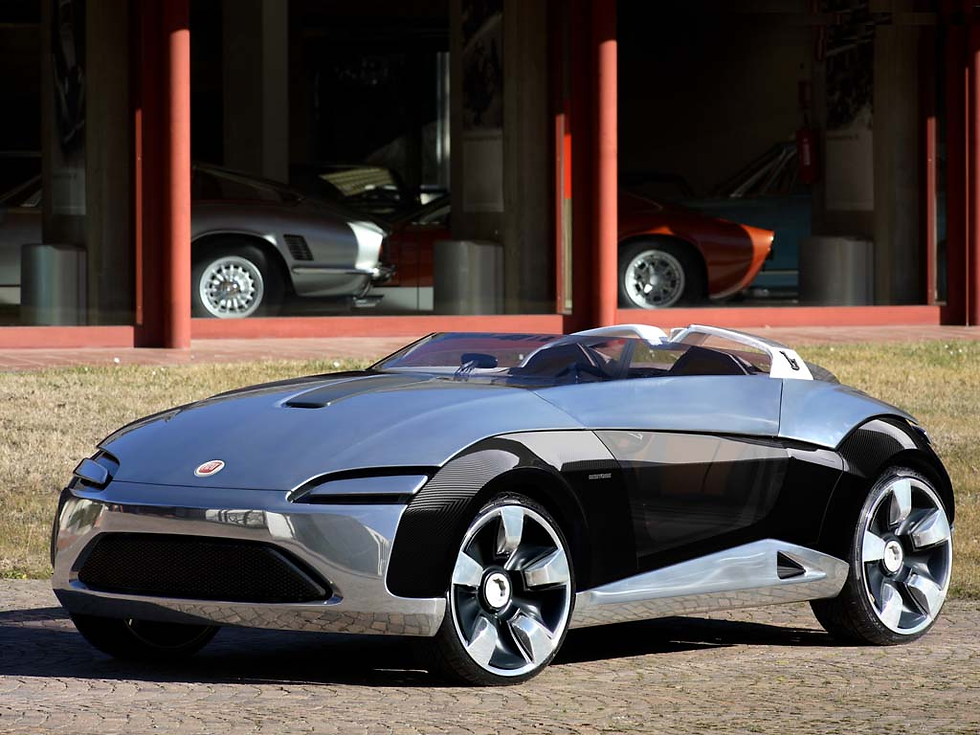


Comments