
10 Cars That Saved Their Automaker from Bankruptcy
.png/v1/fill/w_320,h_320/file.jpg)
The automotive industry is full of comeback stories. Some brands survived wars, economic downturns, bad management decisions, and near-bankruptcy thanks to a single vehicle arriving at exactly the right moment.
In some cases, these cars generated desperately needed sales. In others, they attracted investors, secured new ownership, or gave struggling automakers a product people actually wanted to buy.
Here are 10 cars that helped save their companies when the future looked uncertain.


Before there was a DB4, DB5, or DB9, there was the Atom.
Only one Atom prototype was built before World War II interrupted production. While it never reached customers, it played a critical role in Aston Martin's survival.
In 1947, industrialist David Brown drove the Atom and was impressed enough to purchase Aston Martin for £20,500. Brown's ownership transformed the company and led directly to the legendary DB series that still carries his initials today.
Without the Atom, Aston Martin's history may have ended before it truly began.
Technical Specs
Year: 1939
Engine: 2.0L Inline-4
Power: Approximately 90 hp
Transmission: 4-speed manual
Production: 1 prototype
Survival Impact: Led directly to David Brown's purchase of Aston Martin in 1947
2. 1959 BMW 700

By the late 1950s, BMW was in serious trouble. The company was losing money and came close to being acquired by Mercedes-Benz.
The solution arrived in the form of a tiny rear-engined coupe called the 700.
The BMW 700 became a surprise success, selling more than 188,000 units between 1959 and 1965. The profits generated by the 700 gave BMW enough breathing room to develop the Neue Klasse sedans, which would become the foundation of modern BMW.
Technical Specs
Year: 1959
Engine: 697cc Flat-Twin
Power: 30-40 hp
Top Speed: 78 mph
Production: 188,211
Survival Impact: Stabilized BMW finances and funded Neue Klasse development
3. 1974 Volkswagen Golf Mk1

Volkswagen knew the Beetle's days were numbered.
The Golf represented a complete shift in thinking. It traded the Beetle's rear engine and air-cooled design for a front-engine, front-wheel-drive layout that would define Volkswagen for decades.
The gamble worked.
More than 6 million first-generation Golfs were produced, helping Volkswagen transition successfully into the modern era.
Technical Specs
Year: 1974
Engine: 1.1L-1.8L Inline-4
Power: 50-112 hp
Layout: Front-engine, front-wheel drive
Production: Over 6 million
Survival Impact: Replaced the aging Beetle and secured Volkswagen's future
4. 1981 Chrysler K-Car
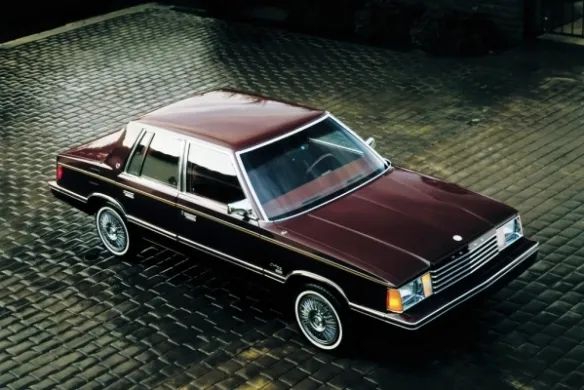
When Chrysler received federal loan guarantees in 1979, its future was uncertain.
The K-Car platform changed everything.
The Dodge Aries and Plymouth Reliant were affordable, practical, and inexpensive to build. More importantly, the platform was flexible enough to support dozens of future Chrysler products.
More than 2.1 million K-Cars were produced, helping Chrysler return to profitability and repay its government-backed loans years ahead of schedule.
Technical Specs
Year: 1981
Models: Dodge Aries / Plymouth Reliant
Engine: 2.2L Inline-4
Power: 84 hp
Production: 2,105,059
Survival Impact: Generated the revenue that fueled Chrysler's recovery
5. 1983 Peugeot 205

Peugeot entered the 1980s facing mounting financial pressure following costly acquisitions and declining sales.
The compact 205 arrived at exactly the right time.
It was stylish, economical, and fun to drive. Buyers responded immediately.
By the end of production, Peugeot had built more than 5.2 million examples, making the 205 one of the most important cars in company history.
Technical Specs
Year: 1983
Engine Range: 954cc-1.9L
Power: 45-130 hp
Production: 5,278,050
Survival Impact: Helped restore profitability after major financial losses
6. 1986 Ford Taurus

Ford invested roughly $3 billion developing the Taurus, making it one of the most expensive automotive programs of its time.
The risk paid off.
Its aerodynamic styling looked years ahead of competitors, and buyers flooded dealerships. The Taurus became America's best-selling car in the early 1990s and helped Ford regain market share lost to Japanese brands.
Technical Specs
Year: 1986
Engine Range: 2.5L-3.8L V6
Power: 90-140 hp
First-Year Sales: Over 200,000
Lifetime Production: Nearly 8 million
Survival Impact: Restored Ford's competitiveness in the family sedan market
7. 1994 Aston Martin DB7

Aston Martin was producing cars in extremely low volumes before the DB7 arrived.
The Ian Callum-designed grand tourer changed that.
With 7,117 examples built, it became Aston Martin's best-selling model ever at the time and generated the revenue needed to modernize the company.
Technical Specs
Year: 1994
Engine: Supercharged 3.2L Inline-6
Power: 335 hp
Top Speed: 165 mph
Production: 7,117
Survival Impact: Became Aston Martin's highest-volume model to date
8. 1996 Porsche Boxster

By the early 1990s, Porsche sales had collapsed.
The company needed a lower-cost sports car that could attract new buyers while sharing components with the upcoming 996-generation 911.
The Boxster delivered exactly that.
More than 160,000 first-generation examples were sold, helping Porsche return to financial health and setting the stage for future success.
Technical Specs
Year: 1996
Engine: 2.5L Flat-6
Power: 201 hp
Top Speed: 149 mph
First-Generation Production: Over 160,000
Survival Impact: Restored Porsche profitability during the 1990s
9. 1996 Lotus Elise

Lotus has survived numerous ownership changes and financial challenges throughout its history.
The Elise became the car most responsible for keeping the brand relevant.
Lightweight, simple, and focused, it perfectly captured the Lotus philosophy. More than 35,000 examples were sold during its production run.
Technical Specs
Year: 1996
Engine: 1.8L Inline-4
Power: 118 hp
Weight: 1,598 lbs
Production: 35,124
Survival Impact: Became the foundation of Lotus production for decades
10. 2012 Tesla Model S

The Model S didn't just save Tesla—it legitimized the entire electric vehicle industry.
Tesla achieved its first quarterly profit in 2013 after Model S deliveries ramped up. The sedan quickly became one of the most awarded vehicles ever built and proved EVs could compete with traditional luxury cars.
Today, it stands as one of the most important vehicles of the 21st century.
Technical Specs
Year: 2012
Battery: 40-100 kWh
Range: Up to 405 miles (later variants)
First Profitable Quarter: Q1 2013
Initial Deliveries: 4,900 in Q1 2013
Survival Impact: Established Tesla as a viable automaker
Final Thoughts
Not every car on this list was a blockbuster seller. Some generated profits. Others attracted investors or bought their companies time.
What they all have in common is simple: without them, their manufacturers might not exist today.
In an industry where billions of dollars can hinge on a single product launch, these cars proved that one great vehicle really can change everything.
What did we miss?
These cars helped save entire automakers from collapse — but there are plenty more honorable mentions:
• Mazda MX-5 Miata
• Chrysler Minivans
• Fiat 500
• Bentley Continental GT
• Lamborghini Urus
Comment the car you think deserves a spot on the list.


Comments