
2026 Hennessey Blackbird: 850-HP Manual Hypercar Built for Drivers
.png/v1/fill/w_320,h_320/file.jpg)

Hennessey has revealed the 2026 Hennessey Blackbird, an all-new American hypercar that takes a very different approach from the Venom F5. Instead of chasing another top-speed record, the Blackbird focuses on the driving experience with a naturally aspirated V8, six-speed manual transmission, rear-wheel drive and a cabin with no traditional infotainment screen.
Inspired by the legendary Lockheed SR-71 Blackbird, Hennessey's third hypercar combines aerospace-influenced styling with lightweight carbon fiber construction and an analog approach that has become increasingly rare in modern performance cars.
Production will be limited to 71 cars worldwide, with pricing starting at $2.5 million before taxes. Customer production is expected to begin in 2029 or 2030.

A Different Kind of Hennessey Hypercar
The Hennessey Blackbird follows the Venom GT and Venom F5, but its purpose is different.
The Venom F5 was developed around extreme speed and power. The Blackbird is designed around the connection between the driver, car and road.
That means no hybrid system, no turbochargers and no automatic transmission. Instead, Hennessey has chosen a high-revving naturally aspirated engine, a gated manual gearbox and rear-wheel drive.
The Blackbird is also intended to be comfortable enough for long trips. Hennessey says the car is being engineered to cover more than 800 miles in a day, giving it more of a grand touring character than the track-focused image normally associated with modern hypercars.

Naturally Aspirated 6.2-Liter V8
At the center of the Hennessey Blackbird is an all-new 6.2-liter naturally aspirated V8 developed with Ilmor Engineering.
Hennessey is targeting approximately 800 to 850 horsepower, with the engine capable of revving beyond 9,000 rpm. The company expects it to become one of the highest-revving and most powerful naturally aspirated V8 engines fitted to a road car.
There are no turbochargers and no electric motors assisting the engine. The goal is immediate throttle response, predictable power delivery and an engine that feels directly connected to the driver's inputs.
All of that power goes exclusively to the rear wheels through a six-speed gated manual transmission. There is no automatic version planned.

Hennessey Blackbird 0-60 MPH and Top Speed
Despite its focus on driver engagement rather than records, the Blackbird is still extremely fast.
Hennessey's current performance targets include:
0-60 mph: 2.5 seconds
Top speed: 220 mph
Power: approximately 800-850 hp
Engine speed: more than 9,000 rpm
Those numbers put the Blackbird firmly in modern hypercar territory, even though outright performance isn't the main goal of the project.

Inspired by the SR-71 Blackbird
The name isn't just marketing.
The Lockheed SR-71 Blackbird reconnaissance aircraft influenced several parts of the car's design, including its long proportions, sharp body-side line and unusual active rear stabilizers.
The two vertical stabilizers are among the Blackbird's most recognizable features. They deploy automatically at 71 mph and can move through a range of plus or minus 71 degrees—a deliberate reference to the SR-71 name. Drivers can also activate them manually.
Aerospace inspiration continues at the rear with four exhaust outlets arranged in a diamond pattern. This design references the Bell X-1 experimental aircraft, the first crewed airplane to exceed the speed of sound.

Carbon Fiber Body and Lightweight Construction
The Blackbird is built around a new Hennessey full-carbon tub, rather than using the structure from the Venom F5.
Its exterior panels are also made from carbon fiber.
Hennessey is targeting a weight of less than 3,000 pounds, giving the Blackbird a strong power-to-weight ratio without relying on the extreme horsepower figures of the Venom F5.
The chassis uses an inboard suspension architecture with adaptive dampers, allowing the car to balance handling with the comfort needed for longer drives.
Michelin Pilot Sport Cup 2 tires will be standard, while carbon-ceramic brakes handle stopping duties.
A Hypercar With a Six-Speed Gated Manual
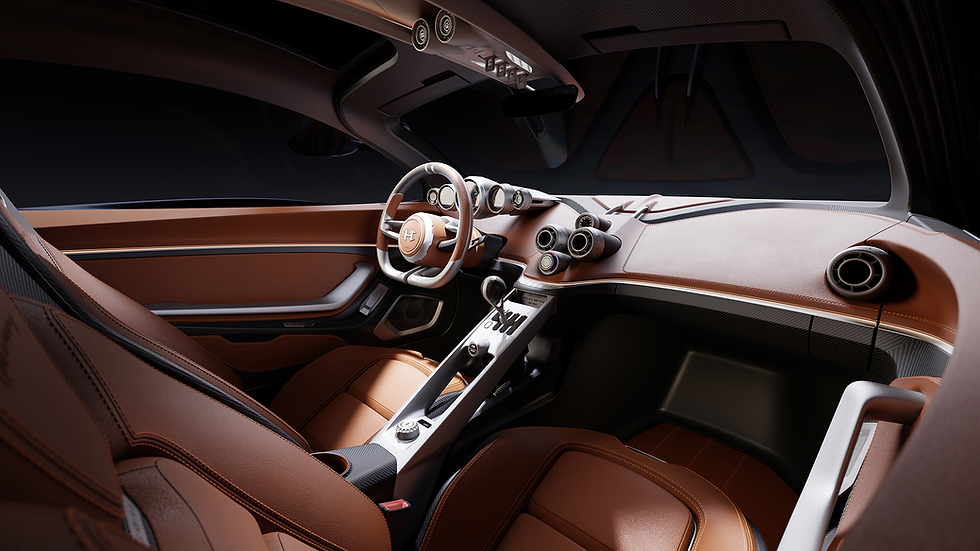
One of the biggest attractions of the 2026 Hennessey Blackbird is something increasingly difficult to find in a new supercar: a manual transmission.
Every Blackbird will use a six-speed gated manual gearbox.
The exposed shift linkage is intentionally placed at the center of the driving experience. Hennessey wants changing gears to feel like an important part of operating the car rather than something handled automatically in the background.
Combined with rear-wheel drive and the naturally aspirated V8, the setup gives the Blackbird a mechanical simplicity that separates it from many hybrid and all-wheel-drive hypercars.
No Infotainment Screen
The interior takes the analog theme even further.
There is no conventional infotainment screen, no digital instrument display and no steering-wheel buttons. Instead, a large analog tachometer sits at the center of the driver's view.
There is even a physical ignition key.
Hennessey hasn't eliminated modern connectivity entirely. Navigation, Apple CarPlay and Android Auto can run through the driver's smartphone, which sits in a dedicated holder. Premium speakers provide audio without requiring a permanent display in the dashboard.
It's an unusual approach in 2026, when even relatively inexpensive cars often come with multiple large displays.

Built for Long-Distance Driving
The Blackbird isn't supposed to be a hypercar that spends most of its life sitting in a collection.
Hennessey has given it adaptive suspension, improved visibility, a larger cabin than the Venom F5 and gullwing doors to make entering and exiting easier.
There's also more storage than you might expect.
The front luggage compartment can hold two full-size carry-on bags, with additional storage available behind the cabin and inside the interior. There are even four cup holders.
Low noise and vibration levels are also part of the development targets, helping make the Blackbird suitable for longer highway trips without removing the character expected from a high-revving V8 hypercar.

2026 Hennessey Blackbird Specs
Specification | Hennessey Blackbird |
Engine | 6.2-liter naturally aspirated V8 |
Power | Targeting 800-850 hp |
Maximum RPM | More than 9,000 rpm |
Transmission | 6-speed gated manual |
Drivetrain | Rear-wheel drive |
0-60 MPH | Target: 2.5 seconds |
Top Speed | Target: 220 mph |
Construction | Carbon fiber tub and body |
Target Weight | Under 3,000 lbs |
Suspension | Adaptive |
Tires | Michelin Pilot Sport Cup 2 |
Production | 71 cars |
Starting Price | $2.5 million before taxes |
Production Start | Targeted for 2029-2030 |
Built In | Texas, USA |
Why Only 71 Hennessey Blackbirds?
Hennessey plans to build exactly 71 examples of the Blackbird.
The number connects directly to the SR-71 aircraft that inspired the car. That theme is repeated throughout the design, most noticeably in the active rear stabilizers that deploy at 71 mph.
Demand is already strong. Hennessey says more than two-thirds of the planned 71-car production run has already been allocated ahead of the car's public debut.
How Much Does the Hennessey Blackbird Cost?
The Hennessey Blackbird starts at $2.5 million before taxes.
That's only the starting point. With just 71 examples planned and extensive customization expected for buyers at this level, individual cars could cost considerably more depending on their specifications.
Every Blackbird will be designed, engineered and built in Texas.

When Will the Hennessey Blackbird Go Into Production?
Although Hennessey unveiled the Blackbird in 2026, customers will have to wait several years for production cars.
The company is targeting 2029 to 2030 for customer production, around the time the Venom F5 program reaches its conclusion.
The Blackbird is therefore best viewed as a preview of Hennessey's next generation rather than a car that will immediately reach dealerships or owners.
Hennessey Blackbird vs. Venom F5
The Blackbird isn't meant to replace the Venom F5 by simply adding more horsepower.
It represents a change in priorities.
The Venom F5 is about pushing the limits of acceleration, power and top speed. The Blackbird focuses on naturally aspirated response, manual shifting, lighter construction, comfort and the experience of driving on real roads.
That difference may be exactly what makes the Blackbird interesting.
Instead of joining the race toward heavier, more complicated hybrid hypercars, Hennessey has gone in the opposite direction: a naturally aspirated V8, rear-wheel drive and a manual gearbox.
An Analog Hypercar for a Digital Era
The 2026 Hennessey Blackbird is unusual because it doesn't try to solve every problem with more technology.
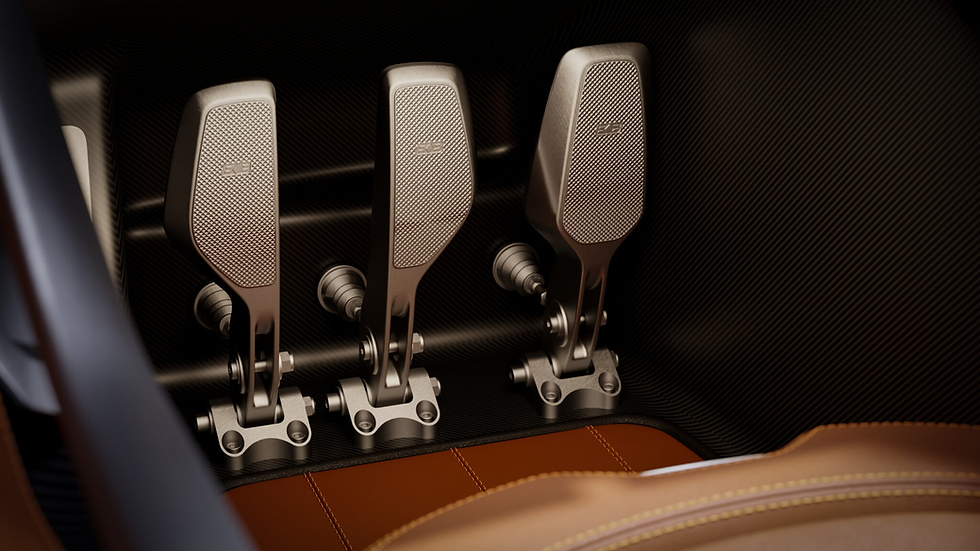
There are no turbochargers. No hybrid assistance. No paddle-shift transmission. No dashboard filled with screens.
Instead, Hennessey has built its latest hypercar around a 9,000-plus-rpm V8, a gated six-speed manual, rear-wheel drive and a lightweight carbon fiber chassis.
It will still do 0-60 mph in a targeted 2.5 seconds and reach around 220 mph, but those figures aren't the whole point.
The Blackbird is designed to make the process of getting there matter just as much.
With only 71 cars planned, a $2.5 million starting price and production scheduled for the end of the decade, the Hennessey Blackbird will be an extremely rare machine. More importantly, it represents a different vision for the future of the hypercar—one where the driver is still expected to do the driving.


Comments